


 Claim Ownership
Everything is Somewhere Podcast
Subscribed: 1Played: 25
Subscribe

© 2024
Description
From the rope stretchers of ancient Egypt to ubiquitous satellite precision, geospatial technology has ever been the bedrock of the constructed world and of civilization itself. Your host, land surveyor and infrastructure writer Angus Stocking, engages in regular conversation with today's location experts to determine exactly where, in space and time, we find ourselves today. Location, location, location; it's not just real estate, it's everything and, Everything is Somewhere.
24 Episodes
Reverse
The Four Corners Monument, marking the common corner of four southwestern states, can seem perverse and arbitrary, memorializing nothing more than 4 invisible lines coming to a point in desolate country. There is little to do: no rides, no museums, just a few booths selling food and trinkets and the monument itself, a metal disk encased in a massive wheel of imported granite. And yet we do come, by the thousands, driving hundreds of miles out of our way and paying three bucks to stand on the smooth bronze disk, tie our shoes in four states at once, have our picture taken and then… well, nothing; buy some fry bread, perhaps, and then get back in the car and drive to somewhere else. It resembles a pilgrimage, a Southwestern Hajj, a ritual journey to be completed at least once in every American's life.
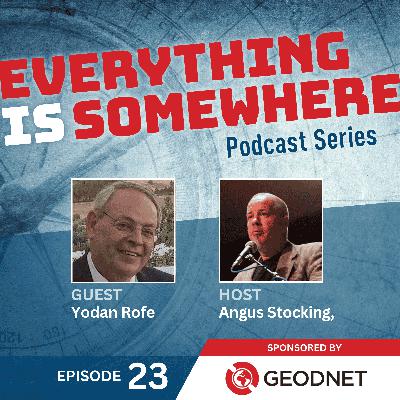
In this episode, Angus talks with returning guest Yodan Rofe about Christopher Alexander's four‑volume magnum opus, The Nature of Order, and its impact on architecture, teaching, and daily life. Rofe, who studied and worked closely with Alexander, explains how early work on pattern language led to the deeper geometric and experiential insights developed in The Nature of Order. The conversation explores ideas such as the 15 properties of living structure, the "mirror of the self," and the challenge of talking about life and transcendence in built environments without slipping into abstraction. Rofe also describes his "Building Beauty" program, where students engage Alexander's work through seminars, studios, and real construction, and how this education can reshape how they see cities, infrastructure, and their own role in making a more livable world.
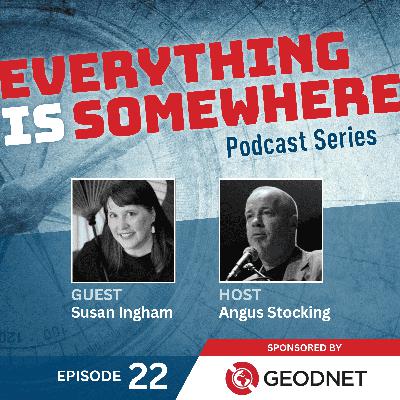
In this episode, Angus welcomes Seattle architect and Building Beauty faculty member Susan Ingham for a deep, practical conversation about the living structure at the heart of Christopher Alexander's work. Susan recounts the serendipitous lecture that drew her back to Berkeley to study with Alexander and Hajo Neis, and how those methods now guide her residential practice—from one-to-one site mock-ups to pattern-based design that uncovers clients' real needs. She explains how shared feelings of coherence and calm can be made tangible, starting with hand-made objects, improving a single room, and then unfolding a home by placing the garden first—an approach anchored in Pattern 104: Site Repair. Angus and Susan also explore what surveyors can contribute to site-centered design, the pedagogy of Building Beauty's studio and Nature of Order courses, and why small, well-judged changes to everyday environments measurably improve well-being. It's an inspiring, common-sense tour of Alexandrian practice for designers, builders, and curious citizens alike.
This episode of Everything is Somewhere pairs hands-on geospatial craft with imaginative worldbuilding across two in-depth conversations. In the first half, Texas surveyor Aaron Burrell walks listeners through the Odessa Stonehenge recreation, from community arts origins and university partnership to site topo, engineered slabs, and crane logistics, culminating in precise summer solstice and 18.6-year lunar standstill alignments calculated with NGS/NOAA resources back in 2004, before widespread archaeoastronomy software was available; the sunrise "crown" over the heelstone drew cheers and set a public art landmark that now attracts visitors, weddings, and school tours, while deepening appreciation for ancient construction feats and intentional stone selection. In the second half, returning guests Dustin Garner and Colin Sellers unveil For the Quest, a GPS-first-person RPG that places dungeon entrances at real survey monuments; players navigate to coordinates, complete geospatial mini-games to earn tokens, and continue on mobile or PC in a classic RPG loop inspired by Elder Scrolls, Borderlands, and Diablo, with monsters and lore drawn from Dustin's Creatures of the Compass and a planned novel trilogy. The conversation ranges to Dustin's Caritas nonprofit work in Cedar City and Colin's scientific literacy advocacy, from flat-earth debunking experiments to Bronze Age catastrophism.
In this episode, Angus talks with Pete Kelsey—AEC veteran, reality-capture leader, and founder of VCTO Labs—about building survey-grade, photorealistic models that turn complex places into actionable narratives for conservation, planning, and prime-time storytelling. From the Air Force Academy Chapel and Glen Canyon Dam to the Moai and USS Arizona, Pete explains why "story first, tools second" became his north star—and how lidar, photogrammetry, and tight control transform public understanding of place. Eventually, the conversation heads into geospatial forensics for television: Expedition Bigfoot and The Secret of Skinwalker Ranch. At the Patterson–Gimlin site, perspective matching on scan-tied geometry yielded a defensible height for "Patty," opening the door to deeper biomechanical study. At the ranch, GPS misbehavior across phones, survey GNSS, aircraft, and drones—plus "impossible" lidar returns—raises a provocative hypothesis: time-related effects. It's a candid, nuts-and-bolts look at balancing credibility with entertainment while keeping the measurement honest—and why rigor matters when reality gets weird.
In this expansive episode of Everything is Somewhere, Angus speaks with architect James Maguire, currently Campus Architect and Vice Chancellor of Facilities Planning at Boise State University and the University of North Texas System. Maguire studied under Christopher Alexander at UC Berkeley and worked with him at the Center for Environmental Structure. Together they explore Alexander's philosophical and architectural legacy—moving from A Pattern Language to The Nature of Order—and how these ideas can improve real campus architecture and planning. Maguire discusses his Catholic roots, his rediscovery of spiritual life, and how Alexander's teachings helped him bridge architecture, philosophy, mathematics, and art. Along the way, they explore the meaning of beauty, wholeness, and living structure, with anecdotes about clay massing models, campus tree benches, and the search for better design processes. This is a richly philosophical conversation, offering insights for architects, planners, surveyors, and anyone who cares about building more living environments.
In this episode, Angus sits down with Anna Rios, a trailblazer in the world of land surveying. Anna's journey began as an administrative assistant for Texas' first female licensed surveyor and, inspired by that pioneering mentor, she dedicated herself to the profession—overcoming industry barriers to become licensed in 2018. Anna shares candid reflections on what it was like entering a field long viewed as a "man's job," explores the importance of visibility, mentorship, and education in opening surveying to women, and unpacks her personal path through setbacks, career changes, and eventual entrepreneurship. Listeners will hear about Anna's creation of the Women Surveyors Summit, a vibrant annual event fostering connection and support for women in surveying, as well as the Future Surveyors Foundation. Anna's heartfelt stories and practical advice illuminate why surveying is an exciting, varied, and welcoming career for any background—and why a network of supportive peers matters more than ever.
In this episode of Everything is Somewhere, Angus welcomes Maggie Moore Alexander and Yodan Rofe—both close colleagues and friends of the late Christopher Alexander, the visionary architect and philosopher renowned for his influential theories on the built environment. Together, they discuss Alexander's enduring ideas, how they continue to shape thinking about architecture and infrastructure, and the mission of Building Beauty, a multidisciplinary program inspired by Alexander's legacy. The conversation explores why these principles matter so deeply for creating both beautiful and functional spaces in today's world, and why wider awareness of Alexander's work could transform the built environment for the better.
In this episode, Angus interviews Jenny Quillien about anthropogeography, a branch of geography that studies the spatial relationships between human communities and their environments. They discuss the work of Ellen Churchill Semple, a pioneering geographer whose insights into how geography shapes culture and civilization are often overlooked. The conversation explores various examples, including the influence of geography on European cultures, the impact of technology on human geography, and the significance of land surveying in shaping the American landscape. Jenny also shares a case study on the Anasazi civilization in the Southwest, examining how geography influenced their way of life and eventual collapse. The episode concludes with reflections on the legacy of Semple and the importance of understanding geography in today's world.
In this episode, Angus interviews Colin Sellers, a land surveyor and expert in catastrophism. They explore the concept of catastrophism, which posits that Earth's history is marked by significant, rapid changes due to catastrophic events, contrasting it with the gradualism of conventional scientific views. The discussion delves into historical evidence, the work of Randall Carlson, and the implications of catastrophism for understanding climate change and geological history. The conversation emphasizes the importance of considering all evidence, including ancient myths and modern scientific findings, in understanding our planet's past and preparing for future events. We delve further into various themes surrounding earth curvature, the implications of catastrophism, and the exploration of geological phenomena such as Bonneville Lake and the Yellowstone caldera. The discussion highlights the importance of personal inquiry in understanding scientific concepts, the evidence of catastrophic events in geological history, and the merging of education with adventure through the concept of 'adventurology.'
In this episode, Angus interviews Jenny Quillien, a scholar and consultant known for her work with Christopher Alexander. They discuss architecture, anthropology, and organizational culture, focusing on Alexander's ideas about living structures and the importance of land surveying in urban planning. The conversation delves into the spiritual aspects of building, the fundamental processes in design, and the cognitive psychology behind our experiences of space. Further discussion addresses the intersection of art, science, and philosophy, exploring themes of teleology, transformation, and the nature of creativity. In closing, they review the importance of making things whole, the role of personal authenticity in creation, and the epistemological approaches of Christopher Alexander. All of these things emphasize the significance of self-reflection in evaluating art and life, and the need for experimentation in understanding and applying Alexander's principles.

In this episode, Angus interviews Wendy Lathrop, a pioneering female land surveyor with a rich history in the field. Wendy shares her journey into land surveying, the importance of communication between surveyors and lawyers, and the challenges faced in their interactions. She also discusses the unexpected parallels between her martial arts experience and her work in surveying, emphasizing the need for better education and understanding between surveyors and their clients. In this conversation, Wendy discusses the evolution of research methods in land surveying, emphasizing the importance of thorough investigation and client communication. They share insights on the challenges of writing and the significance of clear communication in the profession. The discussion also touches on the role of AI in surveying, highlighting both its potential benefits and the need for careful verification of its outputs. The speaker reflects on their journey in establishing Cadastral Consulting and the integral role of writing in their career.
In this episode of Everything is Somewhere, Angus interviews Sybil Derrible, a professor of Urban Engineering and author of 'The Infrastructure Book: How Cities Work and Power Our Lives.' They discuss Sybil's journey from a small island in France to becoming an expert in infrastructure, the writing process behind his new book, and the importance of understanding urban systems. The conversation covers various topics including innovative infrastructure solutions, the impact of technology on urban living, and the significance of desalination in modern cities. Sybil shares insights from his travels to different cities and emphasizes the need for a comprehensive understanding of infrastructure that is accessible to the general public.
In this episode, Angus interviews Lloyd Pilchen, a partner at Olivarez Madruga Law Organization, who specializes in municipal land use, water, and environmental law. The conversation explores Lloyd's journey from land surveying to law, his writing for American Surveyor Magazine, and the importance of clear communication in the surveying profession. They discuss the complexities of property law, the significance of understanding land use, and the fascinating history of Seattle's terrain transformation. The episode also touches on the concept of 'zone of benefit' in property law and the whimsical nature of pictorial maps.
In this episode, Angus interviews Ryan Singer, a prominent figure in software development and author of Shape Up. They discuss the influence of Christopher Alexander on design and architecture, exploring how his principles can be applied in both physical and digital realms. The conversation delves into the practical applications of Alexander's ideas, the challenges of implementing them, and the current trends in architecture that reflect a shift away from minimalist designs. Ryan shares insights from his own work in software development and how he helps teams navigate the complexities of design and engineering collaboration.
Returning guest Jeffrey Wilson shares his expertise and the latest archaeological information about the prehistoric mound cultures in North America, and Ohio's Serpent Mound in particular. Listeners may remember Jeffrey as the director and founding researcher of the Independent Crop Circle Researchers' Association. For more on his other pursuits, check out episodes three and seven.
In this episode, Dustin Gardner returns to talk about his new book, "Creatures of the Compass: A Surveyor's Guide to Surviving the Supernatural". Dustin is a fourth-generation land surveyor who kicks off our discussion of land surveying lore as related in myth, folklore, scripture, and revenants, or vampires.
More thoughts on crop circles in America from Jeffrey Wilson, Director and founding researcher of the Independent Crop Circle Researchers' Association. Part 1 released as episode #3 on April 8th, 2024.
Boyce Upholt is the author of 2024's The Great River: The Making & Unmaking of the Mississippi River. As I read this instant classic, I was reminded of David Ambrose's Undaunted Courage, Kevin Fedarko's Emerald Mile and John McPhee's Coming into the Country. But more than any of these, Upholt tells the tale of early surveying along the Mississippi and writes the history of 200 years of river management infrastructure in interesting and exciting detail.
Will Selman is an urban planner with 30 years of public and private practice, and the founder of Symbolic Urbanism. His book "Temenos: The Design and Experience of Urbanism as Spiritual Path" is an essential text for anyone interested in the philosophy of land development.

Comments

Download from Google Play

Download from App Store
 United States