


 Claim Ownership
Frameshifts with Benjamin Arya
Subscribed: 1Played: 1
Subscribe

© Benjamin Arya
Description
Spotlighting the world’s most ambitious biotech founders, investors, researchers and change-makers.
frameshifts.bio
frameshifts.bio
24 Episodes
Reverse

Parag Mallick is a Stanford Professor and Chief Scientist at Nautilus Biotechnology, a publicly traded biotech company. He’s also a professional magician and circus performer, which might sound random until you realize that his company does the closest thing to proteomics magic I’ve ever seen. The things that make you weird, he argues, are exactly what let you see data differently than anyone else.Here’s what caught me off guard: we can only measure ~8% of human proteins with current mass spectrometry tools. The other 92%—what Parag calls the “dark proteome”—is essentially invisible to us.Why is proteomics so much harder than genomics? Three reasons. First, protein concentration. DNA is basically uniform—roughly the same amount per cell. Proteins range from one copy to a billion copies in a single cell, and no analytical tool can handle that spread. Second, dynamics. Your genome is relatively static over your lifetime. Your proteome changes every second of every day. Third, there’s no equivalent of amplifying proteins like PCR can do. You get what you get.Nautilus is tackling this with single-molecule detection. The technical approach is fascinating: they use DNA origami nanoparticles. Picture a Ritz cracker with a flagpole sticking out the top. That flagpole has exactly one attachment point. They coat sample proteins with one half of a click chemistry reagent (methyltetrazine), the nanoparticle has the other half (trans-cyclooctene), and they bind together. One protein per nanoparticle. These then self-assemble onto a flow cell with 100-nanometer landing pads, creating a hyperdense array of billions of individual protein molecules.Now comes the really clever part: protein identification. Traditional proteomics tries to build one highly specific antibody per protein—an intractable problem when you’re dealing with millions of proteoforms. Nautilus does the opposite. They intentionally build cross-reactive affinity reagents. The system uses ~300 different affinity reagents, each one recognizing just a three-amino-acid epitope. That’s deliberately non-specific. Then they run 300 cycles of iterative mapping. The primary data looks like fluorescent NGS—you get a light-up at each location on the array or you don’t. Binary. Yes or no.The median protein only needs ~12 epitopes to be uniquely identified, but each protein gets touched 10-30 times across the 300 cycles for high confidence. It’s exactly like playing Guess Who: “Do you have glasses? Brown hair? A hat?” Each question alone tells you almost nothing, but together they pinpoint exactly who you are. Same principle here: “Do you have this 3-amino-acid sequence? What about this one?”The 300 binary measurements create a point in 300-dimensional space. Each protein has a characteristic signature in this space. The machine learning layer compares your observed pattern against the reference proteome and asks: what protein is compatible with this specific binding pattern? If you find a totally new protein, it’ll occupy a new point in that space—something not in the database.But here’s the thing about building something this audacious: you can’t prove it works before you start. Parag shared what the early days were actually like—renting a single lab bench at Stanford’s StartX incubator, trying to convince people to join when he couldn’t demonstrate single-molecule deposition yet, couldn’t show them they could run 180 cycles because they didn’t have an instrument. The first automation system was literally called “Parag” because he was pipetting by hand. How do you hire people to believe in something impossible? You share the vision of what it could mean—bringing the proteome to everyone—and see if that resonates. Some people thrive in that uncertainty. Others are brilliant at early-stage innovation but different people excel at scaling and productization. That evolution isn’t failure, Parag argues. It’s healthy. It’s part of the journey.We’re really just at the beginning of understanding biology. The genomics revolution, as transformative as it’s been, was the opening act. The era where we can actually see what proteins are doing—that’s what comes next.And in case you’re short on time, here’s a quick teaser:Watch on Youtube; listen on Apple Podcasts or Spotify.Guest Information* Parag Mallick. Professor at Stanford University & Chief Scientist at Nautilus Biotechnology.* LinkedIn* X (Twitter)* Nautilus Biotechnology* Large-scale single-molecule analysis of tau proteoforms* Proteomics Toolkit Paper (Nature, 2012)* High-density and scalable protein arrays for single-molecule proteomic studies (bioRxiv, 2022)Connect With Us* Website* Substack* YouTube* X (Twitter)* LinkedIn* TikTok Get full access to Frameshifts with Benjamin Arya at frameshifts.bio/subscribe
The future of human biology isn’t about better animal models - it’s about building human organs on chips that think like the body does.Don Ingber, founding director of Harvard’s Wyss Institute, has one of the most unconventional origin stories in the field. In 1975, as a Yale undergrad, he took a sculpture class where students built floating structures held together only by tension; no rods touching, no rigid frames. At the same time, he watched cells in culture flatten, round up, and then flatten again.The connection clicked: cells aren’t rigid blocks; they’re dynamic tensegrity structures, governed by forces, tension, and mechanical cues. That conceptual shift reshaped his view of biology.Fast-forward, and Ingber’s team would eventually build something that changed the definition of a “model system”: organ-on-chip devices the size of a thumb drive, lined with living human cells, that recapitulate organ-level physiology with astonishing fidelity.Key Takeaways:* Animal testing has a low success rate: 70% of clinical trials fail, with neurology hitting 95% failure rate. Organs-on-chip technology offers an alternative method that can help predict patient treatment responses* How a chip mimics an organ: Two microfluidic channels with different tissue types separated by a porous membrane. Cyclic suction mimics breathing or peristalsis* The microbiome breakthrough: Culturing complex bacterial communities for days using flow and mechanical forces creates a microbiome-like culture compared to static cultures* Personalized medicine economics: Test 100 patient-derived chips, identify the 50 responders, screen for toxicity, run focused clinical trials on the 35 most promising candidates* The Wyss origin story: A donor who walked away for two years, and a Martha’s Vineyard meeting that led to a $125 million gift* Why institutional structure matters: Independent governance, no deans, separate finances from Harvard and MIT* The Boston/Cambridge singularity: Universities, hospitals, VCs, pharma all in walking distance. You can’t recreate this by distributing talent globally* What’s at stake now: Immigration restrictions and funding cuts threaten the human capital that drives American innovationThis conversation goes beyond the science. We get into what it actually takes to build an institution like the Wyss, and how we’re watching the American scientific leadership face an existential threat with immigration restrictions and ideological constraints.And in case you’re short on time, here’s a quick teaser:Watch on Youtube; listen on Apple Podcasts or Spotify.GUEST INFORMATION:* Don Ingber - Founding Director, Wyss Institute for Biologically Inspired Engineering at Harvard University* “Cellular tensegrity: defining new rules of biological design that govern the cytoskeleton” - Journal of Cell Science (1993)* “Human organs-on-chips for disease modelling, drug development and personalized medicine” - Nature Review Genetics (2022)* X (Twitter) * Wyss Institute* Emulate (Organ Chip Company)CONNECT WITH US:* Website* Substack* YouTube* X (Twitter)* LinkedIn* TikTok Get full access to Frameshifts with Benjamin Arya at frameshifts.bio/subscribe
This week, I sat down with Shelby Newsad, Partner at Compound VC, to break down what makes a great biotech investment and why so many platform stories fall short.Shelby lays out a playbook forged across therapeutics, diagnostics, and lab automation. We dive into why mechanistic understanding predicts success, how diagnostics evolve into data businesses, and why the next wave of value may come from closed loop automated labs that combine hardware and software to finally link the whole bench.We explore faster paths to human evidence through compassionate use, phase 0 trials, and cassette microdosing, and how biobanks move discovery closer to patients. Shelby also explains how RNA secondary structure targeting with covalent small molecules could merge phenotypic and target based discovery inside one company.Then things get wonderfully weird. We discuss manufacturing as value capture in a world where intelligence designs drugs, gene edited flowers as a low regulation high margin venture canvas, and what it means when biohackers and LLMs push healthcare outside traditional borders.Key Takeaways* Mechanism > platform: Companies prosecuting mechanistic disease biology have a 3–4× higher chance of success than platform first bets with fuzzy “why.”* Diagnostics as engines: Tests that are profitable and build biobanks create data and network effects and decouple cost from revenue via services and licensing.* Human evidence faster: Use compassionate use, phase 0, and cassette microdosing to de risk earlier with real PK PD and binding data.* Automation gap: Most lab robots lack vision systems. Closed loop labs that are miniaturized and observable are the usability unlock.* RNA covalency: Covalent binders to RNA secondary structures offer clean transcriptome readouts blending phenotypic and target based discovery.* Value capture shift: If AI designs the drug, manufacturing of proteins, chemicals, and gene therapies could own the margin stack.* Global arbitrage: The United States leads, but Australia and China accelerate timelines. Trials and approvals follow speed and clarity.* Weird is good: Gene edited flowers that are non edible and simpler to regulate marry beauty, margins, and scale, unexpected but venture real.But in case you’re short on time, here’s a quick teaser:Watch on YouTube; listen on Apple Podcasts or Spotify.🔔 SUBSCRIBE so you don’t miss our next conversation!GUEST INFORMATION:* Website* LinkedIn * X (Twitter)CONNECT WITH US :* Website* Substack* YouTube* X (Twitter)* LinkedIn* TikTok Get full access to Frameshifts with Benjamin Arya at frameshifts.bio/subscribe

What happens when the man who launched commercial spaceflight decides humanity needs to stop aging?Peter Diamandis is building the infrastructure to tackle aging. He founded the XPRIZE Foundation, created Singularity University with Larry Page and Ray Kurzweil, and wrote the playbook on exponential thinking with Abundance and Bold. However, somewhere between flying Stephen Hawking into zero gravity and recruiting Elon Musk to his board, he realized something: if we’re building an unlimited future, we need to be around to see it.We talk about why Peter walked away from space (his first love) to focus on longevity. He shares his story on how he raised $101 million for the XPRIZE Healthspan, the largest incentive prize he’s ever launched, and why 730 teams are now racing to reverse functional aging by 2030. Peter also talks about what it means to restore cognition, immune function, and muscle capacity to what you had 20 years ago, measurably and reproducibly.We also get into the economics of abundance where Peter states that artificial intelligence, the most powerful technology in human history, is becoming free for 8 billion people. Intelligence as a service is demonetizing at 79% per year. Ultimately, are we heading toward Star Trek (exploring the universe with godlike capabilities) or WALL-E (sitting back while robots feed us grapes)?Key Takeaways:* XPRIZE Healthspan: $101M prize with three targets: reverse cognitive decline, immune exhaustion, and sarcopenia. Winner announced by 2030.* The six D’s of exponentials: Digitize → Dematerialize → Demonetize → Democratize → Deceptive → Disruptive. Every industry that touches ones and zeros follows this curve.* Why biotech is broken: Wall Street stopped valuing potential and started demanding revenue. Peter thinks high-fidelity AI cell models (the biology equivalent of physics-based simulations of SpaceX’s Falcon 9) could restore confidence before Phase 3 trials.* Healthcare will be free: AI diagnosticians already outperform human doctors (92% vs 72% accuracy). Data collection will be ambient: sensors in your watch, ring, breath, typing patterns. Companies will pay to keep you healthy because catching disease early is cheaper than treating it late.* The cost curves: Full-body MRI machines that don’t need helium cooling, cost $200K instead of $2M, and scan in 10 minutes instead of 90. Genome sequencing headed toward free. Grail’s multi-cancer detection becoming a volume play.* Why Moore’s Law mattered more than anyone realized: In 1958, Gordon Moore noticed transistors per dollar doubled every 12-18 months. That gave us 60+ years of predictable exponential compute. Everything else, including AI, biotech, and nanotech, runs on top of that curve.* The transition from space to longevity: Peter realized rockets and satellites were incremental, but if AI, 3D printing, and nanotech go exponential, space becomes easy downstream. So he went deep into the enabling technologies first.* What “solving everything” looks like: Enough compute, enough algorithms, enough data to uncover the secrets of math, physics, chemistry, biology. Imagine what happens when every day you wake up to a scientific breakthrough?This is one of those conversations where you realize the future isn’t decades away, it’s deceptively close. The tools exist, the compute exists and intelligence is free. The only question is whether you’ll build something with it, or watch from the sidelines.And in case you’re short on time, here’s a quick teaser:Watch on Youtube; listen on Apple Podcasts or Spotify.GUEST INFORMATION:* Peter Diamandis - Founder of XPRIZE, Singularity University, Bold Capital Partners* Book: Abundance, Bold, The Future Is Faster Than You Think* Upcoming Books: We Are As Gods: A Survival Guide in the Age of Abundance* X (Twitter)* Moonshots Podcast: Weekly discussions on exponential technologiesCONNECT WITH US:* Website* Substack* YouTube* X (Twitter)* LinkedIn* TikTok Get full access to Frameshifts with Benjamin Arya at frameshifts.bio/subscribe
What happens when one of the world’s leading neurosurgeons steps away from the operating room to become a first-time founder? Dr. Theodore Schwartz pioneered minimally invasive brain surgery going through the nose and eyelid instead of opening the skull. He’s published over 200 papers, written a bestselling book on neurosurgery history, and now he’s building a MedTech startup to solve a problem that’s plagued him for decades: there’s no way to continuously monitor a patient’s pupils during surgery.This conversation goes deep. We talk about the psychological weight of knowing you might paralyze 3-4% of patients no matter how good you are. Why it took him 20 years to truly master neurosurgery. The physics problems that keep him up at night. And why he thinks AI will struggle with surgery for a long time, not because of intelligence, but because of how differently humans and computers evolved.We also get into the future of brain-computer interfaces. Ted sits on the scientific advisory board of Precision Neuroscience, and he breaks down exactly how their approach differs from Neuralink and Synchron. Spoiler: it’s about electrodes on the surface of the brain, not inside it, and why that might actually be better for getting high-bandwidth data out.Plus: focused ultrasound opening the blood-brain barrier, targeted immunotherapies for glioblastoma, the doorman who changed his perspective on hard work, and what it’s really like to transition from 40 years of clinical practice to writing FDA guidelines and pitching to VCs.* Why continuous pupillary monitoring through closed eyelids could revolutionize neurosurgery and ICU care* The three competing BCI approaches: Synchron (in blood vessels), Neuralink (penetrating electrodes), Precision (surface electrodes)* Why neurosurgery took 25 years for even the best hospitals to adopt transorbital approaches* The decision algorithm surgeons use when removing a tumor might blind someone, and why AI can’t make that call yet.* How Harvey Cushing reduced brain surgery mortality from 50% to 8% and essentially founded the field* Why grit and curiosity matter more than raw intelligence in neurosurgery* The transition from practicing clinician to founder: patents, FDA meetings, grant writing, and learning to create value before raising VC money* Why infrared light passes through eyelids better than visible light (it’s the melanin)How focused ultrasound might eliminate the need for opening skulls entirelyThis is one of those conversations where you realize how much frontier work is still happening in medicine, and how the people pushing those boundaries think about risk, responsibility, and what it means to literally hold someone’s brain in your hands.Watch on Youtube; listen on Apple Podcasts or Spotify.GUEST INFORMATION:* Theodore Schwartz, MD - Neurosurgeon, Author, Entrepreneur* Book: Gray Matters: A Biography of Brain Surgery* Website* X (Twitter)CONNECT WITH US:* Website* Substack* Youtube* X (Twitter)* LinkedIn* Tik Tok Get full access to Frameshifts with Benjamin Arya at frameshifts.bio/subscribe
This week, I sat down with genome engineering prodigy Michael Florea.I first met Michael at the Longevity Biotech Fellowship retreat in Tahoe National Forest, California (2.5hrs east of SF). I was in the final days of building an AI edtech startup, and looking for advice on what to do next.Michael had been genetically engineering longevity since he was 16 years old. What he always wanted to do was extend the human lifespan. But he decided that the most impactful technology he could work on first was to remove the human bottleneck on in vivo experiments, namely for mice.In vivo experiments are incredibly expensive, primarily because human beings are required to look after, feed, clean and collect data from mice living in old archaic mouse cages. If you’re doing a PhD, you’ll receive a literal email from a human when your mice die. It’s a brutally manual process.The industry had not been disrupted in decades.Now, as co-founder of Olden Labs, Michael is tackling this massive bottleneck in biomedical research: the manual, expensive nature of animal studies.But we also reveal something that has not yet been discussed. In an as-of-yet unpublished paper, Michael and his colleagues in the Amy Wager’s lab at Harvard, have made a massive breakthrough in whole-organism gene delivery.In this episode, we dive deep into:* The hidden crisis in animal research: Why a single aged mouse costs $700 (and is often sold out), how manual measurements create irreproducible results, and why the person running your experiment might be the biggest variable in your data* Olden Labs’ smart cages: How computer vision and AI can track 23 different health metrics continuously, eliminate the “technician effect,” and reduce study timelines from 4 years to 6 months* Breaking the gene delivery barrier: Michael’s breakthrough combining multiple AAV serotypes into a linear mathematical “cocktail” that achieves greater than 80% organism-wide, uniform-tissue expression - something nobody has achieved in AAV’s 60-year history* The economics of drug development: Why improving model predictiveness by just 1% equals screening 16x more drug candidates, and how Regeneron’s 25-year investment in humanized mice led to 8 consecutive drug successes* From automation to AI: How collecting standardized phenomics data at scale could enable the first true biological foundation models - imagine predicting drug effects in silico before any animal testingMichael shares his journey from discovering Aubrey de Grey’s “Ending Aging” as a teenager in Estonia to developing what might be the most comprehensive whole-body gene delivery system ever created. We explore the technical challenges of AAV engineering, the game theory of data sharing in biology, and why solving these infrastructure problems might be the key to making humanity an immortal and disease-free species.Whether you’re interested in gene therapy, drug development, research automation, or just understanding why biology moves so slowly, you should watch this episode.But in case you’re short on time, here’s a quick teaser:Watch on YouTube; listen on Apple Podcasts or Spotify.GUEST INFORMATION:* Michael Florea, PhD - Co-founder, Olden Labs* Olden Labs Smart Cages* Longevity Bottlenecks (2023)* Purification of Different AAV Serotypes (2023)* Whole-Organism Gene Delivery Paper: Unpublished as of now* LinkedIn* X (Twitter)CONNECT WITH US:* Website* Substack* YouTube* X (Twitter)* LinkedIn* TikTok Get full access to Frameshifts with Benjamin Arya at frameshifts.bio/subscribe
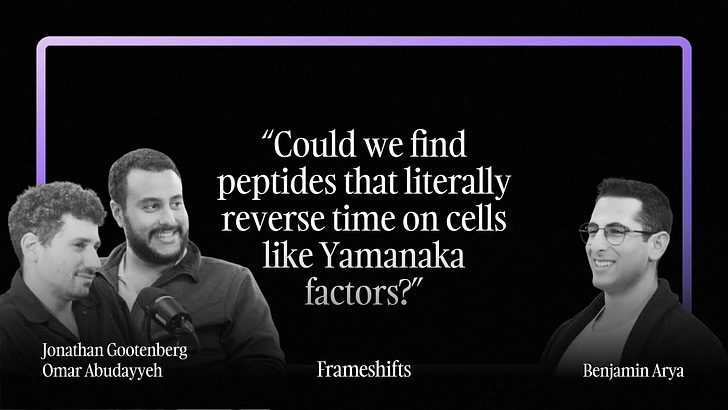
This week, I sat down with Omar Abudayyeh and Jonathan Gootenberg, the co-PIs who helped pioneer the field of genome engineering, and are now leading one of the most innovative and productive bioengineering labs in the world.Omar and Jonathan met as graduate students in the lab of CRISPR pioneer, Feng Zhang. They have since co-authored more than 30 breakthrough papers that helped transform CRISPR-Cas from a basic research tool into a clinically relevant therapeutic and diagnostic modality. Their work has led to the founding of companies like Sherlock Biosciences, Proof Diagnostics, and Tome Biosciences. Their mission is to make biology programmable, and here’s the progress they have already made towards that goal:* EvolvePro: To compress months of directed evolution into weeks by combining protein language models with experimental iteration* STITCHR: For scarless and efficient DNA insertions ranging from a single base to 12.7 kb* PRECISE: For writing RNA of arbitrary length and sequence into existing pre-mRNAs* Virtual Cell: To model cell states and perturbations to predict or control cellular behavior * Secretome Project: To systematically test human secreted peptides for desirable therapeutic phenotypes, like muscle gain and organ rejuvenation.And in case you’re short on time, here’s a quick teaser:Watch on YouTube; listen on Apple Podcasts or Spotify.GUEST INFORMATION:* AbuGoot Lab * EvolvePro * STITCHR* PRECISE* PASTE* X (Twitter): @omarabudayyeh @jgootCONNECT WITH US:* Website* Substack* YouTube* X (Twitter)* LinkedIn* TikTok Get full access to Frameshifts with Benjamin Arya at frameshifts.bio/subscribe
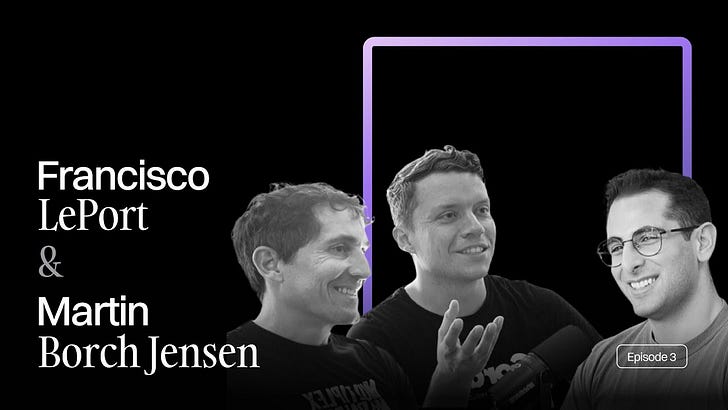
In this week’s episode, I sit down with Francisco LePort and Martin Borch Jensen, the co-founders of Gordian Biotechnology. Gordian is revolutionizing drug discovery by testing where it matters most… directly in living organisms. We discuss their groundbreaking approach of pooled in vivo screening that transforms a single organism into thousands of parallel experiments, and how this could fundamentally change our approach to studying age-related diseases.Francisco and Martin believe that traditional anti-aging drug discovery has been ignoring the biology of aging itself. Instead of testing drugs in mice (equivalent to studying osteoarthritis in 25-year-olds), they are using actual horses that developed arthritis naturally and thus better represent aging as it actually manifests. Their early results suggest we might be on the cusp of a new era where we can finally address the root causes of multiple age-related diseases simultaneously.This episode covers:* Why aging research ignores actual aging biology, and how this kills drug development* How to do the work of 10,000+ animal studies in a single experiment using gene therapy and single-cell sequencing* How Francisco & Martin deliberately “killed their ambition” to go after aging directly* The policy disasters strangling US biotech innovation (and why China’s gaining ground)* How failed clinical trials waste billions in data that never gets analyzedAnd in case you’re short on time, here’s a quick teaser:Watch on YouTube; listen on Apple Podcasts or Spotify.GUEST INFORMATION:* Francisco LePort* Martin Borch Jensen* An Autocrine Signaling Circuit In Hepatic Stellate Cells Underlies Advanced Fibrosis In Nonalcoholic Steatohepatitis* In-Vivo Pooled Screening* Gordion BiotechnologyCONNECT WITH US:* Website* Substack* YouTube* X (Twitter)* LinkedIn* TikTok Get full access to Frameshifts with Benjamin Arya at frameshifts.bio/subscribe
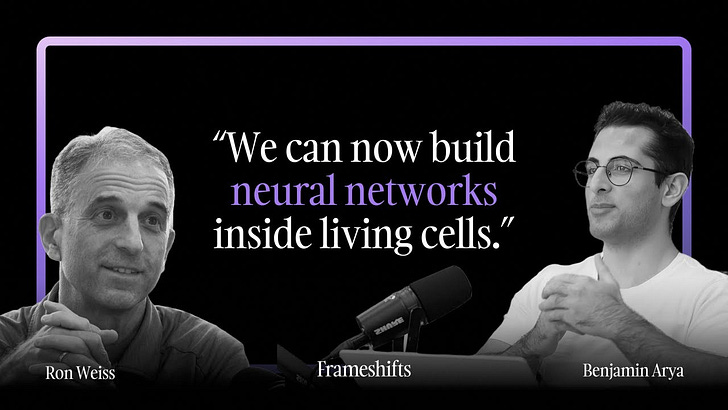
In this week's episode, I sit down with Prof. Ron Weiss, the MIT pioneer who helped create the field of synthetic biology. We discussed the emergence of living therapeutics that can think, adapt, and make complex decisions inside the human body. The implications of this stretch from synthetic cells within implantable biosensors that can produce insulin based on real-time glucose sensing to self-amplifying RNAs encoding gene circuits that specifically detect and kill cancer cells.Ron believes the future of medicine lies in treating biological systems as sophisticated analog computers… systems we can learn to program. While this may still seem like a distant future, the first therapeutic fruits of this approach are already on their way to the market. And in case you’re short on time, here’s a quick teaser on the “REACT” ARPA-H project that Ron’s lab is working on:Watch on YouTube; listen on Apple Podcasts or Spotify.GUEST INFORMATION:* Prof. Ron Weiss* Weiss Lab for Synthetic Biology* Programming gene and engineered-cell therapies with synthetic biology* PERSIST platform provides programmable RNA regulation using CRISPR endoRNases* Synthetic neuromorphic computing in living cells* LinkedinCONNECT WITH US:* Website* Substack* YouTube* X (Twitter)* LinkedIn* TikTok Get full access to Frameshifts with Benjamin Arya at frameshifts.bio/subscribe
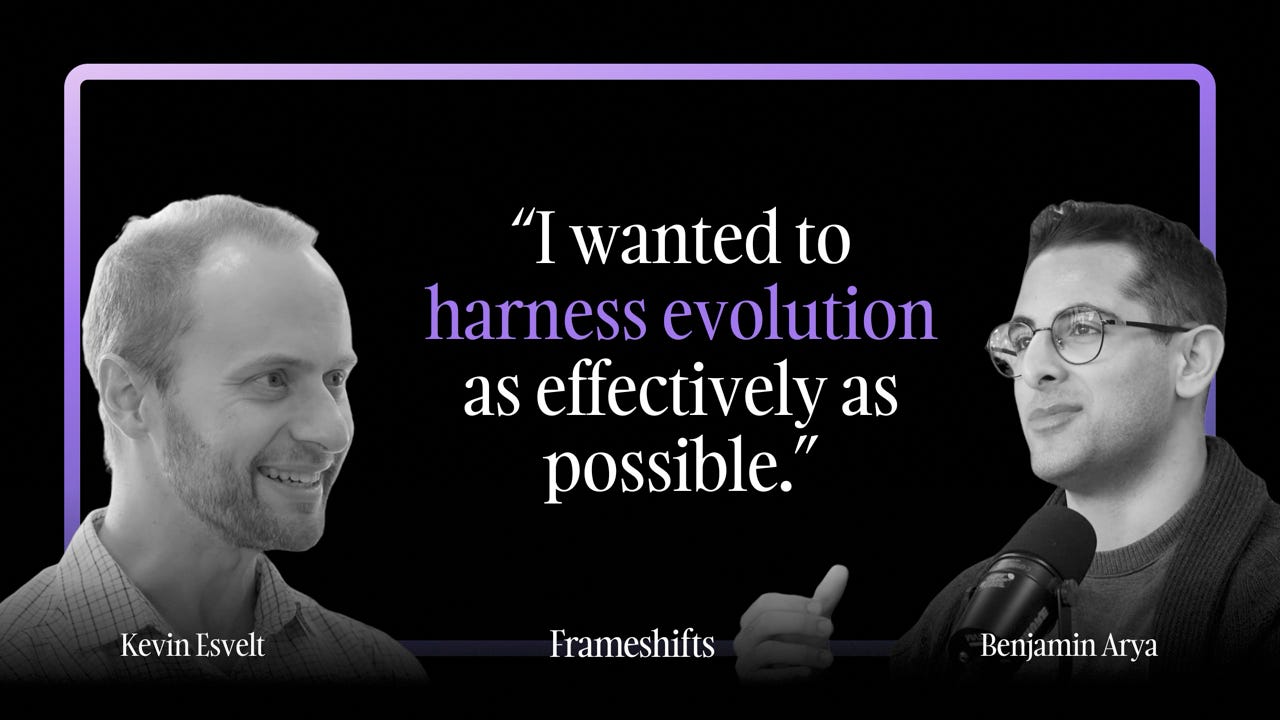
“What I wanted to do was harness evolution as effectively as possible.”In this episode, I sit down with pioneering synthetic biologist Kevin Esvelt. Together, we explore how technologies like gene drives and phage-assisted continuous evolution could help tackle humanity’s toughest challenges, from eradicating malaria to protecting global food security. We also dig into the urgent need to safeguard biotechnology against misuse.This is a conversation about the future of science, biosecurity, and society, and how we can harness biology safely to create a healthier, more equitable world.🔔 SUBSCRIBE so you don’t miss our next conversation! GUEST INFORMATION:Prof. Kevin EsveltSculpting Evolution Group at MITThe Original PACE Paper (Nature, 2011)Gene Drives Paper (eLife, 2014)X (Twitter) CONNECT WITH US:WebsiteSubstackYouTubeX (Twitter)LinkedInTikTok Get full access to Frameshifts with Benjamin Arya at frameshifts.bio/subscribe

Forbes 30 Under 30 honoree, Eldin Rostom, CEO and Co-Founder of Diag-Nose.io, who is pioneering the way forward in the diagnosis of chronic nasal disorders. In this episode, Eldin recounts his journey from participating in the MedTech Actuator Accelerator to being one of the select Australian companies to enter the Creative Destruction Lab in Seattle. This episode explores how Diag-Nose.io employs AI to improve diagnostic accuracy for ENT specialists by analysing biological protein profiles, directly addressing the problem of antibiotic over-prescription.Eldin also shares the personal motivations behind his professional pursuits, including his health challenges and how the impactful loss of loved ones plays a substantial role in shaping one's character and ambitions.Join us as we dive into:The challenges and triumphs of building a MedTech startupThe importance of community and networking in the Bay Area vs. AustraliaEldin’s vision for the future of medical technologyTune in to Insane Ambition on Apple Podcasts, Spotify, and YouTube for this compelling episode and more conversations with experts in technology and innovation. Subscribe via https://insaneambition.beehiiv.com/#business #tech #innovation #leadership #technology #podcast #techshow #startups #insaneambition #podcastA big thanks to Melbourne Connect Co-working, the heartbeat of Australia’s leading innovation precinct, for supporting the production of Insane Ambition and for fuelling the creative spirits that bring our stories to life!Use our discount code "AMBITION" to reserve your co-working space now! Get full access to Frameshifts with Benjamin Arya at frameshifts.bio/subscribe

Meet Joe Foster, founder of Reebok, who revolutionised the sportswear industry by building a multi-billion dollar shoe empire. In this episode, Joe recalls his earliest memories of war, shares stories of his grandfather the cobbler, and recounts founding Reebok as a competitor to his father's inherited shoe brand, eventually growing it into a billion-dollar empire.This episode delves into Joe's philosophies and the "why" behind his success, exploring the strategies and mindset that drove Reebok's rise and providing valuable insights into the world of high-stakes business and brand building.Don't miss this insightful episode on Insane Ambition!Be part of our exclusive community on Apple Podcasts, Spotify, and YouTube, where you can access insightful conversations with industry leaders driving innovation in technology.#reebok #sport #business #innovation #entrepreneur #success #motivation #insaneambition #podcastA special thanks to Melbourne Connect Co-working, the pulse of Australia's leading innovation precinct, for supporting the production of Insane Ambition and fostering the creative spirits that bring our stories to life.Use our discount code "AMBITION" to discover your ideal co-working space now! Get full access to Frameshifts with Benjamin Arya at frameshifts.bio/subscribe

In this episode, we sit down with Ethan Donati, a marketing expert who overcame social anxiety to host some of Australia's largest events. Ethan shares his journey from a shy individual to a prominent event organiser, detailing the challenges and strategies involved in bringing top speakers like Gary Vee and David Goggins to Australia. Tune in as he discusses the nuances of event planning, the importance of personal branding, and key marketing principles that drive success. Subscribe now on Apple Podcasts, Spotify, and YouTube for exclusive conversations with industry leaders driving innovation in business and events.#promoter #businesssummit #events #success #entrepreneur #innovation #insaneambition #podcastA special thanks to Melbourne Connect Co-working, the pulse of Australia’s leading innovation precinct, for supporting the production of Insane Ambition and fostering the creative spirits that bring our stories to life. Use our discount code "AMBITION" to discover your ideal co-working space now! Get full access to Frameshifts with Benjamin Arya at frameshifts.bio/subscribe

Step into the world of startup transformation with Michael Batko, the visionary CEO behind Startmate. With a track record of nurturing 230+ startups valued at over $2 billion, Startmate is a catalyst for entrepreneurial success.Join us as we unravel Michael's journey from consulting to traversing the Amazon rainforest to leading the future of Australia’s startup ecosystem. Don't miss this insightful episode on Insane Ambition! Subscribe now on Apple Podcasts, Spotify, and YouTube for exclusive conversations with industry leaders driving innovation in technology.#startup #technology #innovation #transformation #entrepreneur #success #insaneambition #podcastA special thanks to Melbourne Connect Co-working, the pulse of Australia’s leading innovation precinct, for supporting the production of Insane Ambition and fostering the creative spirits that bring our stories to life. Use our discount code "AMBITION" to discover your ideal co-working space now! Get full access to Frameshifts with Benjamin Arya at frameshifts.bio/subscribe

Joining us is the inaugural chair of Primary Care Research at Royal Melbourne Hospital, Jane Gunn. Known not only as a medical practitioner and PhD graduate, Jane is also the Dean of the Faculty of Medicine at Australia's top-ranked medical school, The University of Melbourne. In this episode, we'll delve into her thoughts on the future of Australia's public health system, the role of innovative technologies, the effects of COVID-19 on the educational system, and the evolving landscape of medical education and research. Tune in to Insane Ambition on Apple Podcasts, Spotify, and YouTube for this enlightening conversation and more discussions with leaders at the forefront of healthcare innovation. Subscribe via https://insaneambition.beehiiv.com/ #healthcare #innovation #covid19 #medical #education #insaneambition #podcast A special thanks to Melbourne Connect Co-working, the pulse of Australia’s leading innovation precinct, for supporting the production of Insane Ambition and fostering the creative spirits that bring our stories to life. Use our discount code "AMBITION" to discover your ideal co-working space now! Get full access to Frameshifts with Benjamin Arya at frameshifts.bio/subscribe

In a world where technology drives rapid advancements, James Fallon, Chief Technology Officer at the Bionics Institute, takes us on a journey through the realms of medical research. From his insights on cochlear implants to groundbreaking developments in neuromodulation for Inflammatory Bowel Disease, James shares his expertise and passion for pushing the boundaries of science.Join us as we uncover James's thoughts on overcoming challenges and embracing personal growth in the science world. Dive deep into his experiences, from pivotal moments shaping his career to the invaluable lessons learned along the way.Tune in to Insane Ambition on Apple Podcasts, Spotify, and YouTube for this enlightening episode and more conversations with industry leaders driving innovation in healthcare. Subscribe via https://insaneambition.beehiiv.com/#MedicalResearch #InnovationsInScience #PersonalGrowth #InsaneAmbitionPodcastA big thanks to Melbourne Connect Co-working, the heartbeat of Australia’s leading innovation precinct, for supporting the production of Insane Ambition and for fuelling the creative spirits that bring our stories to life!Use our discount code "AMBITION" to reserve your co-working space now. Get full access to Frameshifts with Benjamin Arya at frameshifts.bio/subscribe

🎙️Peter Vranes: Skincare, Smart Patches, Medtech, Innovation | Insane Ambition Episode #8Meet Peter Vranes, often likened to a modern-day Nikola Tesla in the realm of health technology. As the co-founder of Nutromics, he's engineering a smart patch biosensor that is revolutionising real-time health monitoring. Peter shares his journey, detailing his initial foray into the skincare industry before gradually shifting focus towards the forefront of medical technology, where he now aims to shape the future.His work challenges us to envision a future where healthcare is transformed by the seamless integration of technology, making us ponder: how close are we to a world where every critical health metric is just a patch away?Tune in to this conversation on Apple Podcast, Spotify, and YouTube. Subscribe to our newsletter for regular updates at https://insaneambition.beehiiv.com/#healthcare #technology #innovation #podcast #insaneambitionA big thanks to Melbourne Connect Co-working, the heartbeat of Australia’s leading innovation precinct, for supporting the production of Insane Ambition and for fuelling the creative spirits that bring our stories to life!Use our discount code "AMBITION" to reserve your co-working space now! Get full access to Frameshifts with Benjamin Arya at frameshifts.bio/subscribe

Ever wondered how blockchain technology can shape our future? Dive into the captivating world of blockchain and fintech with Liam Bussell, Chief Marketing Officer at CloudTech Group, and a passionate advocate for global crypto adoption.Join us as we uncover Liam's journey from humble beginnings with just 3 bitcoins to his role as a thought leader in the blockchain space. Discover his insights on navigating uncertainty, building better user experiences, and the critical steps needed for blockchain to go mainstream.Subscribe to Insane Ambition on Apple Podcasts, Spotify, and YouTube to catch Liam's episode and gain exclusive access to expert discussions on fintech, innovation, and the future of technology.#BlockchainInnovation #FintechInsights #CryptoAdoption #CloudTechPodcast #BlockchainFuture Get full access to Frameshifts with Benjamin Arya at frameshifts.bio/subscribe

Venture capital may sound glamorous, but as Hunter Watkin knows, "statistically, the vast majority of startups will fail.” So how does Hunter, a VC at Rampersand, identify the unicorns among the litany of early-stage startups that slide into his email inbox?For Hunter, being a VC is about much more than just getting a high ROI. It's about empowering wildly ambitious founders to build the future.Follow Insane Ambition on Apple Podcasts, Spotify, and YouTube. Subscribe via https://insaneambition.beehiiv.com.#insaneambition #podcast #entrepreneurship #success #investment #venturecapital Get full access to Frameshifts with Benjamin Arya at frameshifts.bio/subscribe

Harry Al-Wassiti is a visionary bioengineer. More than 14 years after leaving war-torn Iraq, he is now spearheading Australia's mRNA therapeutic program.Harry believed in mRNA therapeutics well before they became mainstream via the Pfizer and Moderna vaccines. In 2019, he published a Medium article advocating for mRNA-based therapeutics just months prior to the COVID-19 pandemic.But new medicines are useless without the ability to build them affordably and at scale.There is this essential marriage of innovation and manufacturing, “We’re developing amazing medicines, but their deployment hinges on solving manufacturing issues.”For a country that too often outsources its most complex manufacturing processes to China and the US, we need someone like Harry in Australia to be thinking about the machine that builds the machine. After all, having mRNA manufacturing facilities within our borders is a national security issue.Tune in to this conversation on Apple Podcast, Spotify and YouTube. Subscribe via https://insaneambition.com/. Get full access to Frameshifts with Benjamin Arya at frameshifts.bio/subscribe

Comments

Download from Google Play

Download from App Store
 United States