


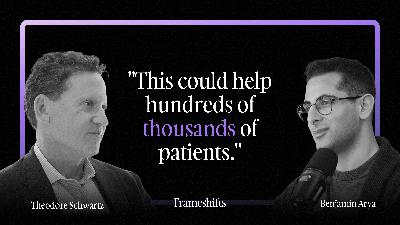
Minimally Invasive Neurosurgery, Brain-Computer Interfaces, and Continuous Pupil Monitoring — Theodore Schwartz
Description
What happens when one of the world’s leading neurosurgeons steps away from the operating room to become a first-time founder? Dr. Theodore Schwartz pioneered minimally invasive brain surgery going through the nose and eyelid instead of opening the skull. He’s published over 200 papers, written a bestselling book on neurosurgery history, and now he’s building a MedTech startup to solve a problem that’s plagued him for decades: there’s no way to continuously monitor a patient’s pupils during surgery.This conversation goes deep. We talk about the psychological weight of knowing you might paralyze 3-4% of patients no matter how good you are. Why it took him 20 years to truly master neurosurgery. The physics problems that keep him up at night. And why he thinks AI will struggle with surgery for a long time, not because of intelligence, but because of how differently humans and computers evolved.We also get into the future of brain-computer interfaces. Ted sits on the scientific advisory board of Precision Neuroscience, and he breaks down exactly how their approach differs from Neuralink and Synchron. Spoiler: it’s about electrodes on the surface of the brain, not inside it, and why that might actually be better for getting high-bandwidth data out.Plus: focused ultrasound opening the blood-brain barrier, targeted immunotherapies for glioblastoma, the doorman who changed his perspective on hard work, and what it’s really like to transition from 40 years of clinical practice to writing FDA guidelines and pitching to VCs.
* Why continuous pupillary monitoring through closed eyelids could revolutionize neurosurgery and ICU care
* The three competing BCI approaches: Synchron (in blood vessels), Neuralink (penetrating electrodes), Precision (surface electrodes)
* Why neurosurgery took 25 years for even the best hospitals to adopt transorbital approaches
* The decision algorithm surgeons use when removing a tumor might blind someone, and why AI can’t make that call yet.
* How Harvey Cushing reduced brain surgery mortality from 50% to 8% and essentially founded the field
* Why grit and curiosity matter more than raw intelligence in neurosurgery
* The transition from practicing clinician to founder: patents, FDA meetings, grant writing, and learning to create value before raising VC money
* Why infrared light passes through eyelids better than visible light (it’s the melanin)
How focused ultrasound might eliminate the need for opening skulls entirelyThis is one of those conversations where you realize how much frontier work is still happening in medicine, and how the people pushing those boundaries think about risk, responsibility, and what it means to literally hold someone’s brain in your hands.
Watch on Youtube; listen on Apple Podcasts or Spotify.
GUEST INFORMATION:
* Theodore Schwartz, MD - Neurosurgeon, Author, Entrepreneur
* Book: Gray Matters: A Biography of Brain Surgery
* Website
* X (Twitter)CONNECT WITH US:
* Website
* Substack
* Youtube
* Tik Tok
Get full access to Frameshifts with Benjamin Arya at frameshifts.bio/subscribe













 United States
