


 Claim Ownership
Heavy Or Not - The O.G. Swim Guide
Subscribed: 0Played: 0
Subscribe

© CC0 1.0 Universal
Description
A thought-provoking and insightful exploration of the intersection of sports, technology, and human potential.
=
Heavy Or Not delves deeper into social issues, such as access to sports, cost of wellness, the impact of technology, and the importance of community engagement.
Heavy Or Not incorporates the evolving role of A.I. in sports training, exploring both the benefits and potential drawbacks of this technology.
The show integrates valuable educational content on swimming techniques, water safety, and environmental issues, making it more than just a sports drama.
From the gritty pools of Pittsburgh to the ambitious rebuild of the Salmon Arm Aquatic Centre in BC, Canada, to the elite ISCA meets of Florida, this inspiring series follows a diverse cast of coaches and swimmers as they navigate the challenges and triumphs of competitive swimming.
=
Heavy Or Not delves deeper into social issues, such as access to sports, cost of wellness, the impact of technology, and the importance of community engagement.
Heavy Or Not incorporates the evolving role of A.I. in sports training, exploring both the benefits and potential drawbacks of this technology.
The show integrates valuable educational content on swimming techniques, water safety, and environmental issues, making it more than just a sports drama.
From the gritty pools of Pittsburgh to the ambitious rebuild of the Salmon Arm Aquatic Centre in BC, Canada, to the elite ISCA meets of Florida, this inspiring series follows a diverse cast of coaches and swimmers as they navigate the challenges and triumphs of competitive swimming.
74 Episodes
Reverse
"From Drowning Stats to Million‑Dollar Swim Schools: How Coaches Turn Pools into Profit (and Safety)‑First Empires" Swim Coaches Can Earn Six Figures by Adding Structured Lesson Sessions The Australian Success Secret: Integrated Lesson Programs Drive Performance and Profit In this episode, Steve Friederang breaks down why every swim coach should run a lesson program—and how it can become a serious revenue stream while boosting safety and recruitment. He shares real‑world numbers, proven strategies, and the pitfalls to watch out for. Why lesson programs are essential for recruiting elite swimmers and keeping kids safe. The financial upside: a simple model that can generate six‑figures annually. How to structure lessons (group size, pricing, scheduling) for maximum profit. Leveraging partnerships with organizations like ASCA and the American Swim Teachers Association. Navigating insurance and legal hurdles to set up a successful swim school. See: https://UCANSwim.org

Safety Dilemma and League Issues. Have mercy on the Foxes as they are sly! In episode #72 of Heavy or Not we break down the bizarre "vote‑of‑no‑confidence" resignation tactic of a Fox Chapel Area high‑school coach and its athletic department. Sure, there is a deeper safety and fairness crisis driving it. Plus, I'm certain some wire pullers are lurking like sly foxes do. We also explore the district's league‑restructuring proposal and why athletic reform matters now more than ever. What you'll learn: How a coach's "negotiated surrender" forces parents to vote on his job. The safety risks caused by extreme roster size mismatches in high‑school football. Fox Chapel's three‑step data‑driven plan to create balanced, safer leagues. Why some districts are considering alternative fall sports like water polo and swim. Ongoing calls for broader athletic reform—from high‑school leagues to college‑level playoffs.

How Insurance Gaps and Governance Failures Threaten Swim Coaches' Careers Uninsured. Unheard. Undervalued. Real challenges facing swim coaches are pondered. Why they're left out of the decision‑making table, the insurance maze, and what's needed to keep the sport of swimming (and others) thriving. Coach Barry Healey, BC, Canada, and Mark Rauterkus, International Swim Coaches Association in the USA, break down the roadblocks and propose concrete steps. Why coaches aren't at the table with health and policy makers. The tangled insurance landscape (LEI, Lloyd's, Marker, SwimBC, Swim Canada, Club Policies) and coverage gaps. Three major risks for professional coaches: intimidation, defamation, and performance issues. Strategies for coach retention, education, and making the profession sustainable. Action items: advocacy, quizzes, and partnerships to drive change in the swimming community. More at the course, CYA at Read.SwimISCA.org. Inside the Coaching Crisis: Insurance Loopholes, Board Exclusion, and the Fight for Fairness. Free CYA Course with additional details is at https://Read.SwimISCA.org

Take a peek at Coach Jonty's holistic approach to athlete development and the geopolitical factors shaping swimming. This clip highlights a few insights from Jonty Skinner's recent WAFSU seminar. In this video you'll learn: How Coach Jonty connects with kids and leverages holistic development. The genetic and regional patterns that produce world‑class runners and swimmers. South Africa's historical impact on elite athletics and its modern swimming scene. Emerging swimming talent from Tunisia and broader African nations. Where to watch the full two‑hour seminar on wafsu.org and how to stay updated. https://WAFSU.org

The Swim Team Song You Didn't Know You Needed An AI Made This Swim Team Song You won't believe what happens when AI writes a holiday anthem for swim teams heading into Christmas break! Christmas Break Planning Happens NOW. Swimmers, this one's for YOU. Episode #68 of Heavy Or Not, The OG Swim Guide drops a brand new AI-generated song to launch your holiday training with serious vibes! This AI-generated track is about to become your new favorite swim team anthem for winter break. Okay, we let AI take over the studio. Do you have room on your holiday training playlist, for travels, for guilt trips, for staying motivated? Happy to give you all something fun to kick off your Christmas season. Don't skip this episode. AI + swim culture = a podcast moment you'll never forget. Steve Friederang drops in to share his wisdom. Thanks to Coach Kile for raising this concern of winter breaks in a prior episodes.
Matt made signs and took them to the recent games and sent a letter to the President of Penn State University to support Terry Smith. It seems like you are under a lot of pressure to deliver a national championship. You may not remember me, but we met briefly in the Marriott lobby the day before the Rose Bowl. You were kind enough to record a quick, encouraging message for my friend's wife while she was battling cancer. That moment stayed with me—and with my friend—for a very long time. That video meant more to their family than you could ever know. From a fan of over 30 years who embodies what it means to be a true Penn State supporter, I'll be brave enough to say this: it is okay if we do not win a national championship. If we define success solely—or even primarily—by that single standard, we risk losing the joy, purpose, and identity of what it truly means to be a Penn Stater. If we stay true to the mission and values Penn State Football has always stood for, the results—and the championships—will come in time. I say that not because I don't want to see Penn State win a national championship in my lifetime. I absolutely do. I say it because of what I've observed across the college football landscape—the game I love—where an unreasonable belief has taken hold among countless fan bases, a belief that has distorted—and in many cases captured—the love, enjoyment, and true purpose of what college football is all about. There is a growing notion that because of the transfer portal and constant player movement, national championships can be won overnight. And if they are not, then the season—and even the purpose of a football program—is labeled a failure. That belief is utterly false. Would it be the worst thing in the world to pause for a moment and reflect on what our true mission is for Penn State Football in this process? Is it to win at all costs? Is it to make every last penny possible? Or is it to build something we can proudly tell our kids—and the next generation—about, something "We Are" proud to protect and build? I've been a Penn State fan for over 30 years. I've collected more than 100 game-worn jerseys, flown all over the country for bowl games, and flown back several times a year while living in Hawaii—often a 35-hour round trip—just to be in Beaver Stadium supporting my team. I also took my son to his first Penn State game at just five months old—the Rose Bowl. Along the way, I've formed genuine relationships with other fans, coaches, and players because my support has always been authentic and rooted in love for this program. Some people know me simply as Matt from pennstatejerseys on Instagram. After tough losses, I still find myself asking a familiar question: Why do I watch Penn State Football? The answer never changes—it's the people, not just the outcome. Every fall Saturday, Beaver Stadium is packed, and "We Are" chants unite this community in a way nothing else can. I also want to be transparent. I am the individual who printed 150 "Hire Terry Smith" signs and personally handed them out at the Nebraska game—followed by another 500 signs at the Rutgers game. I did this for one reason only: to show visible, genuine support for a man who has spent his career serving Penn State without fanfare, leverage, or entitlement. This was not about attention, pressure, or influence. It was about standing up for a coach who does not have a powerful agent shaping his narrative, who is not represented by a major agency, but who has consistently served this university with humility and loyalty—without asking much of anything in return. It was a simple gesture of respect—for service, commitment, and belief in what Penn State Football is supposed to represent. I want my children to care deeply about things—and to see that their father did everything he could to stand up for someone he believed needed a true voice, simply to get the conversation started about being seriously considered for this job. Over time, the bigger picture has become clearer to me, and that clarity has only made Penn State Football more meaningful. Purpose Before Position: We tell Penn State students—and our kids—all the time: find something you truly love, and you'll never work a day in your life. When someone is driven by passion and purpose, that energy leads not only themselves, but everyone around them, toward success. The opposite is also true. When someone is motivated primarily by money, titles, promotions, or simply the next job on the résumé, they often find themselves stuck in a constant cycle—one that is never fully satisfying and never deeply purposeful. When I look around college football today, that is exactly what I see in many coaching searches and coaching careers. Too often, coaches are not building something—they are chasing something. The result is constant turnover, fractured locker rooms, and programs that never quite know who they are. Purpose matters. Motivation matters. And who a leader is when no one is watching eventually shows up everywhere. Culture, Fit, and Why It Matters More Than Ever: One of the biggest mistakes across college football today is schools cycling through head coaches like cheap shoes—constantly chasing the next résumé, the next scheme, the next quick fix—while ignoring the most important characteristic of a head coach: the ability to understand culture, lead people, mentor, and motivate young boys into men. As the saying goes in business, culture eats strategy for breakfast. College football is no different. Look at Kirby Smart at Georgia. He played there. He understands the expectations, standards, and identity of that program. His success is amplified because his leadership is rooted in authentic connection—something that cannot be replicated by someone passing through. The same is true with Brent Key at Georgia Tech. He played there. He knows the institution. The culture he is rebuilding is credible because it's personal—and it's working. And consider Kalani Sitake at BYU. He played there, served a mission, and embodies the values of the school. His ability to lead, motivate, and develop young men is amplified precisely because he fits the culture. In every one of these cases, coaching ability is magnified by cultural alignment. These leaders are not installing culture—they are living it. That brings me to Penn State. Terry Smith is Penn State. He represents service, success, honor, integrity, humility, and stewardship. He understands what it means to lead young men at this university—not just as athletes, but as people. He has earned trust through years of quiet, consistent leadership. He mentors. He motivates. He holds standards. And he treats coaching not as entitlement, but as a privilege. In an era when college football feels increasingly transactional, Penn State has the opportunity to choose alignment over impulse—leadership over trend—culture over constant churn. If you choose to hire him and give him the time and opportunity to lead, and for some reason it ultimately does not work out, you will still have my full support—and the support of the people who matter most—to make another hire. You should not be held to the same unreasonable, reactionary standards that athletic directors across the country are holding themselves and their coaches to. No one is asking for promises or guarantees. We are simply asking for an opportunity; an opportunity to let a leader who understands this program, this culture, and this responsibility be given a chance to succeed. History shows us that the greatest athletic directors and leaders—the ones who are ultimately remembered—are those who had the courage to take chances and the conviction to believe in their own people. In Closing: Dr. Pat Kraft, you have a unique opportunity in front of you—one that very few athletic directors truly recognize while they are living it. By choosing to prioritize culture and purpose over short-term pressure and outside noise, you have the chance to build something at Penn State that endures far beyond any single season, record, or headline. If you choose that path, it will define your legacy here in a way championships alone never could. While many of your peers across college football continue to miss this moment—cycling through coaches, chasing trends, and slowly losing their identity—you have the opportunity to lead differently. To protect what makes Penn State special and to build something rooted in belief, alignment, and integrity. That kind of leadership does more than shape a program; it leaves a lasting legacy—one that your family can be proud of long after your time in this position has passed, and one that will be remembered at Penn State for generations. From a fan who cares, Matt Wolosz
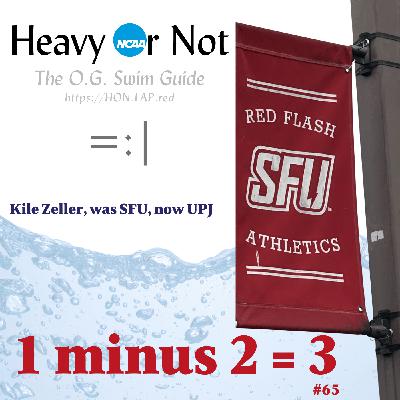
Now at UPJ and focused on recruiting with a local priority but international hopes. Building a Competitive Swim Program at UPJ: Scholarships, Recruiting, and Team Culture From Tears to Triumph: How St. Francis Swimmers Stayed Strong After Division Change There is no playbook on that heavy administrative downgrade. The Coach‑Athlete Relationship: Trust, Recovery, and Performance in Collegiate Swimming Balancing Academics and Athletics: Affordable Tuition and Scholarship Strategies at UPJ Recruiting with Heart: Why Coach Zeller Prioritizes Team Fit Over Finances Taper Strategies Across Sports: Lessons from Wrestling Applied to Swimming Success Embracing D3 Opportunities: Why St. Francis's Division Drop May Benefit Swimmers Inside a Growing Swim Team: Challenges, Bus Rides, and Community Support at UPJ Staying Present in a Distracted World: Coach Zeller's Advice for Young Athletes Coach Kile Zeller talks about the heavy news from the shift and St. Francis' move to Division III. He was in the process of getting hired as the new and original coach at Univ of Pittsburgh Johnstown, of D2. Learn how a funds its swim team, and what his day‑to‑day coaching philosophy looks like. He also shares insights on recruiting, athlete‑coach relationships, and campus collaboration. The transition of St. Francis from D1 to D3 and its impact on swimmers UPJ tuition costs, academic aid, and the limited athletic scholarships available Recruiting approach: honesty, fit, and keeping athletes on campus for the long term Coaching style: trust, communication, recovery work, and individualized stroke analysis Cross‑sport support at UPJ: working with wrestling, soccer, compliance, and campus resources
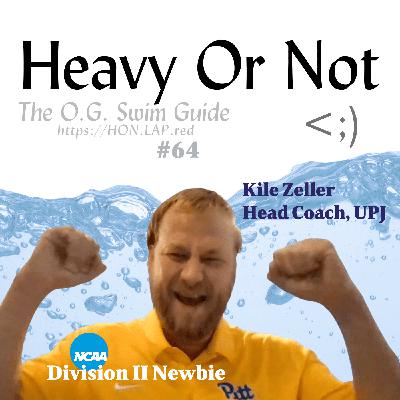
Life at University of Pittsburgh Johnstown: Campus Beauty, Close‑Knit Community, and Opportunities for Athletes Get a behind‑the‑scenes look at Coach Kyle Zeller's first year building a D‑II men's & women's swim program at UPJ— from historic PSAC meet wins to the next‑gen recruiting playbook. Watch how he turns a modest pool into a squad where the person comes first. He is keeping student‑athletes front of mind. What's Covered: Building a competitive PSAC program and historic meet qualification Recruiting tactics: internal talent, high‑school stars & value propositions Marketing & outreach: podcasts, local media, coach networking Campus & facility snapshot: 25‑yard pool, Appalachian views, small‑school perks Break‑time training, student‑athlete balance & growth roadmap for 2026 / 2027 Some mentions in this, part one of three, episode, #64 of Heavy Or Not, The OG Swim Guide: The PSAC is fast – our UPJ swimmers just made history with our first PSAC qualifier, Mark DePalma, who smashed the cut by two seconds. Recruiting started late April 2025, but we've already secured the valedictorian of Marion Center High, a 4.8‑GPA swimmer, as our inaugural college recruit. We're promoting the men's and women's teams across PA, hitting high‑school meets, club events, and even a Fox 8 interview to spread the word. Our facility is a basic six‑lane, 25‑yard pool with stunning Appalachian Mountain views, fresh tiling, and a million‑dollar recent renovation. Campus life: 729 acres of woods, ski‑chalet dorms, top engineering and nursing programs, and a close‑knit community where the AD knows every student's name.

Elite coaching isn't a myth. It's a choice and science built on relentless work, crystal‑clear goals, and total alignment of mind, heart, and body. In this episode of Heavy Or Not, The OG Swim Guide, #63, we break down some of the bits of what it takes to train like the world's top athletes. What "elite" really means and why it's a whole different universe from ordinary competition The brutal training load: 12 sessions/week, 6 hours/day, 24,000 m of swimming daily The three‑key framework: mind (goal clarity), heart (inner drive), body (smart recovery) The seven pillars of elite coaching—from active listening to adaptive programming The deeper motivators beyond money: honor, legacy, and self‑mastery The Brutal (and Beautiful) Truth About What It Really Takes to Be Elite in Sport Also see the full seminar called Elite Coaching, level 1, from Dennis Antonio Cordova in the course at WAFSU.org. From Vision to Victory: Craft Crystal‑Clear Goals for High‑Performance Success Subscribe to this podcast and share with others.

Swimming Mechanics: Heavy Or Not, The OG Swim Guide The Science of Speed: Unpacking Resistance and Propulsion in Elite Swimming Doctor Ernie Maglischo is an ISCA & ASCA Hall of Fame Coach and still updating his most recent ebooks. Understand the biomechanics of swimming and explore how elite athletes generate propulsive force and minimize water resistance in the pool. Drawing on expert analysis, we examine the fundamental characteristics of water flow, classifying water as a semi-solid whose density is over 800 times greater than air. Learn how competitive swimmers battle resistive drag—including form drag (profile drag) and lateral form drag—by maintaining laminar flow and optimal horizontal alignment. This analysis confronts common misconceptions in stroke mechanics: • Is Hip Rotation Propulsive? We challenge the popular notion that hip rotation is a source of propulsion in long-axis strokes (like the front crawl), arguing instead that it primarily serves to reduce water resistance and increase the effectiveness of arm and leg propulsion. • The Best Arm Stroke: Compare the controversial deep-catch, straight-back pull (which some researchers suggest is superior for generating propulsive thrust) with the widely preferred curvilinear stroking and shoulder adduction used by the majority of elite swimmers in all four competitive strokes. We explore why the shoulder-adducting style may be universally used in longer events, while the deep catch may be superior for sprints (50m/yd). Discover the true sources of speed: • Vortex Theory: Understand how swimmers create vortices and a pressure differential to propel themselves forward. Propulsive thrust is generated because the pressure on the palm side of the hand is higher relative to the dorsal side, where pressure decreases due to vortex formation. • The Catch: Learn why elite swimmers intentionally decelerate their hand speed to near zero during the crucial catch phase, positioning the arm backward before applying propulsive force. • Wave Propulsion: Investigate unique propulsive concepts like wave propulsion (or "body wave") and the importance of undulation in short-axis strokes (butterfly and breaststroke). See how breaststrokers like Mike Barrowman utilize streamlined positioning during the arm recovery to benefit from this wave phase, accelerating continuously for a short time. The analysis in the ebook uses visualizations, including actual photographs of elite swimmers like Grant Hackett, Martin Lopez-Zubero, Mary T. Meagher, and video simulations/CFD renderings of water flow around limbs. Get the ebook from the link at SwimISCA.com.

From Locker Room to Loyalty Loop: The Sports Marketing Journey of Purpose. Coaches must handle the technical side, the physical side and all the Xs and Os. But let's Think again about sports marketing. Dr. Olena Timasheva, sports marketing professor in the university presented to the international audience at WAFSU.org and was able to reveal the coaches roles in digital strategy, sponsorship, and fan engagement. More than motivators, coaches today are key to driving revenue, fan connection, and team brand identity. Blending the intensity of the game with the science of segmentation is where coaching meets modern sports marketing. Get all the slides, discussion questions and the full 70-minute seminar in the free course at https://WAFSU.org -- World Aquatic Federation for Schools and Universities. In episode #61 of Heavy Or Not, The OG Swim Guide, we peek into the playbook for turning a local sports team into a global brand. Learn the proven framework that top clubs like Liverpool and Manchester City use to drive fan loyalty and revenue. The three‑pillar framework: market segmentation, research & targeting, and the 80/20 loyalty investment rule. How to segment fans by demographics, geography, psychographics and behavior for maximum impact. Digital tactics that work: social media two‑way dialogue, user‑generated content, and hyper‑personalized email campaigns. Building authentic sponsorships and partnerships that align with your brand's core values. The top three challenges facing sports marketers today: tech & data privacy, shifting fan preferences, and economic/social issues. This episode is just a short invite to explore the full seminar by Dr. Olena Timasheva of the Ukraine. How do your Coaches, Players, and Data Drive Loyalty‑Focused Marketing in your Sports Organizations? We want to hear from you. Keywords: sports marketing, coach role, market segmentation, age groups, gender targeting, income levels, geographic segmentation, psychographic segmentation, behavioral segmentation, loyalty tiers, branding, brand identity, brand positioning, brand loyalty, marketing mix, product price place promotion, digital marketing, social media, content marketing, email marketing, fan engagement, loyalty programs, sponsorship partnerships, community outreach, case study Liverpool, case study NBA, case study Manchester City, case study NFL, case study Barcelona, case study Manchester United, case study Red Bull, case study Under Armour, Ukraine sports market, low income audience, high income audience, mid income audience, fan demographics, fan psychology, community-driven fans, status seekers, VIP experiences, family packages, merchandise strategy, interactive technology, virtual events, customized sponsorship, ROI metrics, marketing challenges, trends
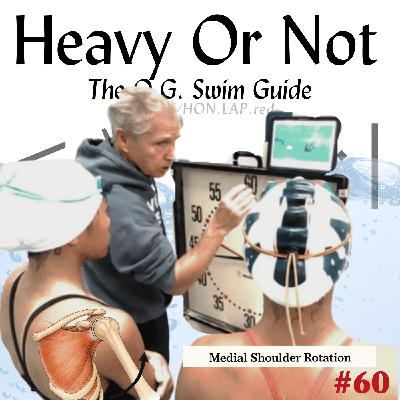
Hidden Biomechanics of Shoulder Medial Rotation That Separate Good Swimmers From Great Alert: This episode is better if viewed with the video due to the descriptive words used by Coach Steve. See: https://youtu.be/VazazjPHUOc?si=rXhOX8V5liI-Uc-N Swim faster by mastering shoulder medial rotation. Coach Steve Friederang breaks down why this subtle cue makes or breaks your pull in all four strokes. Join Coach in a lesson with two aspiring swimmers and hear how he thinks and explains this vital move. Why medial shoulder rotation is the key to an early vertical forearm and a powerful catch. How outward‑rotated shoulders prevent forward pull and waste energy. Visual cues to spot improper rotation on the deck and in video. Practical drills to train the rotator cuff for inward shoulder positioning. How balanced shoulder‑rotator strength affects stroke efficiency and injury prevention. Join Coaches, Steve Friederang and Mark Rauterkus on a weekly chat at 1:30 pm EASTERN every Wednesday. We're online and your input is welcome as well. Use the link at the correct time! https://HON.LAP.red https://Meetn.com/wafsu
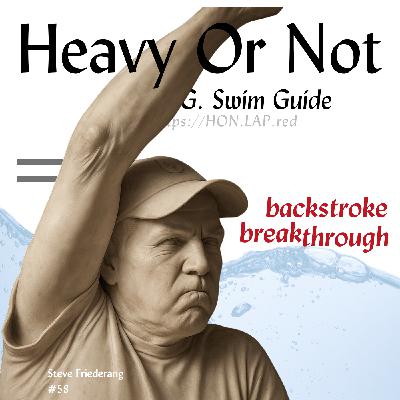
Coach Steve Friederang unpacks a technique with private-lesson athletes that's bending by-gone rules without breaking them. Could this be the biggest backstroke breakthrough since dolphin kicks off the wall? In this episode of Heavy Or Not - The OG Swim Guide, biomechanist and elite swim coach Steve Friederang breaks down a newly misunderstood, and presently underused, backstroke finishing technique in forward thinking swimming: the underwater kicking returns at the finish for speedy backstroke. With a recent rule change allowing swimmers to submerge in the final 5 meters of a backstroke race, Steve shares how he's helping top-tier athletes legally use dolphin kicks all the way to the touch on the wall, and gain a serious edge. You'll learn: Why this backstroke rule exists (and how it's misunderstood) How elite swimmers train underwater finishes without losing speed The biomechanics behind maximizing your dolphin kick Drills, tools, and safety tips to train like a pro Real results from swimmers dropping seconds, not tenths Whether you're a coach, swimmer, or swim parent, this episode is packed with practical insights and race-changing techniques. Subscribe to catch our weekly swim strategy sessions and training deep dives. New episodes are going to be open for live discussions every Wednesday at 1:30 PM ET. Got questions or ideas? Drop them in the comments. We might feature them next week! Opt in at https://HON.LAP.red or else at Steve's Competitive Swimmer magazine. Transcript in PDF.

In this episode of Heavy Or Not, The OG Swim Guide, we discuss why insurance coverage is a critical need for swimming coaches and how Barry Healey with ISCA and the BC Swimming Coaches Association are working on the discovery for solutions to fortify the profession and passions of coaches. What you'll learn: What if every coach had $1‑2 M in liability insurance and lawyer support. Let's consider all the modern risks of going uninsured. Real‑world scenarios that have cost coaches financially and mentally. How advocates are negotiating insurance options and potential membership fees. Plans for a joint venture to embed insurance education and mental‑health training into coach certification. How you can get involved – sign up on the Heavy Or Not form to stay informed and help shape the solution. Turning Insurance Into Retention: Keeping Coaches in Competitive Swimming and Sport
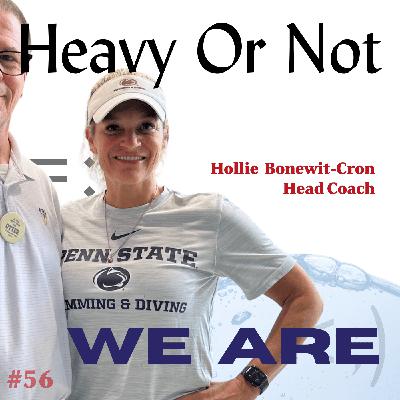
Catch the latest deep‑dive with Penn State swimming head coach Hollie Bonewit‑Cron as she breaks down recruiting, training schedules, and the evolving college‑swim landscape. From dual‑meet highlights against Pitt to her career path and future plans, get the key takeaways from a clinic to coaches when she was in her first season as the head coach in Happy Valley. In this video you'll learn: How Penn State structures its practice groups, pool assignments, and daily training blocks. The current recruiting pipeline, international talent, and scholarship timelines for the classes. Holly's coaching philosophy on culture, accountability, and balancing academics with athletics. Insights on the transfer portal, roster caps, and how the program navigates NCAA rule changes. A quick recap of Hollie's career journey, from Athens, Ohio, and an OU swimmer to coaching as a Florida assistant and then to Miami of Ohio to Penn State head coach. Penn State Swimming's Fresh Vision: Coaching, Recruiting, and Culture Under Hollie Bonewit‑Cron Questions from the audience too. Managing Burnout, Time, and Recovery for Elite College Swimmers at Penn State

Is USA Swimming Holding the Sport Hostage? USA Swimming's data drama is setting the sport back decades — and it's hurting athletes, families, and innovation. Here's what they're not telling you... Why Swim Times Are Disappearing Imagine training all year only for your swim times to vanish into thin air. This podcast exposes the growing blackout and the fight for data transparency. The Swim Data Crisis No One Is Talking About Developers are quitting. Parents are confused. Swimmers are in the dark. The future of competitive swimming depends on solving this data nightmare. In this candid conversation we hear about the growing crisis around swim meet result data—why PDF‑only posting is hurting athletes, coaches, and developers. Michael Krone explains the barriers, the mis‑interpretations of privacy rules, and what's on the horizon. What you'll learn: Why parsing PDFs for meet times is a dead‑end solution for the sport. How LSEs misread USA Swimming's privacy policy and are removing raw result files. The impact on third‑party tools like MySwim IO and Swim Standards. USA Swimming's planned API rollout (estimated 4‑5 months) and its limitations. Action steps for coaches, parents, and developers to push for open, accessible meet data.

After repeated requests, this single is being lifted from the rewind show, #50, at the end of season one and put into its own episode. CDs were pressed and offered at The Eastern States Clinic and elsewhere, but too few have CD players. Go figure. Enjoy the tune delivered by recycled electrons. Its message is a calling for you to do a complete rewind of the prior episodes. Binge on the content and skip into the future with confidence! But no running on the pool deck. This song shows what happens when AI writes a track for a gritty show about real human struggle in swimming and coaching. Heavy Or Not: The Single is a machine-made, vintage-inspired musical experiment that hits like a lost 45 RPM classic—pressed with purpose, soaked in soul, and spun by artificial intelligence. This isn't just another song release. It's what happens when emotion meets algorithm. And it's about to change how we think about music, storytelling, and tech. Want to feel vintage vibes without breaking the bank? Ever wonder what it sounds like when AI creates art that hits you in the gut? Think old-school records are dead? Let this track prove you wrong. If you love real music with a twist you won't see coming—keep listening. Warning: You may not believe a machine made this… Whether you're a nostalgic crate-digger, a future-focused creator, or just someone who loves a good story set to music—this one's for you. Hit play. Heavy Or Not… you decide. And, let us know. If you want help in crafting your own song for your team, an ISCA travel meet, senior night or the team banquet, then subscribe and then attend our roundtable discussions. We would love to share your song in a future episode. #preach #sing #coach #play

New Roundtable Series for for Aquatic Professionals and Coaches: Insurance, Intellectual Property, Technology, Fun & Games, and Broadcasting What Every Coach Needs to Hear From the OG Swim Guy Coach Mark Rauterkus breaks down new coaching resources, roundtables, and media opportunities for swim professionals. Watch to learn how you can get involved, access free content, and stay ahead in the industry. Overview of the five weekly roundtables: CYA (insurance), IP in the pool, Tech, Fun & Games, and Broadcasting. Details on WAFSU.org webinars and seminars for schools, universities, and international coaches. Pathways to present your own content on the podcast or at roundtable events. Quick look at the TV show vision and some related media projects (Apple TV's "Stick," local Pittsburgh shows). Got ideas? Live from the Eastern States Clinic – Featuring Mark Rauterkus Get ready to rethink community and what you thought you knew about swim coaching. In this episode of Heavy or Not, Mark Rauterkus — the OG Swim Guy and ISCA webmaster — drops five powerful ideas that challenge the status quo of competitive swimming, youth sports, and coach development. From water safety to podcasting, tech tools to mental health for young athletes, this talk at the Eastern States Clinic is packed with insight, experience, and vision for the future of aquatic leadership. Topics Covered: The future of swim education Tech innovation in coaching Mental skills training for young athletes Live streaming and media in aquatic sports The global coaching community via WAFSU Whether you're a high school swim coach, swim parent, or athlete — this is a must-listen. Subscribe to the podcast: https://HON.LAP.red Learn more at ISCA: https://swimisca.org Full archive of episodes available wherever you get your podcasts. #SwimCoach #SwimmingPodcast #MarkRauterkus #EasternStatesClinic #HeavyOrNot #AquaticLeadership #ISCA #SwimTraining #YouthSports
This episode of Heavy Or Not, The OG Swim Guide, jumps into a podcast from friend and we replay a recent releaseof Navigating Neva. We had a sit down interview with Nicole and Wes -- and myself, Mark Rauterkus. The coach, podcaster, and ISCA contributor comes gushing about and we explore how swimming, water polo, and tech are reshaping aquatics today. We cover: How Mark launched the "Heavy Or Not" podcast and his vision for expanding its reach. Using water polo to keep swimmers engaged and create a pipeline for lifelong aquatic participation. Mark's diverse coaching background—from high‑school and college pools to community programs and the Pittsburgh Public Schools "Summer Dreamers." The role of the International Swim Coaches Association (ISCA) in hosting meets, providing education, and upcoming AI‑driven tools. Practical AI & CRM solutions that streamline pool operations, sponsor outreach, and coach‑parent communications.
It is a great time to be alive and there are some cliff hangers within! David, a devoted athlete turned Doctor and researcher is deploying AI in off-brand discoveries. This is a peek at a MUST HEAR podcast from another source, Radiolab. Experience a flashback to tracks from a campaign CD with a fall baseball story from Meg Barnhouse. It is chilly and dark under the lights and parents are watching. In the final segment, new USA Swimming CEO issued his first statement that lost me on the "one of" part. May the wind be at his back. Show pointer: https://radiolab.org/podcast/the-medical-matchmaking-machine A quarterback's love of football turned into a medical mission after his mom's brain cancer diagnosis, and now AI is helping him chase new treatments. Listen to the full conversation for the highs, the lows, and the tech driving the fight. David's roller‑coaster journey from college quarterback to aspiring oncologist. The impact of his mother's grade‑4 glioblastoma and the promise he made to her. How athletic discipline translates into medical study and research. AI‑powered drug repurposing and off‑label uses discussed in the Radiolab interview. Meg Barnhouse story, Diamonds, was included in a past campaign CD when standing for public office. She gives a parent's perspective on fall baseball. A quick look at USA Swimming's new CEO, AI‑generated remarks, and the broader conversation about sports, health, and technology. He lost me at "one of" -- as it is THE best and ONLY sport! Pretty transparent isn't "ALWAYS Transparent." Rather than quck and fast meetings, try long, slow and hard meetings that happen soon. Grassroots is good! May the wind be at his back, and the BS be already sucked into the pool's filters.

Comments

Download from Google Play

Download from App Store
 United States