


 Claim Ownership
Leaving Academia: Becoming a Freelance Editor
Subscribed: 5Played: 81
Subscribe

© Paulina Cossette
Description
In 2019, I was a political science professor who was fed up with the stress and hostility of academia–not to mention the low pay. I left my tenure-track job and went from barely surviving to thriving as a freelance academic editor. Today, I own Acadia Editing Services, an editing and coaching business that brings in six figures a year.
In this podcast, I’ll discuss the challenges of academia, what academic editing involves, and what life as a freelancer looks like. If you’re willing to jump outside your comfort zone, it IS possible to find joy, true flexibility, and a profitable and rewarding career as an academic editor.
Hosted on Acast. See acast.com/privacy for more information.
65 Episodes
Reverse

🔥 Burned out in academia? Wondering how to turn your PhD into a flexible, fulfilling business?Cara Jordan did just that—and in this episode, she reveals how she went from freelancing for artists in NYC to founding Flatpage, a thriving academic editing agency and publishing house.So many academics feel stuck, exhausted, and unsure how to market themselves beyond word of mouth.Cara shares exactly how she marketed her editing services, grew a team, and expanded into publishing—all while navigating relocation, burnout, and the challenges of marketing to academic clients.Today, Flatpage serves a wide range of humanities and social science scholars. Cara teaches in the UCSD editing certificate program and co-edited the fabulous book, The Art of Academic Editing.In this episode, you’ll learn how to attract clients, overcome fear of visibility, and build a sustainable editing business—even if you're starting from scratch.Resources Mentioned:Flatpage: https://www.flatpage.com/UCSD Copyediting Certificate: https://extendedstudies.ucsd.edu/certificates/copyeditingBook: The Art of Academic Editing (affiliate link): https://amzn.to/48uH30uWant to end burnout and become an academic editor or coach? Go to AcadiaEditing.com/BecomeAnEditor00:01:00 - Cara's Academic Background 00:02:30 - Early Freelance Experience 00:04:00 - Transitioning from Academia to Freelancing 00:05:30 - Initial Client Acquisition 00:07:00 - The Importance of Word of Mouth 00:08:30 - Marketing Strategies for Editors 00:10:00 - Overcoming Marketing Hesitations 00:11:30 - Networking and Community Engagement 00:13:00 - Challenges of Marketing to Academics 00:14:30 - Creative Approaches to Finding Clients 00:16:00 - The Importance of Niching Down 00:17:30 - Growth of Cara's Editing Business 00:19:00 - Starting Flatpage and Team Expansion 00:20:30 - Differences Between Copy Editing and Developmental Editing 00:22:00 - The Value of Formal Editing Training 00:23:30 - The Role of Academic Background in Editing 00:25:00 - The Need for Professional Development 00:26:30 - Advice on Working for Free 00:28:00 - The Decision to Add Publishing Services 00:29:30 - Advocacy Through Publishing 00:31:00 - Final Advice for Aspiring Editors Hosted on Acast. See acast.com/privacy for more information.
Burnt out by content creation? Glued to your phone, cranking out posts that barely get engagement? You're not alone—and there’s a better way.Academics starting their businesses often fall into the trap of chasing social media trends—thinking they have to do Reels, show up daily, and perform for the algorithm.In this episode, I walk you through a step-by-step system that simplifies content creation by drawing on your academic strengths—writing, planning, and strategic thinking.This is the exact system I've used to create a month of content in a few hours—and stay off the content hamster wheel that leads to burnout.You’ll learn how to brainstorm blog topics, batch-write posts, repurpose them for social media, and even delegate to AI (ethically and efficiently). If content has ever felt overwhelming, this is how you can simplify.🎧 What You’ll Learn:Why Instagram-style content isn’t effective for academic businessesHow to repurpose blog content into multiple social postsA 3-step batching system that saves hours of timeTips for using AI tools (like Claude and ChatGPT) without losing your voiceHow to avoid burnout and still show up online📚 Resources Mentioned:Ep 39 of my podcast with SEO expert Laura Jawad📣 Want to end burnout and become an academic editor or coach? Go to AcadiaEditing.com/BecomeAnEditor00:00 - Target mindset shift away from fleeting social media engagements. 03:40 - Choose where to spend time online based on ideal client presence. 04:02 - Brainstorm topics based on client questions to improve SEO. 05:14 - Create a list of five to ten questions, select the top four. 06:27 - Draft short blog articles, aiming for 1000-1500 words each. 11:48 - Avoid task switching; focus periods for each content creation step. 13:24 - Repurpose blog posts into social media content for consistent messaging. 15:07 - Use excerpts from blog articles for engaging LinkedIn posts. 19:05 - Use AI tools for drafting social media posts based on articles. 21:14 - Expect low visibility; only a small percentage of followers will see posts. 25:38 - Schedule blog articles in advance for consistent content delivery. 30:05 - Implement a systematic approach for efficient content creation over time. 31:26 - Protect your energy; pace content creation to avoid burnout. 32:57 - Focus on platforms that resonate with your target audience. 35:02 - Success isn’t based on follower count but on client conversion. 36:17 - Prioritize driving engagement toward your email list for control. 37:17 - Understand that building a brand takes time and effort. 37:55 - Practice will help refine your brand voice and messaging. 39:02 - Utilize support resources like coaching when growing your business. 39:44 - Explore educational opportunities for aspiring academic editors. 39:52 - Each step in content creation contributes to your professional growth. Hosted on Acast. See acast.com/privacy for more information.

Are you afraid to leave academia because you've “invested too much” or feel like it’s “too late” to start over? In this episode, master life coach and midlife mentor Suzy Rosenstein shares how to regret-proof your life, especially if you’re over 50 and stuck in a career that no longer fits.Suzy left a 27-year career and built a thriving coaching business—proof that it’s never too late to pivot.If you're in midlife and wondering “is this all there is?”, this episode is your wake-up call.We cover:☑️ Why being stuck isn't just painful—it's costly☑️ How identity and fear keep us trapped in academia☑️ Simple mindset shifts to help you imagine a new future☑️ How Suzy used coaching to get unstuck and build a business☑️ Why it’s okay (and essential) to want more🎧 Whether you're thinking about leaving your faculty role, building a side hustle, or just feeling “off,” this is a must-listen for anyone craving more clarity and freedom in midlife.RESOURCES MENTIONED:Suzy Rosenstein's podcast: Women in the MiddleTake Suzy's Midlife Quiz: https://midlifequiz.comSuzy's coaching site: https://suzyrosenstein.comConnect with Suzy on Instagram: https://www.instagram.com/themidlifecoach_suzy🎯 Want to end burnout and become an academic editor or coach?Go to AcadiaEditing.com/BecomeAnEditor02:23 - Personal transformations during midlife are common and necessary10:00 - Detaching from academic identity is a significant challenge11:12 - Rethinking identity can offer opportunities rather than a crisis17:09 - Understanding the cost of staying stuck is crucial19:00 - Prestige in academia does not equate to personal fulfillment20:06 - Journaling helps examine limiting beliefs . 24:21 - Imagining success can counter fears of failure 25:24 - Exploring alternatives can unveil unexpected career options . 29:28 - Engaging in curiosity without immediate action is valuable . 31:27 - Identifying perspectives about potential career changes is critical . 33:01 - Solidifying your what is essential before determining how . 34:42 - "I'm open to the idea that" promotes exploration of possibilities . 36:32 - Transitioning from academia to business fosters community connections . 39:04 - The online entrepreneurial world offers diverse opportunities . 40:57 - Group coaching can enhance the transition experience . 41:36 - Taking advantage of midlife opportunities can be life-changing . 42:11 - Personal stories of resilience in entrepreneurship are inspiring . 42:44 - Midlife quizzes and exploration can clarify future desires . 46:29 - Embracing a beginner's mindset is essential for growth Hosted on Acast. See acast.com/privacy for more information.
Why does investing in your academic business feel terrifying?You've spent tens of thousands of dollars on your education—but when it comes to starting your academic editing or coaching business, you're trying to do it with zero investment, zero tools, and zero support. Why?Because academia trained you to survive on scraps.This week, I’m breaking down:💡 Why investing feels so risky for academics💡 How to shift into a true ROI (return on investment) mindset💡 What I did wrong at first (and how I changed my strategy)💡 Small, high-impact investments that can save you time and land you clients fasterIf you're tired of spinning in circles and trying to figure it all out yourself—this episode will help you take that first powerful step toward a business that actually pays you (well!) and gives you your life back.👇 Resources mentioned in this episode:PerfectIt editing software: intelligentediting.comBeefText: beeftext.orgTextExpander: textexpander.comWant to end burnout and become an academic editor or coach? Go to AcadiaEditing.com/BecomeAnEditor00:00 - Introduction of the topic about money in business. 00:52 - Importance of investment in your business, not treating it like a hobby. 03:28 - Academia teaches resourcefulness, not investment. 04:07 - Spending on your business is a responsible choice. 04:49 - You need tools and support to build a successful business. 06:10 - Reclaiming agency as a business owner is essential. 07:07 - Invest in learning how to run a successful business. 11:55 - DIY mindset keeps you stuck; investing buys back your time. 12:29 - Shift to an ROI mindset to think like a CEO. 14:32 - Statistical predictions guide your investment decisions. 20:04 - Coaching programs provide structure and accountability for growth. 22:22 - Tools and systems simplify workflows and improve efficiency. 24:26 - Use flexible payment options to attract more clients. 28:52 - Community support enhances your business journey. 31:00 - Over-analysis can hinder decision-making and progress. 35:00 - Start small but start investing now to see growth. 36:28 - Acting like a CEO boosts confidence in business. 38:00 - Investing improves your chances of attracting higher-paying clients. 39:58 - Your past investments in education justify new business investments. 41:45 - Importance of joining a program to support your growth. 42:28 - Conclusion and invitation to consider the program offered. Hosted on Acast. See acast.com/privacy for more information.
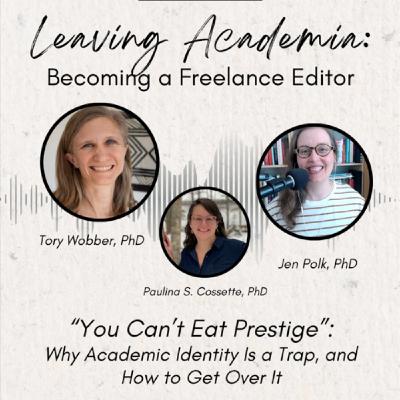
“You Can’t Eat Prestige.”It’s a brutal truth that haunts many academics—but what does it actually mean?In this raw and radically honest episode, I sit down with coaches Tory Wobber and Jen Polk to unpack one of the hardest parts of leaving academia: letting go of your academic identity.For so many of us, being a professor isn’t just a job—it’s a calling. We internalize the idea that we’re special, self-sacrificing, and above the grubby world of capitalism. But all that prestige? It doesn’t pay the bills. And it definitely doesn’t buy you freedom.Tory and Jen offer a compassionate, no-BS conversation about how to grieve your academic identity, try on new ones, and build a life that actually makes you happy—even if it’s outside the ivory tower.Drawing from their own exits from academia and years of coaching other scholars through the same process, they reveal just how common—and navigable—this identity shift can be.By the end of this episode, you’ll feel seen and supported. You’ll have practical tools to begin detaching your self-worth from your job title. And you'll have permission to build an identity that’s truly yours.▶ Sign up for Tory's newsletterJoin 2000 PhDs on the Academic Exit Newsletter to receive free tools and techniques for how to move from academia into industry quickly and easily:https://www.academicexit.com/opt-in-36add534-500b-4e74-a319-408d4810480e▶ Subscribe to Jen’s From PhD to Life newsletter to get advice and resources for professors, postdocs, and other PhDs who are ready to change careers, even if that means moving away from academia or their discipline: https://subscribe.fromphdtolife.com/▶ Get Paulina’s free workbookLove what you do but hate where you do it? Get my free workbook Map Your Academic Business and start building your “Plan B.” Use your academic training inside a profitable business that you control–no more free labor, no more toxic workplace, no more burnout. https://acadiaediting.com/map1. **00:00** - Transitioning from academic to alternative careers discussed.2. **01:11** - Cultural norms in academia strongly influence identity.3. **02:52** - Academics often feel a calling, tying work to identity.4. **05:00** - Discussing barriers to seeing oneself in new roles.5. **06:15** - Grieving the loss of previous academic identity is crucial.6. **09:02** - Finding personal identity beyond job titles emphasized.7. **14:56** - Practicing new identities through self-reflection suggested.8. **17:00** - Importance of letting go of old descriptors for self-identity.9. **18:56** - Emphasizing gradual exploration of new professional identities.10. **20:00** - Taking small steps towards new roles instead of abrupt changes encouraged. Hosted on Acast. See acast.com/privacy for more information.
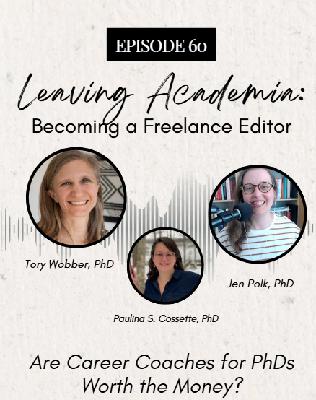
Are PhD career coaches worth the money??In this week's podcast episode, I'm joined by fabulous PhD career coaches Victoria (Tory) Wobber, PhD, CPCC and Jennifer Polk, PhD to answer this very question.Rather than just saying "yes" and patting ourselves on the back, we share insights into our own experiences working with coaches and clients and give some tips on when and how you might go about choosing a coach to work with.🎃 Jen shares her own journey from academia into coaching🎃 I talk about how my childhood affected my own money mindset🎃 Tory explains how a talented coach can help you feel good about yourself and your job search so you don't end up mired in self-doubtTune in for this info and other spicy snippets, and keep your eyes peeled for more videos from these lovely post-ac coaches! 🤩Happy Halloween! 👻Learn from PhD Career Coaches Tory Wobber (Academic Exit) and Jen Polk (From PhD to Life) in conversation with PhD Business Coach Paulina Cossette (Acadia Editing) about whether and when coaches are worth the money. Looking for more resources to chart your path outside of academia? ▶ Sign up for Tory's newsletterJoin 2000 PhDs on the Academic Exit Newsletter to receive free tools and techniques for how to move from academia into industry quickly and easily:https://www.academicexit.com/opt-in-3...▶ Subscribe to Jen’s From PhD to Life newsletter to get advice and resources for professors, postdocs, and other PhDs who are ready to change careers, even if that means moving away from academia or their discipline: https://subscribe.fromphdtolife.com/▶ Get Paulina’s free workbookLove what you do but hate where you do it? Get my free workbook Map Your Academic Business and start building your “Plan B.” Use your academic training inside a profitable business that you control–no more free labor, no more toxic workplace, no more burnout.https://acadiaediting.com/map Hosted on Acast. See acast.com/privacy for more information.
What if your own accountability tool became a profitable business--and academic escape plan?Dr. Nicole Pettitt didn’t set out to build a business. She just wanted accountability for her own writing. So she launched a free co-writing group for women in grad school—and it quietly became a coaching business, with paid clients and real impact.Many academics want a “Plan B” but don’t know where to start. They feel stuck between their current role and the unknowns of entrepreneurship—especially when they still enjoy aspects of their job.Nicole started with what she already had: experience advising grad students, a deep understanding of writing struggles, and a Zoom link. From there, she organically built a coaching business—without quitting her tenure-line role.In this episode, she shares how she turned her Saturday morning co-writing group into a business that supports women finishing their dissertations—while staying in alignment with her values and energy.Whether you’re toying with a side hustle or looking for a sustainable exit strategy from academia, Nicole’s story will give you the clarity and confidence to begin.🔗 Learn more about the BAE program: AcadiaEditing.com/BecomeAnEditorConnect with Nicole:https://www.linkedin.com/in/nicole-pettitt/Email: drnicolep31@gmail.com01:24 – Nicole's shift toward supporting women in academia05:14 – Balancing academic roles with entrepreneurial aspirations08:11 – Free writing group beneficial for community building09:13 – Majority of clients found through the writing group10:57 – Importance of providing community for online doctoral students12:11 – Similarities between coaching others and personal challenges14:30 – Bridging the gap between knowledge and action14:30 – The necessity of community and feedback for doctoral students16:07 – Community aspects tied to external feedback in coursework18:48 – Recognizing that information alone isn’t enough for student success22:39 – Advice to focus on one-on-one coaching first24:56 – Writing group as a funnel for attracting one-on-one clients26:03 – Clarity is key to helping clients execute their projects30:20 – Establishing boundaries between coaching and editing services36:39 – Pricing coaching services fairly based on value offered42:03 – Strategies for promoting coaching services to writing group members48:40 – Testing marketing strategies as a scientific experiment49:43 – Understanding client pain points as core to effective marketing50:53 – Providing contact information for potential clients51:21 – Encouragement for women to pursue their academic goals Hosted on Acast. See acast.com/privacy for more information.
🎙️ AI is NOT taking your editing job—unless you let it. In this episode, I’m joined by Erin Servais, a former fiction editor and agency owner who pivoted her entire career after asking ChatGPT to edit a paragraph.Erin has since trained hundreds of editors in 20+ countries in her signature course, AI for Editors. She shares:🤖 How she transitioned from agency work to AI instruction🤖 The Star Trek-fueled curiosity that led her to AI long before it was cool🤖 Why vague prompts ruin AI editing—and how to fix them🤖 Her favorite tools for developmental, line, and copy editing with AI🤖 Why emotional resistance to AI is valid—and how to move through itWhether you’re curious or resistant, this episode will shift your mindset and give you concrete tools to future-proof your editing business.📌 RESOURCES MENTIONED:Erin’s course: aiforeditors.comTools discussed: Notebook LM, ChatGPT, Claude, Draftsmith🔗 Want to end burnout and become an academic editor or coach? Go to AcadiaEditing.com/BecomeAnEditor00:00 - AI is powerful but requires knowledgeable human editors.01:03 - Editors need skills in AI prompting for effective editing.13:39 - Interest in AI has developed over a long career in editing.15:30 - Specific prompts lead to better editing results with AI.16:58 - Editing involves numerous specific, granular tasks.17:10 - AI tools need clear instructions for better outcomes.19:07 - Teaching AI prompting can enhance communication skills across contexts.20:38 - The course design followed AI technology advancements.22:46 - Courses evolve as functionalities of AI improve.23:57 - Accept that constant updates in AI tools are challenging.27:33 - Validate feelings about AI, whether fear or skepticism.29:43 - AI is not a magic solution; it requires proper use.30:23 - Companies are realizing AI does not entirely replace human editors.35:54 - Notebook LM can efficiently handle long documents, excellent for content analysis in editing.38:58 - Smaller text pieces yield better results in AI editing.39:18 - Use specific prompts for effective copy editing with AI.41:37 - Draft Smith improves line editing directly in Microsoft Word.44:42 - Transparency with clients about AI use is crucial.45:04 - Explain how AI tools will protect client’s intellectual property.50:10 - Erin's AI for Editors program is available online. Hosted on Acast. See acast.com/privacy for more information.
🎙️ “I didn’t tell anyone I was leaving academia. I just left.”When Jeff Malins quietly exited a tenure-track position to protect his marriage, mental health, and creativity… he didn’t know how to talk about it. He didn’t even post an update on LinkedIn.In this honest conversation, Jeff shares what led him to walk away from a ‘successful’ academic career—including the surprising clarity that came after the decision—and how he’s now thriving as an AI scientist, part-time editor and coach, and side-hustle business owner.If you’ve ever wondered, “What if I just left?”, this episode will open your eyes to what’s possible—and remind you that you're not alone.In this episode, we discuss:🎨 Why Jeff left academia without having a toxic workplace🎨 How he found meaningful work at the Mayo Clinic🎨 The emotional weight of leaving and not knowing what’s next🎨 How painting, public speaking, and coaching helped him reconnect with himself🎨 His journey through the BAE program and how he’s shaping his new business🔗 Resources Mentioned:Connect with Jeff on LinkedIn: https://www.linkedin.com/in/jeff-malins/Learn more about my friend, and phenomenal coach, Tory Wobber: https://www.linkedin.com/in/victoria-tory-wobber-phd-cpcc-0364682b/Explore the Becoming an Academic Editor program: https://acadiaediting.com/becomeaneditor05:11 Personal factors influenced job relocation decisions. 06:00 It's okay to prioritize family over academic career. 07:28 Choosing happiness and family is a valid choice. 08:56 Transition from academia to a research role in AI. 09:20 Research opportunities continue outside of academia. 22:05 Different institutional cultures affect work-life balance. 23:42 Creative marketing strategies enhance professional identity. 26:22 Importance of personal narratives in scientific communication. 29:09 Shift towards career coaching from editing services. 30:49 Workshops bridge community and offer unique learning experiences. 33:00 Assessing unique contributions beyond academic roles. 36:20 Broadening definitions of professional opportunities. 38:09 Integrating personal passions into professional work encourages fulfillment. 43:30 Targeting university departments for workshops increases visibility. 45:00 Workshops provide revenue and client opportunities. 49:21 Personalized outreach can strengthen professional connections. 51:02 Taking advantage of existing networks for referrals. 51:39 Building a supportive community enhances entrepreneurial confidence. 52:05 Engaging with a broader audience strengthens personal brand. 52:24 Learning from peers is valuable in professional development. 52:27 Encouragement fosters readiness for new business ventures. Hosted on Acast. See acast.com/privacy for more information.
Still Think Business Is Sleazy? This Episode Will Change Your MindBurned out academics often assume the business world is greedy, exploitative, and cutthroat—worse than higher ed.But what if the right corner of online business was actually collaborative, compassionate, and aligned with your values?In this episode, Paulina shares her personal journey from academia to entrepreneurship—including the shocking moment she realized how different (and better) the business world can be. She introduces communities like the MixerMind, highlights successful former academics turned entrepreneurs, and breaks down the myths that keep so many of us trapped in higher ed.If you're burned out, craving flexibility, and wondering whether running a business could ever be ethical or joyful, this episode will show you what’s really possible—and that you were never the problem. Academia was.👇 RESOURCES & LINKS▸ Book a chat with Paulina to share why you burned out and left (or are considering it): https://acadiaediting.com/chat▸ Get my free workbook, Map Your Academic Business: https://acadiaediting.com/map▸ Follow Paulina on Instagram: @acadiaediting▸ Connect on LinkedIn: https://linkedin.com/in/paulinacossette📌 Want to end burnout and become an academic editor or coach? Go to AcadiaEditing.com/BecomeAnEditor02:47 - Discussion on backgrounds of academics and perceptions of job stability.03:33 - Negative socialization regarding capitalism and business in academia.04:08 - Academia framed as morally superior compared to business.05:11 - Critique of the narrative perpetuated by senior faculty.05:37 - Recognition that many businesses are indeed run for profit.06:21 - Contrast between academia’s challenges and business community’s support.07:28 - Surprising kindness in the business community compared to academia.10:02 - Emergence of women entrepreneurs in online business.14:23 - Growth of digital products and courses among women.17:06 - Description of joining a welcoming entrepreneurial community.19:35 - Successful women entrepreneurs with academic backgrounds.20:06 - Ethical marketing practices in the online business community.21:16 - Common fears of leaving academia and the stigma attached.22:26 - The supportive environment outside academia for entrepreneurs.23:29 - The unique qualities and personalities of business owners.24:24 - The importance of connection and choosing the right mentor.28:19 - Encouragement to see abundance in business opportunities.29:06 - Myths of the business world debunked.29:26 - Introduction to resources for aspiring business owners.30:04 - Prompts for exploring potential business ideas and lifestyle integration.30:42 - Guidance on creating a business around personal life.30:56 - Overview of the editing program as a pathway to entrepreneurship.31:16 - Emphasis on community support within the editing program.31:29 - Invitation to consider the editing course for those unhappy in academia. Hosted on Acast. See acast.com/privacy for more information.
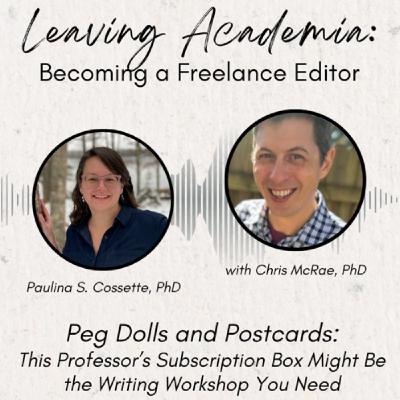
What if writing could be fun again?In this episode, I'm talking with Chris McRae, a tenured professor of communication and published author who found himself burnt out by the grind of academic publishing. But instead of staying stuck, he created something entirely new: Writing from Wonder: the Writing Workshop in a Box—a sensory, curiosity-driven experience that brings joy and creativity back to the writing process. (Keep reading to find out how to get your free gift! 🎁)The problem for many authors? Writing feels like a chore. Burnout is real, and the joy of discovery is often lost in the pressure to publish.To help solve this, Chris shares how he reconnected with the joy of writing through creative play—and how he turned that insight into a physical product for writers everywhere.After joining my program, Becoming an Academic Editor, Chris explored editing, coaching, and eventually launched a limited-run product that sold to total strangers—proof that your creativity can become a business.In this episode, you'll find out how to turn your love of writing into a meaningful side hustle (or full-time gig) using the expertise and skills you already have.🔗 Resources Mentioned:Chris's Website: https://www.creatingcuriositycoaching.com🎁 For your free gift: mention the "Leaving Academia" podcast in the notes for your Etsy purchase“Source of Sources” for PR leads: https://sourceofsources.com/Connect with Chris on Instagram: https://www.instagram.com/creatingcuriosity_box/Connect with Aubrey (Chris's business partner) on Instagram: https://www.instagram.com/aubreyahuber/Connect with Chris on LinkedIn: https://www.linkedin.com/in/chris-mcrae-phd/👉 Want to end burnout and become an academic editor or coach? Go to AcadiaEditing.com/BecomeAnEditor00:00 - Introduction of Chris McRae, a communication professor and entrepreneur. 01:45 - Discovery of potential in applying academic skills to support others. 02:48 - Desire to contribute more meaningfully beyond academia. 03:23 - Constraints of academic writing affecting creative expression. 04:16 - Starting a side hustle to recapture creativity in writing. 06:26 - Innovators thrive during disruptions through creativity. 07:44 - Academic burnout leads to questioning writing's enjoyment. 08:46 - Transition from editing to launching writing workshops in a box. 09:05 - Appeal of the workshop concept, especially for academics. 10:32 - Freedom to write without academic constraints fosters creativity. 12:00 - Box includes sensory prompts to enhance writing experience. 14:31 - Using physical items as inspirational aids for writers. 18:25 - Commitment to launch business by a self-imposed deadline. 19:34 - Emphasizing learning through experimentation in business. 20:34 - Acknowledgement that imperfect efforts can still be valuable. 23:02 - Surprise at first sales coming from unknown sources. 24:10 - Importance of experimentation in marketing strategies. 27:20 - Ideas for creating a community around writing workshops. 28:44 - Potential collaboration with writing workshop facilitators. 36:20 - Understanding the numbers game in e-commerce and marketing. 51:05 - Offering a special surprise for Etsy purchases to promote outreach. Hosted on Acast. See acast.com/privacy for more information.
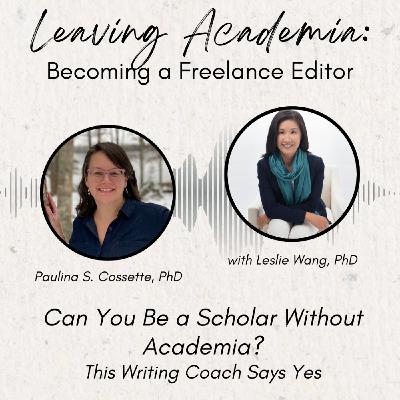
📌What if the dream job—tenure, publications, grants—still leaves you feeling empty inside?In this episode, Leslie Wang, PhD, shares how she transitioned from a tenured academic to a thriving writing coach and podcast host, finding deeper purpose and flexibility outside academia.Leslie’s podcast is now ranked in the top 3% globally, and she runs a successful coaching business helping academics write their books without burning out. She shares how she made the leap into business, found her niche, and now works with clients she loves—on her own terms.If you’ve ever wondered whether it’s really possible to leave academia and build a meaningful (and profitable!) business, this episode will give you clarity, courage, and steps to take action.What You’ll Learn in This Episode:📌 Leslie’s full journey from PhD to tenure to entrepreneurship📌 How coaching gave her what teaching couldn’t📌 Her 4-month financial test before quitting📌 Why being 80% ready is enough📌 Advice for launching your side hustle the right way🔗 Resources Mentioned:👉 Your Words Unleashed Podcast: https://yourwordsunleashed.com/podcast/👉 Princeton University Press Coaching Program: https://press.princeton.edu/book-proposal-development-grants?srsltid=AfmBOoq-kAZYOXpzEJRWsrxggELLaDoOdn0mQv97PPOJlH2XJo9zmfIQ👉 Book: The Prosperous Coach by Steve Chandler & Rich Litvin (affiliate link): https://amzn.to/4n31GHb👉 Coaching resource: Rhonda Hess – The Prosperous Coach Podcast: https://prosperouscoachblog.com/prosperous-coach-podcast/📣 Know someone stuck in academia? Send them this episode.Want to end burnout and become an academic editor or coach?Go to AcadiaEditing.com/BecomeAnEditor00:00 - Overview of Leslie's background as an academic and coach.02:27 - Starting a business feels daunting yet rewarding.06:23 - Experience of burnout in academia.09:58 - Transitioning from academia to coaching and editing.12:20 - Email from the chair marked a turning point.14:10 - Importance of finding happiness beyond career.17:15 - Coaching differs from teaching in tangible impact.18:32 - Light bulb moments bring fulfillment in coaching.20:35 - Empowering clients through coaching without advice.23:09 - Importance of mental and scheduling space in coaching.27:39 - Learning to say no to avoid burnout while freelancing.29:01 - Rule to replace salary for four months as a threshold.31:37 - Balancing a side hustle with academic commitments.35:40 - Embracing uncertainty in decision-making.37:24 - Majority of clients focus on book coaching.39:00 - Coaching incorporates developmental editing for effectiveness.45:54 - Podcast creation keeps business engaging.46:31 - Interviews enrich the podcast experience.48:10 - Social media is crucial for marketing outreach.55:30 - The role of support in leaving academia behind.56:45 - Final thoughts on pursuing personal fulfillment outside academia. Hosted on Acast. See acast.com/privacy for more information.
👉 Ready to level-up your business by hiring a business coach? Connect with me on LinkedIn or email me (paulina [AT] acadiaediting [DOT] com) and let's have coffee (on Zoom). I'd love to get to know your business and see if we're a good fit to work together.Think the only way to grow your editing or coaching business is by taking on more clients or becoming a marketing guru? Think again. In this episode, I’m sharing the uncomfortable truth: if you want to earn 6 figures, your beliefs—not your rates or resume—are what's standing in your way.Most academics-turned-editors undercharge, overdeliver, and wonder why they’re burned out and still broke. They think more clients or more credentials will fix things—but it never does.This episode walks you through the mindset shifts, pricing experiments, and systems that actually work when you're trying to scale to $100K. I'm sharing boundaries, business experiments, and real talk about what’s keeping you stuck undercharging and overworking.These exact strategies helped me grow from side-hustling freelancer to fully booked CEO of a six-figure editing and coaching business. And it’s not just me—plenty of other editors and coaches are doing it too.By the end of this episode, you’ll understand the core identity shift required to grow your academic business into a profitable, sustainable career.👇 MENTIONED TOOLS & RESOURCES:The EFA rate chart: https://www.the-efa.org/rates/Episode 20: 5 Tools to Edit Faster and Earn More Money: https://youtu.be/ipJSNA-XytQEpisode 38: Two Things Keeping Editors Stuck at $20/hr: https://youtu.be/cOkUjIGMB9c🧠 Map Your Academic Business (Free Workbook): AcadiaEditing.com/map🧰 Want to end burnout and become an academic editor or coach? Go to AcadiaEditing.com/BecomeAnEditor00:12 - Common misconceptions affecting business growth.00:33 - Shift thinking to reach income goals.01:10 - Transition from freelancer to CEO mindset.01:58 - Reactions to earning $100,000 are revealing.02:20 - Beliefs shape income potential.02:59 - Skills are not the main barrier to six figures.03:22 - Academia encourages overwork for low reward.04:04 - Cultural narratives diminish perceived value.05:24 - Let go of distorted beliefs about earnings.06:51 - Set boundaries; do not work for free.08:10 - Minimum charge for coaching: $100/hour.14:22 - Price based on value, not hours.18:20 - Invest in your business for growth.18:47 - Seek out a business coach for support.19:09 - Build connections with industry peers.20:20 - Commit to earning $100,000 by a set date.21:11 - Regularly raise your rates without fear.21:51 - Embrace discomfort as a part of growth.22:06 - Make decisions as the six-figure version of yourself.22:31 - Join a supportive community of entrepreneurs. Hosted on Acast. See acast.com/privacy for more information.
Feeling stuck in academia, but unsure how to take the first step toward starting your own business?In this episode, I reveal the most accessible, low-risk, high-reward way to monetize your academic skills: offering paid workshops.Workshops have helped me and many other coaches and course creators test their offers, gain confidence, and even land long-term coaching or editing clients—without the overwhelm of building a course or running a full-time business.👉 I’ll walk you through exactly why workshops are effective, two simple workshop formats you can try, and a 3-step plan to launch your first event.Whether you want to earn extra income or transition fully out of academia, this episode gives you the roadmap to start now—before burnout wins.👇 FREE RESOURCE: Map Your Academic Businesshttps://acadiaediting.com/map🌟 Kit (affiliate link): https://partners.kit.com/koj113xbly45🐦🔥 Join the BAE Program (Becoming an Academic Editor):https://acadiaediting.com/becomeaneditor🔥 Don't forget to like, subscribe, and leave a review if you found this helpful!00:00 - Celebrating one year of Leaving Academia podcast.01:04 - Expanding topics to include business ownership.02:25 - Workshops as fast and easy way to earn money.03:08 - Familiarity of workshops builds on teaching skills.03:45 - Workshops boost confidence and perceived value.04:15 - Effective client attraction method through workshops.19:58 - Participants should leave with tangible results.24:07 - Keep structure simple and include accountability.31:21 - Don’t undersell; value perceived is important.35:51 - Repeat workshops to build audience and revenue. Hosted on Acast. See acast.com/privacy for more information.
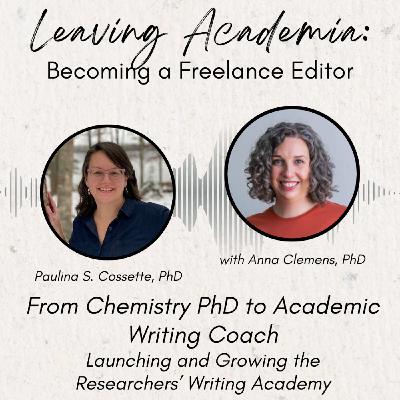
Are you burned out from academia but still love research and writing? You’re not alone.In this episode, I talk to Anna Clemens, a chemistry PhD who left research to become an academic writing coach. Through her Journal Publication Formula, Anna helps researchers get published faster—without the overwhelm. What started as a blog turned into a full-blown coaching business, and she now runs the Researchers' Writing Academy, supporting scholars around the world.Anna shares how she navigated the transition, what made her pivot from editing to coaching, and how she built a business that gives her freedom and fulfillment. If you’ve ever wondered how your academic skills could be used in a more meaningful, flexible way—this episode is a must-listen.🎧 Listen now and discover how you can turn your love for writing into a freelance business you actually enjoy--and that pays the bills (and more!).Resources:🔗 Researchers' Writing Academy: https://annaclemens.com/🎓 Free Training with Anna: https://annaclemens.com/training/🧠 Highly Sensitive Person by Elaine Aron (affiliate link): https://amzn.to/45PjRsI👉 Want to end burnout and build an academic business that fulfills you? Go to AcadiaEditing.com/BecomeAnEditor2:31 - Meet Anna, Academic Writing Coach5:07 - Anna's PhD Journey Frustrations10:18 - Finding Joy in Writing15:35 - Leaving Academia, Why The Shift20:00 - Exploring Freelance & Internships25:00 - Transitioning to Writing Coaching30:00 - Building the Researchers' Writing Academy35:00 - The Power of Community Support40:00 - Marketing Your Business45:00 - Academic Skills for Business Success50:00 - Embrace Continuous Learning55:00 - Final Takeaways & Resources Hosted on Acast. See acast.com/privacy for more information.
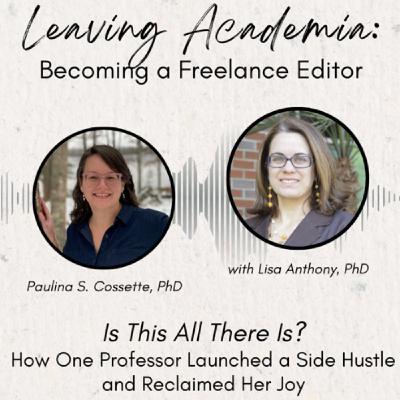
Tenure was supposed to be the promised land.But for Dr. Lisa Anthony, it felt like a dead end. After years in academia, she realized something was missing—joy, creativity, and connection.The surprising solution?Launching a side hustle in academic editing and coaching.What began as a reluctant experiment became a full-blown passion—and even made her fall in love with marketing (I know, right??).In this episode, Lisa shares how starting a business reignited her energy and improved her day job as a tenured professor at an R1 university.If you’ve ever thought, “I want something more—but I don’t know what,” then you have to watch this episode.🎙️ We discuss:🎯 Lisa’s realization that tenure "isn’t what I thought it would be.”🎯 Her resistance to business—and how that changed completely after enrolling in Becoming an Academic Editor🎯 The surprising overlap between academia and entrepreneurship🎯 How she’s attracting editing and coaching clients while working full-timeLisa also shares what she thinks every academic should know before starting a side hustle. Tune in to hear from someone who took the leap and is thriving.🎯 Resources mentioned:"The 7-Year Postdoc":https://www.scientificamerican.com/blog/guest-blog/the-awesomest-7-year-postdoc-or-how-i-learned-to-stop-worrying-and-love-the-tenure-track-faculty-life/🎯 Find out how to follow in Lisa's footsteps:https://acadiaediting.com/becomeaneditor?utm_source=youtube&utm_medium=notes&utm_campaign=ep50🎯 Connect with Paulina on LinkedIn: https://linkedin.com/in/paulinacossette🎯 Connect with Lisa: https://lisa-anthony.com/🎯 Join the waitlist for Lisa's CAREER grant-writing program:https://agapanthus-editing.kit.com/career2:44 - Side Hustle Academic Editing4:09 - COVID Changes Work Practices6:34 - Preconceived Business Notions8:40 - Passion Creativity Reignited11:39 - Academia Lack Collaboration13:53 - Post Tenure Habits Change16:33 - What's A Committee? 🤔18:35 - Rewire Brains Learn New Things20:36 - How Start An Academic Business22:54 - Authentic Selling Feels Natural25:50 - Agency Editing Part-Time Job27:34 - Coaching Developmental Editing29:08 - Discovery Sales Call Contract31:14 - AI Affecting Editing Agencies33:34 - Experience Worth It?36:16 - How Find Editing Clients38:28 - Cast Wide Net Get Eyeballs40:23 - Community Been Instrumental42:21 - NSF Career Coaching Program45:51 - Career Workshop Overview48:26 - Connect With Lisa Anthony Hosted on Acast. See acast.com/privacy for more information.
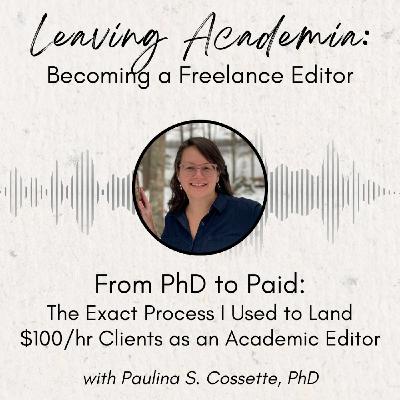
🎧 Burned out in academia and ready to reclaim your time, income, and sanity? You don't need another degree to escape — you just need a plan.Important NOTES for this episode:👉 There are just 3 spots left in the September cohort of BAE. Doors close August 22.Go here to save your seat before they're gone: https://acadiaediting.com/editingfreedom_postlaunch/?utm_source=acast&utm_medium=notes&utm_campaign=ep49In this episode, I walk you through the three essential steps to become a freelance academic editor or coach — even if you’ve never edited professionally or built a business before. You’ll hear exactly how I transitioned from a tenure-track job to a six-figure freelance business, and how you can do the same, starting today.I share:👉 How to break into editing without a certificate👉 The first actions to take if you want to coach instead of edit👉 Why editing agencies can be your best (temporary) training ground👉 Real-world examples of students who were fully booked within weeks of finishing the program👉 A behind-the-scenes look at my BAE program and how it worksWhether you're looking to replace your academic job or build a lucrative side hustle, this episode will give you the clarity, confidence, and roadmap you need.📌 Mentioned in this episode:BAE Program Info & Enrollment:https://acadiaediting.com/editingfreedom_postlaunch/?utm_source=acast&utm_medium=notes&utm_campaign=ep49Map Your Academic Business workbook:https://acadiaediting.com/map/?utm_source=acast&utm_medium=notes&utm_campaign=ep492:06 - My Story Leaving Academia3:54 - Prioritizing Happiness and Freedom5:57 - Six Figures Working Part-Time6:54 - What Academic Editors Actually Do7:16 - Developmental Editing Overview8:13 - Copy Editing Tasks Explained8:56 - Editing Agencies Pros and Cons10:17 - Coaching Options With Editing11:12 - What Problems Can You Solve?12:28 - Skills Editors Need Most13:43 - How To Land Editing Jobs14:24 - Create a One-Page Resume15:17 - Why Agencies Aren't Ideal16:58 - How to Start Coaching Business17:43 - What Is Your Ideal Client?18:37 - Lisa's Success Story Example19:38 - Step 2 Network and Attract20:00 - Website Copywriting Tips21:34 - Step 3 Hone Your Expertise22:22 - Earn $150+ Per Hour Editing23:65 - Coaching: Charge $100+ Hourly (Minimum)25:27 - BAE Program Details Explained26:06 - 12-Week Group Coaching CohortQ&A27:26 - Program Includes Money Tracking28:56 - Can I Enroll in 2026?29:05 - AI and Future Editing Jobs?30:94 - Editing in Other Languages?31:64 - Stick To Your Editing Field?32:80 - Standard For Manuscript Quality?34:13 - Examples of Academic Coaches35:52 - Non-Native English Writers36:21 - Line Editing vs Copy Editing37:80 - Explore Multiple Options?39:03 - Don't Let Fear Get In The Way Hosted on Acast. See acast.com/privacy for more information.
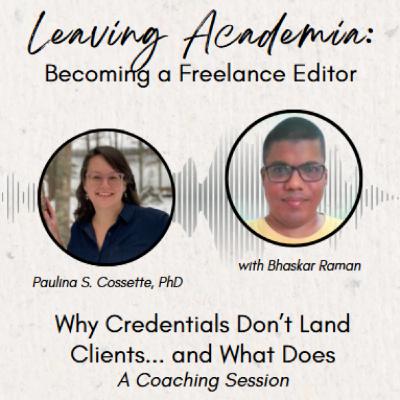
Marketing doesn't have to feel gross, fake, or confusing.In this episode, I coach Bhaskar Raman—a skilled academic editor—through the exact mindset and messaging shifts that help editors attract higher-paying, more satisfying private clients.Bhaskar has years of experience working with academic publishers, but he’s ready to go direct—to work with scholars one-on-one. The problem? Marketing feels overwhelming, and he's unsure of how to stand out.In our coaching session, we:🚶➡️ Walk through how to build a marketing plan that starts with empathy, not expertise🚶➡️ Uncover who Bhaskar’s ideal clients are, and the real emotional struggles they face🚶➡️ Make a plan for how he can write content and website copy that truly resonatesBy the end of our session, Bhaskar has a clear message, a strategy for content creation, and a renewed sense of confidence in his value—not just as an editor, but as a thought partner for academic authors.Whether you’re brand new or already freelancing, this episode will shift how you think about selling your services—so that you can build a business that feels good... and pays well, too.RESOURCES:📚 Laura Portwood-Stacer’s Book Proposal Book: https://amzn.to/46EWkwH📘 Editorial Freelancers Association (EFA) rates: https://www.the-efa.org/rates/👉 Want to end burnout and become an academic editor or coach? Go to AcadiaEditing.com/BecomeAnEditor02:23 – Identifying client struggles04:00 – Credentials vs. connection in marketing06:42 – Selling outcomes, not services09:35 – Using client language in copy12:18 – Bhaskar’s mindset shift14:44 – Relatable vs. original content17:26 – Overcoming fear of “copying” others20:10 – LinkedIn marketing strategy23:07 – Storytelling as marketing26:55 – Defining Bhaskar’s ideal clients29:34 – Writing in first-person voice32:01 – Marketing as service35:12 – Website copy critique38:50 – Why Bhaskar’s experience is enough41:26 – Coaching through imposter syndrome44:39 – Creating a simple content plan47:03 – What to say in your content49:20 – Bhaskar’s final reflections Hosted on Acast. See acast.com/privacy for more information.
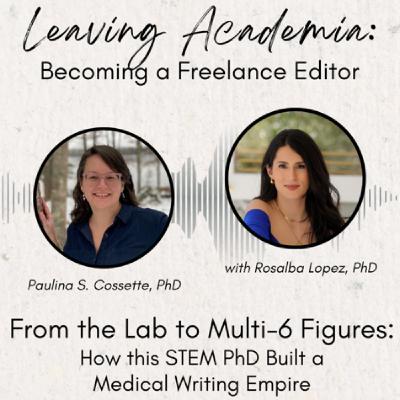
Burned out in academia and wondering what comes next?Rosalba Lopez was in your shoes—struggling through a disheartening PhD and trying to make ends meet on a stipend.But instead of settling for the usual path, she turned her love of writing and editing into a multi-6-figure business in medical writing, academic editing, and coaching.In this episode, Rosalba shares how she:🎆 landed her first freelance editing client straight out of grad school, 🎆 created contracts that protect her time and sanity, and 🎆 built the FLAS Foundation to help other STEM professionals launch their own creative businesses.You’ll hear how she finds clients without cold pitching, uses her background in both science and the arts to stand out, and balances it all as a mom of two.Whether you're still in academia or already have one foot out the door, this conversation will show you what’s possible—and how to make it happen.🔔 Subscribe and listen to hear:– How to start an academic business without an MBA or prior clients– Why retainers are a game changer (and how to set them up)– The power of tracking your work and using it in your marketing– How Rosalba helps scientists become successful entrepreneurs✨ Want to map out your business and become an academic solopreneur? Go to AcadiaEditing.com/mapWork with Rosalba: https://www.flasfoundation.com/ 1:43 - Rosalba's Background and Expertise 3:25 - AMWA Medical Writing Certification 6:26 - Retainer Service Agreement Defined 7:49 - Substantive Editing Constructive Feedback 8:58 - Merck Blog Post Opportunity 9:37 - Creative Freedom Benefits 10:08 - LinkedIn Medical Writer Marketing 11:08 - Networking at Daycare & Funerals?! 11:50 - Multi 6-Figure Business Breakdown 12:39 - Tapping into Neglected Passions 13:05 - FLAS Foundation Arts and Science 13:57 - Subcontracting Junior Medical Writers 14:60 - Mentoring Clients: Calendly & Zoom 15:55 - Be 10% Ahead Ideal Client 16:13 - Refuting Academic Editing Myths 16:62 - Cold Pitches Are Wasteful? 17:26 - Persuasive LinkedIn Profile Skills 18:58 - Balancing PhD Critique Power 20:00 - Track Metrics Project Management 21:56 - Postpartum Burnout Business Lessons 22:49 - Building Business Solid Foundation 23:10 - FLAS Foundation Community Building 25:48 - Freelance Industry Jobs Positioning 26:30 - Outsourcing Email Marketing Tasks 27:34 - Ideal Client Audience Defined 28:45 - Advice: Networking & Opportunities 29:15 - Find Rosalba at FLAS Foundation Hosted on Acast. See acast.com/privacy for more information.
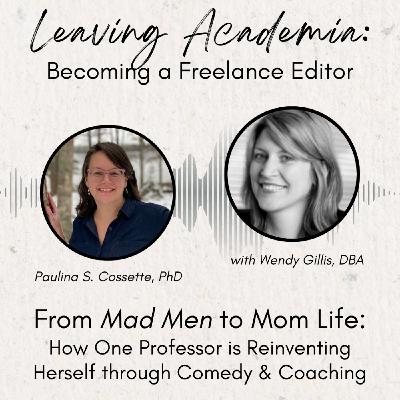
Start building your new academic business here: AcadiaEditing.com/BecomeAnEditor Wendy Gillis has had quite a journey—from the thrills of Madison Ave., to an MBA and Doctor of Business Administration, to professor (and mom) life in North Florida. And yet, something was still missing.After spending years trying to launch a business on her own, Wendy discovered my program, Becoming an Academic Editor. She quickly realized that she had no interest in editing, but she was motivated and energized by our discussions of launching and marketing a coaching business and consultancy.And that's how WendyGillis.com was born.Now, Wendy is a professor, personal brand consultant, and clean stand-up comic with a full life that reflects her whole self.If you've been feeling like you need more out of academia—more joy, more fulfillment, or even more money—this episode shows you how to uncover your creativity and build a successful business that fits your life.📍Want to build a joyful post-academic life? Get started at AcadiaEditing.com/BecomeAnEditor Work with Wendy: wendygillis.com0:25 - Wendy's Academic Side Hustle2:32 - Madison Ave: Advertising Career4:36 - Work Life Balance: Personal Decision5:22 - Super Bowl Move: Jacksonville, FL6:03 - Teaching Marketing: Doctorate Degree8:19 - Adjunct Professor: Academia Transition10:35 - Marketing Consultant: Value Proposition12:11 - Academia vs Real World Skills13:18 - Teaching Entrepreneurship to Academics17:47 - Digital Marketing: Organizational Skills23:59 - Comedy and Consulting: Business28:14 - Business Building: Constant Evolving30:87 - Consulting on Marketing: Non Profits35:16 - Clean Comedy: Set Apart36:31 - Scary Things: Confidence37:25 - Take Course: I Felt Seen39:45 - Women Entrepreneurs: Supportive40:08 - Hire Comedian: WendyGillis.com Hosted on Acast. See acast.com/privacy for more information.

Comments

Download from Google Play

Download from App Store
 United States