


 Claim Ownership
Meaningness Podcast
Subscribed: 1Played: 16
Subscribe

© David Chapman
Description
🚞 Trains of thought 💭 captured as sound🎙️; monologues on diverse ⁉️ topics, and conversations 👥 too!
meaningness.substack.com
meaningness.substack.com
31 Episodes
Reverse
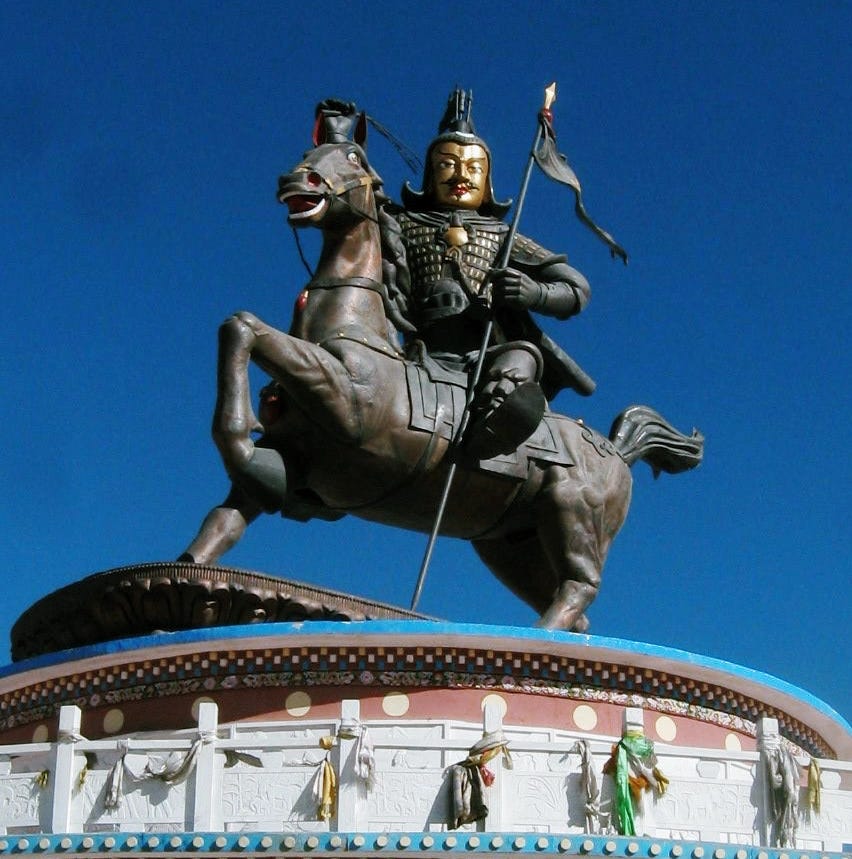
TranscriptIntroduction [00:00]Most of this podcast is a recording from a retreat Charlie Awbery and I led a month ago. I’m adding a short introduction here now, to provide background context, so you can understand more of what we presented then.So first, tantra is the branch of Buddhism concerned with energy, and therefore with action. Energy is the potential for action. You can’t have either without the other. Tantra is still sometimes misunderstood as being all about sex. There’s a lot of energy and action in sex, so tantra can work with that. But there’s energy and action in everything we do, so tantra can work with everything in our lives.In all Buddhisms, one acts for the benefit of others. However, most just help you develop good intentions. Tantra calls the bluff on that. Without energy, intentions are flaccid piety. Tantra says, “Okay, that’s nice. What are you actually going to do for other people and how?” And it has answers.There are many different styles of beneficent activity. Tantra personifies them as yidams, who are mythic people, rather like gods, who represent particular kinds of energy. This retreat was sponsored by Evolving Ground, a contemporary Vajrayana Buddhist community we abbreviate as eG. eG teaches several different yidams, and therefore several different styles of benevolent energy, and beneficent activity. We wrote a post about that two weeks ago, titled “Yidam: extraordinary relational possibilities.” You might want to check it out for more background explanation.One style of beneficence is nobility: the wise, creative, and just use of power. In eG, we take the yidam Gesar as inspiration for noble activity. Gesar is the mythic warrior-king-sorcerer-god-hero of a vast Tibetan epic. We practice Gesar with a text, called a sadhana. A sadhana is the manual for a structured meditation ritual, which you can practice individually or in a group. Part of the ritual is reading the text out loud, and then doing the things it describes.The Evolving Ground sadhana is titled Good King Gesar. It’s written in flowery pseudo-poetic language, as is traditional. In the retreat recording that follows, I explained particular bits of the text; and quoted it in places.Gesar was the king of a place called Ling. Our retreat was held in a gorgeous remote mountain valley in Scotland. As you will hear, that is also Ling.One last thing: the transcript of this podcast on Substack includes numerous hyperlinks to explanations of uncommon concepts. If you are confused by missing background, or want to learn more about some point, you could follow those. Also, the transcript has numerous illustrations which can help visualize what we are talking about.And so now… let’s catch a ride to Ling on the back of the garuda of outrageousness!The actual world is the mandala of the deity [04:04]One of the things about this sadhana that is unusual is that it is emphasizing the actual world as the mandala of the deity. Mandala is the Sanskrit word for kingdom. It literally means circle, but it means kingdom.There is the visionary world, and there’s the actual world; and these are both real, in some sense. Tantra forms the connection between the visionary realm and the actual world. You become the connection between these two. You can think of the central channel as a conduit that connects the energy of the actual world and the energy of the visionary realm, and they flow through you.You can get lost in the visionary realm. I recommend avoiding becoming a spiritual person, because this means being lost in the visionary realm, and trying to un-see the actual world as much as possible. And this makes you ineffective! Because if you’re going to act in the actual world, for the benefit of other people, you need to have a accurate vision of what is going on, and how it works.On the other hand, if you are stuck in the actual world and you are trying to un-see the visionary world, then you’re caught in a kind of mundane materialism that lacks vision; that is not directed toward some… better future? That’s actually putting it in a bit of a materialistic point of view, but: some kind of pure vision of what is possible. I think “possibility” is the right word for this.So, a lot of Tibetan material… they were isolated in monasteries, and they got lost in the visionary realm a lot of the time.The Gesar material is, I think, an attempt to make this connection of the actual world of a very difficult political situation, at a particular time, at a particular place in Tibet, where action needed to be taken: for the benefit of people who were caught up in civil wars and religious strife. There needed to be a connection made between that mundane, difficult situation and a vision of what was possible instead. And the possibility was: a Good King.Mipham, who did a lot of this work, was an advisor to the king at the time. And he wrote a book called The Just King, which is a book of advice to the Crown Prince of Derge, which was a major kingdom in the area; who did become king.This is a form-oriented sadhana. It’s an action-oriented sadhana. And I think it’s why Mipham did what he did, which we’re reworking here. It’s that action was required, form was required, at that time. And Tibetan Buddhism had kind of gone off into fairyland, and he was trying to pull it back down to concrete form; reality.The cavortings of awareness unleashed [07:34]So all of this stuff is: the cavortings of awareness unleashed.And partly that’s to emphasize the fact that we’re speaking in the visionary realm here, and you don’t want to concretize this as something that’s actually existent in some sense. But also, there is the practice in tantra of seeing everything as illusory in some sense. And this is bringing the visionary realm and the actual realm into correspondence. And when you do that, things you see in the actual realm take on a visionary quality, and become somewhat unreal and transparent and shape-shifting. And that can become psychotic, if you’re not maintaining also the connection with the concrete specifics of how stuff actually works. This is the trick of tantra: making that connection without losing yourself in either realm. And being able to superimpose them, to employ the logic of vision and the logic of actuality as appropriate; simultaneously, ideally. So, “cavortings of awareness unleashed” is this sense of sacredness, and slightly unreal quality.Jan: I have a question about “cavortings.” I checked it in the dictionary and it means, like, “play” basically?David: Yeah, energetic, bouncing around kind of play.Jan: What was the “leash” then?David: Um, unleashed from mundanity. From being lost in ordinariness. When you’re leashed to ordinariness, you can’t see sacredness. You can’t see the electric qualities of actual things.Ideologies are demonic attempts to escape from actuality into some vision [09:38]David: The section “Displaying confidence in actuality,” I said last time: this is in the place of the refuge. “Taking refuge” is displaying confidence in actuality. That’s this sense of, “Okay, I’m actually in this actual-world situation. And that is what I’m confident of.”Mara showing a mystic vision of perfectionis the failure mode of trying to escape into the visionary realm. The actual world is the charnel ground. It’s civil war, in that case.Do ask questions! Splendid! Yes?Sasha Vezhnevets: Um, when I yesterday was going through it, I also had another way of interpreting the “vision of perfection”?David: Mm-hmm?Sasha: As kind of: an ideology, not necessarily related to mysticism or religion, but any sort of ideology that imagines perfection?David: Yeah.Sasha: I mean, for me, the “mysticism” would be communism; something like that. That’s what was more familiar growing up, but there’s no lack of other ones. So what you think of that interpretation?David: Yes.Sasha: And monastics, we can have academics, and that choice—Steph: Or any rule-based system, or any framework, if you take it as the main, or the only, framework.David: Yeah, thank you. That’s exactly right. There’s a section in here about Gesar… Let’s see… Your horse-hooves trample the compulsions of demonic egregores!Your werma-arrows riddle the promises of delusional enthusiasms! Your prajña-sword eviscerates the certainties of fixed ideologies!This is addressed at exactly that.Dzogchen has a meta-systematic view of Buddhism [11:20]David: This is kind of eG-specific. It’s the meta-systematic view that any fixed system is actually demonic, and needs to be slaughtered. Once you’ve chopped the head off the demon, you can raise it from the dead and have it serve you. This is a very traditional role for Tibetan sorcerers, to subjugate demons and force them to serve the dharma.My work on meta-rationality, and other things that I’ve written, are relevant here, and being echoed in the sadhana. Dzogchen, uniquely in Buddhism, is meta-systematic; and says, “Here are all these different Buddhist systems; and here’s how they’re useful, under what circumstances, for what purposes do you apply this Buddhist system; and here’s how it’s limited, and actually not a full story, not actually correct.”I think that’s part of the attraction of Dzogchen, for me and for Charlie and for others: that sense of “No fixed system; but systems are actually very valuable.” And we’re practicing a particular system in doing this; but there’s nothing sacred about this sadhana; or fixed as “this is the thing to do.” It’s a thing that has a particular function.We got this partly from Ngak’chang Rinpoche, who got it from Kunzang Dorje Rinpoche. I don’t know where Kunzang Dorje Rinpoche got it. I mean, he got it from the Kunjé Gyalpo, I suppose. Or his teachers.Victory over aggression [12:59]David: I’m just gonna go through this and babble, but please ask questions. That was a very illuminating question; thank you, Sasha!I act for the benefit of friend and foe alike.That’s central for the Gesar mythos: that a warrior is willing

John Vervaeke’s Meaning Crisis and my Meaningness address similar issues in similar frameworks. Yet there seem significant differences!Andrew Conner pinpointed some in his insightful essay “Is the ‘meaning crisis’ a real loss?”Coincidentally, he was visiting Charlie Awbery and me at the time, so we were able to discuss it in person, and recorded a video of our conversation.In addition to that, this post includes a section of links to relevant discussions elsewhere, assembled by Andrew; and a transcript in case you’d rather read than watch.A follow-up post, going live next Saturday, explains bits I botched during the recording and we deleted from this video. It’s about ways metaphysics muddles our thinking, feeling, and acting. And, about how we perceive sacredness in the actual world—such as in a salt shaker.Relevant discussions elsewherePrimary sources* John Vervaeke, Awakening from the Meaning Crisis (AftMC): YouTube playlist · series home · community transcripts* David Chapman, Meaningness * David Chapman, Meta-rationality* Andrew Conner, Is the “meaning crisis” a real loss?Chapman’s concepts, in the order they’re mentioned* Eternalism: meaningness.com/eternalism: the stance that meanings must be perfectly definite* Nihilism: meaningness.com/nihilism: the mirror-image stance, that since meanings aren’t perfectly definite, they don’t exist* The complete stance: meaningness.com/meaningness: recognizing meaning as inseparably nebulous and patterned* Nebulosity and pattern: meaningness.com/nebulosity* No world beyond the actual one: https://meaningness.substack.com/p/this-is-it* Stances trump systems: meaningness.com/stances-trump-systems* Materialism (as stance): meaningness.com/materialism* Textures of the complete stance: meaningness.com/textures-of-completion · wonder · curiosity · humor · play · enjoy-the-dance · creation* Vision, Instruction, and Action (Chapman’s PhD thesis, lightly revised)* Vividness: vividness.live · Approaching Vajrayana* Nobility arc: table of contentsVervaeke’s concepts, in the order they’re mentioned* Relevance realization: Vervaeke, Lillicrap & Richards (2012), “Relevance Realization and the Emerging Framework in Cognitive Science,” J. Logic and Computation 22(1): Oxford Academic · open PDF* Four P’s / Four Ways of Knowing (propositional, procedural, perspectival, participatory): Henriques overview · Vervaeke & Mastropietro, revised 4P paper* DIME / Ecology of Practices (Dialogical, Imaginal, Mindfulness, Embodiment): Vervaeke Foundation EoP page* Reverse-engineering enlightenment: AftMC Ep. 36 and Ep. 37* The sacred as inexhaustibility: AftMC Ep. 35 develops it; Ep. 50 ties it together* Cultural grammar: AftMC Ep. 38* Serious play: AftMC Ep. 17 (Gnosis and Existential Inertia)Developmental psychology, cognitive science* Robert Kegan, The Evolving Self (1982): Harvard UP* Robert Kegan, In Over Our Heads (1994): Harvard UP* The frame problem: SEP: Frame Problem* McCarthy & Hayes (1969): “Some Philosophical Problems from the Standpoint of Artificial Intelligence” (origin)* Dennett (1984): “Cognitive Wheels: The Frame Problem of AI” (philosophical generalization)Miscellaneous* Adjective ordering (“clear blue sky” vs “blue clear sky”): Cambridge Grammar: order of adjectives · Wikipedia: English adjective order (the so-called “royal order of adjectives”)* Bronze Age / Late Bronze Age Collapse: Bronze Age · Late Bronze Age collapseTranscript[Caveat: Generated by “AI,” inaccurate and in places misleading.][00:00:00] David: I thought maybe it would make sense for you to start by introducing your project here, what it is that you’re trying to do and why. And some background on John Vervaeke’s general project, because people may not be familiar with that.[00:00:29] Andrew: So I encountered your writing and his writing around the same time. I would guess about five to six years ago. It was kind of a time where a lot of things were breaking for me, and so I found them both incredibly useful. John Vervaeke recorded a 50-hour lecture series called Awakening from the Meaning Crisis, and you have written many partial books, which are probably far more than 50 hours of reading.In my mind they’re a little bit interleaved, and I found both of them very useful. Recently I wanted to figure out how your ideas interact. They’re both about the word “meaning” and different aspects of it. I think that both you and him have a diagnosis of what’s going on, and I wanted to understand how you saw each other’s ideas. I think I have a decent idea of the way you disagree, but you can correct me.[00:01:46] David: So I don’t know Vervaeke’s work well at all. I read a few of his academic papers, and I watched, I think, two episodes of the 50-hour meaning crisis series. Then I read a lot of blog posts from other people about his work. So I have a quite diffuse sense of it. Something you mentioned when we were talking about this earlier is that he has developed his ideas in further directions, or maybe even a different direction, since the meaning crisis series. And neither of us, I think, is very clear on quite how he’s gone.I thought it’d also be good to say that the Meaningness book I started working on 25 years ago, and I worked most of the ideas out during a six-month period when I was staying with Rin’dzin, who’s now Charlie, my now spouse —Andrew: Congratulations.David: Yeah, it’s great to be married to Charlie. On her kitchen table while she was off at work. This was when she was living in Bristol in the UK. So that book doesn’t really reflect my current understanding. It’s not that I disagree with anything or that I think it’s wrong, but there’s another 15-plus years of development since I put it on the web, which was in 2010 or 2012 or something like that. So we have two out-of-date understandings.[00:03:58] Andrew: Try to merge two out-of-date understandings, right. And see how they go. So I had written a tweet thread that may go out as a tweet thread, or maybe this conversation, or something like that. Perhaps we could go through it. I can kind of summarize. I think it’s useful to speed-run his ideas. Maybe you can interject with your background.The overall shape of his lecture series is that it’s a little bit entertaining. If you like watching him lecture, then it is an entertaining thing to watch. If you’ve never encountered the ideas, there’s a lot of learning. He’s knitting together thought from eastern, western, different branches of philosophy in very pleasant ways.One way of looking at what he’s doing is this intellectually entertaining sort of thing. I think that understates what his goal was, but there’s intellectual understanding there. The first half is largely a history lesson and the second half is largely cognitive science. Maybe we could go through a little bit. Would that be good?[00:05:22] David: And maybe I’ll throw in random, incoherent interjections periodically.[00:05:28] Andrew: That’d be great. That’s what we signed up for: David Chapman random interjections.I think looking back at his work, one of the fundamental things I realized is he believes we have lost something.[00:05:43] David: So I’ll interject right at the beginning. I think maybe I’ll get to the substance of my objection a little later, but I think we haven’t lost something. I think we probably disagree already at this point. I think we’ve gained an enormous amount. We have enormously more sophisticated ideas about meaning, and how it works and what it is and how to work with it, than at any time in the past.And the whole history that he tells — it’s great that he’s telling that history. It’s important to understand the history, to understand how we now understand meaning. But we’ve actually just accreted a whole lot of extra stuff. And there’s nothing that we’ve lost. A little later, I’ll get back to why I think he thinks that, and why I disagree.[00:07:00] Andrew: So if he approaches from “we’ve lost something,” it makes sense to do two things. One, that motivates understanding: well, how did we get to where we are now? So that motivates the history lesson. And then it motivates what he perceives as the solution space. How do we recreate the thing that we’ve lost?His idea is that around the Bronze Age, no one was worried about finding meaning. Meaning is all around us. It’s within the substrate of culture and nature, and it existed in the interplay of relationships and that kind of thing. Then you have this innovation that occurred across the world in many places that he calls the axial age, where metacognition developed — second-order thinking. Because of that, a separation of here and the divine emerged, and you see this separation in religions.You see it in religions that don’t exist anymore, and in current religions: we are here in the dirty realm of existence, and there is this pristine, divine existence that’s separated from us. Our goal is to figure out how do we connect to that thing. Both connect to it while we are living here, for divine inspiration and purpose and meaning, but also when we die. So there’s a story there about the afterlife.His story is that because of this, a lot of psychotechnologies were developed to try to meet this need of bridging the separation. So there’s meditation, dialectic, prayer, ethical discipline. All of the philosophies and religions develop from this. He would include shamanic medicine and that kind of thing, a way of tapping into this divine that is hidden from us.So we had three different orders that emerged. From what I can tell, the Middle Ages tried to recreate everything in the axial frame as stably as possible. He has three orders. The nominal order gave coherence — the universe is rationally ordered by logos, God, something like that. A normative order gave significance — there’s a hierarchy of value that’s available to us. And narrative order gave purpose. That’s history moving from creation through fall to redemption. A lot of this is Christian-inspired.Nominalism

TranscriptYou can bless things. It’s easy! You can do this!You just go around blessing things.You don’t need a clerical collar, you don’t need a fancy hat (although the hat might help).This is a non-denominational practice. It’s not particularly religious; you can be of any religion, or no religion.There’s no prerequisites. It’s easy! You just do it.This is a practice of perception, of appreciation, of connection, of expanding benevolence.It’s not a metaphysical practice. The point is your intention, not the effect that it might have on whatever it is that you’re blessing.I normally do this silently, but for this video I’m going to do it out loud, which feels kind of dorky, but this way you can hear what I’m thinking.When you do it, you can do it silently. I found the practice is embarrassing at first, even if you do it silently; but if you overcome your embarrassment, it becomes ecstatic.Bless this place.Bless this trail. I, personally, bless this place.Bless everything here.Bless the flowering trees.Bless this house. May it keep its inhabitants safe and comfortable.Bless this amazing purple plum tree. Bless these willows. Bless the creek. Bless the petals.Bless the sun. Bless the sky, the clouds. Bless the creek, bless these new green leaves, bless last year’s dead leaves, the petals on the surface of the creek.Bless these fluffy white flowering shrubs. Bless the shrubbery. Bless the shrubbers.Bless last year’s dead grass; bless this year’s grass, just starting to come up.Bless the path.The path that takes us from the base to the result, and delights us along the way.Bless my feet that carry me on the path, my legs that support me, the ground that supports me. Bless gravity!Bless these birds. Bless the cottonwoods that are just starting to get leaves. Bless the contrail.Bless these plums. Bless these three plum trees, each individually.Bless these dandelions.Bless this fruit orchard. Bless the fruit that will come from the fruit orchard. Bless those who planted the fruit orchard. Bless those who will enjoy the fruit. Bless the carpet of petals on the ground. Bless the forsythias.Bless the dog poop bag. No, it’s gloves! Bless whoever thoughtfully put the gloves in a place where someone might find them again.Bless those who clean up after their dogs, bless their dogs, bless the love they have for their dogs.Bless the warmth of the day. Bless the wind, the breeze, caressing my skin.Woo! Bless the bunny. Hello, bunny! Bless you, bunny! Two bunnies! Bless you both.Bless this manhole cover, that is undoubtedly doing something important.Bless… Danielle Amanda Quillman Heilmann, who died in her twenties, with a ginkgo leaf. Bless her memory. Bless those who remember her. Bless them for providing this bench.Bless the bridge. Bless the bridge makers. Bless the Continental Custom Bridge Company. Bless the solidity of the iron. Bless everything made of iron everywhere. Bless the sound it makes.I bless the neighborhood. I bless this house. I bless the people who live in this house. I bless their future. May they always know happiness.Bless this place. Bless all phenomena here. Bless all beings here. Bless all beings everywhere now and forever.Bodhi. Svaha. So mote it be. This is a public episode. If you'd like to discuss this with other subscribers or get access to bonus episodes, visit meaningness.substack.com/subscribe

Transcript (ish)Dzogchen is the branch of Buddhism that I’m most influenced by; that I love most. It’s extraordinarily compelling and exciting and beautiful. It’s in some sense the basis of pretty nearly everything that I write.It has several serious problems, though. One is that you can’t sell it. And this problem is nearly fatal. Every religion has to have some economic basis. This is something we resist in the West; going back to Martin Luther, whose slogan was “Every man his own priest.” His idea was that everybody (every man at least) should be able to read the Bible in his own language, and understand it. Then he should form his own direct relationship with God, without a priest intermediating. This is a very attractive idea! It eliminates the class of religious professionals, who had become corrupt and parasitic in Europe at that time.The problem is, this doesn’t actually work. Most people are not capable of being their own priests. Not any more than most people are capable of being their own plumber. DIY religion sounds great, but hardly anyone can make it work. You need professionals to do the job. So, in many Protestant denominations, there’s a “pastor” role which is officially definitely not a priest, but performs most of the same functions in practice.Buddhism is also a religion that needs religious professionals. In Asia, there were professional Buddhist clergy. And, in Asian cultures, there were various economic arrangements that made it feasible to support a class of religious professionals. Those depended on cultural patterns that we don’t have in the West. The main one, monasticism, mostly doesn’t work in the West, despite attempts.This is a big problem for Buddhism in the West. On the one hand, we want, and actually need, full time professional teachers. But we don’t think we ought to pay for them. And it’s not clear what the payment model should be. So we’ve mostly followed the pastor model, from Protestantism. That has worked pretty okay, although not ideally, in many cases. It doesn’t work for dzogchen.But the Asian models didn’t work for dzogchen, either! The problem is, dzogchen has nothing to sell. At least, not in its original version, which is the one that I care about. That’s sometimes called “pristine” dzogchen. Later, dzogchen got modified, repeatedly over centuries, to overcome this problem, along with several other genuine problems with it. So Tibetans added things that you could sell, but those actually messed it up, I think.You can sell secrets, but dzogchen isn’t secretOne thing you can sell is secrets. So Scientology, if you keep going with it, at each level, you pay much more, and you get told the next chunk of the secrets. But all of the secrets of Scientology eventually came out, and you can find them on the internet for free.In Tibet, they tried this model, and supposedly dzogchen was extremely secret. That pretense was retained until dzogchen came to the West, and then the store got given away. So now you can find the whole thing on the internet.The original version of dzogchen simply told you what enlightenment is and what it’s like. And that’s extremely simple. It’s two or three sentences, maybe. And it’s not easy to sell two or three sentences!And also, they’re no use, because they don’t make any sense. What is enlightenment? What’s it like? If you understand the brief description, you say, “yeah; yeah, that’s what it’s like.” And if you don’t understand it, there’s no further explanation possible. You can ask questions, and the answers may sound interesting, but usually they don’t help. I have a post about this, called “A non-statement ain’t-framework.” It explains why you can’t explain dzogchen.What actually happens is: if you meditate in certain ways, quite a lot, eventually you start to see it. And then, at that point, the two sentence explanation can suddenly make sense.So you could try to sell this secret, but it’s useless, and people would feel like they didn’t get their money’s worth. And anyway, it’s on the internet!In Tibet, secrecy mostly didn’t solve the economic problem either. So the way they addressed it was to add more things to dzogchen which you can sell. Two of them are methods and entertainment.You can sell methods, but dzogchen has no methodsYou can sell a method for getting to enlightenment. In Tibet, tantra is considered the main method for getting to enlightenment. So you can sell tantra. Tantra has many complicated methods, and it takes a lot of in-person instruction to learn those methods, and you can charge for the expertise and labor of teaching them. So that works for tantra.(I should say that in Buddhism, as in Christianity, it’s mostly considered gauche to put a straightforward price tag on religious services. So instead there are implicit norms and deniable negotiations. I can see good reasons for this, but on the whole I find transparent arrangements more copacetic.) There’s no point asking ChatGPT how to get to Paris if you’re in Paris.Anyway, this doesn’t work for dzogchen, because it doesn’t have any instructions. Because it’s not a path. It’s not a method. There is no method. It’s just a description, of enlightenment. Once you’re enlightened, you don’t need a method. “Dzogchen,” in Tibetan, means “full completion.” It’s what you get when you’ve completed tantra. You don’t need any instructions at that point. It’s like: there’s no point asking ChatGPT how to get to Paris if you’re in Paris.So, to make dzogchen saleable, a whole lot of methods got added to it, which (in my view) violate the spirit of the thing, and are actually a step backward. The methods are kind of dzogchen-flavored, but they’re essentially tantric methods. And tantric methods are great. I love tantra! But it’s not dzogchen. And it’s missing the point.Student: How do I get enlightened?Teacher: You already are.Student: No I’m not.Teacher: . . . Student: Everybody is doing these way-out esoteric mystic things and getting enlightened. Tell me how to do that!Teacher: [sighs] OK, first you need to stand on your head…You can sell entertainment, but dzogchen isn’t entertainingAnother thing you can sell is entertainment. Most people in Medieval Tibet didn’t have internet access, so there wasn’t enough entertainment to go around, and that created demand for something better than watching yaks chew their cud. So rituals, which had been genuinely religious, were recycled as entertainment. Those became the main form of public spectacle in Tibet. And lots of extra foofaraw was added to these religious rituals, to make them more entertaining. Primarily, this was done with tantra; but once you’ve started adding methods to dzogchen, you can do the same thing, so you can have big public dzogchen rituals.That is actually a contradiction in terms, again in my view. If pristine dzogchen could be said to have any rituals at all, they take about two seconds, and are improvised one-on-one on the spot. But that’s not something you can charge for.And because dzogchen had the reputation of being the fanciest kind of Buddhism, the idea was it must have super-duper rituals. So a dzogchen ritual was something very special that you would pay a lot of money to go and see, and it would be highly entertaining; or you’d hope it would be. That subsidized the actual work of dzogchen professionals, so maybe it was a good thing. But it’s dishonest.Dzogchen is still available, despite its unsellabilitySo, where does this leave us, here and now?It leaves us with the main forms of “dzogchen,” the ones widely taught and practiced, being diluted, adulterated with tantra. Maybe you could even say corrupted. And that’s fine, if you understand that’s what you are getting. They are probably great for what they are! I don’t know, I haven’t tried them seriously. Tantra is great, and tantra that’s pretending to be dzogchen is probably extra good! It’s just, there’s a conceptual confusion here, and it’s a motivated confusion, and this results in a lot of incoherent explanations, and duplicity, maybe even a kind of sleaziness in the relationship between teachers and students.I said that the unsellability of dzogchen was nearly fatal. But fortunately, the original, pristine thing is still available. In fact, it’s much more available than it ever was in Tibet, or at least than it had been in hundreds of years, because there’s no longer any attempt at secrecy. But if you want it, you need to know what you are looking for. And you aren’t going to get it on its own—unless for some reason you can understand the two-sentence explanation when you find it on the internet. No one can sell it to you, so it only comes as part of a package deal. You can get full-strength, unadulterated dzogchen from someone who mostly teaches tantra, yet maintains a clear distinction between the two. You can get it from someone very holy, with a gold-embroidered hat, who drops the two sentences in the middle of a days-long lecture series on archaic Tibetan metaphysics. You can get pristine dzogchen from a professor in a Western university classroom, who gives you the straight dope in an off-hand way while lecturing on Buddhist history. You can get it from an informal meditation teacher. That’s probably the best bet!You might get it from a crazy street person in a Starbucks, who trades it for your building her a web site. This is a public episode. If you'd like to discuss this with other subscribers or get access to bonus episodes, visit meaningness.substack.com/subscribe

Many people in the West pursue meditation in order to experience altered states. Meditation is sometimes considered a safer alternative to taking psychoactive drugs, with roughly similar effects. The jhanas are altered states of consciousness, for example. Buddhist tantra also produces diverse altered states, using various methods.In Western Buddhism, the usual idea is that enlightenment itself is a special kind of experience. It’s an altered state of consciousness, also in the way that psychedelic drugs can produce altered states. This is roughly consistent with some traditional Buddhist ideas about enlightenment, although not others. For example, in some tantric systems, the endpoint of the path, enlightenment itself, is said to be the simultaneous union of clarity, bliss, and emptiness. Those are often explained more-or-less as altered states of consciousness. Then tantra is a collection of methods that produce altered states, including ultimately that union. (There are other explanations of tantra that are more metaphysical; less psychological.)I don’t want to denigrate altered states, in any way. I think they can be fascinating, enjoyable, meaningful, and useful. However, the branch of Buddhism I care most about, dzogchen, denies that enlightenment is an altered state.In fact: Exactly the opposite! Enlightenment is the unaltered state. The dzogchen word for enlightenment is “rigpa,” which is defined as the natural state. You might say it is the state in which you are not altering your mind.Nearly all the time, we are in an altered state, which is called samsara. Samsara is the state in which you are constantly poking at your mind in order to get it to behave better—instead of leaving it as it is, in its natural condition.So you might suppose that rigpa is the special state in which you don’t do that. But this is actually wrong. Samsara is also nirvana. It too is enlightenment. It is also rigpa.The thing is, rigpa is always present. It’s not something you produce. Rigpa is not something you produce, because it’s always already there. It’s something you notice. Or don’t notice. Dzogchen is not like tantra. It has no methods for getting to enlightenment. From dzogchen’s point of view, tantra’s attempts to produce enlightenment are impossible and absurd. It’s like trying to get to Paris from Notre-Dame Cathedral. You’re already there! You are right at the center of it! Just look, and you’ll see Paris all around you! Everything you can see is more Paris!Rigpa’s present, regardless of what state you are in. Samsara is nirvana, because rigpa is there, even when you’re samsara-ing. You, personally—you—are fully enlightened, right now.Maybe it doesn’t seem like that?An alternative term, that’s considered more or less equivalent in Tibetan Buddhism, is tamalgyi shepa, which literally means “ordinary mind.” So, rigpa is ordinary mind, which is the ultimate goal of dzogchen, which claims to be the ultimate form of Buddhist practice.Tax preparation seems the exact opposite of enlightenment …In my experience, tax preparation seems the exact opposite of enlightenment. It’s certainly the exact opposite of meditation! A typical basic meditation instruction is: whenever you notice that you are thinking, let go of it, and return to open awareness. My recipe for efficient tax preparation is: whenever I notice I am aware, squash that, and return to Schedule 8849 line 2 column h, trying to force it, by narrowing my thinking, to equal Form 1099-B Box A. This is miserable. It’s probably a better example of samsara than the dramatic torture scenarios you can read about in scripture. At least there’s energy in those!But rigpa is there, just the same. Or so I am told! I don’t recommend my anti-meditation recipe as a religious practice. It’s better if you can meditate while doing your taxes. I can’t!When you stop samara-ing, it’s easier to notice rigpa. The samsara is a bit of a smokescreen.There’s particular circumstances in which it’s difficult to samsarize. They are ones in which rigpa might become obvious. Sacred texts have a standard list, which includes things like sneezing, orgasm, dreaming, dying, fainting, stubbing your toe with a sudden pain.In each of these experiences, it is more difficult to do samsara, so you may have a recognition of rigpa. It could become obvious. It’s difficult to think. Thinking is totally compatible with rigpa, but it tends to obscure it. Each of these experiences might also be considered an altered state of consciousness. That’s not the rigpa, but altered states make it easier to notice. Remember, though, that rigpa is ordinary mind; it’s the same when you are coming and when you are doing your taxes.Unfortunately, each of the things on the standard list has some difficulty that make it not particularly easy to find rigpa there. Easier than when doing taxes, but not easy. Sneezing, for example, is extraordinary. There’s a moment when you know you are going to sneeze, and there’s a unique, overwhelming itchy tickling feeling that pervades your physical body, subtle energy channels, and mind, and you can’t think, and rigpa is right there—and the whole thing lasts only a fraction of a second, and then you immediately lose it. Similarly, fainting, orgasm, and sudden sharp pains may last only a little longer. Tantra has esoteric techniques for prolonging these. That’s one of the points of sexual tantra. If you prolong and intensify orgasm, there’s more likelihood that you will notice, in the middle of it, “Ah! there’s rigpa here.” This may be difficult to arrange, though. Pain might be easier, but it’s difficult to have intense enough pain for long enough without injuring yourself. There are esoteric methods for that too, but generally people would rather have an hour-long orgasm than an hour-long torture session.The problem with dreaming and dying is that they make you stupid. You get caught up in some compelling, illusory drama which distracts you from your intention to recognize rigpa. Again, there are esoteric techniques, but they are difficult.Dying is supposed to be the best and most important opportunity for recognizing rigpa. That’s what the so-called “Tibetan Book of the Dead” is about. Unfortunately, though, you don’t die very often, so you don’t get a lot of practice.People in hell don’t realize how lucky they areThe exception is if you’re in hell. According to Buddhist metaphysics, after you die, which realm you get reborn in depends on your emotional state. If you are angry, you get reborn in hell. Some of the Buddhist hells—there are several Buddhist hells—some of them are so lethal that you die almost immediately after rebirth. So you are born in hell, and get sliced to bits by whirling knife blades, or crispy-fried in boiling oil, and you die two seconds later. If that makes you mad, you get sent straight back.So being in hell is actually a great opportunity for dzogchen practice, because you’re dying every few seconds. Countless opportunities to recognize rigpa! People in hell don’t notice how lucky they are, because hell is unpleasant. It’s the same problem as with prolonged pain. It makes you stupid, and you forget to practice. Everybody in hell is stupid. Don’t go to hell. It’s a stupid place.So tantra is a collection of methods that produce altered states, I guess you could say. The point is not the altered states for their own sake. Well, maybe. As I said, tantric theory says enlightenment is the union of clarity, bliss, and emptiness. Why is that enlightenment? I mean, it’s nice. You don’t suffer, I guess. The point of enlightenment as originally conceived was to stop suffering. And if you’re experiencing clarity, bliss, and emptiness, then you’re not suffering, which is nice for you. Rather like orgasm. It’s kind of difficult to do samsara in these states.From point of view of dzogchen, the value of the state is that it makes it exceptionally easy to recognize rigpa. I think some people would say it is rigpa, but I’m not necessarily convinced. Rigpa is ordinary mind, remember!It’s easiest to find rigpa when your mind is clear and sharp, but you are not distracted by thoughts or bad feelings. That’s not necessary; rigpa is there when you are obsessing about the awful thing someone said about you at work, or you’re short on sleep and your brain feels full of glue. But it helps.Meditation helps notice rigpaSo there are particular types of meditation that tend to produce that clear, undistracted state of mind. It’s pretty ordinary. You probably wouldn’t call it an “altered state of consciousness”; it’s not like taking drugs.However, “clear and undistracted by bad feelings or thoughts” is pretty much the same as “clarity, bliss, and emptiness!” Except you haven’t turned the volume up to eleven. That makes it safer and easier than esoteric tantric methods. Or drugs. It might be slower; tantra is fast but dangerous. Supposedly fast, and supposedly dangerous! I think both are often exaggerated. “Meditation” is not all one thing. Most types of meditation aren’t about this. They don’t aim for it, and probably won’t help.You will probably need many hundreds, perhaps thousands, of hours of practice of the type that does—and it’s still easy to miss the point. It helps to have someone checking your progress, and redirecting you if you get a bit off course.You need to know what you are trying to notice, and until you’ve seen that a few times, you don’t notice it, even though it’s right there all the time. Even right now! As you are listening to this! It’s rigpa!Pure obviousnessRigpa has been called “pure obviousness.”[Holds up an eggplant] This is rigpa![Rings a bell] This is rigpa! This is a public episode. If you'd like to discuss this with other subscribers or get access to bonus episodes, visit meaningness.substack.com/subscribe

Comments

Download from Google Play

Download from App Store
 United States