DiscoverMindset Money Success
Mindset Money Success
Claim Ownership

Mindset Money Success

Author: Loraine Marshall

Subscribed: 12Played: 7
Share

Description

Mindset, Money, Success is a Podcast aimed at discovering what it takes to be successful.

I believe that you can’t become successful unless you have the right mindset. What do you think? I will be talking with entrepreneurs to discover their secrets to success. First up, chatting to Single, Sexy, and Successful Women. I also want to raise awareness of experiences of adversity and how these can impact individuals. My story covers the three Ds in relationship endings. Check out my Bio. I’m a self-published author and survivor of hidden emotional abuse that was revealed to me post-separation. If money were not a concern, I would buy a home and run a retreat to help women in recovery from trauma after any of the three Ds in relationship endings.

85 Episodes
Reverse
IntroductionWelcome to Mindset Money Success. Host Loraine Marshall speaks with Tina Woods, a coach dedicated to helping individuals recover from narcissistic abuse and unlock trapped trauma. Tina recounts her entry into this field after leaving a 24-year advertising career and navigating her own journey through complex trauma (CPTSD), addictions, burnout, and a highly abusive relationship with a covert narcissist. She now works in her purpose of empath empowerment, assisting women to transform lessons learned and move from victim mode into their highest frequency. This episode delves into the deep psychological trap of the trauma bond, the strategic nature of narcissistic abuse, and practical self-help steps for recovery.3 Best MomentsUnderstanding the Trauma Bond: Tina explains that the trauma bond is a "serious, serious addiction" and is fundamentally a "spiritual, a physical, a mental, psychological trap" that is extremely difficult to break.Abuse Starts with Love Bombing: It is crucial to understand that the manipulation and abuse cycle begins not with the devaluation or discard, but with the love bomb phase. Narcissists are highly strategic; they plot their victims and look for supply by weighing up their wounds, such as isolation or self-love issues, making the love bombing the beginning of the abuse.Harnessing Anger for Healing: Tina advocates for releasing anger, describing it as her "kill Bill stage," rather than repressing or suppressing it, which can cause sickness. Techniques she used for release included joining kickboxing and self-defence, as well as bouncing on a mini trampoline, shaking, and dancing.4 Key TakeawaysEmbrace Deep Honesty and the 'Ik-List': To begin breaking the trauma bond, the first step is to come into deep, painful honesty about both the abuser's behaviours and your own attachment patterns. Tina suggests creating an 'ik-list' (a tip she borrowed from Dr Ramani) detailing all the awful things the abuser said and did, so you can clearly see the truth when they attempt to 'hoover' you back in.De-centre the Abuser and Reclaim Self-Love: Recovery requires understanding your codependency and recognising that seeking validation from a toxic person reflects a lack of self-love and self-worth. You must de-centre the narcissist and the relationship story to go on a deep journey of reclamation, which often involves reviewing childhood patterns and behaviours.Implement the 360 Approach for Complex Trauma: When dealing with complex trauma (CPTSD), a self-help strategy should address the mind, body, and soul. For the soul, focus on raising your frequency through faith, prayer, cord cutting, or walking in nature. For the body, prioritise nervous system safety through somatic exercises, yoga, breathwork, and nourishing food.Listen to Your Intuition: Your intuition is activated when you start spotting the abuser's patterns of behaviour. When you find yourself having the same conversation multiple times or noticing flare-ups around certain times, this may lead to the realisation: "maybe it's not all me," which is a powerful starting point for moving forward.Contact Talia Coaching https://www.taliacoaching.co.uk/ From your hostConnect on other platformsSupport the PodcastInvitation To Join Skool As A Creator
In this week's episode, Loraine Marshall aims to challenge and completely dismantle conventional financial advice that often leaves people feeling stuck. Our guide on this journey is Rob Moore, a self-made millionaire, property investor, and host of the Disruptors podcast, known for building his fortune on contrarian thinking. Loraine extracts some of Rob Moore's valuable insights, offering a blueprint for building wealth by exploring the money lies that keep you poor, and revealing the hidden rules of the financial game. 4 Key Takeaways1. Lie number one suggests that saving your money in the bank is responsible, but Rob Moore argues this is a dangerous myth. Due to inflation—which he calls the biggest legal money scam—leaving your money in the bank is not saving it; it is eroding and degrading its value, resulting in a guaranteed loss of purchasing power over time.2. Inflation is a quiet theft of your money and a systematic feature of the modern financial system. The only effective defence is to own assets that rise in value as currency devalues, such as property, stocks, businesses, and precious metals (like gold and silver coins), which store value better than cash.3. The wealthy understand a critical distinction: bad debt (borrowing for depreciating consumer items like a new car or designer clothes) keeps people on a treadmill, while good debt can make you richer. Good debt involves strategically borrowing money, like using a mortgage on a rental property, to acquire an asset where the financial return is higher than the debt's cost.4. The supposedly secure job is one of the riskiest financial strategies because your entire income stream depends on one employer, meaning you are not in control. Since even saving money is a risk due to inflation, true financial security comes from taking calculated, educated investment risks to build assets that you control. 4 Best Moments1. Ex-financial advisor Chris Roll provided a brilliant analogy, explaining that the Monopoly game rules state that if the bank runs out of money, it can simply write some more on a piece of paper and use that. This perfectly illustrates how the modern financial system and central banks create currency out of thin air.2. In a rant about modern consumer culture, Rob Moore highlighted the absurdity of spending £55 on a trendy water bottle when the same money could purchase a one-ounce silver coin, which is a real, tangible asset that stores value. This powerfully symbolises society's broken financial priorities.3. This insight captures the power shift when dealing with high-level finance and leverage: "If you borrow a million pounds from the bank, you have a problem. If you borrow 100 million from the bank, they have the problem".4. Blueprint for Your First £10,000. Rob Moore provides a simple, diversified plan for asset growth: 40% into the stock market (e.g., Vanguard Life Strategy Fund), 30% in physical gold, 20% in physical silver, and 10% in calculated high-risk crypto (e.g., 80% Bitcoin, 20% Ethereum). This strategy hedges against economic uncertainty while investing in long-term growth.Connect on other platformsSupport the PodcastInvitation To Join Skool As A Creator
In this episode, Loraine explores opportunities for finding and securing funding for your Dream Business Startup.Best Moments1. The discussion highlights the systemic challenges in traditional venture capital, noting that while almost 40% of startup owners in Europe are women, companies founded by women receive only 2.4% of total venture capital funding. However, this statistic is reframed as "permission to stop playing a game that wasn’t designed for you".2. We examine the internal hurdle of a "scarcity mindset" the deeply ingrained belief that there isn't enough opportunity or support. This paralysing mindset leads to risk aversion and accepting limitations. The powerful counterpoint is introduced: "poverty loves foot dragging," while speed, decision, and action are the habits of abundance.3. Listeners are encouraged to shift from passive worrying to an active, opportunity-focused state of doing. The principle "money loves speed" is explained as a law where acting on an idea as fast as humanly possible creates an energy that helps attract more money, echoing the concept that "the universe loves speed".4. Grants are highlighted as the best kind of funding because they are a primary source of debt-free money—meaning founders don't give up equity and do not have to pay the money back. Corporate partners like Poker Power, BOTOX® Cosmetic, Visa, and Caress have created major grant programs through IFundWomen (IFW).5. The most efficient strategic move a founder can make is to fill out the IFundWomen Universal Funding and Grant Application. This single action places the founder in a central database, which IFW uses to match founders with opportunities when they partner with brands.Key Takeaways• Mindset is your most powerful asset: Acknowledge that the funding gap is real, but recognize that shifting your mindset from scarcity to abundance is the critical foundation for success.• Embrace Immediate Action: Apply the principle that "money loves speed" by taking immediate, decisive action on your ideas instead of waiting for the "perfect" moment.• Tap into the Diverse Ecosystem: Don't focus solely on VC; instead, tap into the rich ecosystem of grants and supportive organisations like IFundWomen, Female Founders Rise, Ladies Who Launch, and the Tory Burch Foundation.• Take One Concrete Step Today: The only wrong choice is inaction. Your homework is to take immediate action, such as filling out the IFundWomen Universal Application or exploring the Tory Burch Funding Finder to give your dream the momentum it deserves. Follow on more platformsSupport the PodcastInvitation To Join Skool As A Creator
Welcome to another episode of Mindset Money Success! Host Loraine Marshall introduces guest Carolyn Ann Wood, a mindset mentor and hypnotherapist. Carolyn specialises in an "amazing modality called heart healing," which literally heals the heart. She shares her journey of becoming a certified heart healer and quitting her day job to pursue her successful business, currently travelling and living out of two suitcases. Her personal purpose is focused on freedom, love, and connection.Loraine and Carolyn discuss the profound power of the mind and how unconscious beliefs, often formed in early childhood, can silently drive reality. Lorraine recalls her own experience growing a property management business based on a simple written goal: "double the income in the first three months, double the income in the next three months". The conversation also touches upon Lorraine's challenging experience navigating years of overlapping litigations, from an ex-partner, and the importance of managing anger and rebuilding self-worth while tackling external pressures.Carolyn emphasizes that true transformation is not a "one and done" event but requires a holistic approach involving mind, body, heart, and soul work, along with dedicated nervous system regulation.Best MomentsOn the Nature of Heart Healing: "The crazy thing is, the beliefs aren't about the experiences themselves. They are about the other people who were involved in the experiences". Heart healing targets the root belief formed in childhood, often related to the primary caregiver, to address the feeling of "not enoughness".Affirmations vs. Deep Beliefs: If you are repeating affirmations like "I'm a millionaire" but not seeing results, it is likely because an underlying, unconscious belief is running silently in the background, saying, "no, you’re not a millionaire". To fast-track success, you must get to the root of these negative beliefs.Self-Love as the Key: Unconditional self-love and self-acceptance are the key to joy, happiness, success, and wealth. When you love yourself, you have the confidence to make decisions that suit you, and if things don't go as planned, it doesn't "knock you back"Key TakeawaysMindset Requires Clearing Blocks: While repetition of education and motivational content (like Jim Rohn's tapes) is helpful, true, rapid transformation requires clearing the deep, unconscious beliefs that prevent affirmations from becoming reality.Holistic Work for Lifestyle Change: Mindset work is a lifestyle choice; it is not achieved through a single session. It involves working with your mind, body, and heart (and soul) simultaneously, much like losing weight requires diet, exercise, and mental pre-planning.Nervous System Regulation is Core: Nervous system regulation is "absolutely core for everyone". Carolyn recommends breathwork and EFT tapping to intentionally regulate the nervous system, especially since dysregulation sends internal signals of instability and unsafety.Achieving success by shifting your mindset is like being a skilled gardener: affirmations are the seeds you plant every day, but unless you consistently clear the deep, unconscious weeds (the negative beliefs and unregulated nervous system), those seeds struggle to fully blossom.https://carolynannewood.com/shopwithmeSupport the PodcastInvitation To Join Skool As A Creator
Host Loraine speaks with Marie, owner of Vesta Hypnotherapy, based in the UK. Marie’s business is centred on creating alignment throughout oneself rather than focusing solely on working harder, stressing the need for balance between strategy, mindset, spirituality, and belief in yourself. Loraine and Marie explore how different elements govern different areas of life —from managing emotions (Water) to cultivating passion and purpose (Fire) —and how understanding these energies is key to personal success and money alignment.4 Best Moments1. Marie explains that the order of the four elements (starting with Fire, moving to Earth, Air, then Water, and cycling again) represents a clear development cycle. Living in tune with these elements means living in tune with the cycles of life, birth, rebirth, and death. The elements are the basis of everything.2. The conversation highlights that two elements are masculine (Fire and Earth) and two are feminine (Air and Water). Entrepreneurial women, particularly those with strong business backgrounds, may find themselves operating heavily in the male energy, making it crucial to focus on balancing the feminine aspects for overall alignment3. Loraine and Marie agree that for deep-seated wounds, simple affirmations often act as a "band-aid" or cover, not completely removing the root of the issue. Hypnotherapy, however, is a well-proven modality that claims to go directly to the point and change the subconscious mind.4. Emotion is the Language of the Subconscious: Marie notes that the main way to change the subconscious is through emotion. Strong, overwhelming emotions (like fear) lodge patterns and beliefs into the subconscious. Reprogramming requires creating a more powerful, positive emotion connected to that same belief. Coaches like Tony Robbins successfully use massive energy shifts (moving, music) to immediately raise emotional energy from a low vibration (like fear and uncertainty) to a higher one.4 Key Takeaways1. Success does not come from focusing on a single modality (like pure business strategy or just spiritual manifesting). Money, success, and personal development are closely linked and require a balanced approach across all elements. 2. Not everyone is out of balance in the same place. People tend to over-give in one element and ignore another they dislike; focusing on that neglected element can make a massive difference to overall alignment.3. If you lack belief in what you are doing, you won't succeed. Belief in yourself, self-worth, and passion provide the energy and motivation needed to create something meaningful, which is represented by the Fire element.4. Marie is releasing four micro-journeys (10-minute hypnotherapy sessions) targeted at specific element imbalances.Fire: Deals with imposter syndrome and self-confidence.Earth: Addresses overwhelm and procrastination.Air: Focuses on opening to clarity and putting oneself out there.Water: Helps with managing fear.https://www.vestahypnotherapy.com/category/all-productsInvitation To Join Skool As A CreatorSupport the Podcast
In this episode of Mindset, Money, Success podcast, host Loraine speaks with virtual business manager (VBM), Nadia, based in Melbourne. Nadia, who started her business seven years ago, just three months after her baby was born, shares her journey from feeling "terrified" to achieving sustainable growth. She explains how she provides administrative, marketing, and operational support to growth-ready women in business, helping them transition from the kitchen table to success. Nadia sought to create a venture that allowed her the freedom and flexibility to progress her career while remaining a present mother.Best MomentsOvercoming the Fear: Nadia reveals that she was "literally terrified" when she first launched her business. She started, creating her website on a laptop while sitting on her couch, unsure if she would secure her first client. Attending her first networking event was scary, as she had to tell the world about the business she had created.Wearing All the Hats to CEO: Nadia emphasises the struggle entrepreneurs face juggling life, family, and business while wearing multiple hats (marketing manager, bookkeeper, customer service officer). Her service is designed to handle "all the chaos behind the scenes", enabling clients—service providers, creatives, and coaches—to move from wearing all the hats to focusing solely on the CEO role.Global Confidence: After beginning her business journey, Nadia gained confidence as she started working with clients internationally, including those in the U.S. and Germany. This exposure and continuous learning helped her develop her business over seven years, supporting clients with streamlining their admin, marketing, and operations.AI as a Tool for Busy Mothers: Nadia shares how Artificial Intelligence (AI) is a valuable tool for efficiency, helping her get things done quicker. Specifically, she uses tools like (ChatGPT) to help plan her week and create a schedule that allows her to work around school drop-offs and pick-ups for her two boys. AI acts as a starting point, particularly when feeling stuck or lacking creativity.Key TakeawaysMindset and Belief are Key: Having a strong, positive mindset and believing in yourself and your vision are essential to overcoming fears and achieving goals. Nadia noted that her passion and strong urge for freedom needed to be stronger than her fear.Positive Network: It is crucial to surround yourself with positive people who encourage you and share similar goals. If you aim for a six-figure business, you need to surround yourself with six-figure business owners. Negative people can drag you down and make the task seem impossible. Networking is a huge step when starting out.Sustainable Growth: Entrepreneurial women often get stuck at a certain level because they are too involved in the day-to-day running of the business and have not learned to delegate. Outsourcing processes, such as hiring a VBM, simplifies operations, reduces overwhelm, and provides the necessary time to focus on marketing and growth.Monetisation Block: The transition from employee (who expects money at the end of the week) to entrepreneur (who must work long periods before income is generated) is challenging. Many women face a block regarding sales and monetising their services, sometimes opting for free coaching sessions instead. Reading books on mindset can help address these blocks.Support the Podcast and Loraine's recovery Buy Me Coffee Invitation To Join Skool As A Creator
Loraine welcomes Laura, a Somatic Trauma Informed Coach and Narcissistic Abuse Specialist, to Mindset, Money, Success. Laura is helping women who have escaped narcissistic abusive relationships by guiding them out of anxious thought patterns and back into their bodies to process feelings, regaining control, confidence, and calmness. The episode explores the role of somatic healing in trauma recovery, the emotional energy spiral, and tools for processing difficult emotions like anger and grief. Both the host and guest share their commitment to supporting women who often lack resources after leaving abusive situations.Invitation To Join Skool As A Creator - For coaches, trainers, and creators sharing content and building recurring revenue. Best Moments Laura explains that if the body has been in survival mode for extended periods, it learns to remain in a stressful state (stiff posture, shallow breathing). Healing involves telling yourself a new story (mindset) while also giving the brain safe experiences in the body (somatic work), such as slowing down shallow breathing, to rewire the brain's patterns and signal safety.A discussion of how anger is a natural part of the grieving process when recovering from abuse. Laura provides a practical somatic exercise: pushing your hands together or pushing against a wall to release anger, allowing the body to move back into balance rather than suppressing the emotion. Healing from narcissistic abuse is different from healing from a standard breakup. Survivors must process the deep grief of realising that the life and person they believed in were almost entirely fake. The realisation that they were in an abusive relationship often helps survivors define and process their experiences. Laura notes that she was inspired to become a specialist because she personally lacked support when she was going through her own experience, leading to a strong urge to help other women in the same situation. Loraine echoed this sentiment, expressing awe at the support Laura provides, which she did not have when she was left in 2020. Key Takeaways For recovery, it is essential to focus on both the mind (therapy, education, journaling) and the body (somatic work, breath-work ). Somatic coaching teaches skills to regulate emotions that can be applied to future life challenges. Narcissistic abuse erodes self-esteem, impacts the emotional vibration, potentially leading to the "no will to live" stage. Tools to release anger, learning new skills, truth-telling, or engaging in free activities like singing, dancing, or listening to music can help. Abuse often involves gaslighting and silent treatment that are hard to spot until after the fact. Abuse often results in isolation, loss of community and family connections, and financial devastation due to the abuser's entrapping and sabotaging the victim's opportunities. Various physical activities can aid healing, weights to rebuild strength, or simply moving your body by dancing to loud music. For deep emotional processing, survivors can practice mindfulness (e.g., while brushing teeth). Connect for Support: Finding other people in various healing stages and sharing stories is incredibly validating and helps survivors realise they are not alone and that their situation won't define them moving forward. To connect with Laura, find her work at https://salltsisters.com Support the Podcast and Loraine's recovery Buy Me Coffee
October is Domestic Violence Awareness Month, and we're dedicating this episode to a critical, yet often unseen, aspect of abuse: coercive control and its devastating financial aftermath.While the UK and Spain have introduced progressive laws—the UK's Controlling or Coercive Behaviour offence (Serious Crime Act 2015) and Spain's pioneering gender violence legislation (Law 1/2004)—recognising psychological manipulation as a severe form of abuse, the gap between the law's intent and practical use is huge. In this episode, your host shares her five-year survivor's ordeal navigating legal intimidation and litigation abuse within the Spanish system. Exposes how an abuser's financial power and flawed judicial ruling can lead to re-victimisation and poverty, as civil property laws often override the safety and welfare mandated by gender violence legislation.Key Takeaways Coercive Control is a Pattern, Not an Incident: Effective prosecution requires proving a "course of conduct"—a sustained pattern of psychological and financial abuse. When the justice system reduces a long-term pattern of control to a single, minor offence, it allows the severe abuse to escape proper classification.Financial Power Weaponises the Law: Abusers use litigation abuse (legal bullying) in civil courts to continue control post-separation. Financially powerful perpetrators can overwhelm survivors, forcing them into resource-intensive legal battles where courts prioritise property rights over the underlying context of gender violence.The Systemic Failure to Implement Law: Both the UK and Spanish legal systems struggle with low conviction rates. This stems from a lack of in-depth professional training for police, prosecutors, and judges on coercive control theory. This failure grants abusers impunity while leaving survivors broken and often destitute.The Necessity of Documentation: Since perpetrators often leave no physical evidence, gathering comprehensive evidence is crucial. The survivor documented their journey using emails, texts, and diary entries to highlight the gaps and failures in the system.Best Moments "The UK law was introduced to fill a *gap in the legal system**. Campaigners... argued that [traditional laws] failed to capture the insidious, sustained pattern of non-physical abuse that defines coercive control." "My experience highlights the gap between the law’s intent and its real-world impact. While the law itself was a huge step, its practical implementation has faced significant challenges." "The legal system (particularly the civil courts) often defaults to traditional interpretations of property rights and financial contracts over the survivor’s welfare and safety mandated by the 2004 law." "For the survivor, the process itself... becomes a devastating act of state-sanctioned re-victimisation."ResourcesIf you are experiencing institutional sexist violence, the Observatory of Institutional Gender Violence Against Women (OVIM) provides a channel to document cases and stories anonymously.For more information on coercive control, consult organisations like Women’s Aid and Refuge (UK), and SEA Surviving Economic Abuse.
Welcome to another episode of Mindset Money Success. Host Loraine welcomes Dr. Cornelia Kawann, an electrical engineer turned Personal Energy Strategist. Cornelia works to show busy women how to manage their energy—their most precious asset—instead of merely focusing on time management. They discuss the power of energy hacks, the challenges of writing a book quickly, and why addressing energetic blocks is essential for long-term success. Cornelia explains that by managing their energy, women can ensure they have the vitality needed to follow their goals, make an impact, and live the life they truly desire. Best MomentsScience of Personal Energy: Cornelia, a scientist by background, explains she found many similarities between electric energy principles, like Ohm’s law and resistance, and personal energy, leading her to experiment and develop her energy strategies. Rapid Writing Process: After figuring out it made sense to compile her developed exercises into one place, Cornelia completed the first draft of her book in just 16 weeks. However, she found that the editing, formatting, and publishing process took just as long, if not longer. Overcoming Blockades: The guest highlights that long writing processes often result from "energy blockades" and limiting beliefs (like shame or fear of failure) holding authors back. She stresses the importance of looking into and removing these internal blocks to allow flow. Heart-Brain Exercise: Cornelia shares a practical, easy energy hack for achieving an optimal state of efficiency: place your left hand on your heart and your right hand on your forehead, and state, "I bring my heart and brain into coherence now." This exercise helps synchronise the heart and brain cycles to "calibrate the system". Healing Trauma Without Reliving It: Cornelia notes that her energy work is particularly effective for people with traumas because the method focuses on removing problematic frequencies and stored emotions without requiring the client to re-enter the difficult situation, thus avoiding re-traumatisation. Key Takeaways Energy Management: If you feel miserable, focusing solely on time management is ineffective. Energy is your most precious asset, and managing it ensures you have the power to live the life you want. Root Cause: Affirmations and positive beliefs can raise frequency, but they often act as a "band aid" over underlying limiting beliefs. For a sustainable shift, it is necessary to identify the root cause of the problem—which manifests as a low frequency—and remove it from your energy system. Internal Blockages: If things are not working out as expected in life or business (such as publishing delays), it's important to look inward and address internal fears or energies that may be preventing progress. Links To Connect to Dr Cornelia Kawann Check out my book “Change Your Energy – Change Your Life”Get my complementary e-book: Energetic Stress Management - The New Way to Deal With StressWebsite LinkedInPodcast Host Loraine Support My Recovery and Content Creation on Buy Me CoffeeInvitation To Join Skool As A Creator
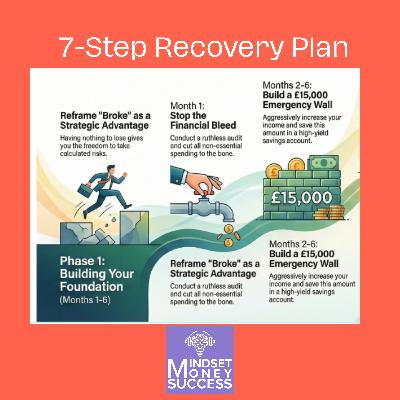
In This weeks episode Loraine covers Mindset shift (Permission to start over), Practical strategy (The zero-based restart), and New beginning (Taking confident action).5 Best MomentsRedefining Your Enough: Loraine shares that recovery isn't about dwelling on what you've lost, but about redefining your enough. Instead of focusing on past numbers, we must redefine success based on a feeling of security and peace, identifying our "current enough" starting today.The Forced Financial Declutter : Financial setbacks should be viewed as a forced financial declutter, not a failure. The upside is gaining total clarity and the wisdom of experience, which becomes a vital asset.The Wisdom Bank and Zero-Based Approach : The concept of the Experience and Skills Audit, or "Wisdom Bank," is introduced. This involves thinking about skills unconsciously mastered over the past 40 years—through employment, hobbies (like gardening or cooking), or creative pursuits—which can be monetised by becoming a niche content creator.Low-Cost Launch Strategy : The true zero-based approach involves getting started with a low-cost launch, utilising tools you already possess, like your mobile phone camera and existing knowledge. The only investment required is time and consistency.AI as Your Digital Mentor : Loraine suggests using AI tools (like Gemini, Google, or Perplexity) as a free business mentor and problem solver, providing clarity and guidance to overcome blocks. A powerful prompt example is shared to analyse time tracking against 90-day goals and suggest effective changes.5 Key TakeawaysPermission to Start Over: When facing financial devastation, emotional thinking is often driven by fear and uncertainty, screwing up decision-making capacity. Grant yourself permission to let go of the past and start over, moving away from dwelling on what you’ve lost.Success via Small Decisions: Success is achieved through a series of consistent small decisions made daily, not through one big leap or single finish line. Use a Decision Audit to ensure your daily actions are moving you closer to your goal of consistent monthly income ("your current enough").Monetise Your Expertise: Leverage your unique experience, resilience, and knowledge—your most valuable assets—and turn them into shareable content. There are many ways to monetise, even before reaching traditional follower counts, such as offering coaching or selling digital products.Strategic Content Batching: Plan your daily actions in advance and schedule them. A practical step is to choose one day per week to batch create short videos (7, 15, or 60 seconds) to ensure you have a week's or month's worth of content scheduled and ready to post.Define and Achieve 90-Day Goals: Clarity on what you want to achieve in the next 90 days makes it easier to determine the necessary actions you should be taking on your journey toward financial security. The goal is to use the clarity gained from the zero-based restart to fuel intentional movement towards your new financial goal.LINKSSupport My Recovery and Content Creation on Buy Me A CoffeeInvitation To Join Skool As A Creator
IntroductionOn this episode of Mindset, Money, Success, host Loraine Marshall tackles the journey of recovering from emotional, psychological, and financial abuse. Drawing on her own story and others, Loraine explores post-separation "litigation abuse," the systemic challenges survivors face, and how to turn trauma into a powerful force for advocacy and change.5 Best MomentsThe Vow to Write: The night her relationship ended, Loraine made a vow: "I'm going to write the book". She shares how this pivotal decision was the first step in reclaiming her story, leading to her book's publication.Vindication in Court: Loraine recounts her stunning legal victory in a Spanish court, where she faced serious criminal allegations that carried a potential 17-year prison sentence. She reveals the moment of ultimate triumph when all charges were completely dismissed.The Birth of an Advocate: Learn the inspiring story of Tina Swithin, who started her blog "One Mum's Battle" in 2011 to document a decade-long family court struggle. Discover how her personal battle transformed into a global educational resource, helping thousands of women.The Unmarried Woman's Plight: Loraine exposes a critical legal loophole, explaining how family laws in the UK and much of Europe often fail to protect unmarried women. This legal gap leaves many financially devastated after a long-term, controlling relationship ends.From Survivor to Coach: An empowering call to action reveals how lived experience with trauma is a valuable asset. Lorraine explains how survivors can channel their journey into positive action, becoming certified coaches and advocates to help others who are struggling.5 Key TakeawaysEmpowerment Begins with Education: Abusers often work to destroy a partner's self-esteem. Reclaim your independence by educating yourself through books, online courses, or volunteering to gain new skills, increase earning potential, and rebuild your self-worth.Recognise the Multiple Faces of Abuse: Abuse isn't just emotional; it often involves financial entrapment that makes leaving feel impossible. After separation, it can become "litigation abuse," where the legal system itself is weaponised to maintain power and control.Your Story Has Power: Sharing your experience through a blog or book, as both Lorraine and Tina Swithin did, is a profound form of healing. Your story can create a community and become a vital educational resource for others who feel alone.Understand the System's Shortcomings: Be aware that family courts are often ill-equipped to handle cases involving parents with personality disorders who manipulate the process. If you are unmarried, you may lack the financial and legal protections given to married couples in the UK and much of Europe.Transform Your Trauma into a Positive Force: Your lived experience is an asset that can be transformed into something positive. With training and support, you can use your unique insights to become a certified coach or advocate, helping other women overcome the very traumas you have survived.Support My Recovery and Content Creation Invitation To Join Skool As A Creator
In this episode, your host, Loraine Marshall, covers the subject of post-separation abuse, drawing on her own experiences over the last five years. Loraine structures the episode by asking and answering seven questions, exposing what this form of abuse looks like, who is most at risk, and its profound impact on a survivor's life.5 Best Moments1. Loraine contrasts a typical breakup with post-separation abuse. Most couples can negotiate terms through discussion or mediation, but post-separation abuse occurs when a dominant, high-conflict personality is determined to use litigation and control from the outset, offering their ex-partner no say in the matter. It's their way or no way at all.2. Loraine shares how she only realised her own relationship had been abusive at its end. The most shocking point was when her lawyer advised her to file a complaint of gender violence with the police, a moment that was a "massive shock" and highlighted the hidden nature of coercive control.3. Loraine offers a transformative perspective on the psychological aftermath of abuse. She argues that post-traumatic stress (PTS) from emotional, psychological, and financial abuse should not be seen as a "disorder". Instead, it should be classified as a "personal injury"—a natural response to trauma, just as a broken bone is an injury from physical violence.4. The manipulative tactic abusers use is known as DARVO: Deny, Attack, and Reverse Victim and Offender. Loraine explains how abusers deny any wrongdoing and attack the real victim, twisting the narrative so completely that the victim is portrayed as the abuser. She shares that she was personally caught up in this type of situation.5. How the legal system can re-traumatise survivors. Loraine highlights how some solicitors advise women not to mention the abuse in family court proceedings, leaving them unable to speak about what happened. This, combined with a lack of understanding of high-conflict personalities by judges and legal professionals, can lead to prolonged litigation abuse that traps women for five to ten years.5 Key Takeaways1. The period after a breakup can be the most dangerous time for a victim of a controlling relationship. The abuser's need for control can heighten when they feel they are losing their "possession," leading to escalated aggression, threats, and intimidation.2. The legal disparity between married and unmarried couples. In the UK and across much of Europe, cohabiting partners are not covered by family laws for financial settlements unless they have a prior written agreement. This leaves the economically weaker party, often the woman, with little legal recourse.3. Post-separation abuse is not a single act but a pattern of behaviour. It can include intimidation through texts and emails, stalking (both in-person and online), threats of litigation, and financial coercion through derisory settlement ultimatums with no room for negotiation.4. The chronic stress from post-separation abuse has severe consequences for a survivor's well-being. It can lead to psychological impacts like loss of self, PTSD, and anxiety, as well as physical manifestations such as a weakened immune system and heart or stomach issues.5. Survivors are often stuck in "survival mode" and cannot begin to rebuild their lives until all litigation is over. The constant stress erodes self-confidence and affects memory, making it incredibly difficult to find employment, manage finances, or even perform daily tasks like getting out of bed.Support My Recovery and Content Creation Invitation To Join Skool As A Creator
Host Loraine Marshall returns after a break, revisiting a chapter from her first book. She shares the transcript of a deeply personal meeting held five years ago. What was intended as a discussion about financial proposals after a breakup quickly escalated, leading to civil and criminal litigation for various offences, including defamation, harassment, and theft. Loraine reflects on this harrowing experience, highlighting the one-sided nature of the meeting and the verbal aggression she endured.Key Moments & TakeawaysThe meeting was not a negotiation; it was an imposition of demands. From the start, Loraine's ex-partner shut down her alternative proposals, stating she "hadn't listened" to what he wanted. He then told her to "go away and think about it," despite her already having a detailed proposal prepared. This demonstrated his complete disregard for her input.Loraine reveals a history of control and verbal abuse that preceded the meeting. She reflects on her inability to communicate effectively with him, a pattern that began after he confessed to an affair. She realised he consistently used verbal aggression—raising his voice, saying "nasty" things, and getting angry—to silence her. This created a dynamic where her voice was suppressed.The severity of his behaviour was underscored when a Spanish solicitor, after hearing a recorded clip of the meeting, advised Loraine to file a gender violence complaint. In the clip, her ex-partner is heard using aggressive and threatening language, while banging his fist down on the glass table, shouting, "I'll make it the 15th of fucking November if I want to. Don't fuck about with me. I've told you 4 months.".Throughout the meeting, he employed threats and belittling remarks to maintain dominance. He warned her, "You've had one strike already," and told her to "just be careful how you tread," suggesting her future security depended on him. He further escalated his aggression by calling her a "fucking bleeding heart, post-menopausal, sad old bitch."This single meeting didn't bring about an amicable end to the relationship. Instead, it marked the beginning of legal intimidation for Loraine, who was left in confusion, fear, trauma, and financially vulnerable. She describes being left without work and limited savings, with her ex-partner referring to her as "collateral damage." The situation post-discard ultimately led to her ex-partner taking both civil litigation for eviction and criminal allegations for defamation, slander, harassment, revealing secrets, misappropriation, theft, and damages.Support My Recovery and Content Creation on Buy Me A CoffeeInvitation To Join Skool As A Creator
Listener discretion is advised *Language Warning* strong, potentially offensive language.In this deeply personal episode, Loraine shares her experience of psychological and economic abuse within an intimate relationship in Spain. Drawing on her lived reality and reflecting against the GREVIO report on Spain’s implementation of the Istanbul Convention, she uncovers the systemic failings of legal, judicial, and social support structures meant to protect women. From conflicting legal advice to court-appointed lawyers who failed her, and the trauma of eviction proceedings where her voice was silenced, Loraine exposes how women, especially foreign nationals, can be retraumatised by institutions meant to help them. This episode is a must-listen for survivors, advocates, and anyone seeking to understand the hidden dynamics of financial control and legal manipulation in abusive relationships.Best Moments“Stay in the property. Call the police if threatened. Negotiate.”— The legal advice Loraine received, which contrasts sharply with what she later learned about prohibited mediation in abuse cases.“You’ll leave with nothing.” A chilling shift from an agreed financial settlement to hostile legal actions by her ex-partner.“I was denied a voice to speak.” Loraine’s description of the eviction hearing, where, despite securing a translator, no one asked her to testify or present her evidence.“Imagine you’re struggling in the sea…” A powerful metaphor captures the despair of economic abuse, likening it to an abuser snatching away a lifeline while watching the victim drown.“He said: ‘Your future security depends on having me on your side." A direct quote that exemplifies coercion, power imbalance, and the emotional manipulation central to economic violence.Key Takeaways Legal Systems Often Fail to Protect Survivors - inconsistent legal representation, poor communication, and ignorance of international conventions leave survivors vulnerable.Economic Abuse Is a Hidden, Ongoing Form of Control - Post-breakup financial manipulation—like withdrawing settlement offers or initiating costly litigation—can trap survivors in prolonged trauma.Mediation in Abuse Cases Is Prohibited—But Still Happens - Despite Article 48 of the Istanbul Convention, survivors are often pushed into negotiation with abusers under the guise of “amicable” settlements.Being a Foreigner Adds Layers of Vulnerability - Language barriers, lack of support networks, and discriminatory treatment from legal and social systems increase risks for migrant women.There Must Be Accountability and Continuity in Legal Support - Survivors need consistent legal help from professionals trained to identify abuse patterns—not just procedural conflict, so they are not silenced or misrepresented.Research Documents“Spain – Istanbul Convention Action against violence against women and domestic violence”STUDY OF ECONOMIC VIOLENCE AGAINST WOMEN IN THEIR RELATIONSHIPS WITH PARTNERS OR EX-PARTNERS PDFSEA: https://survivingeconomicabuse.org/Tips and donations are welcome and greatly appreciated!! Hosted on Acast. See acast.com/privacy for more information.
Will The Real Victim Please Stand Up? How can professionals tell who is the real victim after a relationship with the Narcissist ends?In this powerful episode, Loraine looks at the aftermath of narcissistic abuse—how professionals, courts, and even loved ones often struggle to identify the "real victim" when a toxic relationship ends.Let me tell you about Skool. https://successwithloraine.com/skool-sign-up Narcissists are master manipulators, rewriting history, gaslighting, and playing the victim to evade accountability. Meanwhile, actual survivors are left traumatised, isolated, and struggling to articulate their pain. Drawing from personal experience, expert insights (like Dr. Ramani’s), and harrowing case studies, we expose the stark differences between a "false victim" (the narcissist) and an "actual victim" (the survivor). If you’ve ever wondered why victims aren’t believed—or how abusers weaponise the system—this episode is for you. Best Moments from the Episode: 1. Dr. Ramani’s Stark Truth: "All domestic abusers are narcissistic. Zero empathy, incredible arrogance—that’s narcissism." 2. The Survivor’s Fog: Why true victims often sound "chaotic" when recounting abuse, while narcissists deliver smooth, calculated lies. 3. DARVO Exposed: How narcissists *Deny, Attack, and Reverse Victim and Offender* to manipulate professionals. 4. Courtroom Betrayal: The shocking reality of how survivors are re-traumatised by legal systems that dismiss covert abuse. 5. Life After Abuse: Why true victims isolate themselves, while narcissists move on instantly—new relationships, social media bragging, and no remorse. Equality Now - Human Rights Issues https://equalitynow.org/news_and_insights/weaponizing-defamation-lawsuits-against-survivors-violates-international-human-rights/ Key Takeaways: 1. Spot the Patterns: True victims show PTSD symptoms (anxiety, confusion); false victims appear detached, entitled, and hyper-articulate. 2. Trauma vs. Tactics: Survivors self-blame and grieve; narcissists weaponise victimhood to "win" at all costs. 3. Systemic Failure: Courts often mistake a survivor’s anger for instability while believing the narcissist’s charm. 4. Silence Isn’t Consent: Many victims don’t report abuse due to fear, trauma bonds, or shame—not because it didn’t happen. 5. Healing is Possible: Recovery starts with therapy, community, and the realisation that you were never the problem. Support the Mission: Help raise awareness of hidden abuse—share this episode, grab a copy of my book, or donate to support survivors. 💛 #justiceforsurvivors Buy My BookWhat Type Of Man? The updated 2024 Version.Amazon US : https://www.amazon.com/dp/B0B1RVQQDHIf you live in the UK https://amzn.to/3NBlQbxSupport LifeChangePlans https://donorbox.org/support-life Hosted on Acast. See acast.com/privacy for more information.
Narc Narc Who's There - Podcaster and Author Dana Diaz. In this powerful episode, Loraine sits down with bestselling author, podcaster, and speaker Dana Diaz to discuss the harrowing yet transformative journey of surviving narcissistic abuse. From childhood trauma to toxic relationships, Dana shares her story of resilience, healing, and reclaiming self-worth. This conversation is a must-listen for anyone who’s experienced manipulation, gaslighting, or emotional abuse—and seeks the strength to break free.5 KEY TAKEAWAYS:Narcissistic Abuse Follows a Predictable CycleLove-bombing, devaluation, and discard phases keep victims trapped in hope and confusion.Childhood Trauma Sets the StageDysfunctional upbringing (e.g., parentification, emotional neglect) primes individuals to tolerate abuse in adulthood.The Physical Toll of AbuseProlonged stress can manifest as autoimmune disorders, chronic illness, or extreme weight loss (Dana’s lung syndrome).Financial Control as a WeaponNarcissists exploit financial dependence to maintain power, then blame victims for "using" them.Healing Requires Rebuilding Self-TrustSetting boundaries, therapy, and writing (like Dana’s journal-to-book journey) are critical to recovery.5 BEST MOMENTS:"He was trying to kill me without getting his hands dirty."Dana’s chilling realization about her ex-husband’s psychological warfare."I internalized the words: ‘Nobody will ever love you.’"How childhood verbal abuse shaped Dana’s vulnerability to toxic relationships.The COVID Journal of SurvivalDana hid a journal under the couch during lockdown, fearing her ex would murder her and stage it as an accident."If my daughter told me this, I’d rescue her—yet I stayed."Dana's reflection on the disconnect between self-worth and protecting loved ones."Abuse is abuse, and an a-hole is an a-hole."The blunt truth about narcissists’ universal playbook, regardless of geography or laws.You can discover more at https://danasdiaz.com/Tips and donations are welcome and greatly appreciated!! 🙏❤️🙏❤️🙏https://buymeacoffee.com/successwithloraineSuccess By Loraine Merch is Sold on AmazonNarcissist Aware and SelfCare Collectionshttps://successwithloraine.com/merch/Zoom coaching sessions are 1:1 or appear on my podcast.I’ll spend forty minutes with you to help guide you or listen to your story.Or join me on Mindset, Money, SuccessLet's chat & record a Podcast Episode together. Let's Go!https://buymeacoffee.com/successwithloraine/e/385914Connect on other Platformshttps://linktr.ee/loraine_mms Hosted on Acast. See acast.com/privacy for more information.
In this episode, Loraine shares her four-year battle with a legal system that failed her as a survivor. Through her lived experience, she reveals misguided legal advice and legal barriers faced by women seeking justice. If you’ve ever felt silenced by the system, this episode is for you.Survival Funds - Support the Podcast5 Key Takeaways: Legal Systems Often Fail Survivors: How victims are frequently dismissed, given conflicting advice, or pressured into actions they’re uncomfortable with. Advocacy: Without a lawyer who truly listened or advocated for her needs, survivors face bureaucratic dead ends—highlights the critical need for trauma-informed legal representation. Hidden Abuse Goes Unrecognized: Her case was downgraded from psychological abuse to minor verbal abuse by the courts, exposing how systems minimize non-physical violence. Financial Coercion as a Weapon: Manipulation continued through broken financial promises (reneged offers for a monetary settlement), a tactic many survivors face. :Staying Strong: Despite setbacks, Loraine persisted—researching laws, writing a book, and fighting for her rights—proving survival is possible even when systems work against you. 5 Best Moments: Solicitor’s Shocking Advice (0:13–4:12) The lawyer insisted she file a gender violence complaint, ignoring her plea for negotiation—a pivotal failure in the system. Triggering Legal Threats (10:47–11:17) The gut-wrenching email from her ex’s lawyer: "The judge will order your eviction—you have no rights in this country."Courtroom Betrayal (19:02–20:21) A lawyer dismissed evidence, reducing years of abuse to "one minor verbal incident"—a stark example of systemic failure. Appeal Denied (22:44–23:48) The free lawyer wouldn't appeal —another institutional failure. Systemic Failures (26:09–26:26) “These are the systemic failures in the system. There should be a set process in place so that when someone presents with the issue, they can go through this or that. There should be a flow chart of how to proceed.” Hosted on Acast. See acast.com/privacy for more information.
Wellness, Writing, and Winning: A Conversation with Katie Gauthier #mindset #money #success In this episode of Mindset Money Success, host Loraine Marshall sits down with Katie Gauthier, an international bestselling author, wellness coach, and yoga teacher. Katie shares her journey of co-authoring the book Becoming the Manifesting Diva: Making Ripples While You Flow, which became an instant bestseller across multiple countries. Together, they dive into the power of mindset, overcoming trauma, and how to reframe limiting beliefs to create a life of success and fulfilment. Katie also opens up about her unique approach to coaching, blending yoga and mindset work to help clients release emotional blockages and thrive. Tune in for an inspiring conversation about resilience, collaboration, and the importance of moving forward, no matter the setbacks.5 Key Takeaways:Mindset is Everything: Katie emphasizes that most challenges stem from negative self-beliefs or mindset blocks. By addressing these, individuals can unlock their potential and create lasting change.Trauma-Informed Coaching: Katie’s approach combines mindset coaching with yoga to help clients release emotional and physical blockages, especially those rooted in trauma.The Power of Collaboration: Katie’s journey as a co-author highlights the importance of collaboration and how working with others can lead to incredible opportunities, like becoming an international bestselling author.Reframing Setbacks: Both Loraine and Katie discuss how setbacks can be reframed as opportunities for growth. By asking, “What is this trying to teach me?” you can turn challenges into stepping stones.Resilience in the Face of Adversity: Loraine shares her personal story of overcoming trauma and legal battles, emphasizing the importance of persistence and self-belief in the face of life’s toughest challenges.5 Best Moments:Katie’s Bestseller Journey: Katie shares how she became a co-author of an international bestselling book, Becoming the Manifesting Diva, and the serendipitous connections that made it possible. (00:02:00)The Intersection of Yoga and Mindset: Katie explains how she blends yoga with mindset coaching to help clients release emotional blockages and reconnect with their true selves. (00:10:00)Loraine’s Story of Resilience: Loraine opens up about her traumatic experiences, including a toxic relationship and legal battles, and how she found the strength to keep moving forward. (00:25:00)Reframing Limiting Beliefs: Katie discusses her process of helping clients reframe limiting beliefs, turning self-doubt into empowerment. (00:15:00)Celebrating Failure: Both Loraine and Katie talk about the importance of learning from failure and how it can be a powerful tool for growth. (00:40:00)Find Katie on Instagram @therealkatieofalltradesTips and donations are welcome and greatly appreciated!! 🙏❤️🙏❤️🙏Support the Podcast - https://buymeacoffee.com/successwithloraineAmazon Merch - https://successwithloraine.com/merch/Connect on other Platforms: https://linktr.ee/loraine_mmsIf you’re interested in being a guest on the podcast or booking a 1:1 Zoom session with me, head over to: https://buymeacoffee.com/successwithloraine/e/38591 Hosted on Acast. See acast.com/privacy for more information.
In this episode, Loraine emphasizes the key role of mindset in achieving financial freedom, particularly for women over 40 facing life-altering events. Drawing from her personal experiences of financial insecurity after betrayal and loss, Loraine identifies common blocks such as fear, lack of financial literacy, emotional trauma, and financial dependency. Loraine then offers practical steps and mindset shifts to overcome these obstacles, encouraging listeners to adopt an abundance mindset, hold onto courage, take financial ownership, and develop self-worth. An encouraging guide for women seeking to rebuild their lives and achieve financial independence by focusing on internal strength and proactive steps.5 KEY TAKEAWAYS:* Mindset is the fundamental key to achieving financial freedom, especially for women over 40 navigating significant life changes like divorce, loss, or betrayal. Financial freedom encompasses how we think, believe, and act, not just the amount of money we have.* Overcoming financial trauma involves recognizing and addressing common blocks such as fear and self-doubt, lack of financial literacy, emotional trauma from events like betrayal and loss, and being financially dependent on others.* Shifting your mindset is crucial for building financial independence. This involves moving from a scarcity mindset to an abundance mindset, from fear to courage, from dependency to ownership of your financial decisions, and from self-doubt to self-worth.* There are practical steps you can take to shift your mindset for financial security, including using journaling prompts and daily affirmations, building a supportive network, and actively improving your financial literacy.* No matter your current circumstances, you have the power to change your financial story by making a conscious decision to shift your mindset and take control of your future. Even amidst trauma and setbacks, focusing on skill development and future plans can be empowering.5 BEST MOMENTS:* Loraine's opening, where she shares her personal experience of her planned secure financial future vanishing, immediately highlights the real-world importance of mindset in the face of unexpected life changes.* The article's direct acknowledgment that fear in these situations can stem from external sources beyond negative thoughts, adding a layer of complexity to the common advice to "feel the fear and do it anyway".* The powerful and relatable statement: "Betrayal, abandonment, and loss can shatter our sense of security and self-worth", which underscores the significant emotional impact on financial well-being.* Maya Angelou's impactful quote: “You may not control all the events that happen to you, but you can decide not to be reduced by them,” offering a message of resilience and empowerment in the face of adversity.* The inclusion of concrete, actionable steps like specific journaling prompts and practical tips for improving financial literacy, providing listeners with tangible ways to start their journey towards financial freedom.Tips and donations are welcome and greatly appreciated!! 🙏❤️Merch is Sold on AmazonNarcissist Aware and SelfCare CollectionsConnect on other Platforms Hosted on Acast. See acast.com/privacy for more information.
In this episode of Mindset, Money, Success, host Loraine Marshall dives into the inspiring story behind her Amazon Merch t-shirt collections under the brand Success With Loraine. With two powerful collections—Narcissist Aware and Self Care—Loraine shares her personal journey of overcoming emotional and financial abuse, and how she turned her pain into purpose. These collections, available on Amazon ES, UK, and US, are more than just apparel; they are wearable messages of empowerment, awareness, and self-care. Tune in to learn how Loraine created these collections to support her podcast, YouTube channel, and website while raising awareness about hidden forms of abuse.5 Key Takeaways:Raising Awareness Through Wearable Messages: Loraine’s t-shirt collections, Narcissist Aware and Self Care, are designed to spark conversations about hidden forms of abuse, such as emotional, psychological, and financial manipulation.Personal Healing Through Creativity: After experiencing a toxic relationship, Loraine channelled her pain into creating slogans like "Not A Possession, Not A Plaything, I'm A Person" to empower victims and help them recognize their worth.Multiple Streams of Income: Loraine emphasizes the importance of diversifying income streams, especially for those rebuilding their lives after trauma. Her merch collections are one way she supports her podcast and online presence.The Importance of Boundaries: One of the slogans, "Boundaries Begin Here," highlights the need for setting clear boundaries in relationships to protect oneself from emotional harm and manipulation.Self-Care as a Path to Healing: The Self-Care collection encourages victims to prioritize their well-being through activities like journaling, yoga, and painting, reminding them that happiness is the highest form of success.5 Best Moments:The Story Behind "Not A Possession, Not A Plaything, I'm A Person": Loraine shares how this powerful slogan reflects her experience of being treated as an object in an abusive relationship and how it resonates with many victims of hidden abuse.Creating the Narcissist Aware Collection: Loraine discusses the emotional process of designing t-shirts like "Narcissists Destroy Lives" and "Enough is Enough," which reflect the pain and empowerment of leaving toxic relationships.The Importance of Multiple Income Streams: Loraine opens up about her financial struggles after leaving her business and how creating the merch collections became a way to rebuild her life and support her podcast.The Healing Power of Self-Care: Loraine explains how the Self-Care collection was born out of her own healing journey, with slogans like "Remember You Are Amazing" and "Happiness is the Highest Form of Success."A Message of Empowerment: Loraine closes the episode with a heartfelt reminder that victims of abuse are stronger than they think, and every small step toward self-care and self-love is a step toward reclaiming their power.Don’t forget to check out the Narcissist Aware and Self Care collections on Amazon ES, UK, and US, and support Loraine’s mission to empower victims of hidden abuse.Tune in to next week's episode. Loraine is covering "Why Mindset is the Key to Financial Freedom" Hosted on Acast. See acast.com/privacy for more information.
loading
Comments 
loading