


 Claim Ownership
RMIT FORWARD
Subscribed: 0Played: 1
Subscribe

© All rights reserved
Description
FORWARD is RMIT University's Centre for Future Skills and Workforce Transformation.
44 Episodes
Reverse
We’re in a world where five-year plans don’t last five months, market dynamics shift overnight and AI rewrites the rules weekly.
Traditional strategy-making is cracking under pressure. The question isn’t whether we need strategy, but how to make it resilient, dynamic, and alive. What if strategy wasn’t a static document, but an ongoing practice of adaptation, sensemaking, and navigation?
I’m joined by RMIT FORWARD Fellows Marc Chataigner, strategist and service designer with 20 years of international experience, and Peter Creeden , global supply chain leader maritime logistics specialist, to talk about what nimble, flexible strategy might look like, why it’s important to align strategy, what happens when there are human and non-human actors working together - and what sailing can teach us about strategy.
.
00:58 Navigating Complexity in Global Supply Chains
02:31 The Evolving Definition of Strategy
04:20 Adapting Corporate Strategy to Modern Challenges
07:35 Strategic Failures
For the full video and show notes, head here: https://vimeo.com/1105696515
To learn more about RMIT University FORWARD, and our 50+ global ecosystem of world-class Industry Fellows who we assemble into fluid teams to work as strategic partners with organisations to ensure they have the right help when they need it, head to https://rmit-forward.org
In this episode of Hot Takes, Peter Thomas from RMIT Forward leads a discussion on the challenges and solutions in scaling reskilling programs. He is joined by experts Josie Gibson, founder of Catalyst; Alex Young, Head of Innovation at Lifeblood; and Mish Eastman, Deputy Vice Chancellor for Vocational Education at RMIT University. They explore earn and learn models, the necessity for policy and funding changes, and the role of ethical considerations in adapting to new technologies like AI. The conversation also emphasizes the need for a collaborative approach involving government, industry, and educational institutions to create effective and sustainable reskilling environments.
To learn more about RMIT FORWARD, and our 50+ global ecosystem of world-class Industry Fellows who we assemble into fluid teams to work as strategic partners with organisations to ensure they have the right help when they need it, head to
https://rmit-forward.org
In this episode of Hot Takes, Peter Thomas from RMIT Forward, discusses the intricacies of trust in distributed work. The conversation features insights from FORWARD Fellows Jerry Michalski, founder of Open Global Mind, and Matt Collier, an innovation leader in leadership strategy and transformation.
They explore how trust, traditionally built through proximity and visibility in the workplace, needs to be re-envisioned in distributed teams. The discussion covers the role of leadership, the inadequacies of current collaboration tools, the nuances of designing for trust, and the importance of small daily actions and authentic interactions in building a trust-based work environment.
To learn more about RMIT University FORWARD, and our 50+ global ecosystem of world-class Industry Fellows who we assemble into fluid teams to work as strategic partners with organisations to ensure they have the right help when they need it, head to https://rmit-forward.org
In this episode of Hot Takes, Peter Thomas discusses AI assistants and their impact on human attention with RMIT FORWARD Industry Fellows Sam Spurlin, an organization design strategist from The Ready, and Aaron McEwan, a workplace futurist at Gartner. We tak about the benefits and potential pitfalls of AI assistants, from enhancing focus during meetings to the risk of increased cognitive overload from poorly implemented tools. We discuss why Bring Your Own AI (BYOAI) might change the adoption and value of AI in the workplace.
To learn more about RMIT University FORWARD, and our 50+ global ecosystem of world-class Industry Fellows who we assemble into fluid teams to work as strategic partners with organisations to ensure they have the right help when they need it, head to https://rmit-forward.org
Design fiction invites us to prototype the future - not through predictions, but through artefacts and provocations. It helps organisations rehearse what could be, challenge their assumptions, and expand the boundaries of what they think is possible. And it’s showing up in real places: in policy labs, boardrooms, learning environments, and innovation teams.
Peter Thomas talks to Patrick Pittman, writer, editor, and researcher with deep experience crafting speculative narratives, cultural strategy, and tactical media for brands, cities and creative organisations; and Su Lim, global managing director and master planner of experience-led transformation with a focus on shaping future-ready environments, to talk about how design fiction goes beyond traditional scenario planning by using artifacts to prototype plausible futures and how it can aid in complex decision-making processes.
In this episode of Hot Takes, host Peter Thomas, director of RMIT FORWARD, is joined by digital sociologist and ethicist Lisa Talia Moretti and Andrew Spence, author of the Work 3 Substack newsletter, to talk about the integration of AI into daily workflows and the implications for work culture and productivity. The conversation delves into whether AI is supporting or reshaping the workforce, the relevance of traditional notions of productivity and qualifications, accountability in a human-AI hybrid workforce, the need for the intentional redesign of workplaces to adapt to AI.
In this episode of Hot Takes, Peter Thomas talks to RMIT's Professor Chris Speed about regenerative futures.
Moving beyond traditional sustainability, regenerative futures focuses on not just minimizing harm but actively repairing and strengthening systems.
Chris talks about careers, organizations, and economies that leave positive impacts on people, communities, and ecosystems, how to teach and implement regenerative principles, the importance of collaboration, the paradigm shift from isolated value chains to interconnected value constellations, and educational models that foster interdisciplinary collaboration and life-wide learning.
To learn more about RMIT FORWARD, and our 50+ global ecosystem of world-class Industry Fellows who we assemble into fluid teams to work as strategic partners with organisations to ensure they have the right help when they need it, head to https://rmit-forward.org
In this episode of RMIT University FORWARD Hot Takes, Peter Thomas talks to RMIT Industry Fellows Serafina Maiorano, global leadership strategist and founder of Our Global Table, and Stowe Boyd, work ecologist and founder of Work Futures, about what happens when the centre of opportunity for skilled work shifts—not just away from traditional industries, but away from the West entirely.
For decades, high-value jobs in sectors like engineering, tech, and finance were concentrated in cities like Sydney, Boston, and London. But that’s changing. Companies aren’t just outsourcing anymore: they’re building their workforces where the talent already is - in places like India, where over a million engineers graduate each year.
In the last few years, tech giants have expanded their presence in Indian cities because of access to skilled talent at scale, which many Western countries are struggling to provide. Meanwhile, immigration policies have tightened, making it increasingly difficult for foreign professionals to relocate to the West. Are we witnessing a global inversion of opportunity? Could it soon make more sense for young professionals to study and work in Bangalore, not Boston?
To learn more about RMIT FORWARD, and our 50+ global ecosystem of world-class Industry Fellows who we assemble into fluid teams to work as strategic partners with organisations to ensure they have the right help when they need it, head to https://rmit-forward.org
In this episode of RMIT University FORWARD Hot Takes, we explore narrative intelligence, a crucial leadership capability that extends beyond communication.
In an era marked by disruption, complexity, and rapid change, facts alone aren't sufficient for effective leadership. While data informs decisions, it's stories that inspire action.
Peter Thomas talks to RMIT FORWARD Fellow Cass Spong of Entheos Consulting and Megan Davis of Spendlove and Lamb about how narrative intelligence can reshape leadership and facilitate meaningful change within organizations.
To learn more about RMIT FORWARD, and our 50+ global ecosystem of world-class Industry Fellows who we assemble into fluid teams to work as strategic partners with organisations to ensure they have the right help when they need it, head to https://rmit-forward.org
We're exploring one of the biggest opportunities and challenges of the future workplace: how we can reclaim human agency in the age of AI. As AI advances and automation transforms how work gets done, the potential grows for humans to move beyond routine tasks and focus on judgment, creativity, and strategy. But are we designing organisations that truly empower people—or are we still clinging to control, mistrust, and outdated structures?
Peter Thomas, along with Lisa Talia Moretti, a digital sociologist and tech ethics expert, Diana Wu David, global futurist, author, and strategic advisor and Matt Collier, innovation leader and advocate for human-centric AI futures, explore what real agency looks like, how organisations can foster it, why trust is critical, and how the future of work demands more flexible, human-centered systems.
To learn more about RMIT FORWARD, and our 50+ global ecosystem of world-class Industry Fellows who we assemble into fluid teams to work as strategic partners with organisations to ensure they have the right help when they need it, head to https://rmit-forward.org
We're focusing on a sector facing intense and sustained pressure: community services.
Community service organisations play a vital role in supporting the health, safety, inclusion, and wellbeing of individuals and communities, particularly those experiencing disadvantage, and are essential to the social and economic fabric of society. From workforce shortages and rising demand, to tightening budgets and growing regulatory complexity, many community services organisations are entering a period of contraction in order to survive. But what if this moment of constraint could be something more than a crisis? What if it’s a turning point
Julie Kun, from Julie Khun consulting with 20 years of experience in the community sector, and Antony McMullen, director and secretary of cooperative bonds, a cooperative development agency, join Peter Thomas to explore purpose, mission, new ways of operating, what can be learned from the cooperative movement and how it’s essential to cooperate for success.
To learn more about RMIT FORWARD, and our 50+ global ecosystem of world-class Industry Fellows who we assemble into fluid teams to work as strategic partners with organisations to ensure they have the right help when they need it, head to https://rmit-forward.org
We’re tackling a critical question: Can companies keep up with employee expectations? From hybrid work to leadership transparency, workers are demanding more from their employers than ever before. But are organisations evolving fast enough to meet these shifting expectations? With Megan Davies, specialist in storytelling and Founder of Spendlove and Lamb, Josie Gibson, founder of The Catalyst Network and Peter Thomas explore the complexity of workplace hierarchies, the significance of fulfilment and purpose, the role of storytelling, how emotional regulation is a quantum superpower and the hierarchical versus collaborative frameworks.
To learn more about RMIT FORWARD, and our 50+ global ecosystem of world-class Industry Fellows who we assemble into fluid teams to work as strategic partners with organisations to ensure they have the right help when they need it, head to https://rmit-forward.org
Can we balance AI-driven innovation with ethical responsibility? Peter Thomas is joined by Daniel Layne, CEO of QV Systems; Sami Mäkeläinen, Founder of Transition Level; and David Cordover, Entrepreneur, Mentor, and Angel Investor. Together we dive into the risks and opportunities as AI reshapes the workplace.
To learn more about RMIT FORWARD, and our 50+ global ecosystem of world-class Industry Fellows who we assemble into fluid teams to work as strategic partners with organisations to ensure they have the right help when they need it, head to https://rmit-forward.org
From construction to healthcare to manufacturing, how are these sectors adapting to rapid technological change—and what happens if they don’t? In discussion are Peter Thomas, Alison Worland, Director of Hatchwings, and Sami Mäkeläinen, Founder of Transition Level. We explore the challenges, opportunities, and what leaders need to get right in this transformation.
To learn more about RMIT FORWARD, and our 50+ global ecosystem of world-class Industry Fellows who we assemble into fluid teams to work as strategic partners with organisations to ensure they have the right help when they need it, head to https://rmit-forward.org
In a world dominated by AI and automation, do soft skills still matter?
Peter Thomas from RMIT FORWARD, Alex Young, Innovation Manager at Lifeblood, Josie Gibson, Director of The Catalyst Network and Diana Wu David, futurist and CEO of Future Proof Lab unpacking why creativity, empathy, and leadership aren’t just nice to have—they’re essential for the future of work.
To learn more about RMIT FORWARD, and our 50+ global ecosystem of world-class Industry Fellows who we assemble into fluid teams to work as strategic partners with organisations to ensure they have the right help when they need it, head to
https://rmit-forward.org
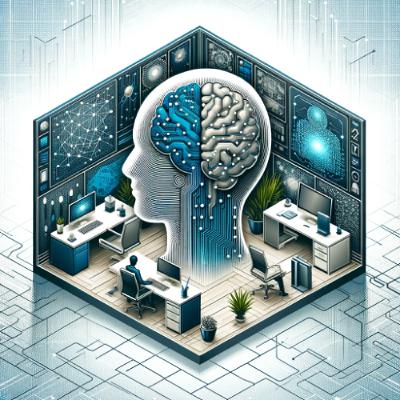
In this episode of AI Chronicles, Pete Cohen talks with Christian Ulstrup, a founder, product manager, and CEO advisor, about AI adoption in the workplace and its implications for the future of work.
Christian introduces a three-level maturity model for AI adoption, progressing from single-player to multiplayer mode. He shares real-world examples of integrating AI into core workflows for clients, highlighting his commitment to consistent, hands-on experimentation.
The discussion delves into approaches to AI tooling and investment, exploring the use of advanced models like OpenAI's o1 Pro and their impact on output quality. Christian is investing more than most people in his AI tooling, and we get to hear his insights on the benefits of using high-performance AI models for various tasks.
Christian introduces Powerline, a product he's developing that functions as an "AI Chief of Staff." This tool analyses meeting transcripts to provide insights for CEOs and helps maintain connections between leadership and teams, showcasing practical applications of AI in organisational management. We also get insight into how one person with limited coding knowledge can leverage AI tools to develop, launch and maintain a software product.
Looking to the future, Christian and Pete discuss the anticipated shift towards more remote, asynchronous, and AI-mediated work environments, with practical advice on adapting to these changes and leveraging AI tools to enhance productivity and collaboration.
Throughout the episode, Christian emphasises the importance of experimentation and hands-on experience with AI tools, encouraging listeners to explore and integrate AI into their workflows.
Recommended writing of Christian's to read:
Accelerated AI Adoption: A Three-Level Maturity Model and How to Make the Shift From Single-Player to Multiplayer Mode - https://bit.ly/3Wm7u3n
Learning through doing - https://bit.ly/42ehHT5
Where to find and connect with Christian:
LinkedIn: https://www.linkedin.com/in/christianulstrup/
GSD at Work: https://www.linkedin.com/company/gsd-at-work
Powerline: https://powerline.bot
Tools and resources mentioned:
ChatGPT and GPT-4 (https://chat.openai.com/) - Conversational AI models for general-purpose text generation and assistance, with GPT-4 offering enhanced reasoning capabilities.
Claude (https://www.anthropic.com/) - Advanced AI language model offering versatile capabilities for various tasks.
Superwhisper (https://www.superwhisper.com/) - Voice-to-text dictation tool utilizing AI for accurate transcription.
Loom (https://www.loom.com/) - Video messaging tool for asynchronous communication and collaboration.
Replit (https://replit.com/) - Online integrated development environment (IDE) and collaboration platform for coding.
Powerline (https://powerline.bot) - AI chief of staff tool developed by Christian Ulstrup for analysing meeting transcripts and providing insights.
Timestamps:
00:00 Introduction of Christian Ulstrup
02:30 Christian's background and professional journey
05:15 Discussion on AI adoption and maturity model
08:30 Explanation of single-player to multiplayer mode in AI usage
11:45 Importance of experimentation in AI adoption
15:20 Challenges of AI adoption in large organizations
18:45 Shadow IT use and formal policies for AI tools in enterprises
22:30 Introduction to o1 Pro and its capabilities
27:15 Jevons paradox applied to AI technology
29:30 Overview of Powerline, Christian's "AI Chief of Staff" product
34:45 Examples of Powerline's practical applications
38:15 Christian's journey in learning programming through AI
41:00 Future of work predictions: remote, asynchronous, and AI-mediated
45:30 The shift towards fractional and gig economy work
48:45 Advice for adapting to the changing work landscape
52:30 Final tips and resources for getting started with AI tools
What is it like trying to introduce AI into a 90 year old organisation?
In this episode of AI Chronicles, Pete Cohen chats with Alex Young, who heads Business Growth and Innovation at Lifeblood which is the Australian Red Cross Blood Service. Alex shares his journey with AI, starting with ChatGPT, and how he is fostering interest and progress within his organisation.
Alex shares the journey of successful AI pilots, including a tool for summarising scientific reports and an AI-assisted interface for blood donor eligibility criteria. He emphasises balancing innovation with data security, particularly in a health organisation.
Beyond work, Alex shares personal experiences using AI for creative projects, such as rapidly prototyping a card game using ChatGPT and Midjourney.
The conversation touches on AI's implications for the future of work, with Alex raising questions about responsibility for implementing AI solutions that benefit employees.
Where to find and connect with Alex:
LinkedIn: https://www.linkedin.com/in/mralexyoung/
The Snooze Strategist (podcast and forthcoming book) https://www.youtube.com/@thesnoozestrategists
Medium: https://medium.com/@alexitabashi
Tools mentioned during the conversation:
ChatGPT (https://chat.openai.com/) - AI language model for conversational interactions and various tasks
Microsoft Azure (https://azure.microsoft.com/) - Cloud computing platform with AI and machine learning services
Amazon Web Services (AWS) (https://aws.amazon.com/) - Cloud platform offering AI and machine learning capabilities
Canva (https://www.canva.com/) - Graphic design platform with AI-enhanced features for creating visual content
Ship 30 for 30 (https://www.ship30for30.com/) - Online writing course for developing a daily writing habit
Google's Notebook LM (https://ai.google.dev/notebooks) - Tool for interacting with Google's language models, providing document summarisation with citations
Timestamps:
0:19 - Introduction of Alex Young and his various roles
1:06 - Alex's first interaction with ChatGPT and AI tools
2:18 - Overview of Alex's work environment at Australian Red Cross Lifeblood
4:46 - Discussion on adopting AI tools in a corporate environment
5:28 - Process of introducing new technologies into Lifeblood
9:14 - Proof of concepts for AI use in the organisation
15:41 - Alex's personal use of ChatGPT for productivity
21:54 - Discussion on voice interaction with AI tools
24:37 - Alex's experience designing a tabletop card game using AI tools
30:24 - Using AI for creative projects and reducing friction in idea-to-prototype process
31:18 - Discussion on using Canva and AI for content creation
33:31 - Alex's experience with the Ship 30 for 30 writing course and using AI for ideation
36:11 - Future of work discussion: identifying business opportunities that benefit individual employees
40:35 - The importance of auditing current work processes and seeking improvements
41:21 - Encouragement for those struggling with AI adoption
42:59 - Wrap-up and final thoughts
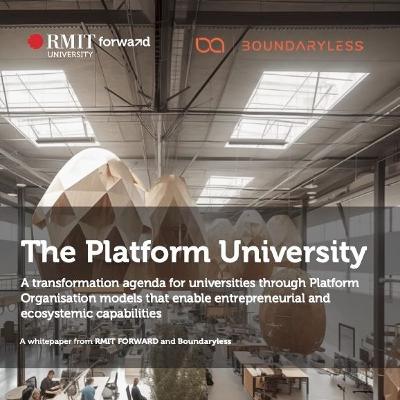
The Platform University whitepaper explores transforming universities using Platform Organisation models. It proposes decentralising decision-making, empowering autonomous units, and fostering entrepreneurial culture to address challenges like financial instability and changing student expectations. The paper discusses benefits, inhibitors, and recommendations for implementing this model, drawing inspiration from successful corporate transformations like Bayer and Haier.
Download the whitepaper and find out more here:
https://rmit-forward.org/platform-university/
This audio overview was generated by artificial intelligence through NotebookLM.
Is the 'human touch' in business becoming obsolete in the age of AI?
This episode of AI Chronicles, features Diana Wu David and Fedhz Mamaril. They collaborate together at Future Proof Lab, providing workshops and courses to help leaders navigate disruptive futures and harness technology trends.
Given this podcast is about the applied use of AI on the workplace, it was super interesting to speak with two people who collaborate on a daily basis and are introducing AI into their workflow.
The conversation covers practical applications of AI in their work as the creators of content and experiences, including design tools like Canva and language models like ChatGPT and Claude. They discuss how AI has streamlined processes, such as producing masterclass replays with transcripts and content snippets - activities which once took several hours can now be done in minutes.
A theme which emerged several times throughout the conversation is the importance of maintaining human touch in their work, especially in the context of the relational aspect of community management and the creative writing process.
Looking to the future, Diana and Fedhz envision AI enhancing learning experiences and enabling more creative business experimentation, given how much more quickly and cheaply an MVP version of a product or course can be developed and tested. However, they give us a reality check in that they have tried using the latest crop of tools to create courses, and the promise doesn’t quite live up to expectations just yet.
Contact:
Diana Wu David:
https://www.linkedin.com/in/dianawudavid
https://dianawudavid.com
Fedhz Mamaril:
https://www.linkedin.com/in/fedhz/
Future Proof Lab:
https://www.futureprooflab.com - Company website for courses, programs, and resources
Tools mentioned during the conversation:
Canva (https://www.canva.com) - Graphic design platform with AI-enhanced features for creating visual content
ChatGPT (https://openai.com/chatgpt) - AI language model for conversational interactions and content generation
Claude AI (https://claude.ai) - AI assistant developed by Anthropic, used for various tasks including creative writing
Beautiful AI (https://www.beautiful.ai) - AI-powered presentation software for creating professional-looking slides
Kajabi (https://kajabi.com) - All-in-one platform for creating, marketing, and selling online courses and digital products
Opus AI (https://www.opus.pro) - AI-powered video editing tool for clipping and processing video content
Otter.ai (https://otter.ai) - AI-powered transcription and note-taking application
Poe (https://poe.com) - Platform for accessing various AI models for conversation and content creation
Timestamps
00:00 - Introducing guests Diana Wu David and Fedhz Mamaril
01:12 - Diana on Future Proof Lab and her background
02:34 - Fedhz on her Future Proof Lab role and background
04:04 - AI products used in their work
05:14 - Fedhz on Canva and its AI features
06:55 - Using ChatGPT and Claude AI
09:39 - Diana's view on AI tools
10:32 - AI improving masterclass production efficiency
15:00 - Thinking differently with AI
17:42 - AI in course creation and personalization
19:46 - AI's role in book writing and content creation
22:57 - Community management and AI
25:18 - Pete on AI in data transformation and content synthesis
28:35 - Future of community management with AI
30:52 - AI's impact on future of work
31:54 - Fedhz on AI in creative writing and automation
34:27 - Diana on AI in business experimentation and learning
Our inaugural guest is Stephen Bartlett who is an accomplished technologist, CTO at the interior designer tool Programa, and founder of Precise - a product used by consultancies to showcase the profiles of their team members
Stephen was an early adopter of AI. Shortly after its release in 2020, he incorporated GPT-3 into Precise. By incorporating this capability, he helped solve the “blank page” problem consultants faced when needing to write text to describe their skills and experience. For some of us it is hard to remember, but before ChatGPT came along, it was still a novel concept to have AI generate human-like text on demand.
As Programa's CTO, Stephen leads his team in utilising cutting-edge AI tools to streamline software development and enhance their product's value. For instance, they use GitHub Copilot for AI-assisted coding and Midjourney to generate design concepts and marketing materials. The team also explores open-source alternatives like Stable Diffusion for image generation, while leveraging ChatGPT for document creation and general assistance. By embracing these technologies, Stephen is fostering an innovative environment that not only improves the efficiency of their software development process but also enhances Programa's workflow tool for interior designers and architects.
Stephen's positive approach to AI emphasises education and awareness. He invests in his team to ensure they understand available tools and their applications, reflecting his proactive stance on the integration of AI into daily workflow.
Where to find and connect with Stephen:
https://www.linkedin.com/in/srbartlett/
Preceise (https://precise.io/) - Precise : Profiles and Portfolios for consulting teams
Programa (https://programa.design/) - Programa : Workflow tool for interior designers & architects
Tools mentioned during the conversation:
GitHub Copilot (https://github.com/features/copilot) - AI-powered code completion tool
Rewind AI (https://www.rewind.ai/) - Productivity tool for recording and indexing computer activity
Midjourney (https://www.midjourney.com/) - AI image generation tool
Stable Diffusion (https://stability.ai/stable-diffusion) - Open-source AI image generation tool
ChatGPT (https://chat.openai.com/) - AI language model for document creation and general assistance
Raycast (https://www.raycast.com/) - AI-enhanced spotlight tool for Mac
Superwhisper (https://www.superwhisper.com/) - Voice-to-text dictation tool
Linear (https://linear.app/) - Product management tool
Timestamps
00:14 Introduction of Stephen Bartlett
02:02 Early adoption of GPT-3 into the Precise
05:23 Discussion on paid vs free AI tools
05:53 Use of Midjourney and importance of open-source alternatives
07:59 Introduction to Rewind AI productivity tool
10:30 Explanation of GitHub Copilot for coding
13:08 Impact of AI tools on team dynamics in software development
16:06 Use of ChatGPT for document creation and assistance
18:00 Overview of Programa, workflow tool for interior designers
20:19 Current capabilities of AI in design and image generation
22:26 Challenges in integrating AI tools into user workflows
23:39 Importance of education in preparing for AI in the workplace
26:28 Discussion on human aspects of work AI can't replace
30:31 Recommendations for additional AI tools
31:53 Conclusion and wrap-up

Comments

Download from Google Play

Download from App Store
 United States