



 Claim Ownership
Research To Practice | Oncology Videos
Subscribed: 590Played: 38,962
Subscribe

Copyright © 2023 Research To Practice. All Rights Reserved.
Description
Featuring the video recorded proceedings of events held in conjunction with important scientific symposia, live webcasts and closed meetings featuring the perspectives of renowned clinical investigators, these videos provide an overview of important advances in the management of a number of solid tumors and hematologic cancers.
795 Episodes
Reverse

Featuring perspectives from Dr Lisa A Carey and Dr Rita Nanda, including the following topics: Overview: Molecular basis of antibody-drug conjugate (ADC) toxicities — Sequencing of ADCs and mechanisms of resistance (0:00) Case: A woman in her late 60s with localized triple-negative breast cancer develops myocarditis during neoadjuvant therapy with chemotherapy/pembrolizumab — Richard Zelkowitz, MD (8:22) Case: A woman in her mid 70s with recurrent ER-negative, HER2-low, PD-L1-positive metastatic breast cancer (mBC) who experiences disease progression on nab paclitaxel/atezolizumab responds to sacituzumab govitecan — Ranju Gupta, MD (26:43) Case: A woman in her early 80s with recurrent ER-positive, HER2-low (IHC 1+) mBC experiences disease progression on trastuzumab deruxtecan (T-DXd), then receives datopotamab deruxtecan and develops pulmonary symptoms — Laila Agrawal, MD (32:11) Data Review: T-DXd (37:51) Case: A woman in her early 70s with recurrent ER-positive, HER2-low (IHC 1+) mBC, including bladder metastases, experiences disease progression after palbociclib/letrozole, then capivasertib/fulvestrant, then nab paclitaxel — Justin Favaro, MD, PhD (44:02) Case: A woman in her late 70s with ER-positive, HER2-low mBC who experiences disease progression after 1 year of ribociclib/letrozole receives sacituzumab govitecan — Erik Rupard, MD (55:19) CME information and select publications
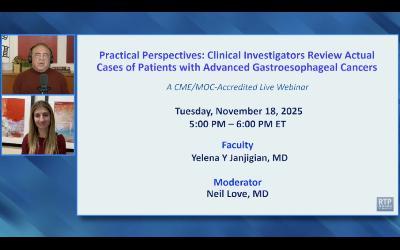
Featuring perspectives from Dr Yelena Y Janjigian, including the following topics: Introduction (0:00) Case: A man in his early 60s with a history of Barrett's esophagus presents with HER2-positive metastatic esophageal adenocarcinoma and a PD-L1 combined positive score (CPS) of 3 — Jennifer Yannucci, MD (10:20) Case: A man in his early 60s with multiregimen-recurrent HER2-positive gastroesophageal junction (GEJ) adenocarcinoma (claudin 18.2-positive, PD-L1 CPS 0) — Neil Morganstein, MD (14:53) Case: A woman in her early 80s with dementia and newly diagnosed mismatch repair-deficient, PD-L1-positive metastatic GEJ adenocarcinoma — Brian P Mulherin, MD (25:55) Case: A man in his mid 60s with localized HER2-negative GEJ cancer (PD-L1 CPS 2, claudin 18.2-positive) and residual disease after receiving neoadjuvant chemoradiation therapy and undergoing surgery — Stephen "Fred" Divers, MD (32:18) Case: A man in his early 80s with metastatic recurrence of esophageal adenocarcinoma and a PD-L1 total proportion score of 75% 2 years after resection of localized disease — Susmitha Apuri, MD (40:28) Case: A man in his mid 70s with claudin 18.2-positive metastatic esophageal adenocarcinoma who develops progressive toxicities with FOLFOX and zolbetuximab — Sean Warsch, MD (52:54) CME information and select publications
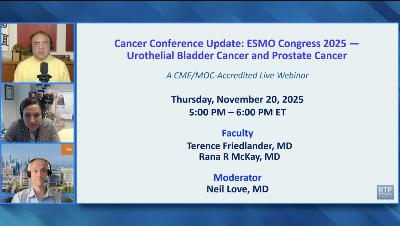
Featuring perspectives from Dr Terence Friedlander and Dr Rana R McKay, including the following topics: Introduction (0:00) Prostate Cancer (1:44) Urothelial Bladder Cancer (29:18) CME information and select publications
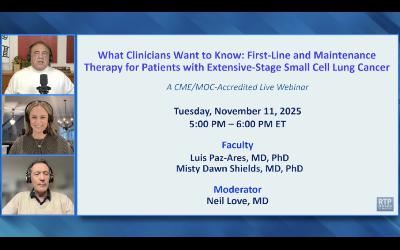
Featuring perspectives from Dr Luis Paz-Ares and Dr Misty Dawn Shields, including the following topics: Introduction: Tail on the Curve? (0:00) First-Line Chemoimmunotherapy (10:45) Maintenance Lurbinectedin (28:42) Second-Line Treatment, Tarlatamab (45:35) Ongoing Research (53:20) CME information and select publications
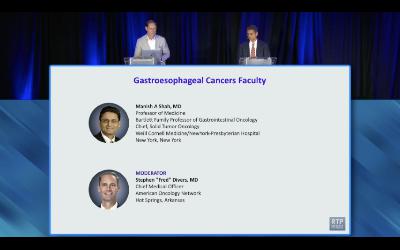
Featuring perspectives from Dr Manish A Shah, moderated by Dr Stephen "Fred" Divers, including the following topics: Highlights and Principles of Management of Metastatic Gastric and Gastroesophageal Junction Adenocarcinoma — Dr Shah (0:00) Case: A man in his early 50s with microsatellite instability-high localized esophageal adenocarcinoma — Dr Mulherin (15:24) Case: A woman in her late 60s with HER2-positive (IHC 3+) and HER2 TKD-mutant metastatic esophageal adenocarcinoma — Dr Warsch (25:34) Case: A woman in her early 70s with HER2-positive (IHC 3+), PD-L1-negative, CLDN18.2-negative metastatic gastric cancer — Dr Mulherin (28:15) Case: A woman in her early 70s with metastatic gastroesophageal junction adenocarcinoma (PD-L1 CPS 15) who begins treatment with FOLFOX/nivolumab and subsequently is found to have CLDN18.2 overexpression — Dr Lamar (35:23) Case: A man in his mid 40s with CLDN18.2-positive metastatic esophageal adenocarcinoma (PD-L1 10%) who receives mFOLFOX6 and zolbetuximab — Dr Yannucci (42:54) CE information and select publications
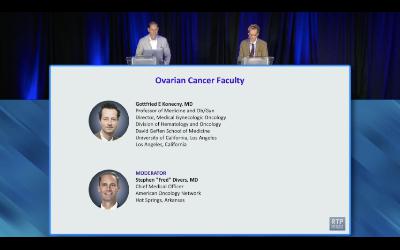
Featuring perspectives from Dr Gottfried E Konecny, moderated by Dr Stephen "Fred" Divers, including the following topics: Updates in Ovarian Cancer (OC) 2025 — Dr Konecny (0:00) Case: A woman in her mid 50s with ovarian cancer and a PALB2 germline mutation — Dr Mulherin (17:15) Case: A woman in her early 60s with Stage IVB fallopian tube carcinoma and a BRCA2 germline mutation — Dr Yannucci (26:27) Case: A woman in her mid 60s with OC and a BRCA2 somatic mutation who develops cytopenias on maintenance olaparib — Dr Lamar (35:47) Case: A woman in her early 70s with HER2 IHC 2+, ER-expressing, FOLR1-positive OC — Dr Warsch (42:54) CE information and select publications
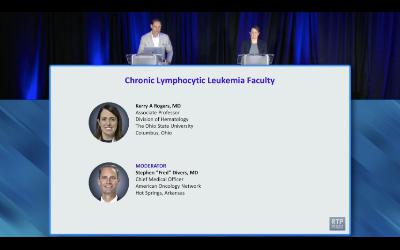
Featuring perspectives from Dr Kerry Rogers, moderated by Dr Stephen "Fred" Divers, including the following topics: Chronic Lymphocytic Leukemia (CLL) — Dr Rogers (0:00) Case: A man in his mid 70s with CLL and a history of atrial fibrillation — Dr Lamar (13:08) Case: A fit man in his early 80s with IGHV-unmutated, TP53-mutant symptomatic CLL — Dr Mulherin (21:16) Case: A woman in her mid 80s with IGHV-mutated recurrent CLL who receives pirtobrutinib — Dr Warsch (32:41) Case: A woman in her late 70s with recurrent del(17p) CLL who receives venetoclax/obinutuzumab — Dr Yannucci (44:52) CE information and select publications
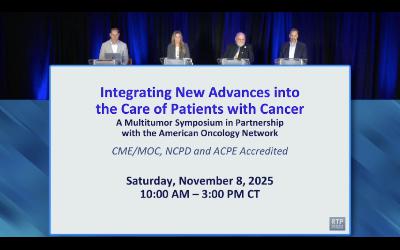
Featuring perspectives from Dr Justin F Gainor, Dr Corey J Langer and Dr Misty Dawn Shields, moderated by Dr Stephen "Fred" Divers, including the following topics: Introduction (0:00) Targeted Therapy for Non-Small Cell Lung Cancer (NSCLC) — Dr Gainor, MD (5:32) Case: A woman in her mid 60s with ALK-mutant metastatic adenocarcinoma of the lung (PD-L1 TPS 70%) — Zanetta S Lamar, MD (17:59) Case: A woman in her mid 80s with EGFR exon 19-deleted adenocarcinoma of the lung with recurrence after 4 years of osimertinib — Jennifer Yannucci, MD (27:53) Case: A woman in her late 60s with HER2-mutant metastatic adenocarcinoma of the lung — Brian P Mulherin, MD (39:41) Case: A man in his early 70s with locally recurrent squamous cell carcinoma of the lung and a MET exon 14 skipping mutation — Sean Warsch, MD (46:39) Case: A woman in her early 70s with ROS1-mutant metastatic adenocarcinoma of the lung that responds to entrectinib and then to pembrolizumab/carboplatin/pemetrexed administered upon disease progression — Dr Yannucci (52:44) Nontargeted Therapy for NSCLC; Small Cell Lung Cancer — Dr Langer (58:16) Neoadjuvant, Perioperative and Adjuvant Anti-PD-1/PD-L1 Antibody-Based Approaches for Patients with Localized NSCLC — Dr Shields (1:14:14) Case: A man in his mid 60s with localized adenocarcinoma of the lung who receives neoadjuvant cisplatin/pemetrexed/pembrolizumab and achieves a pathologic complete response — Dr Mulherin (1:23:19) Case: A man in his early 60s with metastatic mixed adenosquamous NSCLC (PD-L1 TPS 50%) — Sunil Babu, MD (1:30:04) Case: A man in his late 50s diagnosed with extensive-stage small cell lung cancer who receives carboplatin/etoposide/durvalumab — Dr Warsch (1:34:07) CE information and select publications
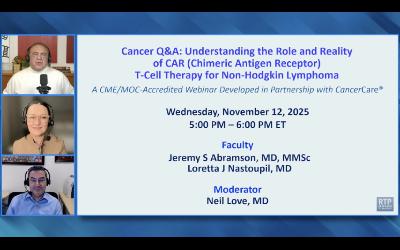
Featuring perspectives from Dr Jeremy S Abramson and Dr Loretta J Nastoupil, including the following topics: Overview of Chimeric Antigen Receptor (CAR) T-Cell Therapy (0:00) Potential Treatment Benefits of CAR T-Cell Therapy (13:31) Cytokine Release Syndrome and Immune Effector Cell-Associated Neurotoxicity Syndrome (28:13) Finding Information About CAR T-Cell Therapy; Clinical Trials (36:28) Financial Issues; Risk of Infection (42:02) Coping with Anxiety; Healing and Moving On (53:27) CME information and select publications
Featuring an interview with Dr John V Heymach, including the following topics: Differentiating factors among various HER2 alterations in non-small cell lung cancer (NSCLC) (0:00) Activity of targeted agents across HER2 alterations in NSCLC (4:06) Available data with zongertinib and sevabertinib for HER2-mutant NSCLC (20:39) Case: A man in his late 40s with HER2-mutant NSCLC receives multiple lines of therapy, including trastuzumab deruxtecan (T-DXd) and zongertinib (29:23) Case: A woman in her mid 50s with HER2-mutant NSCLC receives zongertinib with durable response (34:23) Case: A woman in her late 50s with HER2-mutant NSCLC receives multiple lines of therapy, including sevabertinib and T-DXd (39:53) Investigational approaches in HER2-mutant NSCLC (46:31) CME information and select publications
Featuring a slide presentation and related discussion from Dr John V Heymach, including the following topics: Overview of the biology and treatment landscape of HER2-mutant non-small cell lung cancer (NSCLC) (0:00) Datasets evaluating trastuzumab deruxtecan for HER2-mutant NSCLC (5:03) Clinical data with zongertinib for HER2-mutant NSCLC (6:35) Emerging data with sevabertinib for HER2-mutant NSCLC (14:41) Other investigational strategies being evaluated for HER2-mutant NSCLC (19:10) Summary of the current and future treatment landscape of HER2-mutant NSCLC (21:52) CME information and select publications
Featuring perspectives from Prof Giuseppe Curigliano and Dr Priyanka Sharma, including the following topics: HER2-Positive Breast Cancer (0:00) Hormone Receptor-Positive Breast Cancer (18:16) Triple-Negative Breast Cancer (1:05:23) CME information and select publications

Featuring an interview with Dr Priyanka Sharma, including the following topics: Endocrine therapy for hormone receptor-positive, HER2-negative high-risk localized breast cancer (0:00) Johnston SR et al. monarchE: Primary overall survival (OS) results of adjuvant abemaciclib + endocrine therapy (ET) for HR+, HER2-, high-risk early breast cancer (EBC). ESMO 2025;Abstract LBA13. Durvalumab in combination with neoadjuvant chemotherapy for localized triple-negative breast cancer (TNBC) (3:25) Loibl S et al. Durvalumab in combination with neoadjuvant chemotherapy in early triple-negative breast cancer (TNBC) – Long-term analysis from the GeparNuevo trial. ESMO 2025;Abstract 292MO. Efficacy and safety findings with TROP2-directed antibody-drug conjugates for metastatic TNBC (5:11) Cortés JC et al. Primary results from ASCENT-03: A randomized phase III study of sacituzumab govitecan (SG) vs chemotherapy (chemo) in patients (pts) with previously untreated advanced triple-negative breast cancer (TNBC) who are unable to receive PD-(L)1 inhibitors (PD-[L]1i). ESMO 2025;Abstract LBA20. de Azambuja E et al. Patient-reported outcomes (PROs) with sacituzumab govitecan (SG) + pembrolizumab (pembro) vs chemotherapy (chemo) + pembro in patients (pts) with previously untreated PD-L1+ metastatic triple-negative breast cancer (mTNBC) in the phase III ASCENT-04/KEYNOTE-D19 study. ESMO 2025;Abstract LBA22. Dent R et al. First-line (1L) datopotamab deruxtecan (Dato-DXd) vs chemotherapy in patients with locally recurrent inoperable or metastatic triple-negative breast cancer (mTNBC) for whom immunotherapy was not an option: Primary results from the randomised, phase III TROPION-Breast02 trial. ESMO 2025;Abstract LBA21. CME information and select publications
Featuring an interview with Dr Matthew Lunning, including the following topics: Reflection on the advances made in chimeric antigen receptor (CAR) T-cell therapy (0:00) Overview of the CAR T-cell therapy administration process (4:40) Opportunities for referral for CAR T-cell therapy (10:05) Selection of a CAR T-cell therapy based on patient characteristics (16:09) Sequencing of CAR T-cell therapy for various non-Hodgkin lymphomas (23:23) Safety regulations and mitigation strategies for adverse events (30:36) Case: A woman in her early 80s with relapsed/refractory (R/R) diffuse large B-cell lymphoma receives lisocabtagene maraleucel (36:16) Case: A man in his early 60s with R/R mantle cell lymphoma receives brexucabtagene autoleucel (43:09) Case: A man in his early 60s with R/R multiple myeloma receives ciltacabtagene autoleucel (49:09) CME information and select publications
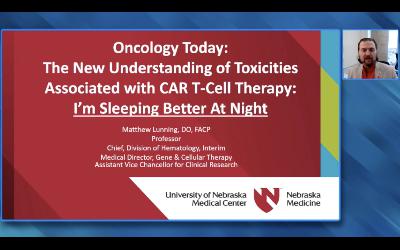
Featuring a slide presentation and related discussion from Dr Matthew Lunning, including the following topics: Overview of available chimeric antigen receptor (CAR) T-cell therapies (0:00) Toxicities associated with CAR T-cell therapy (4:03) Mitigation strategies for adverse events (22:02) Novel strategies for outpatient infusion (26:34) Changes to the CAR T-cell therapy safety regulations (30:23) CME information and select publications

Featuring an interview with Dr Priyanka Sharma, including the following topics: Patient-reported outcomes from the SERENA-6 trial of camizestrant with a CDK4/6 inhibitor for patients with HR-positive, HER2-negative advanced breast cancer and ESR1 mutations emerging during first-line endocrine-based therapy (0:00) Mayer E et al. Patient-reported outcomes (PROs) from the SERENA-6 trial of camizestrant (CAMI) + CDK4/6 inhibitor (CDK4/6i) for emergent ESR1m during first-line (1L) endocrine-based therapy and ahead of disease progression in patients (pts) with HR+/HER2– advanced breast cancer (ABC). ESMO 2025;Abstract 486MO. Imlunestrant and abemaciclib versus fulvestrant and abemaciclib for ER-positive, HER2-negative advanced breast cancer: An indirect treatment comparison of 3 Phase III trials (3:00) Bidard FC et al. Imlunestrant plus abemaciclib versus fulvestrant plus abemaciclib in estrogen receptor positive (ER+), human epidermal growth factor receptor 2 negative (HER2-) advanced breast cancer (ABC): An indirect treatment comparison (ITC) of three phase 3 trials. ESMO 2025;Abstract 496P . Giredestrant in the treatment of ER-positive, HER2-negative breast cancer: The Phase III evERA Breast Cancer and EMPRESS trials (5:39) Mayer E et al. Giredestrant (GIRE), an oral selective oestrogen receptor (ER) antagonist and degrader, + everolimus (E) in patients (pts) with ER-positive, HER2-negative advanced breast cancer (ER+, HER2– aBC) previously treated with a CDK4/6 inhibitor (i): Primary results of the phase III evERA BC trial. ESMO 2025;Abstract LBA16. Llombart-Cussac A et al. Preoperative window-of-opportunity study with giredestrant or tamoxifen (tam) in premenopausal women with estrogen receptor-positive (ER+)/human epidermal growth factor receptor 2-negative (HER2-) and Ki67≥10% early breast cancer (EBC): The EMPRESS study. ESMO 2025;Abstract 294MO. Capivasertib/fulvestrant as first- and second-line endocrine-based therapy for PIK3CA/AKT1/PTEN-altered HR-positive advanced breast cancer in the CAPItello-291 trial and gedatolisib/fulvestrant with or without palbociclib for HR-positive, HER2-negative, PIK3CA wild-type advanced breast cancer in the VIKTORIA-1 trial.(10:25) Rugo HS et al. Capivasertib plus fulvestrant as first and second-line endocrine-based therapy in PIK3CA/AKT1/PTEN-altered hormone receptor-positive advanced breast cancer: Subgroup analysis from the phase 3 CAPItello-291 trial. ESMO 2025;Abstract 526P. Hurvitz SA et al. Gedatolisib (geda) + fulvestrant ± palbociclib (palbo) vs fulvestrant in patients (pts) with HR+/ HER2-/PIK3CA wild-type (WT) advanced breast cancer (ABC): First results from VIKTORIA-1. ESMO 2025;Abstract LBA17. CME information and select publications
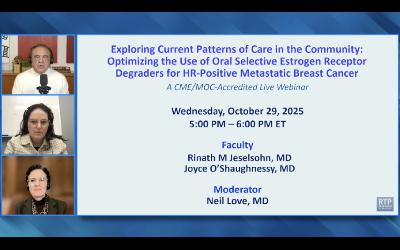
Featuring perspectives from Dr Komal Jhaveri and Dr Virginia Kaklamani, including the following topics: Introduction: Oral Selective Estrogen Receptor Degraders (SERDs) for the General Medical Oncologist (0:00) SERD Monotherapy (13:34) SERD and CDK Inhibitor Combination — The EMBER-3 Study (35:58) SERDs for "Molecular Progression" — The SERENA-6 Study (41:25) CME information and select publications

Featuring an interview with Dr Priyanka Sharma, including the following topics: T-DXd versus trastuzumab emtansine for high-risk HER2-positive primary breast cancer with residual invasive disease after neoadjuvant therapy: Interim analysis of the DESTINY-Breast05 trial (0:00) Geyer C et al. Trastuzumab deruxtecan (T-DXd) vs trastuzumab emtansine (T-DM1) in patients (pts) with high-risk human epidermal growth factor receptor 2–positive (HER2+) primary breast cancer (BC) with residual invasive disease after neoadjuvant therapy (tx): Interim analysis of DESTINY-Breast05. ESMO 2025;Abstract LBA1. DESTINY-Breast11 trial: Neoadjuvant T-DXd alone or followed by paclitaxel/trastuzumab/pertuzumab for high-risk HER2-positive localized breast cancer (5:42) Harbeck N et al. DESTINY-Breast11: Neoadjuvant trastuzumab deruxtecan alone (T-DXd) or followed by paclitaxel + trastuzumab + pertuzumab (T-DXd-THP) vs SOC for high-risk HER2+ early breast cancer (eBC). ESMO 2025;Abstract 291O. Trastuzumab deruxtecan (T-DXd) and pertuzumab versus a taxane, trastuzumab and pertuzumab for HER2-positive advanced or metastatic breast cancer: Additional analyses of the DESTINY-Breast09 trial (10:00) Loibl S et al. Trastuzumab deruxtecan (T-DXd) + pertuzumab (P) vs taxane + trastuzumab + pertuzumab (THP) for patients (pts) with HER2+ advanced/metastatic breast cancer (a/mBC): Additional analyses of DESTINY-Breast09 in key subgroups of interest. ESMO 2025;Abstract LBA18. CME information and select publications
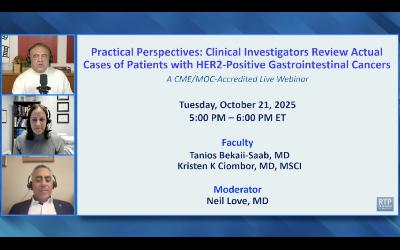
Featuring perspectives from Dr Tanios Bekaii-Saab and Dr Kristen K Ciombor, including the following topics: Introduction: Assessment of HER2 Status (0:00) Case: An otherwise healthy woman in her early 50s with HER2-positive metastatic gallbladder cancer and multiple intrahepatic metastases — Jeremy Lorber, MD (7:33) Case: A man in his late 60s with HER2-low metastatic gallbladder cancer — Brian P Mulherin, MD (11:58) Data Review: Biliary Tract Cancers (18:19) Case: A man in his mid 50s with HER2-positive metastatic rectal cancer — Sunil Gandhi, MD (26:25) Case: A woman in her early 60s with recurrent HER2-positive rectal cancer — Ranju Gupta, MD (31:31) Data Review: Colorectal Cancer (34:16) Case: An otherwise healthy man in his mid 50s with HER2-positive metastatic gastroesophageal junction cancer and several metastatic liver lesions — Shachar Peles, MD (38:06) Case: A man in his early 60s with recurrent HER2-positive, claudin 18.2-positive metastatic esophageal cancer — Susmitha Apuri, MD (43:21) Data Review: Gastroesophageal Cancer (46:55) Case: A man in his early 60s with HER2-positive esophageal cancer and isolated brain metastases — Priya Rudolph, MD, PhD (50:07) CME information and select publications
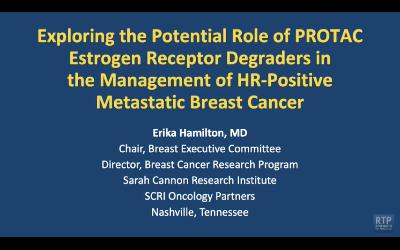
Featuring an interview with Dr Erika Hamilton, including the following topics: General overview of the mechanisms of action of endocrine-targeted therapies for breast cancer (0:00) Downregulation of estrogen receptor expression levels with endocrine therapy; therapeutic benefit of selective estrogen receptor degraders (SERDs) and proteolysis-targeting chimeras (PROTACs) in ESR1 wild-type and ESR1-mutant breast cancer (5:11) Mechanisms of resistance to endocrine therapy (10:08) Efficacy and toxicities observed with SERDs and PROTACs for HR-positive breast cancer (15:26) Other applications for PROTACs (24:24) Emerging data from the Phase III evERA trial (27:38) Perspectives on clinical investigator and general medical oncologist practice pattern survey results (30:51) CME information and select publications


Download from Google Play

Download from App Store
 United States
very informative, thanks 🙏
great podcast, very informative