


 Claim Ownership
Dysregulated Kids: Science-Backed Parenting Help for Behavior, Anxiety, ADHD and More
Subscribed: 28,728Played: 315,397
Subscribe

© Copyright 2025 Dr. Roseann Capanna Hodge
Description
Are you tired of the daily battles, the problems with listening and focus, meltdowns over minor frustrations, and the constant feeling of walking on eggshells in your own home? If you're a parent who feels overwhelmed, stuck in a cycle of reactivity, and utterly exhausted from trying to manage your child's challenging behaviors, you are not alone. You've tried everything—the sticker charts, the timeouts, the endless negotiations—but nothing creates lasting change.
The answer isn't more discipline. The secret is understanding the brain. Welcome to Dysregulated Kids: Science-Backed Parenting Help, the podcast that is revolutionizing the way we parent.
Hosted by Dr. Roseann Capanna-Hodge, a licensed therapist, school psychologist and author with over 30 years of experience in children's mental health and recognized by Forbes as a thought leader in children's mental health, this podcast is your lifeline. Dr. Roseann pulls back the curtain on why your child or teen is struggling, whether they have a clinical diagnosis like ADHD, Anxiety, Autism, OCD, Depression, Dyslexia, Executive Functioning challenges, Lyme, or PANS/PANDAS, or are simply navigating the ups and downs of everyday life.Her revolutionary Regulation First Parenting™ approach teaches that calming the nervous system is the first step before you can connect, teach, or help your child learn.
In short, actionable episodes, Dr. Roseann gives you proven tools like the CALMS Protocol™, quick nervous system reset tools and co-regulation strategies to move your child (and yourself!) from stress and reactivity to calm, connection, and resilience. You'll learn what to say and do to de-escalate meltdowns in the moment, how to build your child's emotional regulation skills, and how to improve their executive functioning and attention so they can succeed at home, at school, and in life.
Imagine shifting your entire perspective from seeing "defiance" to understanding "dysregulation." Picture yourself feeling confident and equipped, knowing exactly how to respond in those tough parenting moments. This is the transformation that awaits you. Parents discover how to break free from the reactivity cycle and build a more connected, joyful family—going from helpless and frustrated to empowered and hopeful.
Here's what you can expect from Dysregulated Kids:
Real Solutions for Real Problems – Whether you're dealing with ADHD, anxiety, sensory overload, meltdowns, or everyday struggles, Dr. Roseann brings strategies that actually work.
Science-Backed Parenting Tools – Learn how to understand your child's nervous system and apply research-driven calming strategies to create a peaceful, happy home.
Practical Advice You Can Use Today – Each episode delivers focused, actionable content without the fluff—just pure wisdom you can apply to your family right away.
Empowerment and Hope – Dr. Roseann blends expert knowledge with deep empathy for the challenges parents face, helping you feel confident that you can make positive change.
This podcast is for parents of the "reactive" kid or the child who feels more, reacts to little things more, and just needs more from you. It's for parents of neurodivergent children or kids struggling with mental health challenges. Really this show is for all parents dealing with typical stressors who want to raise emotionally intelligent, resilient kids in a world that is more demanding and chaotic than ever.
If you've seen Dr. Roseann on TV, you know she doesn't shy away from real talk about real problems. She brings that same authenticity and expertise to every episode, combining hope with science to help you calm the brain and create a happier family.
Are you ready to stop just surviving and start thriving? Subscribe now and start your journey toward a calmer brain and a happier family today.
For more resources, show notes, and to connect with Dr. Roseann, visit drroseann.com.
The answer isn't more discipline. The secret is understanding the brain. Welcome to Dysregulated Kids: Science-Backed Parenting Help, the podcast that is revolutionizing the way we parent.
Hosted by Dr. Roseann Capanna-Hodge, a licensed therapist, school psychologist and author with over 30 years of experience in children's mental health and recognized by Forbes as a thought leader in children's mental health, this podcast is your lifeline. Dr. Roseann pulls back the curtain on why your child or teen is struggling, whether they have a clinical diagnosis like ADHD, Anxiety, Autism, OCD, Depression, Dyslexia, Executive Functioning challenges, Lyme, or PANS/PANDAS, or are simply navigating the ups and downs of everyday life.Her revolutionary Regulation First Parenting™ approach teaches that calming the nervous system is the first step before you can connect, teach, or help your child learn.
In short, actionable episodes, Dr. Roseann gives you proven tools like the CALMS Protocol™, quick nervous system reset tools and co-regulation strategies to move your child (and yourself!) from stress and reactivity to calm, connection, and resilience. You'll learn what to say and do to de-escalate meltdowns in the moment, how to build your child's emotional regulation skills, and how to improve their executive functioning and attention so they can succeed at home, at school, and in life.
Imagine shifting your entire perspective from seeing "defiance" to understanding "dysregulation." Picture yourself feeling confident and equipped, knowing exactly how to respond in those tough parenting moments. This is the transformation that awaits you. Parents discover how to break free from the reactivity cycle and build a more connected, joyful family—going from helpless and frustrated to empowered and hopeful.
Here's what you can expect from Dysregulated Kids:
Real Solutions for Real Problems – Whether you're dealing with ADHD, anxiety, sensory overload, meltdowns, or everyday struggles, Dr. Roseann brings strategies that actually work.
Science-Backed Parenting Tools – Learn how to understand your child's nervous system and apply research-driven calming strategies to create a peaceful, happy home.
Practical Advice You Can Use Today – Each episode delivers focused, actionable content without the fluff—just pure wisdom you can apply to your family right away.
Empowerment and Hope – Dr. Roseann blends expert knowledge with deep empathy for the challenges parents face, helping you feel confident that you can make positive change.
This podcast is for parents of the "reactive" kid or the child who feels more, reacts to little things more, and just needs more from you. It's for parents of neurodivergent children or kids struggling with mental health challenges. Really this show is for all parents dealing with typical stressors who want to raise emotionally intelligent, resilient kids in a world that is more demanding and chaotic than ever.
If you've seen Dr. Roseann on TV, you know she doesn't shy away from real talk about real problems. She brings that same authenticity and expertise to every episode, combining hope with science to help you calm the brain and create a happier family.
Are you ready to stop just surviving and start thriving? Subscribe now and start your journey toward a calmer brain and a happier family today.
For more resources, show notes, and to connect with Dr. Roseann, visit drroseann.com.
363 Episodes
Reverse
If you’ve ever wished you could peek inside your child’s brain during a meltdown or when they completely shut down, today’s episode is for you. We’re diving into QEEG brain maps—one of the most powerful, yet most underused tools for understanding what’s really driving big emotions, focus issues, and chronic dysregulation.For three decades, I’ve watched families bounce from diagnosis to diagnosis… ADHD, anxiety, “behavioral issues.” And while those labels can be helpful, they’re often surface-level.A QEEG lets us look under the hood so we can finally stop guessing. Because when we calm the brain first, everything else follows.Why So Many Kids Get the Wrong DiagnosisParents are often told their child has ADHD simply because they’re unfocused or overwhelmed. But ADHD criteria are broad—so broad that almost any dysregulated kid can fit the checklist. That’s why so many families show up after trying meds, OT, tutoring, and therapy with little or no progress.A QEEG changes that.This quantitative brain map shows where the brain is overactive, underactive, or disconnected, and those patterns tell us far more than a checklist ever could. I’ve done over 10,000 brain maps, and they consistently reveal what teachers, therapists, and even doctors miss.A Real Story: When ADHD Wasn’t ADHDOne mom, Sarah, came to me after years of trying to help her son Jack. He had an ADHD diagnosis, but nothing worked—not medication, not OT, not therapy.His brain map showed focus issues, yes… but more importantly, it pointed to learning and executive functioning patterns that suggested dyslexia. After a deeper history and a follow-up evaluation at school, dyslexia was confirmed.Suddenly everything made sense. Jack didn’t need a stronger stimulant—he needed a reading intervention. Once we supported his brain through neurofeedback and the right academic supports, the whole picture changed.This kind of story is far too common.Want to stay calm when your child pushes every button?Become a Dysregulation Insider VIP and get the FREE Regulation Rescue Kit—your step-by-step guide to stop oppositional behaviors without yelling or giving in.Go to www.drroseann.com/newsletter and grab your kit today.QEEG vs EEG: What’s the Difference?An EEG is a medical tool used to detect seizures. A QEEG—or quantitative EEG—measures the brain’s electrical activity and compares it to normative data.It’s:PainlessNoninvasiveDone with a soft cap and sensorsDesigned to map overactivity, underactivity, and connectivityThink of it like getting a satellite image of your child’s brain weather patterns—where storms are brewing, where things have gone quiet, and where communication lines are overloaded.What Dysregulation Looks Like on a Brain MapA dysregulated brain can’t shift smoothly between states—calm, alert, focused. On a QEEG, that shows up as:Underactivity → brain fog, low motivation, slow processingOveractivity → big emotions, anxiety, OCD-like reactionsChaotic connectivity → trouble transitioning, rigid thinking,...

Parenting a child who goes from calm to chaos in seconds can feel exhausting. You try everything—deep breaths, gentle words, even walking away—and still, the meltdowns come. You’re not alone.When kids struggle with big emotions, there’s often a hidden root cause inside the body—and minerals play a much bigger role than most parents realize.In this episode, I sit down with Dr. Aaron Hartman to unpack the powerful connection between minerals, mitochondria, and meltdowns—and how nutrition, lifestyle, and nervous system regulation can help your child regain balance and calm.Why does my child melt down when they’re “just tired or hungry”?When your child seems to unravel at the smallest thing, it’s not bad behavior—it’s biology. Mineral imbalances directly affect how their nervous system fires.Low magnesium or zinc deficiency can make the brain more reactive to stress.When blood sugar drops from skipping meals or eating too many processed foods, the body burns through nutrients fast—leading to irritability, anxiety, or panic attacks.A deficient diet full of additives and low in whole foods affects serotonin, dopamine, and other key neurotransmitters.When we calm the brain first and nourish the body, meltdowns start to fade.Takeaway: A balanced diet rich in real food, protein, and calming minerals helps stabilize your child’s emotions and energy.Need quick relief while you work on those root causes? Try Quick Calm—my proven method to calm the brain fast so you and your child can reset and start fresh.Could my child’s mood swings be linked to mineral deficiencies?Absolutely. Research continues to show how essential minerals affect mental well-being and brain function.Here’s what parents need to know:Zinc deficiency is linked with attention deficit disorder (ADD/ADHD), depression, and poor immune function.Magnesium supports relaxation and sleep by calming overactive neurons.B vitamins and vitamin D play a critical role in serotonin production—affecting mood and focus.Too much copper or exposure to heavy metals can worsen anxiety, aggression, and brain fog.HTMA testing (Hair Tissue Mineral Analysis) can reveal these hidden imbalances, helping you target the root cause instead of chasing symptoms.🗣️“When your child’s body is missing key nutrients, their brain can’t regulate emotions—no matter how many coping tools you teach.” –Dr. RoseannWhat are simple ways to boost my child’s mineral intake naturally?You don’t need to overhaul your entire pantry overnight. Start small—consistency is what matters most.Choose whole foods over processed snacks. Think nuts, seeds, eggs, leafy greens, and clean proteins.Add trace minerals or electrolyte drops to water for gentle, steady support.Use zinc supplements or a high-quality multivitamin only when guided by a practitioner.Cook with healthy fats (omega-3-rich oils, avocado, grass-fed butter) to enhance absorption of fat-soluble vitamins.Involve your kids—make it fun with family “squat-offs” or walks after...
Parenting a child, tween or teen who swings from calm to chaos in seconds can leave you walking on eggshells. One minute they’re fine, and the next—doors slam, voices rise, and you’re wondering what just happened. You’re not alone. Those big mood swings aren’t “attitude.” They’re signals that your child’s nervous system is in distress.Let’s dive into the hidden clues your child's, tween’s or teen’s nervous system is in trouble, how to decode them before they explode, and practical steps to bring calm back to your home.Why does my kid overreact to small things?When your child melts down over a lost pencil or a simple “no,” it’s not defiance—it’s a sign of an overwhelmed nervous system. Their brain is already running on empty, and even a tiny trigger can send them over the edge.What this means:Overreactions = stress overload. Their stress cup is full, and every little thing spills over.Persistent irritability or mood whiplash can signal emotional dysregulation, not disrespect.Physical signs like chest tightness, rapid heartbeat, or stomach pain often accompany these reactions.🗣️ “Behavior is communication. Once you learn to read these cues, you stop reacting to the behavior and start guiding your child back to calm.” –Dr. RoseannWhy can’t my kid calm down after getting upset?If your teen stays upset long after the conflict ends, that’s a clue their body’s stress response hasn’t shut off. Their stress hormones keep them on high alert, making it hard to return to balance.Try this:Regulate first. Take one deep breath before engaging. When you calm your brain, it helps theirs settle too.Name the shift. Say, “I can see this feels really big for you.” Validation lowers the nervous system threat.Use micro-resets. Short breaks, snacks, or movement stop the spiral.Remember: the more calm happens, the more calm happens.Is shutting down or saying “I don’t care” a warning sign?When teens go silent, refuse to talk, or withdraw, it’s often freeze mode, not attitude. This happens when their nervous system feels unsafe or overwhelmed—a common sign of emotional strain or unresolved trauma.Look for:Sudden withdrawal from friends or activitiesChanges in eating or sleep habits—like skipping meals, difficulty falling asleep, or frequent nightmaresPhysical complaints such as headaches, stomach pain, or fatigueA trauma-informed approach helps teens feel seen, not shamed. It’s not bad parenting—it’s a dysregulated brain.If you’re tired of walking on eggshells or feeling like nothing works…Get the FREE Regulation Rescue Kit and finally learn what to say and do in the heat of the moment.Become a Dysregulation Insider VIP at www.drroseann.com/newsletter and take the first step to a calmer home.Why does my child struggle with focus or schoolwork?Stress doesn’t just...
When every request turns into a power struggle, it can leave you exhausted, frustrated, and questioning everything you’re doing as a parent. But here’s the truth: your child isn’t trying to make your life harder—their brain is stuck in survival mode.Let me break down what’s really happening when kids seem defiant and how parents can shift from chaos to calm using three powerful regulation steps. You’ll learn how to decode oppositional behavior, why it’s not about disrespect, and what you can do today to help your child feel safe and cooperative again.Why Does My Child Say “No” to Everything?When your child refuses to listen or melts down over simple requests, it’s not bad behavior—it’s a dysregulated nervous system.Here’s what’s really happening:Their brain has gone into survival mode, shutting down logic and reasoning.That “no” is often a stress response, not manipulation.Many kids labeled with Oppositional Defiant Disorder (ODD) or other mental health conditions like ADHD, anxiety disorders, or mood disorders are really struggling with nervous system overload.Think of it like a smoke detector that’s too sensitive—it goes off even when nothing’s really burning. When your child’s stress cup is overflowing, every small demand feels like too much.Behavior is communication. Your child’s defiance is their brain’s way of saying, “I can’t handle this right now.”Is My Child’s Oppositional Behavior Really About Anxiety or Control?For many kids, saying “no” is an unconscious coping mechanism. It helps them avoid anxiety triggers or regain a sense of control when life feels unpredictable.Here’s what’s going on beneath that resistance:Anxious avoidance: Kids learn that saying “no” helps them keep anxiety lower.Loss of control: When kids feel powerless, they fight to regain safety.Sensory overload: Every transition, sound, or demand adds another drop to their stress cup.🗣️ “The more dysregulated they are, the more oppositional they become. And when parents respond from stress too, it amplifies the cycle.” –Dr. RoseannKey takeaway: Opposition isn’t disrespect—it’s the nervous system’s cry for safety and connection.You don’t have to figure this out alone.Become a Dysregulation Insider VIP and get your FREE Regulation Rescue Kit: How to Stay Calm When Your Child Pushes Your Buttons and Stop Oppositional Behaviors.Head to www.drroseann.com/newsletter and start your calm parenting journey today.What Can I Do When My Child Refuses to Cooperate?Here is a simple, science-backed three-step plan parents can use right away:Regulate first.You can’t calm your child if you’re dysregulated yourself.Take deep breaths, move your body, or pause before reacting.Your calm signals safety and helps your child’s brain shift out of fight-or-flight.Offer two choices.Keep it simple: “Do you want the red shirt or the blue shirt?”This restores healthy control without giving up...
Parenting a child who’s melting down while you’re barely holding it together yourself can feel impossible.One minute you’re calm, and the next—you’re yelling too. You didn’t mean to, but their meltdown triggered yours. You’re not alone, and it doesn’t mean you’re a bad parent. It means both of your nervous systems are overwhelmed.Let me share why this happens and exactly how to stop the cycle of dysregulation before it spirals out of control. You’ll learn how your calm can anchor your child, what to do in the heat of the moment, and how small shifts can lead to lasting change in your family.Why Do I Lose My Cool When My Child Has a Meltdown?When your child screams, your nervous system feels it. That’s because of mirror neurons—the part of the brain that syncs emotions and energy between people. Your child’s chaos can trigger yours, just like your stress can trigger theirs.Here’s what’s happening:Your stress cup overflows just like your child’s. Every demand, noise, or unexpected change adds a drop until you spill over.Your survival brain takes over. Logic goes offline, patience disappears, and you react instead of respond.You move into fight, flight, or freeze, which makes emotional regulation nearly impossible.🗣️ “When meltdowns meet meltdowns, everyone’s brain goes offline. That’s why we calm the brain first—because no one can think when they’re in survival mode.” –Dr. RoseannWhat Should I Do When My Child’s Behavior Triggers Me?When that meltdown starts brewing, it’s not about perfection—it’s about presence.Try these calming techniques in the moment:Pause and breathe. Slow, deep breathing resets your nervous system and helps you stay grounded.Notice your body. Are your shoulders tight? Is your breathing shallow? These are early signs you’re dysregulated.Step away if needed. It’s OK to say, “I love you, but I need a minute to calm my body.”Anchor with calm body language. Kneel down, soften your voice, and lower your tone. Your calm presence helps your child’s brain feel safe again.Remember: Behavior is communication. Your child isn’t trying to make you lose it—they’re showing you that their nervous system needs help to regulate emotions.Yelling less and staying calm isn’t about being perfect—it’s about having the right tools.Join the Dysregulation Insider VIP list and get your FREE Regulation Rescue Kit, designed to help you handle oppositional behaviors without losing it.Download it now at www.drroseann.com/newsletterHow Can I Break the Cycle of Reactivity in My Family?I once worked with a dad named Michael who constantly clashed with his son, Jordan. Every argument ended in shouting matches—until Michael realized something powerful: he was getting pulled into the same dysregulated state as his child.When he learned to pause, breathe, and step back before reacting, everything changed. His calm energy helped Jordan settle faster—and the daily battles stopped.Key takeaways for parents:You set the...
Parenting a child who melts down over socks that “feel weird” or a sandwich cut the “wrong” way can leave you wondering what’s really going on. You try to stay calm, but inside you’re thinking, Seriously? This can’t be about the sandwich.You’re not alone—and you’re not a bad parent. The truth is, those small moments aren’t small at all when your child’s stress cup is overflowing.Let me break down why your child freaks out over the smallest things and how to calm the brain first so everyone can find peace again. You’ll learn how to spot the warning signs of a full stress cup, what’s happening in your child’s brain during a meltdown, and simple ways to help them regulate—without power struggles or guilt.Why Does My Child Melt Down After School?Ever notice how your child holds it together all day at school—only to fall apart the second they walk in the door? That’s the stress cup effect. Every challenge, noise, and demand throughout the day adds a “drop” to your child’s nervous system. By the time they get home, that cup is full, and even seemingly small things push them over the edge.Here’s what fills your child’s stress cup:Classroom stress and transitionsSensory overload (sounds, textures, smells)Hunger and fatigueSocial struggles with other kidsHigh expectations or perfectionismWhen the brain is overstressed, logic and problem-solving shut down, and big emotions take over. That’s why reasoning in the heat of the moment rarely works—you’re talking to a brain that’s gone offline.Try this:Pause before reacting. Your calm becomes their calm.Offer a short regulation break (quiet time, water, movement) before talking.Create predictability. Use gentle countdowns and routines to lower stress.Why Do Simple Things Feel Like a Big Deal?When your child cries or screams over “nothing,” it’s not manipulation—it’s dysregulation. The meltdown isn’t about the apple slices or the wrong color cup; it’s about a nervous system that can’t take one more drop.Here’s what’s really happening:The amygdala (the brain’s alarm system) hijacks control.The prefrontal cortex—the part that helps kids think and reason—goes offline.Small frustrations suddenly feel enormous.So when your child says they “hate” their shirt or “can’t handle” their homework, it’s a cry for help, not defiance.What helps instead:Co-regulate first. Anchor your own emotions before helping your child.Name what’s happening. “It sounds like you’ve had a really hard day.”Micro resets. Stretch, take a breath, sip water—each helps pour stress out of the cup.If you’re tired of walking on eggshells or feeling like nothing works…Get the FREE Regulation Rescue Kit and finally learn what to say and do in the heat of the moment.Become a Dysregulation Insider VIP at www.drroseann.com/newsletter and take the first step to a calmer home.How Can I Help My Child Cope With Big Emotions?For a...
Parenting a child who constantly melts down—even when you’ve tried every gentle parenting tip out there—can leave you exhausted and doubting yourself.You’re doing your best to be calm and validating, yet you still feel like you’re walking on eggshells. You’re not alone. The truth is, gentle parenting isn’t enough on its own—and understanding whycan completely change your family dynamic.Let’s break down what gentle parenting gets right, what it misses, and how to help your child truly regulate and thrive. Learn more about why empathy without boundaries backfires, what “Regulate, Connect, Correct” really means, and how to shift from over-validation to true emotional safety.Why Doesn’t Gentle Parenting Always Work?Gentle parenting promotes empathy, validation, and connection instead of harsh punishment. That’s beautiful in theory—but many parents discover it’s not enough in real life.Here’s why: Validation alone doesn’t calm a dysregulated brain.Kids may feel heard, but not necessarily safe.A dysregulated nervous system can’t learn, connect, or cooperate.Empathy without boundaries often fuels anxiety and chaos.When kids stay stuck in big emotions, they become dependent on constant reassurance instead of learning self-regulation. That’s when parents start feeling drained and walking on eggshells.🗣️ “Gentle parenting only works when it’s built on regulation first.” –Dr. RoseannWhat Happens When We Over-Validate Our Kids’ Emotions?Many parents think if they just validate enough, their child will calm down. But over-validation can actually make things worse.I worked with a mom named Missy and her daughter, Emma. Missy tried so hard to ease Emma’s worries that she validated every fear—“We’ll get there on time,” “It’ll be okay,” “You don’t need to worry.”But over time, Emma started needing constant reassurance just to feel calm. Her worries grew bigger, not smaller, and she began spiraling into obsessive thinking that bordered on compulsive behavior.Over-validation = more anxiety, not less.Kids learn emotions dominate, instead of learning to manage them.They need boundaries and co-regulation to feel truly safe.The truth? Validation without tools or limits can create dependence. Boundaries are what anchor a child’s nervous system and reduce anxiety.Yelling less and staying calm isn’t about being perfect—it’s about having the right tools.Join the Dysregulation Insider VIP list and get your FREE Regulation Rescue Kit, designed to help you handle oppositional behaviors without losing it.Download it now at www.drroseann.com/newsletterHow Do I Regulate First When I’m the One Who’s Overwhelmed?Parenting a dysregulated child while you’re dysregulated too is a recipe for chaos. That’s why “Regulate First Parenting” starts with you.Before reacting or rescuing, pause and breathe. That pause resets both your brain and your child’s.Try this:Pause before you validate.Don’t rescue too fast.Set a calm, clear boundary.Your calm becomes your child’s calm. This is co-regulation in action—the process of letting your child “borrow” your steadiness. When
Parenting a child who won’t even try can break your heart. You ask, you remind, you offer rewards—and still, they resist or melt down. You’re not imagining it, and you’re not failing as a parent. It’s not bad parenting—it’s a dysregulated brain.Many parents worry their child is lazy, unmotivated, or just doesn’t care about school or responsibilities. But what if what’s really happening isn’t laziness at all—what if your child’s brain is shutting down under stress? In this episode, I explain why motivation struggles often stem from nervous system dysregulation, not defiance, and share practical ways to help your child feel motivated again.Why does my child resist simple tasks like homework?When kids push back against schoolwork, chores, or routines, parents often assume it’s about attitude or lack of effort. But beneath that resistance is often stress overload.Stress shuts down the brain’s control center—the frontal lobe—making focus, planning, and problem solving nearly impossible.Even bright kids freeze when their nervous system perceives a task as too hard or threatening.“Just try harder” doesn’t work because motivation requires regulation—a calm brain can think and follow through.Punishments or charts can’t fix dysregulation; co-regulation and structure can.When a child melts down before math or avoids starting, think: Their brain can’t, not won’t.Is my child lazy or is something else happening?Labels like “lazy” or “unmotivated” only feed shame—and shame blocks learning and confidence.A child with low self-esteem or repeated failures may fear trying again.Shame walls off effort; it turns “I can’t” into “I won’t.”Kids who hyperfocus on screens but avoid schoolwork aren’t choosing fun over success—they’re avoiding discomfort.When the brain feels unsafe, motivation drops and avoidance rises.So before assuming your kid doesn’t care, ask: Is their nervous system overwhelmed? Behavior is communication—their resistance is a signal, not defiance.How can I help my unmotivated child feel successful again?Regulation first. Always. When your child is calm, they can connect, think, and act.Start small: Break big tasks into micro steps—one sentence, one problem, one drawer.Co-regulate: Sit with your child to launch a task, then fade your support gradually.Praise early effort: Catch micro-wins (“I love that you opened your book!”).Build predictable routines: Consistency lowers stress and helps kids feel in control.Use micro resets: Stretch, hydrate, or breathe between steps to prevent shutdowns.These small adjustments help your child rebuild motivation, self-belief, and problem-solving skills—without constant power struggles.Ready to help your child find calm and motivation?Try my Quick CALM™—a science-backed reset that gives you the essential tools to calm your child’s brain and restore peace in your home.What can parents do when motivation swings with mood or...

Parenting a child who melts down over homework or seemingly simple tasks can feel overwhelming and exhausting. You’re not imagining it—the frustration, tears, and chaos aren’t bad behavior. It’s a dysregulated brain struggling to access its control center.In this episode, let me explain why dysregulated kids can’t use their executive function, what that means for daily life, and practical strategies to help your child regain focus, complete tasks, and strengthen their executive functioning skills.Why does my child melt down after school?Many parents notice that after a long day, their child becomes irritable or shuts down at homework time. This isn’t defiance—it’s a dysregulated brain that’s gone offline.When stress builds, it hijacks the prefrontal cortex, the control center for planning, organization, and impulse control. Your child simply can’t access their executive functions or working memory until their nervous system settles.What’s happening:Stress or sensory overload disrupts brain functions.Transitions and overstimulation lead to poor executive functioning—especially in kids with ADHD or anxiety.Their brain shifts from learning to survival mode.What helps:Co-regulate first. Your calm presence signals safety.Once calm, executive functioning skills like focus, planning, and task completion return.Let’s calm the brain first—because that’s when real learning begins.Download the Executive Functioning Toolkit — packed with science-backed strategies you can start using today to reduce stress and improve focus.How can I help my child focus when they can’t control their emotions?When emotions flood in, logic and problem-solving shut down. This is common in children with ADHD, learning disabilities, or high emotional sensitivity.Regulate first: Deep breaths, movement, or sensory grounding can reset the brain.Break tasks into small, manageable steps to avoid overwhelming a child with poor executive functioning.Use internal self-talk modeling: Narrate your planning out loud to teach cognitive strategies like task initiation and sustained attention.🗣️ “Once calm, your child’s executive functioning skills—like focus, organization, and problem solving—can finally do their job.” –Dr. RoseannWhen your child is dysregulated, it’s easy to feel helpless.The Regulation Rescue Kit gives you the scripts and strategies you need to stay grounded and in control.Become a Dysregulation Insider VIP at www.drroseann.com/newsletter and get your free kit today.What are executive functioning skills, and why do they matter?Executive functioning skills are the brain’s Job Manager: planning, prioritizing, organizing, controlling impulses, and problem-solving. Without them, even typically developing children can struggle.Start with the end in mind: Visualizing outcomes improves planning and cognitive flexibility.Teach one skill at a time, e.g., starting a task, organizing materials, or remembering steps.Recognize that strengths and weaknesses vary: A child may excel at baseball stats or...
Parenting a child who’s struggling with mysterious symptoms can be frightening and exhausting. You bring them to the doctor, the tests come back “normal,” and yet you know something isn’t right. You’re not imagining it—it’s real, and you’re not alone.In this episode, Dr. Bill Rawls explains why Lyme disease testing often misses active infections, what it means for your child, and practical steps parents can take to advocate for accurate diagnosis and care.Why does my child keep testing negative for Lyme disease even when symptoms persist?False negatives are common: Many Lyme disease tests, like the ELISA (enzyme linked immunoassay) or Western blot, rely on antibodies that may not appear early or consistently.Early infection can be invisible: During the initial infection or early Lyme disease, the immune system may not have produced enough detectable antibodies for serologic testing.Co-infections complicate results: Other tick-borne illnesses can mask or mimic Lyme disease symptoms, making accurate diagnosis even harder.Persistent or chronic infections: Sometimes, persistent infection or chronic Lyme can continue even after a negative test. Clinical findings, medical history, and physical examination help guide your provider toward the right diagnosis of Lyme disease.It’s not bad parenting—it’s a dysregulated system of testing, not a failure of your vigilance.Even when bloodwork looks clear, your child may still have an active infection. Understanding test limitations helps reduce frustration and empowers you to take action.How can I tell if Lyme disease is being missed in my child?Watch for persistent, nonspecific symptoms: Fatigue, joint pain, headaches, or cognitive changes can appear long before tests turn positive.Consider medical history and exposure: Tick bites, outdoor activities, or living in endemic areas provide important clues.Use clinical judgment alongside lab tests: A single blood test rarely tells the full story; doctors often need multiple tests and examinations.You don’t have to wait for a positive blood test to validate your child’s suffering.Ready to help your child calm down quickly and regain control? Start using Quick Calm today and discover simple, science-backed strategies to regulate their nervous system.What are the limitations of standard Lyme disease testing?ELISA and Western blot tests measure antibodies, not bacteria directly: If your child’s immune system hasn’t produced detectable antibodies, the test can look clear.False positives and delayed diagnosis are common: Inaccurate results can delay treatment, allowing Lyme bacteria to persist and cause chronic symptoms.Tests vary in performance: Different labs, methods, and timing of testing affect results.Let’s calm the brain first—then focus on gathering the right information without panic.Want to stay calm when your child pushes every button?Become a Dysregulation Insider VIP and get the FREE Regulation Rescue Kit—your step-by-step guide to stop oppositional behaviors without yelling or giving in.Go to www.drroseann.com/newsletter and grab your kit today.What should parents do if Lyme disease tests come back negative?Keep a detailed symptom log: Track fatigue, joint pain, rashes, and cognitive...
Have you ever noticed that the more you explain, the more your child melts down? Parenting a child who reacts this way can leave you exhausted, frustrated, and worried. You try to reason, but instead of calming down, your child gets even more upset. In this episode, I’ll share why talking often backfires when kids are upset, and how your calm presence, body language, and deep breaths can help your child regulate without words. You’ll discover the brain science behind co-regulation and walk away with simple, practical strategies you can use in the moment to help your child feel safe.Why does talking make my child more upset instead of calming them?When kids are dysregulated, their brain shifts into fight, flight, or freeze. Logic and language shut down, and many parents notice that their words actually feel overwhelming instead of calming.More words = more stimulation → which leads to bigger emotions.A calm body speaks louder than lectures.Behavior is communication, not defiance.🗣️ “In the heat of the moment, silence and co-regulation calm the brain faster than explanations.” – Dr. RoseannWhat can I do in the moment when my child is losing control?Instead of talking, use your body language and presence to signal safety. This is what helps many kids settle down.Take a deep breath before you respond. Ask yourself: Am I regulated enough to help my child right now?Soften your body → drop your shoulders, relax your arms, loosen your jaw.Stay at their level → for toddlers, sit on the floor; for older kids, sit nearby. Don’t loom over them.Eye contact is optional → for some children, less is more.Your calm cues reduce cortisol and show your child they are safe.When your child is dysregulated, it’s easy to feel helpless.The Regulation Rescue Kit gives you the scripts and strategies you need to stay grounded and in control.Become a Dysregulation Insider VIP at www.drroseann.com/newsletter and get your free kit today.How do I calm my child without words?Co-regulation works through silent strategies that their nervous system picks up instantly.Use rhythmic cues → slow breathing, gentle rocking, or humming. A predictable rhythm helps kids reset.Offer safe touch if welcomed → a hug, a hand on the shoulder, or letting them crawl into your lap.Stay present, not pressuring → don’t force them to talk or “explain” while upset.Kids can borrow your calm until they find their own.When your child is stuck in dysregulation, more effort isn’t the answer—a reset is. Quick CALM shows you how to calm the brain first with science-backed tools that get real results.Can my calm really teach my child self-regulation?Yes—science backs this up. Mirror neurons mean kids sync with your state, not your words. Over time, they learn to regulate by practicing alongside you.Your calm presence is the model → kids copy what they see and feel.Safety cues build connection → when a child feels safe, their brain learns new ways to manage emotions.Consistency matters → the more you practice, the more your child’s brain wires for regulation.Staying calm is not just about this moment—it’s...
Co-regulation is one of the most powerful tools we have to help children learn how to manage emotions, but many parents wonder: Am I even doing it right? When your own emotions feel overwhelming and your child’s emotions are spilling over, it can be hard to know if what you’re doing is helping.In this episode, I break down the signs you’re co-regulating effectively—and the red flags that mean you’re missing the mark. By the end, you’ll know how to create more emotional safety for your child, model healthy coping strategies, and begin to calm the brain first so that both self regulation and connection grow stronger, even in moments of emotional dysregulation.How do I know if co-regulation is actually working?When you’re practicing co-regulation, look for these green lights:You pause before reacting—even if you’re still triggered inside. That moment of not reacting right away wires calm into your nervous system and models it for your child.Your child returns to baseline faster. Meltdowns don’t magically disappear, but recovery time shortens when your child feels emotional support.You’re less reactive and more present. Instead of personalizing your child’s behavior, you can stay grounded and focus on connection.These are powerful signs you’re co-regulating right, even if the journey is messy. Remember: behavior is communication, not misbehavior.Why does my child stay upset for so long?Parents often worry: Why can’t my child just “get over it”? The truth is, dysregulated kids get stuck in stress responses.When co-regulation is working, you’ll notice:Less escalation over time—strong emotions are still there, but the intensity fades faster.More trust and closeness after difficult moments. Your child feels safe knowing you didn’t “hold it against them.”Children begin to use their own words and tools. Over time, kids copy what you model: deep breathing, naming feelings, and even humor.Emotional regulation isn’t instant. It’s about progress, not perfection.Am I making mistakes with co-regulation?Yes—every parent does. The key is knowing what might get in the way:Performing calm instead of being calm. If you’re smiling on the outside but resentful or tense inside, kids feel it in your body language, tone, and facial expressions.Rushing to fix emotions. Instead of shutting down your child’s big feelings, ride the wave with them. That’s how children learn self-regulation skills and trust that emotions aren’t life-threatening.If irritation or anger doesn’t ease over time, it may be a sign to get extra support for your own stress responses.Yelling less and staying calm isn’t about being perfect—it’s about having the right tools.Join the Dysregulation Insider VIP list and get your FREE Regulation Rescue Kit, designed to help you handle oppositional behaviors without losing it.Download it now at www.drroseann.com/newsletterWhat helps me co-regulate more effectively?Parents can build co-regulation strategies into daily life by checking in with their own emotional states first. Try:Slow, deep breathing before approaching your child.Body scans—ask yourself, Where am I tense? Can I soften this?Eye contact and active listening to show emotional support.Repair after tough moments—apologies and reconnection are powerful tools for healthy...
Parenting a child who doesn’t respond to sticker charts, time-outs, or threats can feel defeating. You’ve tried rewards, consequences, and everything in between—and still the meltdowns, backtalk, and battles keep happening. You’re not alone.In this episode, I explain why rewards and consequences don’t land for dysregulated kids and what you can do instead. You’ll learn the brain science behind why your child can’t connect actions to outcomes in meltdown mode, plus practical strategies to shift from frustration to regulation.Why don’t rewards and consequences work for my child?Many parents wonder why their child’s behavior doesn’t change despite sticker charts, time out, or taking away toys. The truth is:A dysregulated brain can’t learn. When kids are in survival mode, their emotional brain takes over and logic shuts down.Rewards only stick when the brain is calm. Extrinsic rewards like tangible rewards or material rewards can’t replace intrinsic motivation.Consequences may backfire. Punishment often increases frustration, lowers a child’s self-esteem, and damages connection.It’s not bad parenting—it’s a dysregulated brain. Let’s calm the brain first so your child can actually absorb lessons and develop lasting skills.How do I respond when my child’s behavior feels out of control?When your child’s actions push every button you have, it’s tempting to react with harsher discipline. But behavior is communication, and what looks like “bad behavior” is often a stress response.Here’s what helps instead:Pause before reacting. Ask yourself: “Is my child regulated enough for this to land?”Co-regulate first. A calm presence, gentle tone, and predictable routines teach safe and appropriate behavior more than threats ever will.Connection before correction. When your child feels seen and safe, they’re far more likely to return to positive behaviors.This shift helps your child learn that they’re not a “bad kid,” but a person developing the ability to manage emotions and actions.Want to stay calm when your child pushes every button?Become a Dysregulation Insider VIP and get the FREE Regulation Rescue Kit—your step-by-step guide to stop oppositional behaviors without yelling or giving in.Go to www.drroseann.com/newsletter and grab your kit today.What can I do to actually teach my child positive behaviors?Kids don’t learn self-control through punishment—they learn through practice in everyday life when they’re calm.Model regulation. Show how adults handle frustration with empathy and consistency.Teach in calm moments. Coping skills, flexibility, and problem-solving only stick when your child is regulated.Use natural consequences. These are more effective than arbitrary punishments because they’re tied to specific behaviors.For example, if your child forgets homework, the natural consequence is explaining to their teacher—not losing screen time.Encourage effort, not just results. Praise hard work, practice, and small successes to build a child’s self-esteem and intrinsic motivation.Remember, positive reinforcement doesn’t mean bribery—it means helping your child connect actions to outcomes in a way that builds confidence and responsibility.Want real tools that actually work in the heat of a meltdown? Inside
When a child feels overwhelmed, their autonomic nervous system kicks into a stress response. Logic shuts down, emotional regulation goes offline, and no punishment in the world can teach better behavior in that moment. That’s why we have to calm the brain first. When we do, co-regulation creates emotional resilience, nurtures healthy relationships, and supports lasting nervous system regulation—for our kids and for us.In this episode, I share why nervous system co-regulation beats consequences every time and how you can begin using simple, practical strategies to help your child move from survival mode into a calmer, more regulated state.Why don’t consequences work when my child is dysregulated?When kids are in meltdown mode, their autonomic nervous system is in fight-flight-freeze. Logic and reasoning are shut down.Punishment adds shame and fear—which makes behavior worse, not better.A stressed brain can’t learn. The sympathetic nervous system is in survival mode.Regulation must come before correction. Calm brains are the only brains that can take feedback.Behavior is communication. If your child is screaming, throwing things, or shutting down, it’s their nervous system saying, “I feel unsafe.”How can I calm my child’s brain when they’re overwhelmed?Co-regulation begins with your nervous system. You can’t expect a child to self-regulate if you’re dysregulated too.Anchor yourself first: use deep breaths, a soft tone, or grounding mantras.Offer presence over words. Sometimes just eye contact, gentle rhythm, or physical closeness (like deep pressure hugs) communicates safety.Avoid escalating threats. Instead of, “You’re losing your tablet all week,” try, “I see you’re overwhelmed. Let’s breathe together.”Use environmental signals. Soft voice, calm body language, and steady breathing send cues of safety to your child’s nervous system.Co-regulating teaches children over time that they can move from dysregulation to calm with supportive relationships.Want a calmer home in just one week? Try Quick Calm—your 7-day reset designed to help busy parents raise a more regulated child.What does nervous system co-regulation look like in real life?Parents often ask, “But what do I do when the meltdown starts?” Here’s what it looks like in daily life:Less talking, more being. Put down the lecture until your child reaches a regulated state.Mirror calm. Your facial expressions and body language send powerful signals through mirror neurons.Stay nearby. Instead of sending your child away (“Go calm down in your room”), model calm by staying present.Shift from red to yellow to green. Once they move out of the red zone of survival mode, you can use words to guide them back to balance.These small but profound effects build emotional connection and nurturing relationships—the foundation for healthy child development.You don’t have to figure this out alone.Become a Dysregulation Insider VIP and get your FREE Regulation Rescue Kit: How to Stay Calm When Your Child Pushes Your Buttons and Stop Oppositional Behaviors.Head to www.drroseann.com/newsletter and start your calm parenting journey today.How can co-regulation help me as a...
Leaving the house, turning off the tablet, starting homework—why does something so small spark such big meltdowns? If you’re exhausted from what feels like Groundhog’s Day every morning, afternoon, and bedtime, you’re not alone.Here’s the truth: it’s not bad parenting—it’s a dysregulated brain. And once you understand the real reason transitions are so hard for your child, you can begin shifting from constant battles to calmer, smoother days.In this episode, I explain the brain science behind transition struggles, why many children fight tooth and nail against even non-preferred activities, and practical steps you can use to make transitions easier at home, school, or even heading to dance class.Why does my child melt down during transition time?Many parents are shocked by how strongly their kids react when asked to switch from one activity to another. But the root cause isn’t stubbornness—it’s biology.During transition time, the brain has to “shift gears.” For a dysregulated child, this is exhausting and overwhelming.The brain’s CEO (prefrontal cortex) goes offline under stress, making switching tasks harder.Kids with ADHD, anxiety, or sensory sensitivities struggle more because flexibility takes extra energy.Triggers like hunger, fatigue, and sensory overload often go unnoticed but make transitions harder.Behavior is communication. When your child melts down at the moment of change, they’re really saying, “This is too much for me right now.”What are the hidden triggers that make transitions harder?One mom reported that mornings before school felt like a war zone. Her son ended up in tears on the floor while the family scrambled to get him out the door. Sound familiar?Here are the triggers many parents miss:Unpredictable routines – Sudden schedule shifts cause anxiety.Demands that feel rushed or critical – Even a few minutes earlier than expected can trigger stress.Overstimulation from screens – Coming off the computer or tablet without a reset makes kids crash.Emotional load – Stress at home (like divorce or conflict) amplifies reactivity.Think of yourself as a dysregulation detective. Instead of asking, “Why won’t they just listen?” ask, “What’s the root cause of this reaction?”If you’re tired of walking on eggshells or feeling like nothing works…Get the FREE Regulation Rescue Kit and finally learn what to say and do in the heat of the moment.Become an Dysregulation Insider VIP at www.drroseann.com/newsletter and take the first step to a calmer home.How can I make transitions easier for my child?Good news: with a few practical steps, you can shift from chaos to calm. These small adjustments work whether it’s bedtime, leaving the house, or starting a non-preferred activity like homework.Preview and prepare – Give 5-minute warnings with visual timers. Kids need predictability.Co-regulate first – Let’s calm the brain first. Sit together, breathe, squeeze a hand, or offer water. Your calmness teaches their nervous system safety.Build in micro resets – A stretch, a sip of water, or movement helps kids reset between activities.Offer limited choices – “Do you want to walk or skip to the car?” reduces resistance while giving healthy control.Practice when calm – Rehearse routines during low-stress moments. Like a learning curve in gymnastics class, repetition builds new brain...
Some days it feels like your child’s big emotions are just too much—and your own stress boils over too. You’re not failing as a parent. What’s happening is called co-dysregulation—two nervous systems stuck in survival mode together.This episode matters because when kids struggle to regulate emotions, they rely on your calming presence to learn how to do it. When you practice co-regulation parenting, you’re not just stopping meltdowns—you’re teaching your child lifelong emotional skills for resilience and self regulation.In this episode, you’ll learn:What co regulation really means (and what it isn’t)Why kids mirror your nervous system—even without wordsPractical ways to pause, reset, and co regulate in difficult momentsWhy does my child’s meltdown make me lose it too?When your child is in distress, your nervous system naturally reacts. This can feel overwhelming, especially if you weren’t modeled healthy emotional regulation growing up.It’s not bad parenting—it’s a dysregulated brain. Your child’s cues trigger your own stress responses.Mirror neurons mean your child learns to regulate emotions by watching you.Chronic stress, fatigue, and past trauma can intensify your reaction.Staying calm doesn’t come naturally—it’s a skill you practice over time, not perfection.When your child is dysregulated, it’s easy to feel helpless.The Regulation Rescue Kit gives you the scripts and strategies you need to stay grounded and in control.Become a Dysregulation Insider VIP at www.drroseann.com/newsletter and get your free kit today.How can I stay calm when my child has big emotions?Your child learns best when you co-regulate in the moment. Instead of reacting, you anchor their storm with your calm.Pause before reacting. Take a deep breath, unclench your jaw, soften your facial expressions.Name what’s happening. Try phrases like, “I see you’re having a hard time. I’m here for you.”Offer gentle structure. Calm tone, clear expectations, and consistent limits help children feel safe.Practice self care. You can’t be a calming presence if you’re running on empty.Parent Tip: Kids don’t just “catch” calm—they learn it through your regulated presence.Want proven tools to stop meltdowns before they spiral? Quick Calm gives you step-by-step strategies to help your child reset their brain and bring calm back into your home.What are examples of co-regulation strategies I can use today?Co-regulation parenting isn’t about rescuing or fixing—it’s about providing structure and emotional support during tough moments.Slow breathing together. Invite your child to take deep breaths with you.Grounding through touch. A gentle touch or steady eye contact signals safety.Model naming emotions. Say, “I feel frustrated, so I’m taking a deep breath.”Practice in calm times. Just like athletes train before the big game, kids benefit from practicing coping strategies when things are calm.Remember: A supportive environment helps children develop new skills for handling intense emotions.What if my child never seems to calm down?When children stay stuck in dysregulation, it can feel hopeless. But research suggests that consistent co-regulation...
You hold it together all day at work, only to walk in the door and snap at the first person you see. Sound familiar? That’s exactly what your child is experiencing when they come home from school—and you’re not alone in wondering what on earth is happening.After-school restraint collapse is real. Many parents feel overwhelmed when their child holds it together for teachers, only to unravel at home. In this episode, I explain why this happens and share practical steps so you can help your child regulate, reset, and reconnect after a long day.Why does my child melt down after school?What looks like defiance or disrespect is really your child’s nervous system waving the white flag. After a long school day filled with demands, noise, and social stress, many kids come home emotionally depleted.It’s not bad parenting—it’s a dysregulated brain. Your child held it together in class, but once they feel safe at home, the emotional floodgates open. This isn’t rebellion—it’s release.Here’s what’s really happening behind those after-school meltdowns:Kids mask stress at school and let it out at home where it feels safe.Common triggers include: sensory overload, skipped meals, transitions, and sheer fatigue.Behavior is communication. Tears, shutdowns, or outbursts signal that your child’s nervous system needs recovery—not punishment.When parents reframe restraint collapse as a call for regulation, it shifts everything.🗣️ “Instead of feeling frustrated or questioning your parenting, you can focus on helping your child reset. And that’s where real change begins.” – Dr. RoseannHow can I help my child calm down after a long school day?Before homework, before chores, before questions—your child needs decompression time. Think of it as their reset button.Create a calm landing zone. A dim room, quiet time, or cozy corner gives kids space to exhale.Co-regulate first. A soft voice, gentle breath, or even silence helps send the message: You’re safe now.Offer a healthy snack. Protein and complex carbs stabilize blood sugar and energy.Delay tasks. Regulate first, then tackle homework or family responsibilities.When your child is dysregulated, it’s easy to feel helpless.The Regulation Rescue Kit gives you the scripts and strategies you need to stay grounded and in control.Become a Dysregulation Insider VIP at www.drroseann.com/newsletter and get your free kit today.What are the best after-school routines for emotional regulation?Every child is different, but all kids benefit from structure. A predictable routine helps prevent restraint collapse and supports your child’s emotional well-being.Build in movement. A walk, trampoline, or dance session resets the brain and body.Mix in play and connection. Even 10 minutes of relaxed play or conversation signals, I see you.Offer simple choices. Ask, “Do you want music or quiet?” “Snack now or later?” Giving small control reduces frustration.Avoid devices right away. Screen time may feel like a shortcut to calm, but it pulls kids further from emotional regulation.How do I know if my child’s after-school meltdowns need professional help?Some kids bounce back with consistent routines, but for others, restraint collapse is a clue their nervous system needs more...
Parenting a dysregulated child can leave you drained and second-guessing yourself. You try connecting, you set boundaries—yet the meltdowns, backtalk, and big emotions just don’t stop. But here’s the truth: it’s not bad parenting—it’s a dysregulated brain. And there is a way forward.In this episode, I’ll introduce Regulation First Parenting—a practical, science-backed approach that helps children calm their nervous systems so connection and teaching can actually stick. You’ll learn why traditional parenting advice often backfires, how co-regulation works, and what steps you can take today to bring more peace into your home.Why does my child melt down after school even when I try to connect?Many parents wonder, “Why does my child explode the minute they walk through the door?” You’re not imagining it. When kids are running on stress responses, connection without regulation falls flat. Their nervous system is in survival mode, and even the kindest validation can unintentionally make anxiety and distress worse.That’s why regulation has to come first. Until the brain is calm, your child simply can’t access learning, connection, or even your love in the way you want them to.Regulation comes before connection. A dysregulated brain can’t learn or fully receive your love and guidance.Gentle parenting without boundaries fuels dysregulation. Endless empathy without calm structure leaves kids feeling more overwhelmed.Behavior is communication. Every meltdown is your child’s nervous system saying, “I need support, not punishment.”When you shift to this Regulation First Parenting mindset, you stop spinning your wheels and begin giving your child the calm foundation they need to eventually learn self regulation skills, emotional awareness, and positive outcomes.Want to stay calm when your child pushes every button?Become a Dysregulation Insider VIP and get the FREE Regulation Rescue Kit—your step-by-step guide to stop oppositional behaviors without yelling or giving in.Go to www.drroseann.com/newsletter and grab your kit today.How can I help my child regulate their emotions in difficult moments?Your child’s nervous system syncs with yours through co-regulation. When you stay calm, they can borrow your calm.Over time, this builds their ability to self regulate.Tips for practicing co regulation:Model calm stress responses. Use deep breathing, softer facial expressions, or a gentle rhythm in your voice.Pause before reacting. Even a few seconds of self reflection helps you manage your own triggers.Practice mindfulness. A deep breath or butterfly tapping resets your body so you can respond instead of react.Use the traffic light model. Using this model helps parents feel less overwhelmed because it gives you a clear roadmap for when to pause, when to support, and when to guide your child’s behavior.Red = stop talking. When your child is in full meltdown, their brain is in survival mode. This is the time to focus on your own calm, not correction.Yellow = stress is lowering. As their body begins to settle, your co-regulation helps them feel safe enough to start regaining control.Green = learning can happen. Once calm returns, your child’s prefrontal cortex is back online. This is when connection and teaching finally stick.Why do discipline and sticker charts...
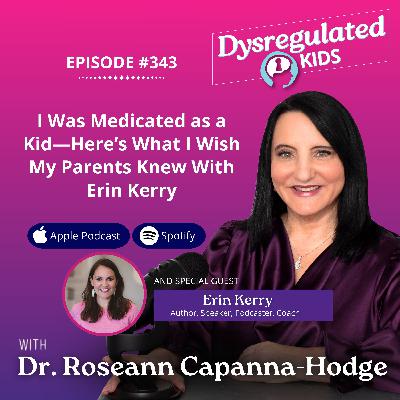
Parenting a child in emotional pain is exhausting — you’re not imagining it. You’re not alone. In this episode, I sit down with Erin Kerry, where we dig into a woman’s experience of misdiagnosis, heavy psychiatric medication, and the healing path she found beyond labels.Why this matters: Too often medication is the first line of defense for children and adolescents. Erin’s story shows how medical history, toxins, infections, and trauma can masquerade as psychiatric disorders — and why a comprehensive treatment plan matters for your child’s life and daily functioning.What you’ll learn: signs that behavior may be nervous-system driven, real risks of early psychotropic medication (including selective serotonin reuptake inhibitors), when to seek second opinions, and alternatives that helped Erin recover.Why does my child have sudden mood swings — could it be bipolar or something else?Look beyond labels. Sudden shifts can come from infections, toxin exposure, PTSD, or PANS/PANDAS as well as bipolar disorder. It’s scary when your child seems ‘possessed’ or out of control.Takeaway: Ask about medical triggers (ear infections, mold, immune issues) before assuming a lifelong psychiatric diagnosis.Parent Tip: Request a full medical review from your child’s doctor and consider immune or toxin screening.You don’t have to figure this out alone.Become a Dysregulation Insider VIP and get your FREE Regulation Rescue Kit: How to Stay Calm When Your Child Pushes Your Buttons and Stop Oppositional Behaviors.Head to www.drroseann.com/newsletter and start your calm parenting journey today.How risky is starting antidepressants or other psychiatric medication for kids?When it comes to childhood mental health medication, it’s important for parents to know the meds. While SSRIs and other prescriptions can be helpful, in adolescents they may sometimes increase the risk of depression or self-harm.Erin shared how her own child worsened after starting Zoloft, later being prescribed heavy drugs like Depakote, lithium, and Seroquel. The experience was devastating for her family and highlights why medication isn’t always the right first step.Parents should always weigh the risks, monitor mood closely, and insist on a clear treatment plan with ongoing follow-up.Parent tips for navigating childhood mental health medication:Get informed about side effects, drug interactions, and dosage.Ask for the lowest effective dose.Request frequent reassessments and clear communication from providers.How can I help my child without making medication the first move?When considering childhood mental health medication, it’s essential to start with nervous-system care. Let’s calm the brain first by looking at foundational areas like sleep, gut and immune health, trauma processing, and classroom accommodations before jumping straight to pills. Addressing these whole-child needs often creates meaningful progress without immediately turning to medication.Key takeaway: Behavior is communication. By addressing the medical, nutritional, emotional, and environmental factors, you support true healing instead of just managing symptoms.Parent tip: Try a multi-disciplinary team for the best results. This may include:A pediatrician for medical oversightChild psychiatrists for second opinionsTherapists for emotional support and trauma processingSchool staff to provide classroom accommodationsWhen should I...

Parenting feels harder than ever, and I want you to know—you’re not imagining it.As a mom and as someone who works with so many parents every day, I see how the mental load of modern parenting leaves us feeling exhausted, guilty, and overwhelmed. It’s not bad parenting—it’s our dysregulated brains trying to manage family life in an overstimulating world.In this episode, I’m unpacking why parenting feels so hard right now and what’s really driving the stress so many of us carry. From screen time to isolation to the unrealistic standards placed on mothers and fathers today, I’ll show you how these hidden stressors impact both you and your child.Most importantly, I’ll share simple, calming strategies to reset your nervous system so you can parent with more patience, joy, and confidence.Why does parenting feel so hard right now?I hear this question from so many parents, and the truth is, modern parenting carries a mental load that previous generations didn’t face. You’re not failing—it’s the world we’re raising kids in today.Here’s why parenting feels so heavy:Double-edged sword of screens: Helpful for quiet moments, but dysregulating for both adults and kids.Isolation from community: Unlike a generation ago, many parents don’t have neighbors, friends, or family to lean on.Unrealistic standards: Contradictory advice, social media pressure, and guilt about not doing “enough.”Sandwich generation stress: Working parents juggling their own children, younger siblings, and even aging parents.Parenting today can feel like a full-time job without a break. And when your nervous system is stuck in survival mode, it’s harder to stay patient, present, and consistent.Why do I lose my patience with my child so quickly?When raising children today, it’s no wonder your nervous system slips into survival mode. Even the most loving parent can snap—it doesn’t mean you’re failing. It means your brain is overwhelmed.Here’s what happens inside your brain:Stress hormones flood your system with cortisol and adrenaline.Executive functioning shuts down, so calm responses feel impossible.Your child’s dysregulation mirrors back, and their meltdown triggers yours.The truth? A dysregulated brain can’t parent a dysregulated child. Whether you’re navigating small children, a baby, or even young adults, the reason parenting feels so exhausting often comes back to your nervous system.Giving yourself moments of quality time and noticing when you’re feeling overwhelmed is the first step to calm—for you and your child.🗣️ “The key is pressing pause—step back, breathe, and reset before you respond. That’s how you break the cycle and bring more calm into family life.” – Dr. RoseannWhat can I do when I feel completely overwhelmed as a parent?Parenting is hard, and most parents hit moments where the stress feels immobilizing. You’re not failing—you just need to calm your own nervous system first.Try these small resets when raising kids feels too heavy:Breathe intentionally: Use 4-7-8 breaths to steady your body.Shift your posture: Stand, stretch, or simply step away.Get into nature: Even a quick walk can soothe your stress.Use simple techniques: humming, tapping, or cold water on your neck.Pause before responding: Don’t go in hot.One moment of calm can change the whole direction of family life.Want to stay calm when your child pushes every button?Become an...


Download from Google Play

Download from App Store
 United States
On weekends, you can not only relax. The cryptocurrency market works 24 hours / 7 days, so you can get an additional profit. We will do this using the Ethereum scaling strategy on standard technical indicators. mfi indicator crypto