


 Claim Ownership
Simply Science
Subscribed: 0Played: 5
Subscribe

© EnolaSays2024
Description
In Simply Science, we break down complex ideas into something you can easily understand. In this episode, we explore the fascinating concept of stochastic resonance—a surprising phenomenon where a little bit of noise can actually help make weak signals clearer! Whether it's helping animals hear better in noisy environments or improving medical devices, you'll learn how randomness can sometimes be a good thing. No complicated math or jargon, just clear explanations and fun examples that show how this quirky part of science plays a role in our everyday lives.
Tune in, and discover how something as simple as noise can actually boost clarity!
29 Episodes
Reverse
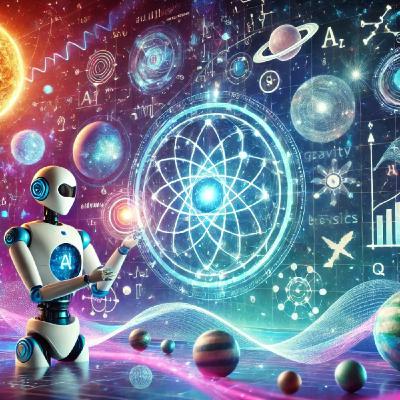
Can machines learn the laws of physics? Sounds cool, but it’s not as easy as it seems! In this episode of Simply Science, we dive into the wild world of AI trying to grasp the universe's rules. From transfer learning giving machines a head start, to multi-task learning making them multitask like pros (sometimes), to reinforcement learning teaching them through trial and error—it’s a rollercoaster of breakthroughs and roadblocks. But physics is no pushover, and blending AI with nature’s laws comes with plenty of challenges. Tune in for a fun, mind-bending journey through the intersection of AI and the ultimate rulebook: the laws of physics!
In this episode of Simply Science, we explore how data-driven evolutionary optimization is reshaping the way we solve complex problems. Unlike traditional methods relying on straightforward objective functions, this cutting-edge approach uses data from simulations, experiments, and real-world observations to evaluate solutions.However, real-world data often comes with challenges like noise and heterogeneity, making optimization more complicated. Enter physics-informed models—AI-inspired frameworks that integrate physical knowledge to reduce computational costs and improve generalization. Coupled with knowledge-driven AI, which condenses and interprets data for greater efficiency, these advancements are driving a shift toward smarter, more interpretable optimization methods.We discuss the exciting potential of combining knowledge- and data-driven optimization strategies to tackle some of AI’s toughest challenges. If you’re curious about the future of AI in solving real-world problems with efficiency and precision, this episode is a must-listen!
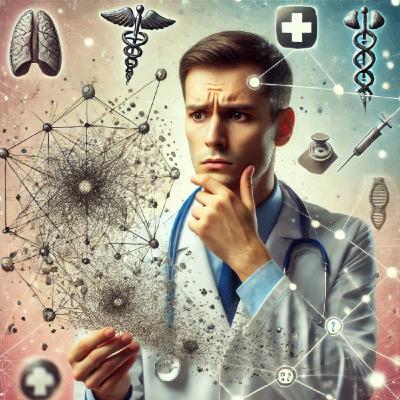
In this episode of Simply Science, we explore the fascinating parallels between the brain's memory system and artificial intelligence. The brain acts as an information filter, much like a computer clearing disk space—it deletes outdated or irrelevant data to make room for new insights. This process, known as “catastrophic forgetting” in neuroscience, involves the weakening or resetting of neural connections, allowing the brain to rewire itself and adapt. While this may seem like a flaw, it’s a feature that enhances flexibility, helps us let go of negative experiences, and improves decision-making in dynamic environments.For artificial intelligence, forgetting is just as essential. To achieve artificial general intelligence, AI systems must learn, adapt, and selectively forget outdated information. This ability prevents overfitting, enhances algorithm generalization, and enables AI to tackle real-world problems effectively.Join us as we dive into how selective forgetting, both in humans and machines, holds the key to adaptability, better learning, and the pursuit of artificial general intelligence. If you’ve ever wondered why forgetting is just as important as remembering, this episode is for you!

Join us in this thought-provoking episode of Simply Science as we unravel the ambitious goal of artificial intelligence: enabling machines to “think” and “decide” like the human brain. While AI has made incredible strides, it still lags behind the brain's unmatched ability to process incomplete information, navigate complex scenarios, and solve time-sensitive problems.We dive into the critical distinction between correlation and causation in AI models, highlighting why most current systems excel at recognizing patterns but falter in understanding the why. Drawing on pioneering works in time-series causality, we explore how integrating causal reasoning, principles of statistical physics, and brain-inspired cognitive activities could transform AI, enhancing its ability to generalize in unpredictable environments.This episode sheds light on the exciting challenges and breakthroughs at the intersection of neuroscience, physics, and artificial intelligence. Whether you’re an AI enthusiast, a science lover, or just curious about the future of machine learning, this is an episode you won’t want to miss!
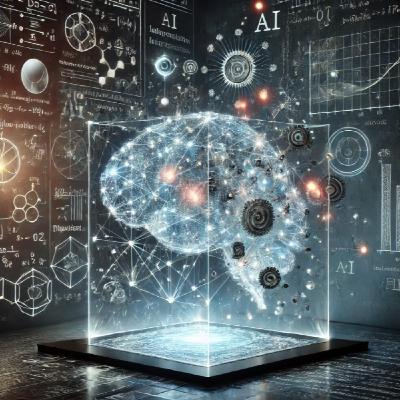
Welcome to Simply Science, the podcast where we break down the complex mysteries of the universe into ideas we can all understand. We are Max and Enola, and today, we’re diving into an intriguing open problem in physics and artificial intelligence: the mystery of neural networks and the challenge of making them explainable.Neural networks, the AI systems that mimic how our brains work, are revolutionizing physics. From predicting complex systems to analyzing massive datasets, these networks are becoming indispensable. But there’s a catch. They’re often called "black boxes" because, while they produce results, we don’t always know how they get there. Join us this Season 4, as we explore these open problems, why they matter, and how researchers are working to crack the code of these mysterious AI systems.

Comments

Download from Google Play

Download from App Store
 United States