


 Claim Ownership
Tech Can't Save Us
Subscribed: 10Played: 253
Subscribe

© Literal Humans
Description
Every week, hosts Paul David and Maya Dharampal-Hornby sit down with founders, CEOs, and innovators at mission-driven tech companies to discuss how tech can help solve the most pressing issues of our time— and how to avoid losing sight of the humans it affects.
180 Episodes
Reverse
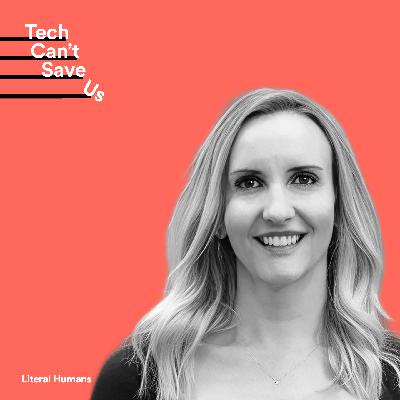
This week on Tech Can’t Save Us, host Paul David is joined by Erin Lee, CEO of Flow Neuroscience, the Swedish health-tech company behind a breakthrough in depression treatment: a wearable brain-stimulation headset that offers a safe, evidence-based alternative to traditional antidepressants.
Flow’s device uses transcranial direct current stimulation (tDCS) to gently activate brain regions responsible for mood regulation. In a landmark 2023 double-blind, placebo-controlled trial, Flow outperformed 21 frontline antidepressants, earning a feature in Nature’s “Future of Medicine” edition, an unprecedented milestone for at-home neuroscience technology. Today, Flow has 50,000+ users, is available across 200 clinics and multiple NHS trusts, and has raised nearly $20M to bring new forms of treatment to those who need it most.
Erin shares how the Flow experience works day-to-day, why users often see improvements within the first two weeks, and how pairing brain stimulation with an app-driven behavioral toolkit increases neuroplasticity and supports long-term recovery. She also speaks candidly about public perception, clinician adoption, and why Flow chose the harder, highly regulated path to build trust and clinical credibility from day one.
The conversation expands into Flow’s growth strategy, upcoming global expansion, and Erin’s transition from leadership roles at Google, Uber, and Babylon Health into one of the most personal and emotionally charged spaces in healthcare. She reflects on the influence of her own family’s mental health history, the importance of scientific rigor, and what it means to build a startup where the mission is literally life-changing.
Find more about Flow Neuroscience here: https://www.flowneuroscience.com
Follow Erin on LinkedIn: https://www.linkedin.com/in/erinslee/
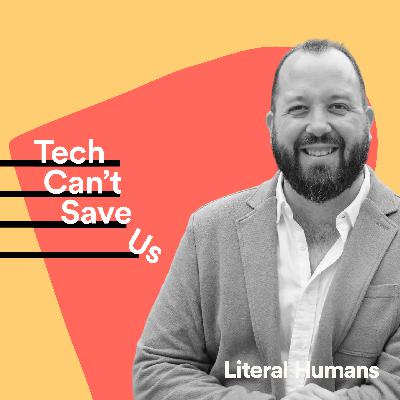
This week on Tech Can’t Save Us, host Paul David is joined by Andy Ellwood, founder and CEO of Stretch, the first shopping intelligence platform built to help families save money and make smarter grocery decisions. Andy’s career spans private aviation, startups acquired by Facebook and Google, business development at Waze, and years spent coaching top founders and now he’s bringing that eclectic experience to one of the most universal, everyday challenges: buying groceries.
Andy explains why the grocery industry is overdue for reinvention. Despite rising prices and endless choices, shoppers still lack the information parity they now expect in categories like travel, real estate, and healthcare. Stretch solves this by turning individual shopping lists into collective intelligence: shoppers enter their weekly items, and the app instantly shows which nearby retailers offer the best total basket price, often saving families $20–$40 per week.
The conversation explores Stretch’s early traction, from thousands joining the waitlist to viral TikTok growth, and how the team is building a massive data moat by connecting cross-retailer pricing in ways the industry never had to before. Andy shares how AI and “agentic commerce” will transform shopping, why Stretch centers dignity and agency for families navigating rising costs, and how his background at Waze shaped his approach to scaling community-driven products.
Find more about Stretch here: https://stretchformore.com
Download Stretch on iOS or Android by clicking here.
Follow Andy Ellwood here: https://www.linkedin.com/in/andyellwood/
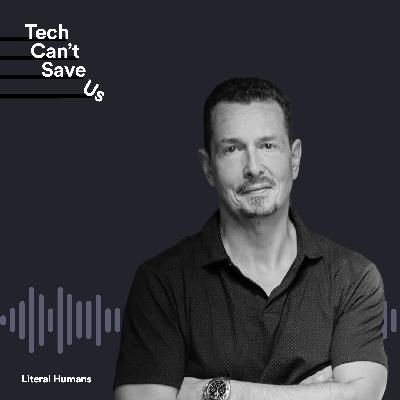
This week on Tech Can’t Save Us, host Paul David is joined by Dr. Serge Santos, entrepreneur, investor, and award-winning leader known as The Business Physicist. After deploying over $1 billion in capital during his investment banking and hedge fund career and achieving a multi-million-dollar exit with his previous company, Serge is now tackling one of the UK’s most persistent economic challenges: SME access to finance.
Through Funding Alternative Group, Serge and his team are reimagining how small businesses secure funding when traditional banks say no. Since 2022, the platform has deployed £8M in SME loans and £18M in invoice finance, offering fast, flexible, and human-centred lending for businesses often shut out of conventional systems. Serge explains how open banking allows Funding Alternative to assess risk using real-time data rather than outdated statements, enabling decisions in hours instead of weeks when clients face challenges.
The conversation explores the company’s biggest growth opportunities, the complexities of raising institutional capital responsibly, and how Serge applies his “business physicist” mindset to simplify complexity through rational, systems-based thinking. He also shares why culture is his “ultimate multiplier of success,” and why discipline, transparency, and trust sit at the heart of every funding decision.
Find more about Funding Alternative here: https://fundingalternative.co.uk
Follow Dr. Serge Santos here: https://www.linkedin.com/in/santosserge/
This week on Tech Can’t Save Us, host Paul David is joined by Professor Rob Young, Co-Founder & Chief Science Officer of Quantum Base, a pioneering deep-tech company using quantum physics to authenticate products and stop counterfeiting at the atomic level.
Rob explains how Quantum Base’s flagship technology, Q-ID, a tiny, printed tag containing “atomic-level uniqueness,” delivers provably secure authentication that’s impossible to clone and can be verified by anyone using a standard smartphone. With over half a billion Q-ID tags already produced, the company is tackling a global counterfeiting problem worth $2.8 trillion, including counterfeit medicines that cause more than 1 million deaths annually.
The conversation explores Quantum Base’s journey from university research to becoming a publicly listed company on London’s AIM market, raising £4.8M to scale its technology across industries, from luxury goods and government documents to pharmaceuticals and critical supply chains. Rob also reflects on his 20-year academic career across Cambridge, Tyndall, and Lancaster, how a breakthrough in his PhD work inspired the origins of Q-ID, and why he believes quantum security must be accessible, affordable, and deployable at global scale.
Find more about Quantum Base here: https://quantumbase.com
Follow Rob Young here: https://www.linkedin.com/in/qopto/
This week on Tech Can’t Save Us, host Paul David sits down with John Richardson, Co-Founder and Director of Coaching at MySalesCoach, the fast-growing platform tackling a problem almost every sales leader knows too well: sales reps simply aren’t getting enough meaningful coaching.
John explains why traditional sales management often fails to deliver authentic coaching, outlining the fundamental disconnect between holding reps accountable and creating a safe space for them to grow. MySalesCoach solves this by pairing salespeople with independent, specialist coaches, creating a personal-trainer-for-sales model that has already delivered 5,000+ coaching sessions to more than 100 sales teams.
The conversation digs into how MySalesCoach matches reps to the right expert, how they measure coaching impact through baselines and ongoing evaluation, and why sales qualification remains one of the biggest skill gaps in the industry. John also shares insights into the company’s rapid growth, including £1.1M in recent funding, over £1M in ARR, and new AI-driven tools built to provide real-time sales support without replacing the human coaching experience.
Find more about MySalesCoach here: https://mysalescoach.com
Follow John Richardson here: https://www.linkedin.com/in/johnrichardson11/
This week on Tech Can’t Save Us, host Paul David is joined by Rupert Shaw, founder and CEO of BILRS, a global bill payment platform that allows companies to offer everything from electricity and gas to mobile top-ups and TV subscriptions, all through a single API integration.
Rupert shares how BILRS is tackling one of fintech’s biggest challenges: the “last mile” of cross-border payments. While many remittance companies have digitized the transfer process, billions of users still struggle to convert those funds into everyday bill payments. BILRS bridges that gap, giving economic migrants and their families direct control over how their money is spent, while helping businesses standardize complex payment systems across thousands of local billers.
The conversation explores BILRS’s rapid global expansion into 20+ markets, its partnerships with major players like Al Ansari Exchange in the UAE, and how the company is leveraging embedded finance to deliver transparency, insight, and financial inclusion to underserved populations. Rupert also reflects on lessons from his 20-year career in mobile, gaming, and fintech (from EA to Ding) and how those experiences shaped his vision for a more connected and human-centered payments ecosystem.
Find more about BILRS here: https://bilrs.com
Follow Rupert Shaw here: https://www.linkedin.com/in/rupertshaw
This week on Tech Can’t Save Us, host Paul David is joined by Jason Saltzman, co-founder and CEO of Relief, the first AI-powered consumer debt resolution platform designed to help people tackle the overwhelming credit-card debt crisis.
Jason shares how Relief automates the complex process of negotiating with creditors, helping users save up to 70% on what they owe, while restoring trust, transparency, and dignity to an industry long plagued by hidden fees and predatory models. Using AI, Relief analyzes users’ financial data, identifies optimal settlement strategies, and executes negotiations automatically, allowing anyone to access professional-grade debt relief right from their phone.
The conversation explores Relief’s journey from a $15M Series A to a strategic partnership with National Debt Relief, the largest settlement company in the U.S., enabling the startup to expand nationwide. Jason also discusses his personal mission to democratize access to financial help, his early experiences with debt that shaped Relief’s ethos, and his broader vision for tech that delivers tangible, human-first impact.
Find more about Relief here: https://www.relief.app/
Follow Jason Saltzman here: https://www.linkedin.com/in/jasonsaltzman
This week on Tech Can’t Save Us, host Paul David is joined by Dr. Benyamin Deldar and David Hanbury, the co-founders of Deep Medical, a healthcare startup using AI to tackle one of medicine’s most expensive and overlooked problems: patient no-shows.
Deep Medical’s platform analyzes over a decade of appointment and social data to predict which patients are most likely to miss visits and why. Their explainable AI helps hospitals take early action, from sending targeted reminders to offering transport through partnerships like Uber Health, unlocking millions of new appointments and reducing health inequalities in the process.
Ben and Dave share how a doctor and a data scientist came together (literally matched by an algorithm!) to build tech that makes healthcare more efficient, fair, and humane. They discuss the global scale of the problem, what it takes to earn clinicians’ trust in AI, and how their mission could help eliminate hospital waitlists altogether.
Find more about Deep Medical here: https://deep-medical.ai
Follow Dr. Benyamin Deldar: https://www.linkedin.com/in/benyamin-deldar-951ab3153/
Follow David Hanbury:https://www.linkedin.com/in/david-hanbury-686a3ab/
This week on Tech Can’t Save Us, host Paul David is joined by David Glennie, founder and CEO of Voodoo Park, a purpose-driven technology company creating transformational solutions for the financial services industry. Under David’s leadership, Voodoo Park has become a certified B Corp, donates 10% of its profits to support women and girls worldwide, and has even founded the world’s first international trade union for software engineers.
They discuss how the company’s latest innovation, Aime (a transparent, secure, and scalable AI platform), is helping enterprises use artificial intelligence ethically and effectively. The conversation also explores Voodoo Park’s mission to make enterprise AI more accessible, David’s journey from actor and musician to tech founder, and how businesses can balance innovation with social impact.
Find more about Voodoo Park here: https://voodoopark.com
Follow David Glennie here: https://www.linkedin.com/in/davidglennie/
This week on Tech Can’t Save Us, host Paul David is joined by Michael Wang, founder and Chief Clinical Officer of Inspiren, a health tech company revolutionizing senior care through augmented intelligence.
Michael shares how Inspiren has built the first complete AI-driven senior living ecosystem, integrating care planning, resident safety, emergency response, and workforce optimization into a single platform. At the center of this ecosystem is AUGi, a wall-mounted pod that uses geometric exoskeletal monitoring to track resident movement without compromising privacy. It dramatically reduces falls, improves care accuracy, and helps staff work more efficiently.
The conversation explores how Inspiren has achieved measurable results, including up to an 83% reduction in 911 calls and increased accuracy in care-level assignments that improve both outcomes and operator financials. Michael also reflects on his unique career journey, from serving as a U.S. Army Green Beret to working as a clinician at NewYork-Presbyterian Hospital, and how those experiences shaped his mission-driven approach to innovation.
Find more about Inspiren here: https://www.inspiren.com/
Follow Michael Wang here: https://www.linkedin.com/in/michael-wang-inspiren/
This week on Tech Can't Save Us, host Paul David is joined by John Fontein, co-founder of Sesame, a healthcare marketplace making quality medical care affordable and accessible for everyone.
They explore how Sesame’s direct-pay model enables patients to book medical services, ranging from primary care visits to specialist procedures, at transparent, upfront cash prices that are often 60% lower than traditional healthcare costs. John shares how the platform has already helped over a million patients save more than $50 million, and how competition on Sesame has driven prices down nationwide.
The conversation dives into Sesame’s innovative partnerships, including an exclusive Costco deal offering $29 virtual visits, as well as the company’s expansion into employer programs through Sesame @ Work. John also reflects on his unconventional journey from music production and finance to health tech founder, and the personal experiences that motivated him to tackle healthcare accessibility.
Find more about Sesame here: https://sesamecare.com/
Follow John Fontein here: https://www.linkedin.com/in/johnfontein/
This week on Tech Can’t Save Us, host Paul David is joined by Dr. Joel Braunstein, co-founder, CEO, and president of C2N Diagnostics, a pioneering biotech company transforming the way we diagnose Alzheimer’s disease.
They explore how C2N is advancing blood-based diagnostic tools, most notably the Precivity AD test that delivers accuracy comparable to PET scans and spinal taps, but in a simpler, less invasive format. Joel shares how these innovations are reducing misdiagnosis rates, empowering clinicians, and providing families with clarity during some of their most difficult moments.
Joel reflects on his journey from cardiologist at Johns Hopkins to biotech founder, the curiosity and persistence that drive his work, and the importance of balancing rapid innovation with clinical rigor. He also shares personal insights, quickfire takes on tech innovation, and the philosophies that keep him grounded.
Find more about C2N Diagnostics here: https://www.c2n.com
Follow Dr.Braustein: https://www.linkedin.com/in/joel-braunstein-md-9456611/
This week on Tech Can't Save Us, host Paul David is joined by Sar Ruddenklau, Founder of Cursive Media, a strategic communications agency that works specifically with underrepresented B2B founders and C-suite executives to transform them into influential thought leaders.
They discuss how the executive branding landscape has shifted, and why showing up as an authentic human voice has become more crucial. Saar explains the specific challenges facing underrepresented founders, including the confidence gap that holds back talented executives who don't realise the value of their expertise.
The conversation covers Saar's journalistic approach to content creation, her strategy of deliberately keeping Cursive small to maintain hands-on relationships with clients, and how she helps founders build credibility.
Saar shares insights from her work across healthtech and fintech, her background moving from Australia to the US, and much more!
Find more about Cursive Media here:https://www.cursive.media/
Follow Sar here:https://www.linkedin.com/in/sarruddenklau/

This week on Tech Can't Save Us, host Paul David is joined by Shawna Young, CEO of Camelback Ventures, a New Orleans-based organization that invests in entrepreneurs of color and women building social impact ventures.
They discuss how Camelback is tackling one of entrepreneurship's biggest challenges: while genius is equally distributed, opportunity definitely isn't. Since 2015, the organization has invested over $9 million in more than 200 entrepreneurs, primarily from under-resourced communities, providing not just capital but executive coaching and access to mission-driven networks through their Fellowship program.
With applications now open for their 2026 Fellowship, Shawna explains how they're evolving their 16-week hybrid program to meet entrepreneurs where they are in today's challenging funding environment.
The conversation also covers the concrete barriers that underinvested entrepreneurs face, from starting ventures on credit card debt to competing against better-funded competitors, and how Camelback's approach differs from traditional accelerators.
Learn more about Camelback Ventures and the 2026 Fellowship application process here: https://www.camelbackventures.org/
Follow Shawna Young here:https://www.linkedin.com/in/youngshawna/
This week on Tech Can't Save Us, host Paul David is joined by Tom Rudnai, Founder and CEO of Demand-Genius.
Tom discusses why 75% of buyers are now avoiding sales reps and how most top-of-funnel content has started reading like a sales pitch. They explore the biggest misconceptions content teams make when trying to prove their value, and how the shift toward AI overviews in search has pushed companies to focus on bottom-of-funnel terms.
The conversation covers how Demand-Genius tracks exactly how sales teams use content and its influence on pipeline and revenue.
Find more about Demand-Genius here: https://www.demand-genius.com/
Follow Tom Rudnai here: https://www.linkedin.com/in/tom-rudnai-0539b6151/
This week on Tech Can't Save Us, host Paul David is joined by Justine Palefsky, co-founder and CEO of Kindred, a members-only home exchange community that's transforming how we think about travel and accommodation.
They discuss how Kindred has grown to include over 130,000 homes across more than 100 cities since launching in 2021, and why home swapping is experiencing a renaissance in our post-pandemic world.
The conversation covers the evolution of home exchange programs, how Kindred builds trust between strangers swapping homes, and the role technology plays in scaling their vetting process.
Find more about Kindred here: https://livekindred.com/
Follow Justine Palefsky here: https://www.linkedin.com/in/justine-palefsky

This week on Tech Can't Save Us, host Paul David is joined by Heidi Kujawa, Founder and CEO of ByFusion, a manufacturing company that's turning plastic waste into high-performing building materials called ByBlocks.
They discuss the staggering scale of the plastic waste crisis, with less than 9% of plastic getting recycled annually, and how traditional recycling methods have failed to address this growing problem. Heidi walks through the process of converting mixed plastic waste into durable building blocks and covers how ByBlocks compares to traditional materials like concrete in terms of performance and environmental impact.
Find more about ByFusion here: https://www.byfusion.com/
Follow Heidi Kujawa here: https://www.linkedin.com/in/heidikujawa/
This week on Tech Can't Save Us, host Paul David is joined by Chloe Coleman, Co-Founder & CEO of Vouchsafe, an inclusive identity verification platform tackling the global challenge of ID poverty through innovative approaches like biometric vouching.
They discuss the staggering reality that 1.1 billion people worldwide lack access to proper identification, including 11 million people in the UK who don't have a passport or driving licence. Chloe explains how this creates barriers to essential services like banking, healthcare, and housing, and why the increasing digitisation of services has made the problem even more acute.
Find more about Vouchsafe here: https://www.vouchsafe.id/
Follow Chloe Coleman here: https://www.linkedin.com/in/chloe-coleman/
This week on Tech Can't Save Us, host Paul David is joined by Amanda Bickerstaff, Founder and CEO of AI for Education.
They discuss how Amanda is helping bridge the growing divide between schools that are embracing AI and those that are restricting it entirely.
Amanda, a former high school biology teacher, shares her journey from the classroom to founding a company that has partnered with more than 150 academic institutions since April 2023. The conversation explores common misconceptions about AI in education and Amanda's hands-on approach to AI literacy training.
They also cover Amanda's ambitious goal of supporting 1 million educators and the challenges of scaling from a first workshop to training thousands weekly.
Find more about AI for Education here: https://www.aiforeducation.io/
Follow Amanda Bickerstaff here: https://www.linkedin.com/in/amanda-bickerstaff-edu/
This week on Tech Can't Save Us, host Paul David is joined by Matej Svancer, Founder & CEO of Openvibe, a platform that's bringing together the fragmented world of decentralised social media into one unified experience.
They discuss how Openvibe connects platforms like Mastodon, BlueSky, Threads, and Nostr, allowing users to manage all their social networks from a single app. Matej explains why decentralisation is becoming crucial as people wake up to the risks of centralised platforms, from algorithm manipulation to content suppression.
The conversation covers Openvibe's impressive growth to 80,000 downloads, the challenges of making complex decentralised tech accessible to everyday users, and how the company is using its recent $800,000 funding round to expand.
Find more about Openvibe here: https://openvibe.social/
Follow Matej here:https://www.linkedin.com/in/matej-svancer-399b2012b/


Download from Google Play

Download from App Store
 United States
Tremor is one of the most unpleasant symptoms of Parkinson's disease. Thus we at Stediwear have developed a new smart technology to help you deal with it. The Stedi-Two gloves feature a magnetic system that moves in the opposite direction of your tremor, reducing hand-shaking and allowing you to perform your activity more comfortably. https://steadiwear.com/
hello, I loved your episode it was super entertaining and I would like to add that Calgee is amazing website I found a similar website too https://naturesageomega3.com/ can you please make a podcast about it I trust your opinion