


 Claim Ownership
The Bee's Knees
Subscribed: 9Played: 295
Subscribe

© X10 Therapy
Description
Stories, articles, interviews about knee recovery, therapy, and life after surgery.
161 Episodes
Reverse

An MUA in NYC
A TKA and then a Struggle
[PJ Ewing] This episode of The Bee’s Knees features a compelling discussion with Dan Heaney, who shares his personal journey through knee surgery and the ensuing recovery process. Dan’s surgery took place on March 24th, and he recounts the initial challenges he faced, including complications with scar tissue that hindered his mobility post-operation. Despite expectations of a smoother recovery, Dan found himself struggling as his knee remained locked at 85 degrees, leaving him frustrated and uncertain about his future.
As Dan describes, he sought guidance from his surgeon, but was met with disappointing advice that seemed to leave him at a standstill. His determination drove him to research alternative recovery solutions, leading him to discover the X10 therapy machine. After a pivotal weekend of frustration and desperation, Dan took matters into his own hands and reached out to the X10 team, initiating a turning point in his recovery journey.
X10 Therapy
Throughout the episode, Dan emphasizes the dramatic impact the X10 machine had on his rehabilitation. Upon obtaining the machine, he diligently committed to using it three times a day, which quickly translated into notable progress. The support he received from his physical therapist, Candice, further fueled his motivation. With consistent use of the X10, Dan saw his knee range of motion improve from 85 to 125 degrees in a relatively short time, radically transforming his outlook on recovery and life post-surgery.
Overcoming Challenges | Advice for Future TKA Patients
The conversation touches on the mental and emotional strain of navigating the uncertainties of rehabilitation. Dan shares the profound sense of hope that emerged from his experience with the X10 machine, contrasting this with the despair he felt when relying solely on traditional physical therapy. He vocalizes a desire to inspire others in similar situations to seek solutions and maintain hope during difficult recovery processes.
As the episode progresses, Dan reflects on the relationships he built during his recovery and the emotional rollercoaster associated with the fear of losing mobility. His story encapsulates not only the physical challenges of post-surgical recovery but also the psychological battles that accompany them. By the end of the episode, Dan celebrates his newfound ability to return to daily activities, including running and surfing, highlighting the life-altering effects of taking charge of his rehabilitation.
Dan’s Recent Wedding – Congratulations!!!
In conclusion, Dan’s success story serves as a powerful testament to the importance of persistence, innovation, and self-advocacy in recovery. His experience illuminates the potential for rehabilitative technologies like the X10 to yield transformative results, urging listeners not to hesitate in exploring all options available for their recovery.

BACK TO FLYING AFTER KNEE MANIPULATION
A TKA and then a Struggle
[Mary Elliott] In this episode of The Bee’s Knees Podcast, I have the pleasure of speaking with Richard Tienan, who shares his candid journey through knee surgery and the complexities he faced during his recovery. We dive into Richard’s experience, starting from the initial surgery on May 7th, which presented unexpected challenges that led to a manipulation under anesthesia. This procedure was essential for improving his mobility, and Richard reflects on how pivotal it was in his recovery process.
Richard’s insights on the X10 therapy machine are particularly valuable. He describes how this innovative device assisted him in achieving and tracking his progress post-manipulation. Unlike traditional methods that leave you guessing about your range of motion, the X10 provides real-time feedback on degrees of bend. Richard emphasizes the importance of understanding your limits and recognizing progress, which not only aids in recovery but also boosts motivation. Through his detailed recounting, listeners gain understanding on the physiological and psychological aspects of knee rehabilitation.
X10 Therapy
We delve into Richard’s struggles with both bending and straightening his knee, highlighting how he found particular comfort in the X10’s monitoring capabilities. His revelation that he reached a remarkable 123 degrees of knee flexion within three weeks of his surgery illustrates an inspiring turnaround, especially after hitting a plateau at 110 degrees prior to his manipulation. Richard discusses both the emotional highs and the physical discomfort of this journey, stressing the significance of resilience and the role of goals in rehabilitation.
Overcoming Challenges | Advice for Future TKA Patients
In addition to Richard’s story, we explore the supportive role of his wife, Patty, and emphasize how having a support system can make a notable difference in recovery. Through her encouragement and the advice from his telemedicine coach, Richard stayed focused and driven. This episode provides practical tips and shared experiences that can guide anyone facing similar surgical challenges. Richard’s journey exemplifies the power of determination, the importance of professional guidance, and the necessity of tools like the X10 in recovering mobility post-surgery.
The episode wraps up with Richard sharing valuable insights to motivate others undergoing knee surgery. His suggestion to massage the thigh during therapy sessions to alleviate discomfort is particularly noteworthy, showcasing adaptation and resourcefulness. As Richard now looks forward to returning to previously enjoyed activities, including flying, he leaves listeners with an uplifting message about reclaiming freedom and joy in daily life. This episode serves as an essential resource for anyone navigating the complexities of knee surgery, offering hope, practical advice, and the reassurance that positive outcomes are possible with the right tools and support.
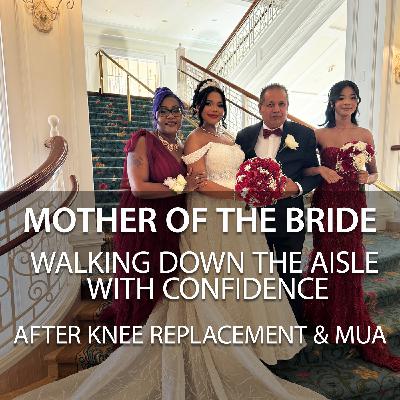
WALKING DOWN THE AISLE AFTER TKA
A TKA and then a MUA
[Mary Elliott] In this episode, I speak with Dawn, who shares her personal journey navigating the challenges of knee replacement surgery and the hurdles she faced during her recovery. Dawn, only 55 years old, initially experienced a meniscus tear and osteoarthritis, which led her orthopedic surgeon to recommend a knee replacement to prevent further issues down the line. Despite her initial reservations about being so young for such a procedure, she chose to move forward, seeking relief from her increasing pain.
Dawn outlines her struggles post-surgery, particularly with bending and flexing her knee, which became a significant roadblock in her recovery. After multiple home therapy sessions and outpatient treatments, she found herself regressing instead of making progress. This period of frustration was compounded by her timeline—her daughter’s wedding was approaching, and she felt a pressing need to improve her mobility quickly.
X10 Therapy
As our conversation unfolds, Dawn reveals that after a manipulation under anesthesia, which was necessary due to the stiffness and scar tissue buildup in her knee, she discovered the X10 machine. This device promised a gentler approach to therapy compared to traditional methods that left her in pain. Once she started using the X10, her progress transformed dramatically. With its programmed gentle movements, she was able to achieve improved flexibility in a supportive manner.
Overcoming Challenges | Advice for Future TKA Patients
Reflecting on her experience with the X10, Dawn highlights the significant progress she made in just a few weeks. From starting at 55 degrees of flexion post-manipulation, she reached an impressive 110 degrees shortly after, which was a major milestone for her. The emotional and physical journey culminated in her ability to walk her daughter down the aisle without assistance, a moment deeply cherished amidst her recovery challenges.
Dawn’s story is one of resilience, determination, and the importance of finding the right tools for recovery. She advocates for the X10 machine, emphasizing that its gradual approach to motion can significantly aid those struggling with post-surgical rehabilitation. As we wrap up, she encourages others facing similar hardships to remain open-minded and proactive in seeking out effective solutions that can help reclaim their independence and quality of life. Her journey illustrates that sometimes, the right tool can make all the difference in promoting healing and regaining autonomy.
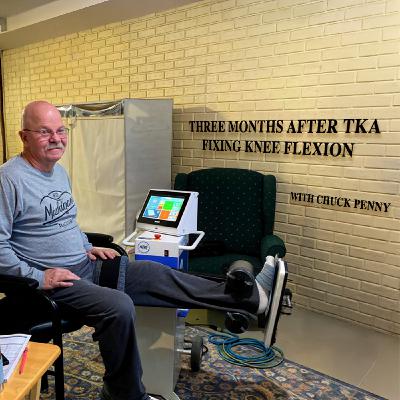
THREE MONTHS AFTER TKA: POOR FLEXION
A Podcast Featuring Chuck Penny and Mary Elliott (host)
In this episode of The Bee’s Knees, I have the privilege of hosting Chuck, who shares his transformative journey through total knee replacement and subsequent challenges he faced with recovery. Chuck’s story underscores the complexities of knee surgery and rehabilitation, and it’s a vital conversation for anyone facing similar challenges. He recounts that his surgery in April initially seemed routine, but soon spiraled into a hurdle-ridden path marked by complications like excessive scar tissue and pain.
The key turning point in Chuck’s recovery came when he was introduced to the X10 therapy machine after experiencing significant setbacks post-surgery, including the denial of a necessary manipulation procedure by his insurance company. It was alarming for him as the pain returned and mobility decreased dramatically, dropping from an initial success of 113 degrees of flexion to merely 95 degrees. In this challenging moment, Chuck, fueled by anxiety about his quality of life and desire to return to an active lifestyle, researched mechanical knee therapy options on platforms like YouTube, leading him to discover X10. He explains how this machine operates on the principle of offering feedback while also ensuring that recovery remains within a manageable comfort level, moving beyond the idea of traditional, painful rehabilitation.
X10 Therapy
Chuck delves into details about his misgivings at the start and how the X10 machine fundamentally shifted his experience, enabling him to engage with the rehabilitation process on his own terms. The therapy allowed him to perform sessions multiple times a day while receiving real-time guidance from his coach, Candice. This personalized support proved to be instrumental in recalibrating his expectations and accelerating his progress, eventually leading to a breakthrough session where he achieved an impressive 120 degrees of flexion. Furthermore, he emphasizes that having control over his recovery without the excessive pain typically associated with rehabilitation has been a game changer.
Overcoming Challenges | Advice for Future TKA Patients
The discussion transitions to Chuck’s reflections on his initial decision to undergo knee replacement surgery. He shares heartfelt advice for potential patients, stressing the necessity of patience and persistence. Emphasizing that even though the surgical path is daunting, the rewards can be life-changing, he endorses the value of being informed and seeking additional resources like X10 therapy to enhance recovery. Chuck’s optimistic approach, despite the setbacks, serves as an inspiring reminder that the journey of healing, particularly after major surgery, is often fraught with obstacles but can ultimately lead to the lifestyle and activity levels one aspires to regain.
As this episode concludes, Chuck’s story not only provides insights into the importance of innovative rehabilitation solutions but also highlights the role of community support in navigating the often-overwhelming journey of recovery. I hope his experience resonates with listeners and offers encouragement, reminding them that they are not alone in their struggles and that with the right tools and support, recovery is indeed possible.
An Interview with Lisa Alarcon, Director of Physical Therapy
Understanding Swelling and Scar Tissue After Knee Replacement
The composition of the swelling that occurs in the knee depends on how long it’s been there. The longer the swelling is in the knee the more likely you will have to deal with stiffness. If you’ve ever noticed you can push on someone’s skin and it stays ‘dipped’, those patients have a lot more protein in that fluid. And so what happens as you get that fluid in the knee structure that supports it (the joint capsule,) it swells like a balloon. Swelling and scar tissue after knee replacement are the two biggest challenges you will face.
So the more swelling that’s in that knee, the tighter the balloon gets. Once that balloon gets too tight, you have a significant limit in how much you can move your knee. When that happens, you don’t move your knee because it hurts, it’s uncomfortable, so you keep it still. Keeping it still only creates kind of this vicious cycle. Now it doesn’t move, so you can have scar tissue start to set up.
Anytime you put your body in a certain comfortable position and then you start to move out of that position, everything’s like, oh wait a minute, that doesn’t feel so good. And that’s also what’s happening in a fresh knee joint, especially immediately following surgery. Those structures are not happy that they’ve been disturbed. They like to be where they are. They don’t want to be cut, and that has all happened with the surgery. The body’s natural system says, “I’m going to limit how much motion I want this knee to have, and so I’m going to send the swelling in.”
Fibrosis
Fibrosis is another way to look at scar tissue. It’s ‘scar tissue plus.’ You can kind of think of the tissue surrounding the knee like spider webs. And so we can move the knee joint a little bit, or the shoulder, or whatever joint it happens to be, and we can break those spider webs, and we can get some range of motion back.
With fibrosis the tissue is more like duct taping the joint. The components that make up something that’s fibrotic versus something that’s strict scar tissue is that the tissue is a little bit more intense. The tissue is stronger, the tensile strength is stronger. It’s thicker. So fibrosis compared to kind of what I would consider normal scar tissue is just really kind of ‘scar tissue on steroids,’ and it’s a lot harder to break through. Usually those with this thicker scar tissue are the people that need the Manipulation Under Anesthesia (see: Julie Avoids an MUA) because they’ve had that fibrotic tissue start to set in, and so that’s the difference really between kind of general scar tissue and something that’s gone fibrotic.
You may have seen people that have those really big, bumpy kind of gnarly looking scars. Those patients are more likely to have that same kind of body response on the inside. Fibrosis depends on genetics, it depends on how long you want to sit still for, it depends on things like: ‘I had a knee replacement, and then I had an injection, and then I had another knee replacement.’ So if you have some or all of these other factors, that limit your ability to move that joint, you’re going to get that fibrosis a lot faster. And so the ‘when and the why’ of fibrosis kind of combine, and based on genetics and these other extenuating circumstances recovery can be more challenging. Certainly the less you move the knee, the less frequently you move the knee, the more likely you are to build in that kind of block, and it really feels like a block.
The X10 Knee Recovery System™
I think the X10 helps prevent scar tissue in general. If we can prevent general scar tissue, we certainly can prevent scar tissue on steroids, when you talk about something like a fibrosis, because you get in and you get moving early. We’ve had physicians who love the progress of their patients so much, they don’t want to put the CPM in the hospital, they want to bring X10 into the hospital, okay? And that’s amazing, to take someone who’s an orthopedic surgeon who’s been an orthopedic surgeon for a long time, who’s relied on the CPM for a long time and have them say, “I don’t want to do that anymore. I like the X10. I like how it works so much, I’m going do it even sooner. I want that patient on the X10 the hour after they come out of surgery or in those kinds of parameters.”
And so X10 as far as preventing fibrosis I think is absolutely what it does. But beyond that, I think if you have a patient that has fibrosis in their knee, or has some kind of a contracture, you can also bring X10 in in that situation, because of the ability to alter the hold times on the machine. On the X10 you can hold in a challenging but not painful position for three seconds, or for longer than that. With the fibrotic joint, I just need to hold longer. So even if a joint is fibrotic, we may not have to worry about a manipulation.
In those situations, whether it’s preventing the fibrosis or taking the fibrosis and trying to kind of break through it and get some more stretching out of it, I think is very possible to succeed using the X10. And I think we’ve seen it, certainly in the prevention stages … in the prevention stages, and we’re just starting now to kind of use it in patients that have contractures and have fibrotic joints to see how well it works in those situations. And it’s certainly not just for total knees. We’ve seen young kids with ACLs, young athletes. We’ve used it on a variety of different patients. It was created to help patients who had a total knee replacement, but I tell my physicians, I tell my patients, if you have an issue with your knee and range of motion is a problem, let’s start here.
Flexion and Extension Contracture
Contracture is a shortening of the muscle itself. So, fibrosis is something that sets up, like we talked about, as a spiderweb, and it connects bone to bone. Contracture is an actual shortening of the muscle, the tendon, because it’s been in a short position for so long. You know that whole ‘use it or lose it?’ That’s real. That really happens. And so if you don’t move that muscle, it’s going to contract, it’s going to stay short, because that’s all it ever had to do. And that’s why sometimes strengthening after a knee replacement takes longer, because you most likely didn’t have that range of motion before surgery.
If you had a knee, and that knee was only bending to 70 degrees, then the quadriceps knew that it had to work from 70 to zero, and that’s all the quadriceps had to do. And the hamstrings only pulled the knee back to 70 degrees. They didn’t pull it back any further, right? So, those muscle fibers that exist after 70 degrees on either side of the joint, they’re on vacation, and they like being on vacation.
And when you ask them to start working again it takes a little bit of time for them to remember what their goal was, what their target was, what their job is.
If we can get that range of motion faster, we can get those muscle fibers to start firing a lot faster. And certainly in our patients that get to outpatient with the X10 in a clinic, who really were significantly limited in their range of motion prior, we see that strengthening over that longer range happens faster, Because with the X10 we can focus specifically on this particular range, and be very accurate with it because of how we can set the X10 machine.
Scar tissue and swelling after knee replacement are the biggest challenges for most patients. Do your homework and make a plan for your recovery. With a good physical therapist and the right approach to recovery you will get back to your life in no time.
The X10 Meta-Blog
We call it a “Meta-Blog” because we step back and give you a broad perspective on all aspects of knee health, surgery and recovery and such subjects as Understanding Swelling and Scar Tissue After Knee Replacement. Voted Top 10 Knee Blog of 2018.
In this one-of-a-kind blog we gather together great thinkers, doers, writers related to Knee Surgery, Recovery, Preparation, Care, Success and Failure. Meet physical therapists, coaches, surgeons, patients, and as many smart people as we can gather to create useful articles for you. Whether you have a surgery upcoming, in the rear-view mirror, or just want to take care of your knees to avoid surgery, you should find some value here. Executive Editor: PJ Ewing (info@x10therapy.com)
Subscribe to the Blog Here
* indicates required
Email Address *
First Name
Last Name
A Knee Replacement Recovery Gone Wrong (and then gone right again!)
by Mike Wyckoff
My name is Mike Wyckoff. I underwent total knee replacement surgery (which included a lateral release) on May 18. Here’s the story of the XIO Knee Machine and how it affected my life.
A Tough Recovery
My post-op recovery had been very difficult. I was using the routine CPM (continuous passive motion) machine three times a day for two hours each session. And my knee had swollen almost to the size of a bowling ball. I saw the doctor for the first time two weeks after my surgery.
He was surprised to see so much swelling. He told me to stop all physical therapy for a few days to rest my knee. I then began a full PT regime with a therapist three days a week. And I rigorously followed all instructions to perform several exercises at home every day. I never missed a day, and I pushed hard. I still had much residual swelling, and a large hematoma on the side of my knee where the lateral release was performed.
Five Weeks Post-Surgery
Five weeks after my knee replacement surgery, I had severe prostatitis and had to be hospitalized for IV antibiotics. Fortunately, the bacterial infection did not affect my knee replacement. This was thanks to the quick, diligent response from my surgeon and an infectious disease specialist. But I lost nearly two weeks of real physical therapy, and my knee was not progressing in its extension and flexion.
Ten Weeks Post-Surgery
Ten weeks out from surgery, the orthopedic surgeon said we needed to schedule an MUA (manipulation under anesthesia). He said he was concerned that in my case, the manipulation might be counterproductive considering my post-op difficulties with such intense swelling. Nevertheless, my MUA was scheduled for the next week. My wife came home from our doctor appointment, prayed, and went to the internet to search ‘alternatives to MUA.’ The X10 machine popped up. She spoke with PJ Ewing (while I was at PT). And when I returned home, limping in the door from my PT, she asked me to look at the on the internet site and call PJ. To say the least, I was skeptical, exhausted, and discouraged.
Getting the X10™
I spoke with PJ and he said a machine could be sent to my home. But it would be five days in arriving. My MUA was scheduled in seven days. PJ said they could get an X10 to Georgia by the next day. I have a nephew who lives in Georgia. So my wife and I got in the car, drove almost all night to Georgia. We met the technician who delivered the X10 to my nephew’s home the following day. I used the X10 for four days in Georgia and, with PJ’s consent, took it back to Oklahoma. I then asked for an appointment with my doctor the day before my scheduled MUA.
The orthopedic surgeon was shocked at my progress and cancelled the MUA. I had progressed in my flexion from 96 degrees to 112 degrees, and my extension was also much improved. By the time I saw the surgeon again ten days later, my flexion was at 125 degrees and my extension was at O degrees. God answered our prayers, I avoided the MUA, and my knee continues to improve daily.
The X10 Team
From Dave Lahmann, who delivered the XIO to my nephew’s home in Georgia and showed me how to properly to use it, to his wife (and my recovery coach) Tricia, who provided excellent advice and timely encouragement throughout my time with The X10 to the entire support staff – all were wonderfully instrumental in the success I had.
And PJ, not enough thanks can be spoken for his understanding of my struggle and his flexibility in allowing me to transport this machine back to Oklahoma.
Finally, I cannot speak enough praise for the X10 machine. It is like a progressive, controlled, measured manipulation, rather than an MUA administered in a few minutes in surgery by the doctor. With the machine, I gradually broke up the scar tissue without increasing swelling at all. Further, the discomfort of “pushing to the next degree” of flexion was accompanied by absolutely no residual pain. It was truly amazing.
I offer the strongest encouragement to anyone to try this machine. Just maybe, the X10 will be the answer to your prayers too!
The X10 Meta-Blog
We call it a “Meta-Blog” because we step back and give you a broad perspective on all aspects of knee health, surgery and recovery and such subjects as knee replacement recovery gone wrong. Voted Top 10 Knee Blog of 2018.
In this one-of-a-kind blog we gather together great thinkers, doers, writers related to Knee Surgery, Recovery, Preparation, Care, Success and Failure. Meet physical therapists, coaches, surgeons, patients, and as many smart people as we can gather to create useful articles for you. Whether you have a surgery upcoming, in the rear-view mirror, or just want to take care of your knees to avoid surgery, you should find some value here. Executive Editor: PJ Ewing (info@x10therapy.com)
Subscribe to the Blog Here
* indicates required
Email Address *
First Name
Last Name
PT PUSHING TOO HARD (Knee Replacement Recovery)
A Podcast Featuring Rebecca Hart and Mary Elliott (host)
In this episode of The Bee’s Knees, I engage in a conversation with Becky Hart, who recently navigated the challenging journey of total knee replacement surgery. Becky, equipped with a PhD in chemistry, brings a unique analytical perspective to her recovery process, sharing insights that can help others on a similar path. We delve into the difficulties she faced post-surgery, particularly during her physical therapy sessions, which she felt were too aggressive and left her in considerable pain. This experience propelled her to seek alternative solutions, ultimately leading her to discover X10 therapy, a treatment that changed the course of her recovery.
As we unpack her experience, Becky describes her initial physical state just three weeks after surgery—limited to a range of motion between zero and 80 degrees. Her desire for a quicker and less painful recovery is evident, and she emphasizes the importance of having control over her rehabilitation. The convenience of X10 therapy, available at home and featuring remote physical therapist support, played a crucial role in her journey. With this approach, Becky was able to gradually increase her range of motion to an impressive 120 degrees in just over three weeks, avoiding the need for more invasive procedures like manipulation under anesthesia.
X10 Therapy
Becky is keen to impart her hard-earned knowledge to anyone considering knee replacement surgery. Her advice veers towards preemptive action—setting up the X10 therapy in advance of the surgery to hit the ground running upon returning home. She underscores the urgency of early movement to prevent complications like scar tissue buildup. Our discussion shifts towards practical steps listeners should take, including consulting with their surgeons and potentially advocating for insurance coverage to make therapy more accessible. Becky’s conviction is clear: the investment in a healthy knee is invaluable and can pay dividends in terms of quality of life.
Overcoming Challenges
As we conclude the episode, Becky reflects on the transformative nature of her journey and the gratitude she feels for overcoming her challenges. The conversation serves as both a source of encouragement and a call to action for others to remain hopeful and proactive in their recovery processes. This episode encapsulates not only the potential hurdles of knee surgery but also highlights the successful strategies that can lead to a more resilient and empowered recovery experience.
Avoid MUA 12 Weeks Post Surgery (Dianne’s Story)
“The Dianne Story” – Part II
We are pleased to share this interview from The Bee’s Knees Podcast and KNEE RADIO 1. We share the account of Dianne Smith’s recovery after total knee replacement. Dianne avoided a manipulation under anesthesia after 12 weeks struggling in outpatient PT. Avoid MUA 12 Weeks Post Surgery
Dianne faced an additional challenge in that she had three blood clots in her calf when she started on X10. At the end the blood clots were gone.
Details in the article below and on the podcast. This is part two of a two-part series.
From the blood clots, her leg had swelled up. She was suffering from swelling from quite a long time, her leg was very tender, and wasn’t getting anywhere with range of motion. PJ on our team first talked to her just said, “Listen, whether you get the machine or not, you just have to stop doing what you’re doing. Ride the bike three times a day. Just stop this forceful stretching. This pain mechanism is not going to stop.” So she decided to get the X10.
Before she got the X10, she already had gained nine degrees from doing what PJ had told her to do. We were so happy. We’re all a team here, so we want the best for the patient. We were happy that she was able to gain that much range.
And then 23 days after her blood clots were gone.
Dianne said, “I don’t know. I don’t know what happened. I don’t care how it happened, but they’re gone. My leg is no longer swollen. It’s not painful. I can touch it. You know, anybody, you know, my grandkids touch my leg. I don’t jump. It’s l like, it’s a miracle, you know? And she was so thankful of finding X10.
From Dianne’s PT: And we had our doubts. We had our honest talks about, “Hey, you know, I can’t promise you that this is going to get you to where you think you want to go, where want to be. But I can guarantee you it’s going to get you better than what you were.” I told Dianne, “You trusted that process and you did it!”
KNEE RADIO 1 (powered by The Bee’s Knees Podcast)
This interview is available exclusively on The Bee’s Knees Podcast and on KNEE Radio 1, a new radio station engineered to help the millions of knee surgery patients each year. You can listen to KNEE RADIO 1 right here: KNEE RADIO 1
CLICK TO SIGN UP FOR KNEE RECOVERY BASICS
Subscribe to Knee Recovery Basics
* indicates required
Email Address *First Name Last Name State

Avoid Manipulation Under Anesthesia (12-weeks after knee replacement)
An Interview with PTA, Kim Sajewski
“The Dianne Story” – Part I
We are pleased to share this interview from The Bee’s Knees Podcast and KNEE RADIO 1. We share the account of Dianne Smith’s recovery after total knee replacement. Dianne was able to avoid manipulation under anesthesia after 12 weeks of struggling in outpatient PT.
Dianne faced an additional challenge in that she had three blood clots in her calf when she started on X10. At the end, the blood clots were gone.
Details in the article below and on the podcast. This is part one of a two-part series.
Hello, my name is Kim Sajewski, and I was fortunate enough to be the recovery coach for Dianne Smith. When I first spoke with her, she was about 83 days post-surgery. Typical patient that I talk to are frustrated, struggling, dodn’t know where to go. Dianne found us at at x10therapy.com: and she did her research. She was a great patient. She wanted to know what else she could do. And I was upfront and honest with her. We talked about where she was in her recovery, what she had been doing.
She was in outpatient therapy. She was zero degrees extension, which she had full, and she had about 103 degrees flexion. The unique thing about Diane and I have not seen before with X10 is Diane had three blood clots in her calf. She still had them when she came to us, and I told her I was concerned. I had never seen it before, but she had been in outpatient therapy. The surgeon told her there’s nothing that they can do about them. She, she was on blood thinners; they didn’t give her any restrictions.
Kim Sajewski
In going through what she was doing in outpatient therapy, I knew the X10 would be way more gentle than the outpatient therapy was for her. She was being forced into manual stretching to the point that she was like, “Kim, I was smacking my hand on the matt / table, tapping out. I’m tapping out like in a wrestling match.” And I said I understood, and it’s not the way to go, but it is what it is. We both said the same thing. As soon as I started saying it, she started finishing it for me. I said, “You know, when patients continue, you have your trust with your therapist and things are going okay, but then things don’t go so well. But then they keep doing the same thing over and over again and expecting a different outcome.” And she said it right with me.
She said, “That’s a definition of insanity, to keep doing the thing, the same things over and over again, and expecting something different, an outcome, something different.” And we laughed.
She’s like, “I knew I couldn’t keep doing this anymore. I was a young 60-year-old grandmother who wanted to play with the grandkids. I had places to go. I wanted to travel. I did this for a reason. You know, my knee was so painful before surgery, and I did this because I wanna get back to life.” Unfortunately, this happened.
From the blood clots, her leg had swelled up. She was suffering from swelling from quite a long time, her leg was very tender, and wasn’t getting anywhere with range of motion. PJ on our team first talked to her just said, “Listen, whether you get the machine or not, you just have to stop doing what you’re doing. Ride the bike three times a day. Just stop this forceful stretching. This pain mechanism is not going to stop.” So she decided to get the X10.
Before she got the X10, she already had gained nine degrees from doing what PJ had told her to do. So I was, I was so happy. We’re all a team here, so we want the best for the patient. And I was happy that she was able to gain that much range.
Now she’s excited, right? She is gaining this range, and now she’s getting a little bit ahead of herself. So that’s where the coaching with my patients, what all the coaches do: ometimes we have to pull the reigns back. It’s a slow process. It’s the slow not forceful process that works. And the knee takes some time to slow down. It takes some time to get used to that, and it’s not going to happen overnight. And I told her that, I said, “It’s not a miracle machine. You have to give the knee some time to calm down. It has to reset itself again. And it has to realize that you are not doing something that is going to make it hurt and is not going to be painful. So once it starts to calm down and realize that it’s okay, what it’s doing, and it’s okay to go one degree at a time, everything starts to follow through.”
And so she did that. She was re respectful of that. She trusted the process. She trusted that this was the road for her. She knew she couldn’t get any worse than what she was. Maybe she could, I don’t know if they caught forcing her, but she knew she wasn’t going to go back to that. I had spoken to her about her outpatient therapy as well. And I said, you know, if you have a good relationship with your therapist, just tell ’em that you have this machine. You can or cannot, you know, but just say, you know, let’s just try not forcing my knee into, into a bend. Let’s just try doing other things. Let’s, let’s focus on the strength. Let’s focus on hamstring flexibility, but not, not the bend. Let’s not do that. And her therapist was very respectful of that. He listened and he said, okay.
And soon all of these things started taking place, and her knee was calming down.,she started to notice that she was walking better. Then when she went into her outpatient PT clinic, everybody’s like, “Wow, you’re walking so much better. You’re more fluent. You know, you’re not stumbling. You’re getting that full stride.” And so, that really made her happy, and she wanted to do more. But I, once again I reminded her, “Diane, let’s pull the reins back. We talked about it going slow and steady.
Dianne continued that progress as the days went on. The numbers were going up, she was gaining. She was progressing well. She was progressing as she should. One degree at a time. And the knee was accepting it.
However. To me the numbers, yes, they mean a lot. But… functionality meant even more. She was now able to get in and out of her car. Her husband said, “You bounced out. You bounced out of the car. Like it was nothing.” She was walking. She got to go down on the floor and play with her grandkids.
And on the phone I could hear the tears in her voice. She was just so happy that she was able to be down on the floor playing with her grandkids.
I think 19 days after she had the machine, she got to zero degrees extension and 130 degrees flexion (that is traditionally full flexion for most of us). She literally texted me that night, a picture of her screen, and she’s said, You have to celebrate this with me!” I, of course, called her and I said, “Oh my gosh, who would’ve thought this happened ?? !!”
And then 23 days after her blood clots were gone, she called me once again.
Dianne said, “I don’t know. I don’t know what happened. I don’t care how it happened, but they’re gone. My leg is no longer swollen. It’s not painful. I can touch it. You know, anybody, you know, my grandkids touch my leg. I don’t jump. It’s l like, it’s a miracle, you know? And she was so thankful of finding X10.
And we had our doubts. We had our honest talks about, “Hey, you know, I can’t promise you that this is going to get you to where you think you want to go, where want to be. But I can guarantee you it’s going to get you better than what you were.” I told Dianne, “You trusted that process and you did it!”
So it was amazing!
Now we’re just friends. I told Dianne, you’re not only my patient, but you’re my friend. So she’s sending me pictures of her grandkids and everything. And it was, it was pretty. It’s an amazing story. I’m so happy for her.
KNEE RADIO 1 (powered by The Bee’s Knees Podcast)
This interview “Avoid Manipulation Under Anesthesia” is available exclusively on The Bee’s Knees Podcast and on KNEE Radio 1, a new radio station engineered to help millions of knee surgery patients each year. You can listen to KNEE RADIO 1 right here: KNEE RADIO 1
The X10 Meta-Blog “Avoid Manipulation Under Anesthesia”
We call it a “Meta-Blog.” We step back and give you a broad perspective on all aspects of knee health as with this article on ‘Avoid Manipulation After Anesthesia (12-weeks after knee replacement)’.
In this one-of-a-kind blog we gather together great thinkers, doers, and writers. All our work is related to Knee Surgery, Recovery, Preparation, Care, Success and Failure. Meet physical therapists, coaches, surgeons, patients, and as many smart people as we can gather to create useful articles for you. This is for you if you have a surgery upcoming, or in the rear-view mirror. Or maybe you just want to take care of your knees to avoid surgery. Executive Editor: PJ Ewing
To subscribe to the blog click here.
GET HELP NOW – TWO FREE EMAIL SERIES BELOW
Two resources for you below to help with knee replacement pain management. Both are email series that we created to help those who need some additional thinking for pre-surgery and post-surgery.
Bilateral Knee Replacement for Olympic Cyclist
an interview with Chris Nowacki
Chris Nowacki spends time with us discussing her husband’s bilateral knee replacement. Wallander (Wally) Nowacki was an Olympic cyclist for Team Poland early in his life. However, finding himself in need of two new knees at age 65, he took the leap and did both knees at once. Chris and Wally did extensive research on how to best prepare for knee replacement surgery. They examined how to best recover afterward. Click the Play button above to listen to the interview. And look for a special bonus at the end of the interview – a nice surprise there for you.
The Impact of Cycling on the Knee
Cycling is a great low-impact aerobic activity. Cyclists are usually more efficient on both hills and flat terrain when they pedal quickly (at about 80-85 rpm) rather than at slower cadences. And cycling is considered a knee-sparing exercise. This is because it does not require an impact with the ground. However, the repetitive motion of pedaling can lead to a variety of overuse knee injuries. The majority of cycling injuries are indeed caused by overuse. This leads to cumulative tissue microtrauma and consequent symptoms. In overuse injuries, the problem is often not acute tissue inflammation, but chronic degeneration. Source: Chester Knee Clinic
More Bilateral Knee Surgery Articles Below
Click here for Ray’s Story.
Here is the article.
Click here for Tom’s Story.
Thank you Chris and Wally for your commitment to getting the X10 for recovery. This bilateral knee surgery for Wallander Nowacki, was a great success.
The X10 Meta-Blog
We call it a “Meta-Blog.” In these articles, we step back and give you a broad perspective on all aspects of knee health. We explore surgery and recovery and such subjects as ‘Bilateral Knee Replacement for Olympic Cyclist’.
This is a one-of-a-kind blog. We gather together great thinkers, doers, and writers. And it is all related to Knee Surgery, Recovery, Preparation, Care, Success, and Failure. Meet physical therapists, coaches, surgeons, and patients. And as many smart people as we can gather to create useful articles for you. You may have a surgery upcoming. Or in the rear-view mirror. Maybe you just want to take care of your knees to avoid surgery. In all cases, you should find some value here. Executive Editor: PJ Ewing (info@x10therapy.com)
Subscribe to the Blog Here
* indicates required
Email Address *
First Name
Last Name
Knee Replacement Recovery for Women: Your Guide to Strength & Renewed Mobility
The Bee’s Knees Podcast | Susanna
In this episode of The Bee’s Knees, I have the pleasure of sitting down with Susanna, a vibrant individual who shares her inspiring journey through knee replacement surgery and recovery. Susanna recounts her experiences leading up to her full right knee replacement on December 19th. Having managed a knee that had been previously injured for 45 years, she faced the difficult decision of replacement surgery after realizing the extent of the wear and tear on her knee joint. What stands out in her narrative is not only her courage to undergo surgery but also the distinct contrasts in recovery experiences between her and her husband, who had his knee replaced a year earlier.
As we delve into her recovery process, Susanna highlights the initial challenges she faced with pain and limited mobility, specifically her struggles to bend her knee beyond 90 degrees. She details ongoing consultations with her orthopedic doctor, which culminated in undergoing a manipulation under anesthesia to improve her knee’s flexibility. Susanna’s commitment to recovery shines through as she explores various approaches to physical therapy, ultimately discovering the X10 Therapy machine, which she enthusiastically describes as a transformative tool in her rehabilitation journey.
Knee Replacement Recovery for Women: Susanna’s Story
Throughout our conversation, Susanna emphasizes her approach to recovery, wherein she committed to using the X10 machine and engaging in personalized physical therapy. Her dedication to this alternative method, in conjunction with traditional rehabilitation techniques, has significantly improved her range of motion, allowing her to achieve 115 degrees on her own within just three weeks after starting with the machine. We discuss the vital role of motivation and determination in her recovery process, as well as the importance of having professional support from coaches who provide guidance and adjustments along the way.
As we reflect on her progress, it becomes clear that Susanna’s story is not just about physical recovery; it is also about attitude and resilience. She encourages others who are going through similar situations to keep an open mind regarding unconventional recovery options and to actively seek solutions that resonate with them. Susanna’s newfound appreciation for her capacity to recover and regain strength serves as an inspiring example for anyone dealing with the repercussions of orthopedic surgeries.
In closing our episode, I express my gratitude for Susanna’s willingness to share her journey and insights with us. She embodies the spirit of resilience and the continuous pursuit of a more active and fulfilling life post-surgery. This conversation is a powerful reminder of the possibilities that lie ahead and the importance of tailored recovery plans that align with individual needs and circumstances. Join us as we continue to explore more inspiring stories and expert advice on knee surgery and recovery in future episodes.
Stiffness After Knee Replacement | Secondary Research
Literature Review (MUA After TKA: Women)
We have done some research recently on the incidence of MUA with a focus on women. This is considered a Literature Review.
Literature Review: This is a comprehensive summary and analysis of the existing scholarly literature on a specific topic. A literature review seeks to identify what has already been written on a subject, identify key themes and debates, and point out any gaps in the current research. It is often a preliminary step in a larger research project but can also be a standalone publication.
To get the full story in the easiest way possible, listen to the podcast for a full rundown on our learnings.
MUA after TKA: Women
This infographic is an easy way to digest the findings. It provides a quick look at the incidence and risk factors of Manipulation Under Anesthesia (MUA) following Total Knee Arthroplasty (TKA). This review has a specific focus on women and MUA.
Identifying At-Risk Patient Profiles
The Critical Window: Early vs. Delayed Intervention
The MUA Paradox: A Solution and a Signal
MUA After TKA: Women | Works Cited
Manipulation Under Anesthesia After Knee Replacement – OrthoInfo – AAOS, accessed on June 10, 2025, https://orthoinfo.aaos.org/en/treatment/manipulation-under-anesthesia/
Manipulation under anesthesia after total knee arthroplasty: a retrospective study of 145 patients – PMC, accessed on June 10, 2025, https://pmc.ncbi.nlm.nih.gov/articles/PMC9214639/
Manipulation under anaesthesia post total knee replacement: Long term follow up | Request PDF – ResearchGate, accessed on June 10, 2025, https://www.researchgate.net/publication/51248496_Manipulation_under_anaesthesia_post_total_knee_replacement_Long_term_follow_up
Risk Factors for the Need for Manipulation Under Anesthesia …, accessed on June 10, 2025, https://pubmed.ncbi.nlm.nih.gov/40180278/
Manipulation Under Anesthesia – Oxford Clinical Policy – UHCprovider.com, accessed on June 10, 2025, https://www.uhcprovider.com/content/dam/provider/docs/public/policies/oxford/manipulation-under-anesthesia-ohp.pdf
Manipulation under anesthesia after primary knee arthroplasty in …, accessed on June 10, 2025, https://pmc.ncbi.nlm.nih.gov/articles/PMC6746267/
Younger age is associated with increased odds of manipulation …, accessed on June 10, 2025, https://pubmed.ncbi.nlm.nih.gov/31471257/
Factors predicting manipulation under anaesthesia after total knee …, accessed on June 10, 2025, https://pubmed.ncbi.nlm.nih.gov/39849219/
Factors predicting manipulation under anaesthesia after total knee replacement, accessed on June 10, 2025, https://www.researchgate.net/publication/388326048_Factors_predicting_manipulation_under_anaesthesia_after_total_knee_replacement
After Manipulation Under Anesthesia – X10 Therapy, accessed on June 10, 2025, https://x10therapy.com/after-manipulation-under-anesthesia-failed-knee-recovery/
Risk Factors for the Need for Manipulation Under Anesthesia Following Total Knee Arthroplasty: A Systematic Review and Meta-analysis. – FirstWord Pharma, accessed on June 10, 2025, https://firstwordpharma.com/story/5948557
Manipulation under anesthesia for stiffness after total knee replacement: A systematic review, accessed on June 10, 2025, https://www.researchgate.net/publication/269807965_Manipulation_under_anesthesia_for_stiffness_after_total_knee_replacement_A_systematic_review
Influence of Gender on Age of Treatment with TKA and Functional Outcome – PMC, accessed on June 10, 2025, https://pmc.ncbi.nlm.nih.gov/articles/PMC2882007/
Outcomes of Early Versus Delayed Manipulation Under Anesthesia for Stiffness Following Total Knee Arthroplasty: A Systematic Review and Meta-Analysis – PubMed, accessed on June 10, 2025, https://pubmed.ncbi.nlm.nih.gov/38797451/
Timing of manipulation under anaesthesia for stiffness after total knee arthroplasty – PMC, accessed on June 10, 2025, https://pmc.ncbi.nlm.nih.gov/articles/PMC4669325/
This infographic synthesizes findings from peer-reviewed medical literature on MUA following TKA. It is for informational purposes only and does not constitute medical advice.
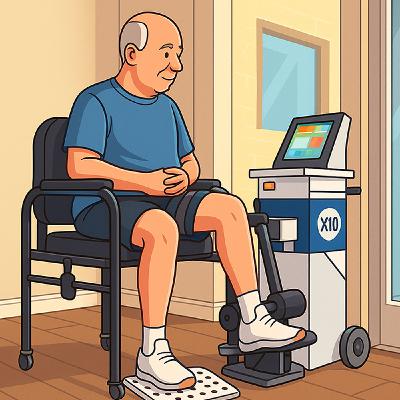
More Than a Knee: Overcoming a Blood Clot, Surgery, and Setbacks
A Podcast Featuring Kevin Evans and Mary Elliott (host)
In this episode of the Bees Knees Podcast, I have the pleasure of speaking with Kevin, who shares his personal journey following knee surgery and a manipulation under anesthesia. Originally from the UK and now residing in the U.S., Kevin opens up about the challenges he faced throughout his recovery process, providing an inspiring insight into not only the physical hurdles he overcame but also the mental resilience required to push forward.
Kevin recounts his initial knee troubles that were exacerbated by his passion for motorcycle riding. The dynamics of stopping quickly on a bike led to his eventual decision to seek medical help. Following a cortisone injection and unfortunately facing an infection that necessitated surgical intervention, Kevin found himself in a hospital setting longer than anticipated. His hospital stay involved not just surgery but also battling a blood clot, which added complexity to his recovery journey. Despite these obstacles, he approached his rehabilitation with determination, gradually moving from a limited range of motion to notable improvement with physical therapy. More Than a Knee: Overcoming a Blood Clot, Surgery, and Setbacks.
Just Bending the Knee
After his initial recovery period included at-home therapy, Kevin transitioned to external physical therapy, where he faced the daunting task of regaining the full functionality of his knee. Each milestone in this journey was marked by pain and effort, especially as he attempted to bend his knee to the desired angle. His perseverance paid off as he shared his progress, reaching a range of motion that spurred his motivations to keep striving for more. He emphasizes the importance of finding the right therapist, which proved pivotal in achieving further improvements in his recovery.
Knee Manipulation Under Anesthesia
As Kevin shares his experiences, he reflects on the moment when he decided to undergo a manipulation procedure to assist with the tight scar tissue that was hindering his mobility. This decision came with its own set of fears, but upon reflection, he found that the manipulation was instrumental in loosening his knee and providing the much-needed range of motion he sought. This episode stands out as a testimony to the trials and triumphs of rehabilitation, capturing the emotional and physical battles faced in such recovery processes.
Personalized Assistance and the Trusty X10 Machine
We delve into the specifics of the innovative X10 therapy machine that Kevin used during his recovery, which offered personalized assistance in his rehabilitation. He highlights its intuitive technology that adapts to the user’s movements, empowering him to regain control over his physical therapy. Kevin’s excitement about using the machine and the positive changes he experienced in just two weeks is palpable, demonstrating the integration of technology and personal effort in recovery.
Ultimately, Kevin’s journey unveils a powerful message about not accepting limitations. His love for biking, which motivated him through difficult times, serves as a reminder of the importance of maintaining passions and chasing an active lifestyle, no matter the challenges that arise. As he approaches a full recovery and anticipates getting back on his bike, he shares valuable insights for others who might be in similar situations, encouraging them to keep moving forward. MORE ABOUT MUA
More Than a Knee: Overcoming a Blood Clot, Surgery, and Setbacks. An interview with Kevin about his knee replacement, MUA and X10 recovery.
KNEE RECOVERY IN NORTH CAROLINA
A Podcast Featuring Debra Conti and Mary Elliott (host)
In this episode of the Bees Knees Podcast, I engage in a deeply insightful conversation with Debra, a registered nurse from North Carolina, who shares her personal journey through the challenges of post-operative recovery following a total knee replacement. Debra provides an honest look into her experience, detailing not just the surgery but her difficult recovery process plagued by the development of excessive scar tissue. She candidly recounts how initial physical therapy fell short of addressing her complex pain management needs, particularly the nerve injuries that arose during her treatment.
Debra describes her pivotal decision to reach out to me after conducting her own research on recovery solutions. She discovered the X10 Therapy, an in-home therapy machine designed to facilitate recovery under the guidance of professional therapists. In our discussion, she emphasizes how this innovative tool became a game-changer in her healing journey. The ability to perform tailored therapeutic exercises from the comfort of her home allowed her to regain mobility and improve her range of motion significantly—with personal touches from her X10 Recovery Coach, Halima, who provided consistent support throughout the process.
X10 Therapy
We dive into the technical aspects of how the X10 Therapy operates, highlighting its unique mechanism that safeguards against overexertion. Debra describes her experience enhancing her range of motion by 20 to 30 degrees, while the machine’s thoughtful design provided real-time feedback on pain levels, a feature she found particularly empowering. Through her narrative, listeners will gain insight into the importance of personalized care and the ongoing adjustments that one must navigate in their recovery journey.
Emotional Support
As her story unfolds, Debra reflects on how vital emotional support is throughout recovery. She appreciates the care she received, not just from the X10 Therapy team but also from others in the medical community. Her fondness for the machine and her therapists radiates through her words, marking a poignant connection between patient and caregiver that transcends traditional clinical boundaries. As we move towards closing the episode, Debra expresses both gratitude and a bittersweet sense of loss as her time with the X10 machine comes to an end.
Resilience and Determination
In wrapping up our conversation, I invite listeners to take inspiration from Debra’s resilience and determination. Her story is a testament to the power of seeking help, leveraging technology in healthcare, and the value of community support in navigating the complexities of recovery. We hope her insights resonate with anyone facing similar challenges, encouraging them to remain hopeful and proactive in their healing journeys..

THREE CHALLENGING KNEE RECOVERIES
A Podcast Featuring Robert Douglas and PJ Ewing (host)
PJ and Robert discussed the challenges of adapting to frequent changes in technology and software updates, as well as their personal backgrounds and experiences. They also shared their experiences with knee surgeries, the importance of range of motion in recovery, and the role of AI tools in their work. The conversation also touched on the benefits of subscribing to email series, podcasts, and books, with a focus on those related to health and technology.
In the meeting, PJ and Robert discussed their personal backgrounds and experiences. PJ shared his interest in jazz guitarists, particularly Pat Metheny. Robert, a 57-year-old from Fort Worth, Texas, shared his military service as an army nurse and his current life with his wife and three daughters. The conversation then shifted to Robert’s knee recovery experiences, which will be the focus of future discussions.
Robert Douglas’ Knee Surgery Experience Robert shared his experience with knee surgeries, starting with a torn meniscus and cartilage in 2016. After a steroid injection, his knee became septic, requiring two back-to-back incision and debridements. The infection destroyed all soft tissue, cartilage, and bone, leaving him unable to walk for six months. He received his first knee replacement, which failed due to misalignment and scar tissue. After a revision surgery, he used the X10 therapy device to improve his range of motion from 70 degrees to 125 degrees. He emphasized the importance of an experienced surgeon and proper physical therapy. He has used the X10 three times for his knee surgeries and found it helpful in his recovery.
Robert discussed his experience with knee replacement surgery, emphasizing the importance of range of motion in recovery. He praised the x10 machine for its precision in tracking progress and its role in his rehabilitation. PJ acknowledged the challenges Robert faced and the x10’s effectiveness in such situations. PJ also asked Robert about his experience with the dark period of his recovery, seeking insights for others in similar situations.
Robert’s Knee Replacement Recovery Journey
Robert shares his personal experience with depression following knee surgery and his journey to recovery. He emphasizes the importance of finding hope and a competent surgeon, as well as the critical role of range of motion in rehabilitation. Robert credits his faith, the X10 machine, and a rigorous therapy routine of using the X10 three times a day for 35 minutes each session as key factors in his successful recovery. He strongly recommends prioritizing range of motion exercises and considers the X10 an invaluable tool for knee replacement recovery.
Overcoming Challenges With Faith and Action
In the meeting, PJ and Robert discussed the importance of maintaining hope and taking action to overcome challenges. Robert shared his personal experience of overcoming a knee problem through faith, hope, and action, including finding a good surgeon and physical therapist, and using tools like the X 10. They emphasized the need to find the right tools and strategies to manage recovery effectively. Robert also shared a recent setback in his recovery process, but expressed confidence in overcoming it with the guidance of his coach.
Knee Surgery Recovery With Coaching
Robert discusses his experience with knee surgery recovery and the importance of having a coach. He explains how his coach, Kim, advised him to reduce his range of motion from 95 to 80 degrees, which helped alleviate bruising and improve his overall recovery. PJ emphasizes the value of coaching in the X10 program, stating that it is instrumental to patients’ success. Robert agrees, noting that he wouldn’t have had the confidence to adjust his approach without Kim’s guidance. They both stress the importance of not giving up and seeking proper support during recovery, with Robert adding a final tip about the benefits of pre-surgery strength training.
Robert and PJ discuss podcasts and books they enjoy. Robert recommends “Genius Foods” by Max Lugavere, which explores the impact of food on the body, and its accompanying podcast “The Genius Life.” He also mentions a podcast called “Cold War: Prelude to the Present.” PJ then enthusiastically recommends Dan Carlin’s “Hardcore History” podcast, praising its in-depth historical content, particularly the episodes on Genghis Khan. They both express interest in exploring each other’s recommendations.
Email Series and Podcast Recommendations
In the meeting, PJ and Robert discussed the benefits of subscribing to email series like Knee Surgery Preparation and Knee Recovery Basics. PJ also shared his appreciation for Robert’s talent as a host and his ability to make people feel comfortable sharing their stories. They also discussed their shared interest in podcasts, with PJ recommending several shows including Pivot, Macbreak Weekly, Conan O’Brien Needs a Friend, and science-focused podcasts. The conversation ended with PJ encouraging Robert to revisit podcasts and find new shows to enjoy.

After Three Knee Procedures, Finally a Rehab Solution
“Everyone involved went above and beyond to make recovery easier—it’s about kindness and generosity.”
[MARY ELLIOTT} In this episode, I have the privilege of speaking with Rana Palowski, a resilient and inspiring individual from Middle Tennessee who courageously shares her journey through knee surgery and recovery. At 61, life took an unexpected turn for Rana after she sustained a significant knee injury while working. Despite her background as the child of a surgical nurse, she realized that recovery from a total knee replacement on November 14th was more challenging than she anticipated. Rana discusses the initial optimism she felt, believing she would quickly bounce back, only to face difficulties with what she referred to as a “quad shutdown” post-surgery, which left her unable to lift her heel for nearly three weeks.
Rana opens up about her experience with physical therapy, detailing how her leg remained swollen, hindering her progress to achieve the crucial 90-degree bend needed for recovery. She candidly expresses her desperation and dwindling hope after months of little improvement, even considering what she thought might be the end of her healing journey. However, everything changed when she found a community online dedicated to total knee replacement experiences, where she learned about X10 therapy—a therapy machine that piqued her interest. Initially skeptical, Rana researched and presented this option to her physical therapist and doctor, ultimately deciding to invest in the machine herself, driven by the desire to regain her mobility. After Three Knee Procedures | Steady progress came faster than expected.
Rana Palowski’s X10
“There’s not a number you can put on your own health or being able to walk—investing in yourself makes all the difference.”
As Rana shares her transformation from skepticism to empowerment, listeners will feel her journey’s emotional highs and lows. After acquiring the X10 machine, Rana experienced a remarkable shift in her recovery. She vividly recalls the moment when, merely days after her third surgery, she achieved 90 degrees of movement—something deemed impossible for her after months of struggle. Rana emphasizes the importance of having the machine available to her at home, facilitating daily progress and allowing her to make significant strides towards regaining her mobility and independence.
Throughout our conversation, I am struck by Rana’s courage, resilience, and willingness to advocate for herself and her health. She acknowledges the support she received from the physical therapists and doctors but highlights the unmatched value of consistency and accessibility that the X10 machine provided. Rana’s story serves as a testament to the power of persistence, faith, and the willingness to explore new avenues for healing, even when the path seems dim.
After Three Knee Procedures, Finally a Rehab Solution
Rana’s journey not only illustrates her personal triumphs but also inspires others to remain hopeful and proactive in the face of adversity. By sharing her struggles and ultimately, her success, she embodies the spirit of resilience and reminds us all that healing is possible, and there are always options available. This episode is not just about physical recovery; it’s about embracing possibilities, fostering connections, and inspiring each other to pursue our best selves.
“It takes an immense amount of faith, even when things aren’t going well, to still be hopeful and open to possibilities.”
After Three Knee Procedures, Finally a Rehab Solution
Four Weeks After Bilateral Knee Replacement
Melissa’s Story (Owings Mills, MD)
Melissa put together the perfect recovery for herself by doing the right things before and after her bilateral knee replacement surgery. She provides us with an update four weeks after bilateral knee replacement in her own words, and in the videos below.
Melissa’s Recovery: In Her Own Words
My name is Melissa. I’m 47 years old and I had bilateral knee replacement surgery four weeks ago. I used the X10 the day that I returned home from the hospital. And now four weeks later I’m able to walk without the aid of a cane or any other device. I’m looking forward to having my new knees.
Knee Pain at an Early Age
I started having knee problems at 35. I had been doing a class at the gym on a treadmill and the next day my knees just blew up and I figured I tore something. So I saw an orthopedist and was told that my knees were ‘twice my age’. And that I was ‘way too young’ right now, but someday I’d need a knee replacement. And I was advised to take Ibuprofen and just deal with it. So over the years I saw an orthopedist and a rheumatologist looking for help.
Injections, Shots, Managing My Knee Pain
I had injections and shots and all of that to try to manage the pain. At that age I was quite active, but I wasn’t able to run anymore. I had pain just standing up from a chair because my knees would be so stiff. I would have pain during the night. There was a period of years when I felt like I was managing it quite well. I wasn’t seeing any doctors or having any injections at that point. But I would have copious amounts of Ibuprofen. I was able to do most of the things I wanted to do, but certainly not everything that somebody my age could do.
One Year Ago
Then about a year ago they started getting fussier and I was experiencing significantly more pain. I sought out another orthopedist. And I was fully expecting to just get some shots and to be told again that I was not a candidate for total knee replacement.
Dr. Richard Winakur
By this time I was 46. On my visit with Dr. Winakur I said, “look, I know I can’t have a knee replacement, but if there’s something else I can do…” He had taken my x-ray and he said, ‘oh no, you are a candidate. If you want a knee replacement you just let me know, but it is completely your decision. You’ll know when the time is right’. That was kind of a revelation to me.
Nonetheless. I did go through a series of cortisone shots, which helped for a time. And after having more conversations with Dr. Winakur about what was involved with knee replacement, I decided to go ahead with the surgery. He said to me it’s a quality of life issue, and that the implants are getting better and better every year.
OK, I’m Done!
I said, ‘you know what? I’m done. I’m done being this constrained at this age. I want to be able to be more active and just walk my dog pain-free.’ So I thought, okay, I’m definitely gonna do it. Then the question was, do I do one or both knees? Dr Winakur felt very strongly, given my age and fitness prior to surgery, that I was an absolute candidate for bilateral. And to me that sounded like a more pragmatic approach. Anyway, it’s one and done. So I went for it and I’m glad I did it that way.
So it was NOT so painful
One of my big surprises is that, at least in my experience, it wasn’t this horrible, painful, awful thing that so many people warned me about. Prior to surgery I was a little nervous because so many people said I was crazy. But St Joseph’s Medical Center was great. My pain was managed well in the hospital, and by the time I got home I was able to keep track of it. And like I said, I got on the X10 immediately. I think just having something that I could do for myself, to move toward healing, was great psychologically. In fact the machine promotes a reduction in swelling. I think I just put that together, and it ended up being a pretty painless process.
On X10: Dynamic Strength and The Pump Test
I had the help of the physical therapist at home who helped me to fire those muscles up. We started doing work there and then we moved on to the Dynamic Strength exercises on the X10, primarily the Pump Test. This was where you’re pushing down against weight to get the quadriceps muscles back in the game.
Managing My X10 Time
What worked best for me was two X10 sessions of 45 minutes on each leg. That’s a big chunk of time when you’ve got two legs. I did toy around trying three 30 minute sessions once. I just preferred a morning and a late afternoon session.
So I did 45 minutes on one leg, ice the knee, then 45 minutes on the next leg and then ice. And after a 45 minute time I felt like that was enough time to really get the joint loose and push my range of motion a bit.
Just Breathe
And I would feel it a little bit, but not to where I was screaming out in pain at all. I mean, it’s just that like ‘breathe through it kind of pain’ is all, nothing. And if that’s too much, you can back off.
Loss of Strength
In fact, one of the most surprising things to me through this whole surgery was what happens to your muscles. It was crazy. It was almost like they were paralyzed at first. I was somebody who had most of my strength in my legs. And to have them turn to mush was extraordinary and disconcerting, to say the least.
Driving Before Two Weeks Was Done
The big turning point for me came at the end of week two when my PT moved me from a walker to a cane. That made me feel like I had a lot more freedom and could get around better. And at that point I was able to start driving too. That was another big game changer. You start to feel a little bit more like yourself when you can have independence. I was excited by that.
I started cooking and doing laundry and being on my feet a lot more, probably even a little too much a couple of times. I would feel the tightness and the stiffness come back. But fortunately I still had the X10 at that point, so I could loosen up my joints by doing a session, with the range of motion on the X10, which, kept me limber.
Next Stop Peloton
So now that I’ve finished up with the X10, I’m lucky that I have a Peloton bike to turn to. That was something that I was avid about prior to surgery. I have already started using it a bit. And so I will just fall into that pattern. Now that I don’t have the X10 my daily routine will be to take a class on my stationary bike. And of course, doing the physical therapist’s exercises; they give you plenty to work on, so I’ll do that too.
Editor’s Note: To learn how to use a stationary bike after knee replacement, click here:
Getting the Most out of a Stationary Bike After Knee Surgery
To read more about Bilateral Knee Surgery and Recovery click here.
The X10 Meta-Blog
We call it a “Meta-Blog.” We step back and give you a broad perspective on all aspects of knee health as with this article on ‘Four Weeks After Bilateral Knee Replacement’.
In this one-of-a-kind blog we gather together great thinkers, doers, and writers. All our work is related to Knee Surgery, Recovery, Preparation, Care, Success and Failure. Meet physical therapists, coaches, surgeons, patients, and as many smart people as we can gather to create useful articles for you. This is for you if you have a surgery upcoming, or in the rear-view mirror. Or maybe you just want to take care of your knees to avoid surgery. Executive Editor: PJ Ewing
To subscribe to the blog click here.
Subscribe to the Blog Here
* indicates required
Email Address *
First Name
Last Name
Two resources for you below. Both are email series that we created to help those who need some additional thinking for pre-surgery and post-surgery.

Why the CPM Machine Failed to Solve Knee Surgery Recovery
The Continuous Passive Motion machine (CPM) does not increase a patient’s range of motion or strength. It does not or shorten recovery. It doesn’t help, and can even hurt a patient’s knee.
The CPM machine is a story of failed early research and technology. If you are interested in the enormous body of research about the Continuous Passive Motion machine click here (as compiled by orthopedic surgeon, Dr. David Halley).
The Great Hope of the Late 1970’s
Robert Salter (MD) and John Saringer (an engineer) commercialized the CPM in 1978. The original idea was to stimulate cartilage production in knees, at which the machine succeeded extremely well in rabbits, but not for humans. Human knee cartilage has no blood supply and consequently cannot grow back.
Range of Motion
Soon patients began using the Continuous Passive Motion machine to increase knee range of motion. Most research studies, before 2005, compared the range of motion of patients who used the CPM to patients who had only bed-rest. When that comparison was made it looked as though the CPM had a tremendous effect. However, after 2005, the experiments on the CPM evolved. These studies compared people who used the CPM to those who did not use the CPM, but who also were not confined to their beds. The non-CPM control group could move about. None of these studies showed that the CPM could increase range of motion better than those who simply moved about. The results were remarkably clear: the Continuous Passive Motion machine failed to increase knee range of motion.
The CPM lost its allure in a single decade. Surgeons who took a close look at the research stopped using the device. The Continuous Passive Motion machine failed to do what was claimed.
Moving from a six-week cast to modern recovery
In the early 1970’s most civilian knee surgery patients had their knees in a cast for six weeks, and were largely confined to bed. The military not only did not cast injured knees, they immediately got patients up and moving. At that point in time the research showed that some movement was superior to no movement. Dr. Salter reasoned that if some movement was better, continuous movement would be better still, and hence the invention of the CPM.
What Continuous Passive Motion Does
Basically, the CPM flexed a patient’s leg through a prescribed arc. In order to work properly, the patient was to lay absolutely still for up to 20 hours a day. The purpose behind laying still was to preserve the alignment between the patient and machine. However, simply moving a patient’s head disrupted the alignment, and to make matters worse, the machine itself moved over the surface of the bed. Even bolting the machine down did not solve the alignment problem. Because of the alignment problem patient’s legs only experienced 68% of the prescribed arc. And the CPM was painful for most patients. Lastly they were not very compliant.
Surgeons who have kept abreast of the research, as a rule do not prescribe the CPM, though some will admit that they offer it if patients ask for it.
How the CPM failed (the research) – Read More
Click the Play button above to listen to a full analysis of the CPM including recent research by hospital, surgeons, and therapists from the U.S. to The Netherlands to China. We welcome your feedback in the comments below.
The X10 Meta-Blog
We call it a “Meta-Blog.” In these articles we step back and give you a broad perspective on all aspects of knee health. We explore surgery and recovery and such subjects as ‘How the CPM Machine Failed.’
This is a one-of-a-kind blog. We gather together great thinkers, doers, and writers. And it is all related to Knee Surgery, Recovery, Preparation, Care, Success and Failure. Meet physical therapists, coaches, surgeons, and patients. And as many smart people as we can gather to create useful articles for you. You may have a surgery upcoming. Or in the rear-view mirror. Maybe you just want to take care of your knees to avoid surgery. In all cases you should find some value here. Executive Editor: PJ Ewing (info@x10therapy.com)
Subscribe to the Blog Here
* indicates required
Email Address *
First Name
Last Name

Many Knee Surgeries, Finally a Rehab Solution
Leslie Harrington shares her profound journey of overcoming multiple knee surgeries and the valuable lessons she learned along the way.
Leslie recounts a significant turning point in October 2022 when a freak incident caused her knee joint to fracture, leading to a pivotal surgery to remove debris obstructing her range of motion. We discuss her initial recovery from that surgery and how it quickly devolved into new challenges when her knee began to float in the joint, resulting in excruciating pain.
Driven by the need for relief, Leslie opted for a partial knee replacement but faced disappointment when it did not yield the expected results, ultimately leading her to undergo a full knee replacement.
Leslie Harrington
Throughout her journey, Leslie highlights the mental battles alongside the physical pain—struggles with muscle guarding and psychological hurdles that compounded her recovery experience. After discovering the X10 Knee Recovery System™, Leslie began to see a significant improvement in her mobility and pain management, emphasizing how crucial it was to have the right tools and support throughout her recovery process.
As we explore her sessions with the X10, Leslie shares uplifting insights on achieving newfound ranges in her knee, the correlation between distraction and progress, and the importance of patience in the healing journey. With laughter and vulnerability, she offers advice to others undergoing similar struggles, reminding listeners to stay true to their own recovery pace and not compare themselves to others.
Many Knee Surgeries, Finally a Rehab Solution
Leslie’s reflections culminate in a sense of hope and excitement for her life moving forward. She articulates her goals not only to regain full physical functionality but also to embrace activities that bring her joy, such as dancing and fitness. Her story stands as an inspiring testament to resilience and the transformative power of self-compassion and support in overcoming life’s challenges.
Many Knee Surgeries, Finally a Rehab Solution
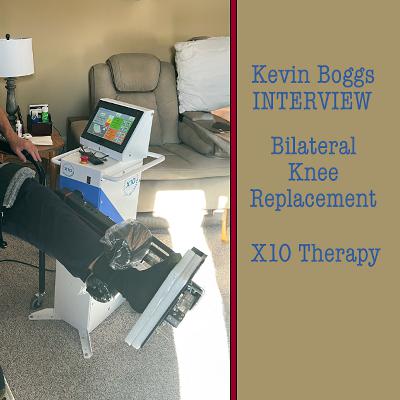
Kevin’s Bilateral Knee Replacement and Recovery
Bilateral Knee Replacement and Recovery and golf in the spring. Now that’s a bilateral knee replacement story you want to hear.
One After the Other
In this episode of The Bee’s Knees Podcast, we delve into the inspiring recovery journey of Kevin, who has experienced bilateral knee replacement surgery within a brief timeframe. At 64 years old, Kevin shares the challenges he faced due to chronic knee arthritis for nearly eight years, which ultimately led him to decide on surgeries for both knees—first in late August and then just 11 weeks later.
Kevin’s choice to undergo the procedures sequentially, rather than simultaneously, stemmed from a blend of apprehension and the desire for a timely resolution to his debilitating pain.
Kevin Boggs
Kevin discusses the pivotal role the X10 therapy system played in his rehabilitation. After his first surgery, he faced a concerning delay in accessing traditional physical therapy. However, with the X10 available in his home, he was able to facilitate his own recovery processes. His commitment to using the device consistently helped him achieve significant progress, much to the delight of his physical therapist during his first official appointment a week post-surgery. Kevin’s diligent work ethic, aided by the expert guidance of his coach Halima, contributed to his remarkable outcomes. Through a structured regimen of physical therapy, he focused on restoring flexibility, strength, and addressing scar tissue, all while engaging rigorously in exercises that accelerated his recovery.
Reflecting on his experience, Kevin expresses how his actual recovery trajectory far surpassed his expectations. His confidence in the X10 was reaffirmed when he opted for the same therapy approach following his second surgery. Four weeks post-operation, Kevin is driving without assistance and reveling in a newfound freedom from the pain that once confined him. He emphasizes the importance of taking charge of one’s health and views his investment in the X10 as a crucial step toward achieving a vibrant lifestyle again.
Bilateral Knee Replacement and Recovery
Kevin’s story serves as a powerful reminder of the significance of health and the lengths one should go to regain it. His journey illustrates the critical nature of timely medical interventions, informed choices about rehabilitation, and the potential of technological advancements in physical therapy. As he looks forward to resuming his everyday activities, including golf and travel, it’s clear that the hurdles he has overcome have only fortified his resolve to enjoy life to its fullest. This episode encapsulates not just a personal victory, but also serves as a beacon of hope for others grappling with similar challenges, encouraging listeners to prioritize their health and pursue the most effective recovery paths available.
Kevin’s Bilateral Knee Replacement and Recovery

Comments

Download from Google Play

Download from App Store
 United States