


 Claim Ownership
The Critical Few Actions
Subscribed: 1Played: 21
Subscribe

© Copyright 2025 John Downes
Description
Overwhelmed by trying to do it all? Focus on the criticalfewactions™ that will have the biggest impact on your business's success.
In this podcast, host John Downes, a seasoned business advisor with extensive experience in Big Consulting, successful entrepreneurship, and mentoring, helps you defeat the overwhelm. Through real stories from business leaders, experts insights, and John’s own experience, you’ll learn how to prioritize those criticalfewactions™ that, if you did nothing else, will drive your business forward to deliver your vision. We’ll cover everything from setting your vision and strategy to improving profitability and supporting your team’s performance so that you get more pleasure, fulfillment, and financial reward from your business.. Subscribe now and tune in every two weeks to take control of your business’s future—one focused step at a time.
In this podcast, host John Downes, a seasoned business advisor with extensive experience in Big Consulting, successful entrepreneurship, and mentoring, helps you defeat the overwhelm. Through real stories from business leaders, experts insights, and John’s own experience, you’ll learn how to prioritize those criticalfewactions™ that, if you did nothing else, will drive your business forward to deliver your vision. We’ll cover everything from setting your vision and strategy to improving profitability and supporting your team’s performance so that you get more pleasure, fulfillment, and financial reward from your business.. Subscribe now and tune in every two weeks to take control of your business’s future—one focused step at a time.
63 Episodes
Reverse
Please please click Subscribe/Follow so I can keep giving you valuable insights.Click here for further information and the eBook of resources: https://www.criticalfewactions.com.au/podcast/Please let me know if I’m on the right track with the podcast. It means the world to me to know I’m adding value.Do you know what your business is really worth, beyond what’s on paper?Are your brand, customers, and systems working as valuable assets? Or are they being overlooked?When it comes time to sell, will you be negotiating from strength or surprise?If you’re thinking of an exit and you’ve never valued your intellectual property or brand, this episode is for you.In this episode, Strategic Mentor, John Downes explores what underpins a solid strategic plan and implementation of that plan as he speaks with valuation expert Fiona Hansen about how CEOs can uncover the real worth of their intangible asset: brand, customers, and systems. Fiona explains how these unseen drivers of value can make or break a negotiation and why smart CEOs treat IP valuation as an ongoing discipline, not a last-minute exercise. What You’ll Learn: == Why systems, customer bases, and brand are often undervalued assets. == The core valuation methods every CEO should understand. == How to calculate customer lifetime value and reduce valuation risk. == Why your brand can never be worth more than your business. == The critical steps to prepare your business for exit. Highlights 00:00 Why Valuing Intellectual Property Matters 01:09 Case Study – How a Mobile Betting Company Valued Its IP 05:04 The Three Core Valuation Methods Explained 12:34 How to Value a Customer Base 15:21 Brand Value and the Louis Vuitton Example 21:46 Market Valuation vs Traditional Techniques 27:30 Preparing Your Business for Exit 32:56 The #CriticalFewActions™ for Senior Leaders The #CriticalFewActions™ You Can Do Today: When I work with successful business leaders as a Strategic Mentor, exploring what underpins a solid strategic plan and implementation of that plan, I often find they’re focused on profit and revenue but overlook the assets that create them. Most CEOs underestimate how much systems, customer data, and brand equity contribute to overall enterprise value. Here are the three key insights I took from the conversation:1 – Systems as Assets. The first insight is about valuing your systems. Problem: Many treat systems as cost centres, not core value drivers. So, what can you do?Identify the systems that enable sales and efficiency.Estimate how much revenue depends on each—this defines your asset value.2 – Customer Value The second insight is about customer bases. Problem: CEOs see databases, not long-term revenue streams. So, what can you do?Measure churn and retention over several years.Segment customers to calculate lifetime value (CLV).3 – Brand and Profit The third insight is about brand. Problem: Awareness alone doesn’t equal brand value. It must link to profit. So, what can you do?Identify how your brand supports pricing power or loyalty.Use industry royalty benchmarks to quantify brand worth.If you found this conversation valuable, please Subscribe / Follow, leave a...
Subscribe/Follow and click here for further information and the eBook of resources:https://criticalfewactionspodcast.com.au/RachelDelaneyPodcastUpdate1Please let me know if I’m on the right track with the podcast. It means the world to me to know I’m adding value.Are you protecting your business, or leaving value exposed every day?Could a single contract clause undo years of hard work?Would investors discover something you never knew you didn’t own?If you want to protect value and avoid costly legal surprises, this episode is for you.John Downes speaks with Rachel Delaney, Founder and Fractional General Counsel at Resident Legal. Rachel shows how early legal action saves money, builds confidence, and makes a business exit-ready.What You’ll Learn:== Why early legal involvement creates confidence, not cost== How to lock down your intellectual property before investors ask== Ways to empower teams through Contract Playbooks== The rise of wage-compliance risk and how to avoid it== Why exit readiness starts with strong legal foundationsHighlights00:00 Rachel’s legal journey and career path02:17 Why startups need early legal support04:13 Case study: IP issues that cost founders06:37 Legal essentials every startup should know08:07 How Contract Playbooks protect and empower10:49 Understanding wage theft and compliance risks14:01 Legal challenges during growth and major deals16:51 Fractional legal counsel for scaling businesses23:55 How to prepare for exits and mergers38:40 #CriticalFewActions™ for Senior LeadersThe #CriticalFewActions™ You Can Do TodayWhen I work with successful business leaders, I often see them delay legal steps until problems become urgent. Waiting too long is always costly.The first Insight is about locking down intellectual property early. If you don’t own it, you can’t sell it. • Audit all IP ownership with founders and contractors. • Include written IP assignment clauses before work begins.The second Insight is about being contract-ready. Teams lose deals—or accept risk—without a playbook. • Build a Contract Playbook listing red flags and escalation rules. • Train staff to use it and call for help early.The third Insight is about preparing for exit long before sale. Messy records erode confidence and reduce value. • Treat legal housekeeping as part of value creation. • Build your data room now so due diligence confirms success.If you found this conversation valuable, please Subscribe / Follow, leave a comment, and share this episode with your peer business leaders. Your support helps us reach more CEOs who want to improve their organisation performance and value.Stay in the loop with show updates and exclusive content: https://www.criticalfewactions.com.au/podcast/Sponsor: The CEO Masterclass in Strategic Planning and ImplementationAre you a business owner or CEO striving to elevate your business to new heights? But right now… you’re not hitting the targets or objectives your business needs to achieve. Or maybe you’ve hit a roadblock you can’t move past, a major challenge with no clear solution, and there’s no one in your world you can talk to about it.This isn’t another generic...
Subscribe/Follow and click here for further information and the eBook of resources:https://www.criticalfewactions.com.au/podcast/Please let me know if I’m on the right track with the podcast. It means the world to me to know I’m adding value.=> Can you really separate your life from your business?=> What if your hardest experiences became the foundation for your greatest success?=> Are the patterns in your organisation helping it grow? Or, are they holding it back?If you’ve ever faced setbacks that shaped how you lead today, this episode is for you.In this episode, John Downes speaks with Marie Felsbourg, founder of Astral Consulting, a specialist in information management and governance. Marie built her business from personal challenge and resilience, helping Australia’s largest corporates and government agencies prepare for the AI era with systems that ensure compliance, trust and performance. Her story shows how discipline, self-awareness and people development can turn adversity into long-term growth.What You’ll Learn:== How to turn personal hardship into leadership strength== Why developing people from the bottom up drives business resilience== How information patterns define your organisation’s success== Practical ways to prepare your business for the AI future== The importance of discipline and accountability in growthHighlights00:00 Meet the Founder: Marie Felsbourg00:43 The Fascination with Patterns03:07 The Birth of Astral Consulting06:03 Challenges and Growth06:32 Information Management and AI09:09 Building a Business from the Ground Up15:38 Navigating Personal and Professional Life25:10 Intern Programs and Global Opportunities30:27 The Unexpected Benefits of COVID-1931:26 Navigating the CEO Masterclass32:14 The Importance of Perspective and Resilience35:43 The Role of Information Governance37:45 Innovating Business Models with Managed Services44:20 Leveraging Positive Psychology for Team Development51:52 Advice for Young Professionals and CEOs55:23 #CriticalFewActions™ for Senior LeadersThe #CriticalFewActions™ You Can Do TodayWhen I work with successful business leaders, I often see that many struggle to connect the personal lessons from their own lives to how they lead their organisations. Marie’s story reminds us that resilience, focus and discipline are as vital in business as in life.Here are the three key insights I took from the conversation:Insight 1 – Turning personal challenges into business strengthMany founders separate personal and business growth, yet they often inform each other.So, what can you do?• Reflect on how your life experiences shape your leadership decisions.• Build systems and habits that keep you focused when life throws its next curve ball.Insight 2 – Developing people from the bottom upGrowth stalls when leaders don’t invest in the next generation of talent and processes.So, what can you do?• Create structured development pathways for your team—from interns to leaders.• Build repeatable processes so knowledge is retained and scaled, not lost in handover.Insight 3 – Understanding patterns in information managementMost leaders don’t see the repeating patterns in their operations until they become bottlenecks.So, what can you do?• Map the critical information flows in your organisation and ask where data gets lost or duplicated.• Use those patterns to...
Subscribe/Follow and click here for further information and the eBook of resources:https://criticalfewactionspodcast.com.au/DianneSemmens4EpisodePagePlease let me know if I’m on the right track with the podcast. It means the world to me to know I’m adding value.Are you only using 20% of the ERP you’ve paid for?Could Phase 2 of ERP adoption be where the real value lies?What if the tools you already own could save time and margin?If you’ve implemented ERP but stopped after the basics, this episode is for you.Many mid-sized businesses install ERP systems, survive go-live, then hit pause. The system runs, but the value stalls. In this episode of the #CriticalFewActions™ podcast, John Downes speaks with Dianne Semmens, CEO of Acacia Consulting Services. Dianne explains how most organisations miss out on mobile functionality, automation, and AI-driven decision support already included in their ERP licence. CEOs will learn how to unlock this “second wave” of ERP and avoid leaving value on the table. What You’ll Learn: == Why most businesses plateau after ERP go-live == How mobile ERP apps streamline expenses, time-tracking and approvals == Simple workflow automations that cut rework and protect margins == How AI is already embedded in ERP and what to switch on today == Why post-implementation reviews matter to capture new functionality Highlights 00:00 Why most CEOs underuse ERP 02:00 Five next-level ERP functions 03:00 Mobile apps for expenses and pay-on-glass 05:30 Automations that boost service and reduce margin loss 07:30 Business alerts and stock management 09:00 MRP and manufacturing planning 10:30 AI integration into ERP 13:00 Natural language queries in ERP 17:30 Efficiency vs headcount: creating capacity 19:00 Post-implementation reviews and missed opportunities 21:00 #CriticalFewActions™ for Senior LeadersThe #CriticalFewActions™ You Can Do TodayWhen I work with successful business leaders, I often see ERP value stall after go-live. The basics work, but advanced capability sits idle. So think about these three insights I took from the episode:The first Insight is about mobile ERP apps. Many businesses miss them. The problem: wasted time on manual forms.So, what can you do?Check if your ERP has a mobile app tailored to your versionsPilot simple functions like expenses, timesheets, or pay-on-glass sign-off.The second Insight is about workflow automations. Manual processes eat time and margin. So, what can you do?Start with small wins like automated order confirmations.Review ERP workflows already available but not yet enabled.The third Insight is about AI-driven ERP decision support. Many teams still export to spreadsheets while AI sits unused. So, what can you do?Ask your ERP provider what AI tools are embedded.Enable natural language query features to answer questions without coding. If you found this conversation valuable, please hit the Subscribe / Follow button, leave a comment, and share this episode with your peer business leaders. Your support helps us reach more CEOs who want to improve organisation performance and value.Stay in the loop with show updates and exclusive content:
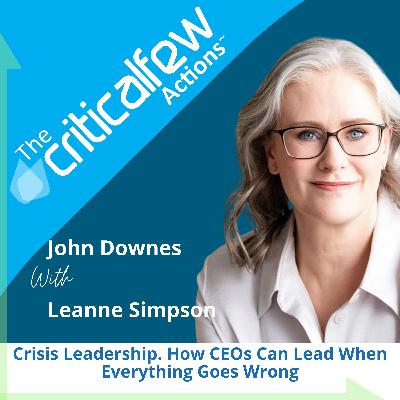
Could I ask you a favour? Please let me know you are getting value by clicking Subscribe/Follow here, and I’ll continue to work my butt off to produce the best content I can for you. It means the world to me.What would you do if your board said: fix it or shut it down?How do you lead when floods, fires, and storms hit all at once?Can you act decisively when you don’t have the data, time, or resources?If you’ve ever wondered how to lead when survival is at stake, this episode is for you.In this conversation, Leanne Simpson shares lessons from turning around the Royal Flying Doctor Service during a cash flow crisis and leading through cascading disasters in regional Australia. CEOs of mid-sized businesses will discover practical tools to act fast, manage resistance, and keep their organisations alive when everything goes wrong. What You’ll Learn: == Why CEOs must spot creeping crises early before options disappear == How to overcome resistance with evidence and clear communication == How to prioritise survival and delegate effectively in cascading crises == Why you must give teams permission to stop non-essential work == Practical crisis leadership tools you can apply in your organisation today Highlights00:00 Leanne's Journey into Crisis Leadership03:01 Defining Crisis Leadership for Medium Businesses04:27 Handling Significant Uncontrolled Calamities08:25 Case Study: Royal Flying Doctor Service17:11 Leadership Challenges and Organizational Change24:14 Case Study: Fire, Flood, Mud slide, Supercell in the Bowen Region28:03 Critical Functions and Prioritization28:23 Effective Communication in Crisis29:50 Delegation and Performance Management33:08 Adapting Organizational Structures35:53 Building Leadership Muscle for Crisis43:30 Environmental Scanning and Risk Management45:51 Top Crisis Management Gotchas50:36 Critical Actions for Crisis LeadershipThe #CriticalFewActions™ You Can Do Today: Real crises come with no time, little data, and scarce resources. But you still must decide. And you must act.Insight 1 – Spot creeping crises early The first Insight is about recognising creeping crises. These build slowly until they threaten survival. So, what can you do?Don’t wait for perfect information — act on early signals.Map cash flow, regulation, workforce, and customer demand together.Insight 2 – Overcome resistance fast The second Insight is about breaking through resistance to urgent change. So, what can you do?Use data to prove benefits to each stakeholder group.Communicate early and set timelines for change.Insight 3 – Lead through cascading crises The third Insight is about prioritising when multiple crises strike. So, what can you do?Put survival and critical functions first, stop non-essentials.Delegate decisively, even with imperfect resources.If you found this conversation valuable, please share it with your peer business leaders to help improve organisation performance and value.Sponsor: The CEO Masterclass in Strategic Planning and Implementation Are you a business owner or CEO striving to elevate your business to new heights? But right now… you’re not hitting the targets or objectives your business needs to achieve. Or maybe you’ve hit a roadblock you can’t move past—a major challenge with no clear solution—and there’s no one in your world you can talk to about it. This isn’t another generic leadership course. It’s a highly focused, small-group programme where...
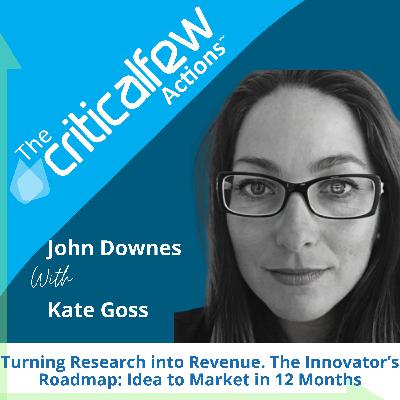
Subscribe/Follow and click here for further information and the eBook of resources:https://www.criticalfewactions.com.au/podcast/Please let me know if I’m on the right track with the podcast. It means the world to me to know I’m adding value.Have you ever had a brilliant idea that never made it past the whiteboard?Are you struggling to get from prototype to your first paying customer?Or wondering how to fund innovation without losing control of your business?If you have an idea on paper but no paying customer yet, this episode is for you.In this episode, John Downes talks with serial innovator Kate Goss, Founder of The Velo Group, about how to turn research and innovation into paying customers within 12 months. Drawing on her four start-ups and four exits, Kate shares how to clarify the real problem, involve early customers, and protect your IP as you scale.What You’ll Learn:== How to identify and validate the real customer problem before you build== Why an MVP mindset accelerates innovation== How to protect your IP and data in the age of AI== How to involve early users as collaborators, not critics== Why speed to market often beats perfectionHighlights00:00 Kate’s Journey from Finance to Technology03:13 The Challenges of Commercialising Innovation06:45 Case Study: KnowMio and AI Innovation13:39 Navigating Funding and Commercialisation Milestones13:53 The Impact of IP and Governance in AI28:20 Collaborative Innovation in Research Institutions28:58 The Importance of IP and Longevity in Innovation30:12 Sustainability and ESG in Innovation30:32 Data and Technology in Agriculture33:39 Performance Metrics in Innovation36:07 The Role of AI in Accelerating Innovation41:32 Challenges in Commercialising Innovation51:16 #CriticalFewActions™ for Senior LeadersThe #CriticalFewActions™ You Can Do Today:When I work with successful business leaders, I often see great ideas stall because leaders try to make them perfect before testing them in the market. Innovation isn’t about the smartest concept; it’s about solving the right problem and validating value quickly.Here are the three key insights I took from the conversation:Clarify the real problem before building the solution.Too many founders rush into design before validating demand.So, what can you do?= Start every innovation discussion with one sentence: What problem are we solving?= Engage potential customers early to test that the problem truly matters before you build anything.Build your MVP and involve early customers.“It’s not your first idea that wins. It’s often the second or third iteration that becomes the cracker,” says Kate.So, what can you do?= Define your minimum viable product; what must work, not what could work.= Get your first users involved as collaborators, not critics.Pricing, IP, and protecting your innovation as you scale.Every business, large or small, has IP worth protecting.So, what can you do?= Review who owns your code, content, and data before sharing them with third parties or AI platforms.= Build governance and clear policies early to protect your intellectual property and customer trust.If you found this conversation valuable, please Subscribe / Follow, leave a comment, and share this episode with your peer business leaders. Your support helps us reach more CEOs who want to improve organisation performance and value.Stay in the loop with show updates and exclusive content:
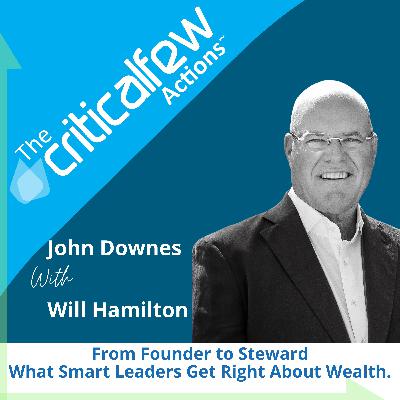
Subscribe/Follow and click here for further information and the eBook of resources: https://www.criticalfewactions.com.au/podcast/ Please let me know if I’m on the right track with the podcast. It means the world to me to know I’m adding value.What happens when your business is sold and you suddenly have $10 million or more to manage?Are you building a legacy? Or just a portfolio?Will your wealth bring your family together? Or tear it apart?If you’ve just exited your business or are planning to sell, this episode is for you.In this conversation with Will Hamilton, one of Australia’s leading wealth advisers for ultra-high-net-worth families. We explore what smart founders get right about managing wealth, preserving harmony, and preparing the next generation. This isn’t about flashy investment tips. It’s about stewardship, legacy, and the often overlooked structural and emotional elements of managing serious wealth.What You’ll Learn:== Why being “sale-ready” means more than operational performance== How to avoid post-exit wealth management pitfalls== What the best families do to maintain harmony after wealth transfer== How to choose the right adviser (and avoid the wrong ones)== Why intergenerational stewardship starts with purpose and structureHighlights00:00 Introduction to Will Hamilton00:52 Will Hamilton's Wealth Management Journey02:30 Key Aspects of Wealth Management05:21 Challenges and Solutions in Wealth Transition13:37 Case Studies and Practical Examples30:55 Choosing the Right Advisor34:50 #CriticalFewActions™ for Senior LeadersThe #CriticalFewActions™ You Can Do Today:When I work with successful business leaders, I often find they’ve spent years preparing their business for sale, but almost no time preparing themselves or their families for what comes next. Here are the key insights I took away from the conversation:== The first Insight is about being structurally sale-ready. Operational performance may look great, but hidden tax and ownership issues can destroy value at exit.Actions you can take:Engage an experienced adviser 2–3 years pre-sale to structure your tax, equity and exit documentation properly.Review any shadow equity or bonus schemes. And don’t assume your day-to-day accountant is the right person to lead the deal.== The second Insight is about wealth planning; not just portfolio management.Running the money is one thing. Sitting beside the client, spotting the gaps, and bringing in the right experts is another.Actions you can take:Treat wealth as a team sport: legal, tax, investment, governance and family advice must work together.Choose a lead adviser who knows their limits and brings in specialists at the right time.== The third Insight is about keeping families talking, especially across generations. Wealth without structure can fracture relationships and invite resentment.Actions you can take:Start early with open discussions, clear governance, and well-defined succession plans.Use philanthropic structures to instil values and unify future generations.If you found this conversation valuable, please Subscribe / Follow, leave a comment, and share this episode with your peer business leaders. Your support helps us...
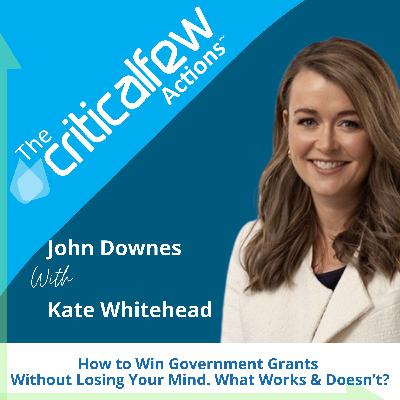
Subscribe/Follow and click here for further information and the eBook of resources: https://criticalfewactionspodcast.com.au/KateWhiteheadEpisodePagePlease let me know if I’m on the right track with the podcast. It means the world to me to know I’m adding value. → Are you wasting time on grant applications that never succeed? → What if your business could access funding, without giving up control? → Why are some companies consistently securing six-figure grants while others miss out?If you’re frustrated with the grant process or unsure what your business qualifies for, this episode is for you.In this episode, Kate Whitehead, one of Australia’s top government grant strategists, joins John Downes to expose the truth about business grants. From the R&D Tax Incentive to export and commercialisation support, (and everything in between) Kate explains what actually works, what’s often misunderstood, and how CEOs can avoid the biggest mistakes.You’ll hear practical examples, including a case study of an Australian innovation company that secured over $1 million in non-dilutive funding, expanded globally, and remained fully in control of their business.Whether you’re chasing growth, managing risk, or simply trying to stretch your runway, this is an unmissable guide to using government support to your advantage.What You’ll Learn: == How to stop wasting time on grants you’ll never win == What government funders are really looking for == Why R&D Tax Incentives are more powerful than most CEOs realise == The role of compliance, audits and post-grant milestones == The funding mistake that’s costing founders control of their companyHighlights 00:00 Why most grant applications fail 01:34 What government funders actually want 03:00 How the R&D Tax Incentive works 04:45 The case study: Underwater drones and export success 07:30 How to prove impact after you’ve won the grant 10:00 What “non-dilutive funding” really means 11:45 Why compliance is painful — but valuable 14:00 Who gets funded (and who doesn’t) 17:15 The critical grant mistakes most CEOs make 20:00 #CriticalFewActions™ for Senior LeadersThe #CriticalFewActions™ You Can Do Today:When I work with successful business leaders, I often see them investing significant time in growth, but failing to explore grants they may already qualify for. Either they don’t know what’s available, or they assume it’s not worth the paperwork.The first Insight is about eligibility and fit.Grants are designed to deliver policy outcomes, not handouts. If your business doesn’t align with the funding objective, you won’t be successful.So, what can you do? → Read the grant criteria carefully before applying → Only pursue grants that clearly match your sector, intent, and stage of growthThe second Insight is about non-dilutive funding like R&D tax and export grants. Many founders give up equity before looking into funding that doesn’t cost them control.So, what can you do? → Treat grants as early-stage capital, not afterthoughts → Use tools and advisors to maintain documentation and audit readinessThe third Insight is about post-award compliance. Winning the grant isn’t the end. It’s the beginning of a delivery and accountability cycle.So, what can you do? → Assign internal responsibility for reporting and milestones → Approach grants with the same rigour as any major investment.If you found this conversation valuable, please Subscribe / Follow, leave a comment, and share this episode with your peer business leaders. Your support helps us...
Subscribe/Follow and click here for further information and the eBook of resources:https://criticalfewactionspodcast.com.au/DamienLacey1EpisodePagePlease let me know if I’m on the right track with the podcast. It means the world to me to know I’m adding value.Are your people working hard but results still fall short?Do frustrations in daily work stop your business moving faster?What if your team could do more — without working harder?If you want your organisation to achieve more without burning out your people, this episode is for you. In this episode, I speak with Damien Lacey, a former Toyota engineer and lean manufacturing specialist, about how CEOs can use continuous improvement to drive better results. Damien shares how he takes the lessons from global giants and applies them to mid-sized businesses, showing that you don’t need radical transformation or new systems, just discipline around the fundamentals.What You’ll Learn: == Why continuous improvement is not about speed, but removing frustration == How fundamentals (like an athlete’s routine) build operational discipline == A manufacturing case study that lifted profits by $550,000 == How visual management boards unlock accountability in teams == Why service businesses, including banks, benefit as much as factories == Leadership’s role in making change stick Highlights00:00 Defining Continuous Improvement and Lean Principles 01:31 Applying Continuous Improvement in Business Operations03:08 Applying Continuous Improvement in Business Operations 06:17 Case Study: Improving Productivity in Manufacturing 13:30 Challenges and Solutions in Implementing Change 18:53 Continuous Improvement Beyond Manufacturing 24:24 Overcoming Roadblocks in Loan Approval 25:09 Visual Management Boards: A Team Approach 30:12 Starting with Simple Tools 31:17 Tailoring Continuous Improvement to Your Business 36:07 Leadership in Continuous Improvement 40:35 The #CriticalFewActions™ for Senior Leaders The #CriticalFewActions™ You Can Do Today:When I work with successful business leaders, I often find they confuse transformation with continuous improvement. CEOs assume they need radical change, when the real value lies in fixing daily frustrations. Here are the three key insights I took from the conversation:Insight 1 – Fundamentals Problem: Most businesses lack discipline in the basics. So, what can you do?Define a few non-negotiables your team must do consistently.Build a rhythm of daily or weekly review.Insight 2 – Visibility Problem: Without a scoreboard, teams lose focus. So, what can you do?Set 3–4 simple measures your people track.Review them daily as a team.Insight 3 – Removing Frustration Problem: People resist change if it just feels like pressure. So, what can you do?Ask staff what slows them down or wastes time.Fix barriers quickly to show change helps them. If you found this conversation valuable, please Subscribe / Follow, leave a comment, and share this episode with your peer business leaders. Your support helps us reach more CEOs who want to improve organisation performance and value. Resources: If you want to dig into this further, download ther Contiuous Improvemenet eBook for further details, references, checklists and an...
Subscribe/Follow and click here for further information and the eBook of resources:https://criticalfewactionspodcast.com.au/PeterBuckinghamEpisodePage Please let me know if I’m on the right track with the podcast. It means the world to me to know I’m adding value.What’s the cost of opening the wrong site?How do you know if your next location will succeed?Are you planning growth, or guessing your way into risk?If you’re expanding your business by opening new sites, this episode is for you.Peter Buckingham has helped major retailers and franchisors across Australia grow with confidence—by using strategy, mapping and data to take the guesswork out of location decisions. If you're a founder or CEO of a growing business, this episode will show you how to scale without the pain of poor-performing sites. What You’ll Learn: == Why “gut feel” and real estate agents can cost you six figures == How 5-, 10- and 15-minute drive-time data shapes better decisions == The most overlooked risks in site and territory planning == How to build repeatable, fair franchise territories == How mapping tools and demographic data help you scale faster Highlights 00:00 Introduction to Peter Buckingham and Site Location Strategy 04:51 How data helps CEOs avoid six-figure site mistakes 06:25 Using catchment and statistical areas to guide decisions 09:49 Strategic network design and real-world case studies 22:15 Predicting revenue potential from demographic analysis 34:32 Proactive vs reactive site selection: what to avoid 35:29 The property rules every expanding CEO should know 36:25 How to eliminate unsuitable locations early 38:55 The power of population projections and local data 43:25 Retail formats and why context matters 48:24 Mapping, AI and smarter business decisions 51:24 Turning spatial data into strategic business insights 56:41 Using quadrant analysis to evaluate site success 59:30 #CriticalFewActions™ for Senior LeadersThe #CriticalFewActions™ You Can Do Today:When I work with successful business leaders, I often see them rely on instinct or past success when choosing locations. But that doesn’t work at scale.The first Insight is about site selection failure. A bad site can cost over $150,000 before you realise it. So, what can you do?Use 5-, 10-, and 15-minute drive-time data to define your catchmentCompare demographics to your top-performing locationsThe second Insight is about removing emotion from decision-making. Real estate agents sell properties, not performance outcomes. So, what can you do?Use ABS data and competitor mapping to assess market fitFocus on evidence, not impressionsThe third Insight is about planning fair, scalable territories. Growth falls apart when franchise territories aren’t structured. So, what can you do?Design territories based on catchment logic, not postcodesEnsure each location has a fair chance to succeedIf you found this conversation valuable, please Subscribe / Follow, leave a comment, and share this episode with your peer business leaders. Your support helps us reach more CEOs who want to improve organisation performance and value.Stay in the loop with show updates and exclusive content: https://www.criticalfewactions.com.au/podcast/Sponsor: The CEO Masterclass in Strategic Planning and ImplementationAre you a business owner or CEO...
Subscribe/Follow and click here for further information and the eBook of resources: https://www.criticalfewactions.com.au/podcast/Brian-Goldberg-Trademarking-Brands/Please let me know if I’m on the right track with the podcast. It means the world to me to know I’m adding value.== Are you investing in your brand but ignoring its legal foundations?== Have you assumed your domain name means you own the brand?== Would losing your business name tomorrow kill your strategy?If you’re building a brand you care about, this episode is for you.In this episode, John Downes speaks with Brian Goldberg, trademark expert and founder of Trademark Ventures. He’s helped hundreds of Australian founders and CEOs build and protect business assets through strong brand ownership. This conversation is your guide to understanding why trademarks are no longer a legal ‘nice-to-have’. They’re business-critical.What You’ll Learn: == Why trademarks are essential assets, not legal extras == The difference between trademarks, patents, design rights, and copyright == Common mistakes CEOs make when launching a brand == Global trademarking strategies for software and digital-first businesses == When you should trademark, and when you might not need toHighlights 00:00 Brian’s Journey into Trademarking 03:24 Understanding Trademarks and Intellectual Property 09:53 The Importance of Trademarks in Business 14:32 Trademarking in the Digital and Software Space 19:05 The Trademark Registration Process 24:15 Global Trademark Considerations for Australian Businesses 25:26 Global Thinkers and Thorough Investigations 26:02 Filing Systems and Priority Dates 27:05 Madrid International Filing Application 28:07 Direct Filing System 29:41 Building Confidence in Your Brand 31:13 SEO and Competitor Challenges 36:45 Trademark Enforcement and Counterfeiting 43:24 When to Trademark and When Not To 45:11 #CriticalFewActions™ for Senior Leaders The #CriticalFewActions™ You Can Do TodayWhen I work with successful business leaders, I often find they assume registering a business name or domain gives them legal protection. But as Brian Goldberg explains, that assumption can cost you the brand you’ve worked hard to build.The first Insight is about brand ownership and timing. Too many CEOs delay trademarking until it's too late.So, what can you do?File your trademark early;’even before launch if possible.If you’re exploring international markets, prioritise protection in those countries.The second Insight is about protecting software and digital brands. Digital-first brands are highly visible, and highly vulnerable.So, what can you do?Treat your brand as an asset, not just a name.Protect your app icon, logo, and product name, not just your business name.The third Insight is about investor due diligence. Brian reveals that investors and partners always ask: “Do you own your brand?”So, what can you do?Use trademark ownership to build trust with stakeholders.Ensure your IP is listed clearly in your pitch or investor deck.If you found this conversation valuable, please Subscribe / Follow, leave a comment, and share this episode with your peer business leaders. Your support helps us...
**Subscribe/Follow and click here for further information and the eBook of resources:**https://www.criticalfewactions.com.au/podcast/Please let me know if I’m on the right track with the podcast. I’m driven by adding value.**Are your team members giving away value because they want to be liked?****Do technical experts in your business struggle to hold their ground?****Could poor negotiation habits be quietly eroding your margins?**You’re already negotiating, whether you realise it or not. If every negotiation leaks value, how much are you losing?In this conversation, Elise Margow, an experienced lawyer and commercial negotiator, shares real-world insights on how business leaders and technical teams can stop losing value in negotiation. CEOs of mid-sized businesses will walk away with a clear view of how negotiation weaknesses show up in everyday deals, and what to do about it.What You’ll Learn:== Why most professionals give away value in everyday negotiations== The myth of “natural negotiators” and what to do instead== A better way to prepare than relying on BATNA== How silence and curiosity unlock true priorities in deals== How to coach your team to negotiate without fearHighlights00:00 Key Principles of Negotiation09:17 Case Study: Selling a Business19:23 Case Study: Family Business Negotiations32:44 Negotiating Business Partnerships34:47 The Importance of Practical and Logical Business Foundations35:35 Preparation and Long-Term Planning in Business36:46 Having Difficult Conversations Early40:01 Real-Life Business Scenarios and Lessons41:09 Strategies for Negotiating with Powerful Entities47:44 The Importance of Professionalism in Business Negotiations54:51 Common Pitfalls in Negotiation58:24 #CriticalFewActions™ for Senior LeadersThe #CriticalFewActions™ You Can Do TodayWhen I work with successful business leaders, I often find they underestimate the cost of poor negotiation. They focus on product, service, and delivery; but they ignore how much value slips away when deals aren’t handled well. Here are the key insights:1. Confidence in negotiation.Many leaders avoid pushback out of fear of conflict.**So:• Prepare by understanding the other party’s interests, not just your fallback.• Role-play internally before a real negotiation to clarify your message.2. Listening for values.Focusing only on price leads to fractured relationships.**So:• Ask, “What’s most important to you?” before discussing terms.• Let silence do the work. Don’t rush to fill the space.3. Your company’s culture.Avoiding negotiation can feel like avoiding conflict, but it’s actually self-protection.**So:• Normalise assertiveness: it's about value, not aggression.• Practice negotiation with your team just like any other skill.If you found this conversation valuable, please Subscribe / Follow, leave a comment, and share this episode with your peer business leaders. Your support helps us reach more CEOs who want to improve organisation performance and value.Sponsor: The CEO Masterclass in Strategic Planning and ImplementationAre you a business owner or CEO striving to elevate your business to new heights? But right now… you’re not hitting the targets or objectives your business needs to achieve. Or maybe you’ve hit a roadblock you can’t move past, a major challenge with no clear solution, and there’s no one in your world you can talk to about it.This isn’t another generic leadership course. It’s a highly focused, small-group programme where you’ll work alongside your peers, on your business, break through barriers,...
Subscribe/Follow and click here for further information and the eBook of resources:https://www.criticalfewactions.com.au/podcast/Please let me know if I’m on the right track with the podcast. It means the world to me to know I’m adding value.= Are your team wasting hours writing government tenders that never get shortlisted?= Have you ever wondered why competitors always seem to win tenders you never saw?= Are you missing 80% of the opportunities that never get advertised?If you think success in public sector work comes from finding tenders online and submitting quotes, this episode is for you, because it's SO MUCH MORE.In this practical episode, John Downes interviews Diem Huynh, Director at SEDO Group, who has helped hundreds of small and medium businesses win local, state and federal government contracts. Diem breaks down what most organisations get wrong about tendering, and reveals what it really takes to become a trusted government supplier. If your business wants to win long-term, low-risk, high-value work, this episode is essential listening.What You’ll Learn:== Why 80% of government tenders are never advertised publicly== What SMEs get wrong about mandatory tender requirements== How to build a genuine social procurement strategy== The role of relationship-building and procurement panels== What contract management really means—and why it mattersHighlights00:00 Government tenders: dark art or opportunity?02:30 What most businesses don’t understand about procurement04:50 Why you’re only seeing 20% of tenders08:00 The truth about probity: what you can and can’t do10:00 Bid or no-bid? The ruthless first gate12:30 Word limits, redactions, and evaluation rules14:00 Relationships, risk, and hidden leverage17:00 Social procurement: the strategic tiebreaker22:30 What happens after you submit your bid28:00 Contract management: the most neglected success factor33:00 #CriticalFewActions™ for Senior LeadersThe #CriticalFewActions™ You Can Do Today:When I work with successful business leaders, I often hear frustration about wasted time on government tenders. Most SMEs miss 80% of opportunities by bidding too late or without eligibility.Insight 1: Qualify Before You BidMost organisations fail at the first gate due to missing mandatory requirements.So, what can you do?= Always run a “bid/no-bid” check first.= Strictly follow word counts and submission instructions.Insight 2: Treat Social Procurement SeriouslyThis is now up to 40% of evaluation criteria in some tenders.So, what can you do?= Build a social procurement strategy with real actions and targets.= Prepare documented examples—not vague promises.Insight 3: Manage the Contract Like It’s Your Next WinMany lose future work through poor reporting or SLA performance.So, what can you do?= Set up systems to track delivery, compliance and communication.= Treat each contract like a long-term partnership test.If you found this conversation valuable, please Subscribe / Follow, leave a comment, and share this episode with your peer business leaders. Your support helps us reach more CEOs who want to improve organisation performance and value.Stay in the loop with show updates and exclusive content: https://www.criticalfewactions.com.au/podcast/Sponsor: The CEO Masterclass in Strategic Planning and ImplementationAre you a business owner or CEO striving to elevate your business to new heights? But right now… you’re not hitting the targets or objectives your business needs to...
Subscribe/Follow and click here for further information and the eBook of resources: https://criticalfewactionspodcast.com.au/Dianne-SemmensEpisodePagePlease let me know if I’m on the right track with the podcast. It means the world to me to know I’m adding value.Food For Thought:Have you underestimated the disruption an ERP system can cause your team?Are you setting your business up for ERP success, or walking into a trap?What’s the real cost of dirty data and unclear processes?If you’re about to implement an ERP system in your business, this episode is for you.In this episode, John Downes speaks with Dianne Semmens, founder of Acacia Consulting Services, an ERP specialist for mid-sized Australian businesses. John and Di cut through the jargon and get real about why most ERP projects fail, and how to avoid the common pitfalls. This is essential listening for any CEO planning to invest in integrated systems to improve performance, visibility and control.What You’ll Learn:== Why your ERP project must start with the end in mind== Why process clarity beats system functionality every time== The critical human factors that will make or break your rollout== Why dirty data guarantees ERP failure — and what to do about it== How to avoid the “Trough of Disillusionment” after go-liveHighlights00:00 What makes ERP implementation so risky03:45 The four big mistakes most CEOs make before they start06:25 Why dirty data will quietly kill your implementation08:10 The one thing most CEOs forget to test before go-live14:00 How to deal with the “trough of disillusionment”22:00 How Acacia applied these principles to their own business26:00 #CriticalFewActions™ for Senior LeadersThe #CriticalFewActions™ You Can Do Today:When I work with successful business leaders, I often see them treat ERP as a tech upgrade. It’s not. It’s a major business transformation. What can you do to set yourself up for success?1: Get the right people on the bus. Too many CEOs delegate ERP to IT. That’s a mistake.= Involve cross-functional leaders from the start= Give them time, ownership, and real decision-making power2: Start with clean, usable data. Garbage in, garbage out. Poor data undermines trust and outcomes.= Begin data clean-up before implementation= Use small test runs to validate new data structures3: Plan for the emotional drop after go-live. Everyone hits the “trough of disillusionment.” Don’t panic.= Prepare staff with training, expectation-setting, and visible leadership= Offer immediate support post-go-live — especially in the first 60 daysIf you found this conversation valuable, please hit Subscribe / Follow, leave a comment, and share this episode with your peer business leaders. Your support helps us reach more CEOs who want to improve organisation performance and value.Stay in the loop with show updates and exclusive content: https://www.criticalfewactions.com.au/podcast/Sponsor: The CEO Masterclass in Strategic Planning and Implementation======Are you a business owner or CEO striving to elevate your business to new heights? But right now… you’re not hitting the targets or objectives your business needs to achieve. Or maybe you’ve hit a roadblock you can’t move past—a major challenge with no clear solution—and there’s no one in your world you can talk to about it.This isn’t another generic leadership course. It’s a highly focused, small-group programme where you’ll work alongside your peers, on your business, break through barriers, and implement real-world strategies—not just to solve the...
Subscribe/Follow and click here for further information and the eBook of resources:https://criticalfewactionspodcast.com.au/SteveWoodEpisodePagePlease let me know if I’m on the right track with the podcast. It means the world to me to know I’m adding value.??Are you working hard but not getting ahead???Do your people know exactly what to prioritise each day???Could your business be busy without actually moving forward?If you want your organisation to focus only on the activities that truly drive results, this episode is for you.In this conversation, John Downes speaks with Steve Wood (consultant, author of The 4 Aces, and long-time business simplifier) about how leaders can focus their teams on four essential priorities that generate cash, value, and growth. Steve shares real-world client stories, practical questioning techniques, and simple systems to stop wasting time and start delivering results.What You’ll Learn:== The Four Aces framework: customers, delivery, process, and intellectual property== How to ask “power questions” that uncover what clients really need== When to say no to a client to protect your business and sanity== How to document and scale your best methods across clients and industriesHighlights00:00 Steve Wood and the Concept of the 4 Aces03:44 Ace of Spades: Attracting and Winning Customers05:29 Ace of Hearts: Delivering What Customers Want11:59 Ace of Diamonds: Streamlining Processes16:35 Ace of Clubs: Leveraging Intellectual Property19:39 Key Takeaways21:00 #CriticalFewActions™ for Senior LeadersThe #CriticalFewActions™ You Can Do Today:When I work with successful business leaders, I often see teams working hard but not always working smart. Steve’s Four Aces filter ensures daily actions align with winning customers, delivering value, improving systems, and creating intellectual property.The first insight is about focusing on the right priorities. Many confuse activity with progress. So, what can you do?= Audit your current to-do list — what links directly to the Four Aces?= Help your team align their work to one of the four categories.The second insight is about asking power questions. Delivery problems often come from unclear expectations. So, what can you do?= Ask: What’s the real problem? What’s the opportunity? What does done look like?= Filter clients — can they be helped, and will they follow through?The third insight is about scaling your IP. Many leaders miss this opportunity. So, what can you do?= Document your proven methods, even in rough form.= Turn one into a tangible asset this quarter and reuse it.If you found this conversation valuable, please Subscribe / Follow, leave a comment, and share this episode with your peer business leaders. Your support helps us reach more CEOs who want to improve organisation performance and value.Stay in the loop with show updates and exclusive content: https://www.criticalfewactions.com.au/podcast/Sponsor: The CEO Masterclass in Strategic Planning and ImplementationTired of missing targets or feeling stuck? The CEO Masterclass is a small-group strategic programme for business owners and CEOs ready to break through barriers and accelerate performance.Find out more: https://criticalfewactionspodcast.com.au/SteveWoodSPOR: Are you a business owner or CEO striving to elevate your business to new heights? But right now… you’re not hitting the targets or objectives your business needs to achieve. Or maybe
Subscribe/Follow and click here for further information and the eBook of resources:https://criticalfewactionspodcast.com.au/JenniferFordEpisodePagePlease let me know if I’m on the right track with the podcast. It means the world to me to know I’m adding value.?? Do you know what it really takes to export your product beyond Australia??? Are your business partnerships helping or hindering your growth??? Are your innovations solving client problems or just adding complexity?If you’re scaling a tech innovation beyond Australia, this episode is for you.In this episode, I sit down with Jennifer Ford, CEO of Southern Ocean Sub Sea. Jennifer shares how her Tasmanian-based subsea business scaled from servicing local salmon farms to selling innovative net repair technology to Norway, the global aquaculture hub. This episode offers practical advice for mid-sized business CEOs looking to export, protect intellectual property, and navigate business partnerships.What You’ll Learn: == How to identify when your local market is too small == Why exporting requires product design with global standards in mind == How to structure business partnerships to protect IP and exit value == Why solving real client problems should drive your innovation == How to stay focused on your core mission while scalingHighlights00:00 Introduction and Background00:39 Founding Southern Ocean Sub Sea04:06 Transition to Innovation and Manufacturing07:53 Partnership Dynamics and Business Growth12:40 Navigating Challenges and Achievements19:38 Advanced Manufacturing and Export Strategy30:36 Future Vision and Reflections41:12 #CriticalFewActions™ for Senior LeadersThe #CriticalFewActions™ You Can Do Today:When I work with successful business leaders, I often see them miss export opportunities because their business model isn’t structured to scale. Or they rush into partnerships without clear agreements, putting everything they’ve built at risk.The first Insight is about scaling an innovation into global markets. Many businesses underestimate their global potential.So, what can you do?Research your global market early.Build products with export-readiness in mind.The second Insight is about building effective business partnerships. Too many founders skip legal clarity, risking control.So, what can you do?Invest in robust shareholder agreements.Review agreements as your business evolves.The third Insight is about focusing innovation on solving client problems. Shiny ideas don’t always sell. So, what can you do?Engage clients to uncover unmet needs.Prioritise development based on real-world problems.If you found this conversation valuable, please Subscribe / Follow, leave a comment, and share this episode with your peer business leaders. Your support helps us reach more CEOs who want to improve organisation performance and value. Stay in the loop with show updates and exclusive content: https://www.criticalfewactions.com.au/podcast/Sponsor: The CEO Masterclass in Strategic Planning and ImplementationAre you a business owner or CEO striving to elevate your business to new heights? But right now… you’re not hitting the targets or objectives your business needs to achieve. Or maybe you’ve hit a roadblock you can’t move past; a major challenge with no clear solution, and there’s no one in your world you can talk to about it.This isn’t another generic leadership course. It’s a highly focused, small-group programme where you’ll work alongside your peers, on your business, break through barriers, and implement real-world strategies; not just to solve the problems holding your business back, but to accelerate your growth...
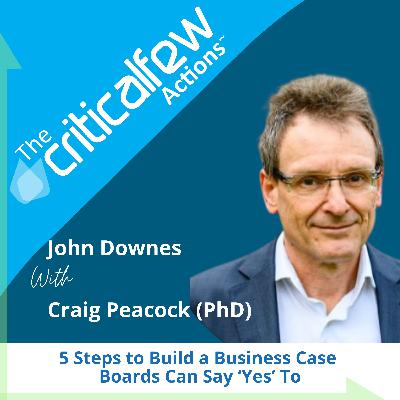
🔗 Subscribe/Follow and download episode resources:https://criticalfewactionspodcast.com.au/CraigPeacockEpisodePagePlease let me know if I’m on the right track with the podcast. It means the world to know I’m adding value.❓ Do you know how your next investment decision will be judged by your board?❓ Have you considered all your strategic options, or just the one you favour?❓ Can AI really build your business case, or is there something more critical you're missing?If you’re raising funds or expanding operations, make sure your case stacks up. And if you think AI can build your next business case, you might want to listen first.In this episode, I sit down with Dr Craig Peacock, one of Australia’s leading experts in business case development, to explore how CEOs and boards can make better, faster, and safer investment decisions; especially when AI is part of the toolkit.With 25+ years of experience across government, tech, infrastructure, and finance, Craig has built more than 300 business cases, worth billions in funding. He’s also the creator of a suite of AI-enabled tools that help, but don’t replace, human judgment in investment decisions.This isn’t just theory. Craig gives us a practical five-step framework for business case development that has helped boards say “yes” with confidence; especially in medium-sized organisations where capital is precious and risk is real.What You’ll Learn=) Why “starting with clarity” beats jumping into spreadsheets=) How to present real options—not just the one you already like=) Why robust financial models still need human judgment=) What boards really want in an implementation strategy=) How to use AI to augment (not replace) your strategic thinkingHighlights00:00 Understanding Business Cases04:15 The Role of AI in Business Case Development07:43 Steps to Develop a Business Case13:16 AI Tools for Business Case Development18:03 Challenges and Gotchas in Business Case Development31:18 Strategic Planning and Implementation38:32 The #CriticalFewActions™📌 The #CriticalFewActions™ You Can Take Today=) Confirm the “why now” with your board before building anything=) List at least 10 options—and explain clearly why each was kept or cutIf you found this valuable, please Subscribe / Follow, share this episode with a peer, and leave a comment to let us know what resonated. Your support helps us reach more CEOs who are looking to improve performance and value in their businesses.📩 Stay in the loop with show updates and exclusive content:https://www.criticalfewactions.com.au/podcast/Sponsor: The CEO Masterclass in Strategic Planning and ImplementationAre you a business owner or CEO striving to elevate your business to new heights? But right now… you’re not hitting the targets or objectives your business needs to achieve. Or maybe you’ve hit a roadblock you can’t move past, a major challenge with no clear solution; and there’s no one in your world you can talk to about it.This isn’t another generic leadership course. It’s a highly focused, small-group programme where you’ll work alongside your peers, on your business, break through barriers, and implement real-world strategies; not just to solve the problems holding your business back, but to accelerate your growth faster than you thought possible.🎯 Find out more here: https://criticalfewactionspodcast.com.au/CraigPeacockBAC💭 Final ThoughtAs Craig put it so well:"Boards don’t just want a business case; they want confidence. Confidence that you’ve thought broadly, analysed deeply, and planned wisely. AI can support...
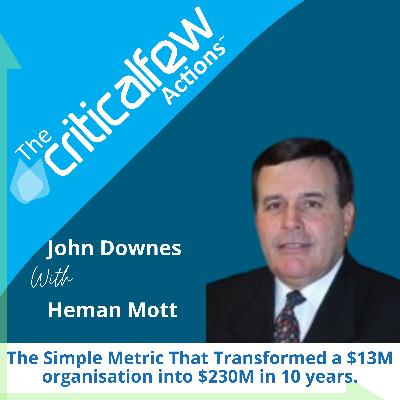
Subscribe/Follow and click here for further information and the eBook of resources:https://criticalfewactionspodcast.com.au/HermanMottEpisodePagePlease let me know if I’m on the right track with the podcast. It means the world to me to know I’m adding value.Do your customers trust you to deliver?Are late or incomplete deliveries costing you repeat business?Is “on time” performance just a dashboard metric; or does it reflect your real customer experience?Could one overlooked KPI be hiding millions in lost growth?If you want to scale profitably by delivering your promise every day, this episode is for you.In this episode, I sit down with Herman Mott, a former Managing Director who helped grow a $13M organisation to $230M in 10 years. His tool? DIFOT; Delivered In Full, On Time.Herman shares how this one metric aligned his people, systems and customer promise; and how mid-sized CEOs can do the same.What You’ll Learn: ✅ Why DIFOT is a customer reputation metric; not a logistics stat ✅ How tracking DIFOT by process, product, and team unlocks margin and retention ✅ Why you must measure the full “order to cash” cycle to improve ✅ What the data says about SMEs who measure end-to-end ops ✅ How culture, visibility and live data make DIFOT sustainable.Highlights:00:00 Meet Herman Mott: A Journey of Success00:53 Understanding DIFOT: Delivered In Full On Time01:23 Herman's Credentials04:23 Transforming Business Operations with DIFOT06:58 Implementing Six Sigma and Lean Strategies12:11 Measuring and Improving Business Efficiency14:17 The Importance of Sales and Marketing Efficiency15:49 Engineering Innovations for Operational Excellence21:23 Building a Culture of Continuous Improvement24:48 Managing Working Capital Effectively26:39 Supplier Collaboration and Inventory Management29:10 Innovating with New Products31:49 Leveraging Logistics Partnerships33:22 Implementing DIFOT and Technology40:40 Engaging Employees and Building Culture42:13 #CriticalFewActions™ for Senior LeadersThe #CriticalFewActions™ You Can Do Today:Track DIFOT across products, customers and teams; not just at a high levelMap your order-to-cash process and uncover hidden costsMake delivery data visible dailyEmpower teams to take ownership and solve issues early.If you found this conversation valuable, please Subscribe / Follow, leave a comment, and share this episode with your peer business leaders. Your support helps us reach more CEOs who want to improve organisation performance and value.Stay in the loop with show updates and exclusive content: https://www.criticalfewactions.com.au/podcast/Sponsor: The CEO Masterclass in Strategic Planning and ImplementationTired of missing targets or feeling stuck? The CEO Masterclass is a small-group strategic programme for business owners and CEOs ready to break through barriers and accelerate performance.Find out more: https://criticalfewactionspodcast.com.au/HermanMottBACOR: Are you a business owner or CEO striving to elevate your business to new heights? But right now… you’re not hitting the targets or objectives your business needs to achieve. Or maybe you’ve hit a roadblock you can’t move past—a major challenge with no clear solution—and there’s no one in your world you can talk to...
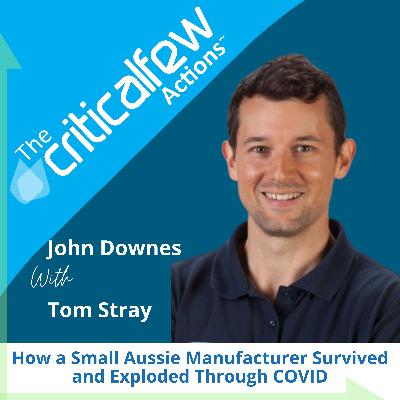
Subscribe/Follow and click here for further information and the eBook of resources:https://criticalfewactionspodcast.com.au/TomStrayEpisodePagePlease let me know if I’m on the right track with the podcast. It means the world to me to know I’m adding value.Could your business survive if 98% of revenue disappeared overnight?Who in your team would step up if you couldn’t lead tomorrow?Is your supply chain genuinely resilient, or just fine until the next crisis?If you’ve ever wondered whether your business could not only survive but grow through a global disruption, this episode is for you.In this episode, I sit down with Tom Stray, Managing Director of Dentalife, a small Australian manufacturer supplying infection control products. Tom shares how his business survived COVID’s supply chain chaos, scaled rapidly, and made the hard calls on customer prioritisation; all while building a more resilient organisation.What You’ll Learn: == How to build flexible supply chains for uncertain times == Why leadership capacity matters more than business size == How to prioritise existing customers when supply is limited == Practical steps to prepare your team and processes for crisis == Why mindset and structured decision-making are your real safety netHighlights00:00 Losing 98% of Revenue Overnight01:34 Navigating COVID-19 Challenges03:35 Crisis Management and Adaptation05:05 Scaling Up and Operational Changes13:36 Impact on Thailand Operations20:11 Key Learnings and Reflections24:08 The Importance of Decision Making36:18 #CriticalFewActions™ for Senior LeadersThe #CriticalFewActions™ You Can Do Today:When I work with successful business leaders, I often see them underestimate just how fast disruption can hit; and how important their team’s resilience really is. Tom Stray’s journey through COVID wasn’t about luck; it was about smart decisions under intense pressure.I took away three key insights from our conversation:1. Maintain supply chain flexibility.Tom shared how supply chain disruption was their biggest pain point: "That was the real pain point for us; the stock management at that stage."Most businesses rely on just-in-time supply. But when international borders close, that model collapses.2. Scaling leadership capacity under pressure.As Tom said, “Judith went from strength to strength… she’d never done it before, but she found a way.”Growth exposes gaps in decision-making and leadership readiness faster than most CEOs expect.3. Prioritise your core customer base.Tom made a deliberate choice: “We made a pretty big decision to say, well, we’re not gonna supply anyone outside our current customer base unless we had the stock.”When demand outstrips supply, it’s tempting to chase new revenue. But that can undermine trust and long-term value.If you found this conversation valuable, please Subscribe / Follow, leave a comment, and share this episode with your peer business leaders. Your support helps us reach more CEOs who want to improve organisation performance and value.Stay in the loop with show updates and exclusive content: https://www.criticalfewactions.com.au/podcast/Sponsor: The CEO Masterclass in Strategic Planning and ImplementationAre you a business owner or CEO striving to elevate your business to new heights? But right now… you’re not hitting the targets or objectives your business needs to achieve. Or maybe you’ve hit a roadblock you can’t move past; a major challenge with no clear solution; and there’s no one in your world you can...
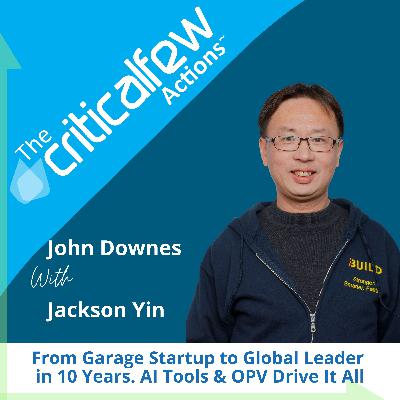
In just 10 years, Jackson has grown iBuild from a garage start-up into one of Australia’s fastest-growing kit home and modular housing manufacturers, selling from local suburbs to royal families abroad.We unpack how Jackson:✅ Turned his strategic plan into a weekly rhythm that his whole team lives by✅ Systemised his business with the OPV framework to boost performance✅ Built a university internship programme that feeds his talent pipeline year-round✅ Embedded AI tools into daily processes to amplify-not replace-his peopleWhat You’ll Learn:=$= How to make your strategic plan part of your daily operations. You’ll see how assigning daily focus areas keeps your strategy front-of-mind; and makes results show up faster.=$= Why interns can be a long-term asset, not a short-term project. You’ll hear how many of his best team members started as interns-and how you can do the same.=$= How to practically apply AI for 10x performance without extra headcount. Jackson explains how embedding AI into daily routines, rather than bolting it on; delivers real gains.=$= How systemising success fuels consistent, global growth. You’ll take away ideas for applying the same disciplined approach in your own business.⏱ Highlights00:00 The Journey of iBuild: From Garage to Global09:05 Innovative Business Strategies and Frameworks20:13 The Power of Internships: Building a Talent Pipeline33:44 Partnering with Universities34:41 Exploring AI in Business35:51 AI in Marketing and Content Creation38:42 AI in IT and Coding39:38 AI in Customer Experience41:11 AI in Project Management49:08 Adopting AI in Business55:31 Challenges and Strategies for AI Implementation57:45 The #CriticalFewActions™ to get started on right nowThe #CriticalFewActions™ You Can Do Today:🔹 Build a simple weekly rhythm - Have a look at the OPV to diagnose your hot spots and prioritise those #CriticalFewActions™. Assign each day a focus linked to your top strategic priorities. Keep progress visible and momentum steady. 🔹 Treat your strategic plan as a daily guide - Share the plan in plain language and use it to guide team discussions and decisions.🔹 Embed AI into real work, not just ideas - Choose one routine task where AI can save time or improve results, and start using it this week.🔹 Turn internships into a long-term talent pipeline - Partner with a university and offer students real, value-adding work. It builds future capability for both of you.If you found this conversation valuable, please Subscribe / Follow this channel, leave a comment, and share this episode with your peer business leaders to let them know you are thinking of them. 📩 Stay in the loop with show updates and exclusive content:https://www.criticalfewactions.com.au/podcast/Sponsor: The CEO Masterclass in Strategic Planning and ImplementationAre you a business owner or CEO striving to elevate your business to new heights? But right now… you’re not hitting the targets or objectives your business needs to achieve. Or maybe you’ve hit a roadblock you can’t move past, a major challenge with no clear solution; and there’s no one in your world you can talk to about it.This isn’t another generic leadership course. It’s a highly focused, small-group programme where you’ll work alongside your peers, on your business, break through barriers, and implement real-world strategies; not just to solve the problems holding your business back, but to accelerate your growth faster than you thought possible.🎯 Find out here: https://criticalfewactionspodcast.com.au/JacksonYinBAC

Comments

Download from Google Play

Download from App Store
 United States