


 Claim Ownership
The Future-Ready Advisor
Subscribed: 3Played: 16
Subscribe

© 2024 The Future-Ready Advisor
Description
As a financial advisor, you’re working in a crowded market, and to be successful, you need to differentiate yourself from the competition. How do you do that? How do you rise above the noise and deliver success for your clients and your business? And, how do you do that when your time is already taxed?
That’s where The Future-Ready Advisor comes in. Host Sam Sivarajan talks with investment experts and top advisors to explore the pain points that financial advisors face, the pain points that you might also face, and how you can best position your practice for a successful future.
Whether you're a seasoned advisor looking for new ways to grow your business, or a new advisor just starting out, The Future-Ready Advisor is the perfect resource for you to learn how to differentiate yourself in a crowded marketplace, solve your pain points, and leverage behavioral coaching to take your financial advisory practice to the next level.
Learn more and grab free resources and exclusive bonus content at www.samsivarajan.com.
That’s where The Future-Ready Advisor comes in. Host Sam Sivarajan talks with investment experts and top advisors to explore the pain points that financial advisors face, the pain points that you might also face, and how you can best position your practice for a successful future.
Whether you're a seasoned advisor looking for new ways to grow your business, or a new advisor just starting out, The Future-Ready Advisor is the perfect resource for you to learn how to differentiate yourself in a crowded marketplace, solve your pain points, and leverage behavioral coaching to take your financial advisory practice to the next level.
Learn more and grab free resources and exclusive bonus content at www.samsivarajan.com.
61 Episodes
Reverse
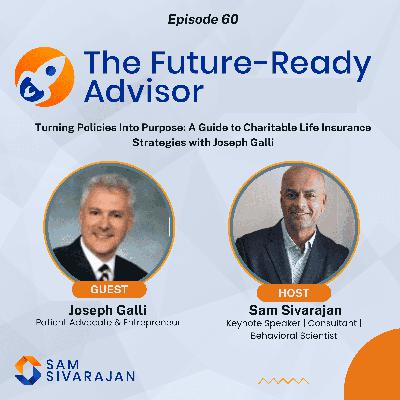
Episode SummaryIn this episode of The Future Ready Advisor, Sam Sivarajan speaks with Joseph Galli, entrepreneur and founder of a medical foundation that’s reshaping how life insurance can fund philanthropy.Joseph shares his personal journey into charitable work, how he created a foundation to fund medical research, and how he’s built innovative life insurance donation programs that combine financial planning, philanthropy, and tax efficiency. He also dives deep into the compliance aspects of these programs, the 310 rule, and how advisors can ethically and strategically guide clients in transforming unwanted policies into charitable legacies.This episode is a must-listen for advisors seeking to expand their value proposition and help clients make a lasting impact.Key Takeaways· Joseph’s philanthropic journey began with personal family health challenges.· His foundation funds medical research through non-traditional methods, avoiding gala-based fundraising.· Life insurance donations can unlock major tax benefits while supporting meaningful causes.· The 310 rule enables donation of term policies not originally intended for charity.· Compliance is critical—ethical advisory practices are key to execution.· Advisors can help clients monetize unwanted policies, converting them into charitable receipts.· Philanthropy should be a core strategy in financial and estate planning.· Life insurance gives clients a unique path to leave a legacy and support medical innovation.Episode Chapters00:00 – Introduction to Innovative Philanthropy03:06 – Joseph Galli's Personal Journey and Foundation05:48 – The Need for a Holistic Approach in Medical and Financial Services08:56 – Building Sustainable Funding Models for Medical Research11:45 – Understanding Life Insurance Donations and Tax Benefits15:00 – Real-Life Examples of Life Insurance Donations17:54 – Navigating Compliance in Philanthropic Endeavors24:17 – Navigating Financial Dignity in End-of-Life Planning26:55 – Compliance and Family Dynamics in Policy Donations28:37 – Identifying Ideal Candidates for Charitable Donations30:34 – The Role of Advisors in Policy Donations34:11 – Philanthropy as a Cornerstone of Financial Planning36:35 – The Future of Life Insurance Donations in Financial StrategiesSound Bites"We only do one in five policies.""We have an IRR that we have to meet.""This is a problem — this is an opportunity."Featured Quote"This is a problem — this is an opportunity."— Joseph Galli, on recognizing how life insurance can be repurposed for philanthropyKeywordsphilanthropy, life insurance, charitable donations, tax benefits, medical research, compliance, financial planning, estate planning, Joseph Galli, Future Ready Advisor
Episode Description: In September 2008, Lehman Brothers—who survived the Civil War, two World Wars, and the Great Depression—collapsed in one of the largest bankruptcies in American history. They had Nobel laureates on staff, sophisticated models, and decades of market data. Yet they missed the critical difference between managing risk and navigating uncertainty. In this solo episode three days before the book The Uncertainty E.D.G.E. Lead with Clarity, Adapt with Confidence, Win with Conviction launches, Sam Sivarajan reveals why smart leaders repeatedly make this mistake and introduces the framework that helps you avoid it.Key Takeaways:Why sophisticated risk management can blind you to true uncertaintyThe critical difference between risk (calculable) and uncertainty (unpredictable)How Lehman Brothers' 25-sigma events revealed the limits of modelingThe four-phase EDGE framework: Establish, Diagnose, Go, EvolveWhy the next two years require uncertainty navigation over risk managementPre-Order The Uncertainty Edge: 🔥 Black Friday Special (ends Dec. 1): [Pre-order here] Regular launch price begins Dec. 2ndConnect with Sam:LinkedIn: https://www.linkedin.com/in/samsivarajan/Website: https://www.samsivarajan.com/Mentioned in This Episode:November 18 newsletter: "Why Smart Leaders Miss the Real Danger"Lehman Brothers collapse (2008)Richard Fuld and the 25-sigma eventsThe 2008 financial crisis lessonsJPMorgan's adaptive response under Jamie Dimon
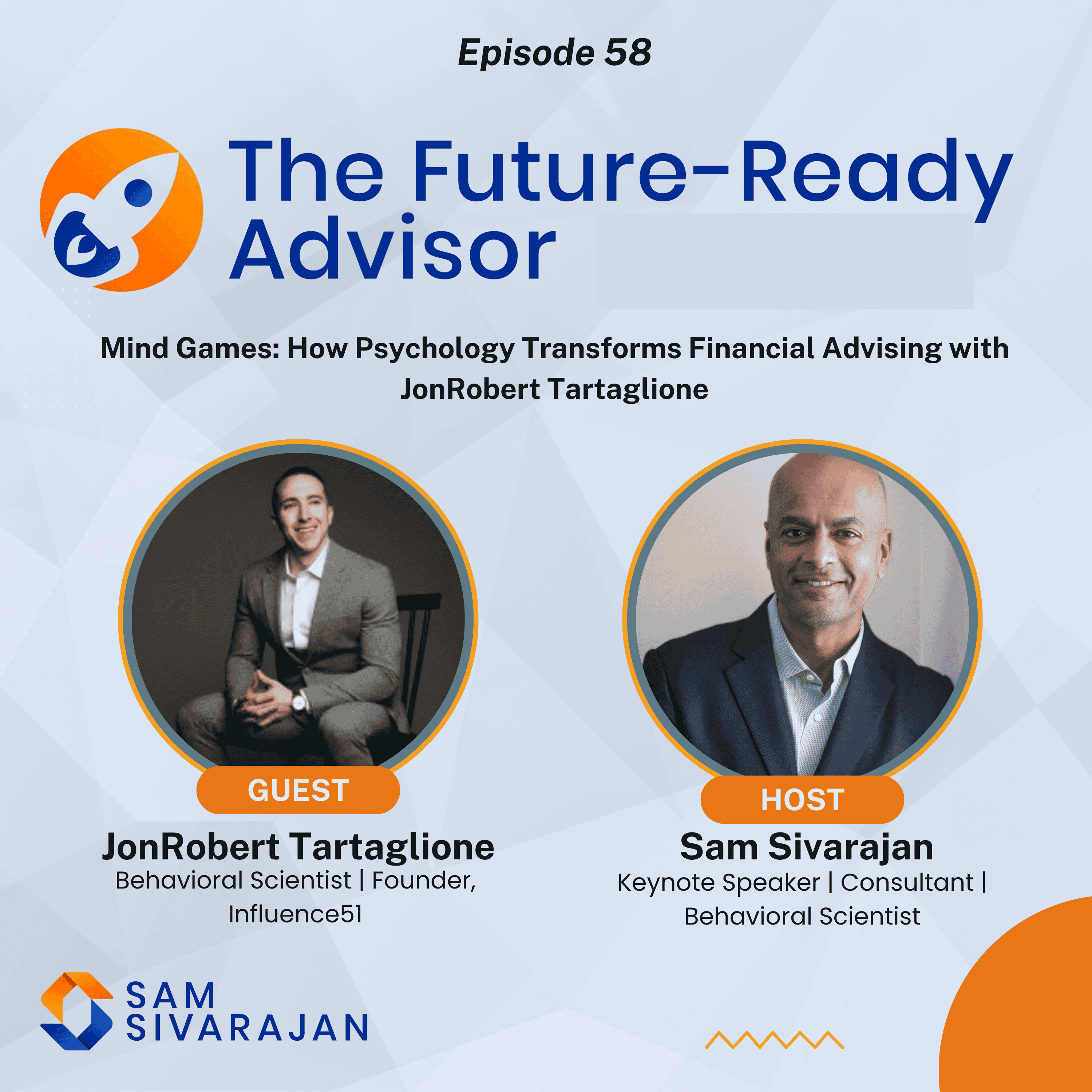
Episode OverviewIn this episode of The Future-Ready Advisor, host Sam Sivarajan sits down with JonRobert 'Tat' Tartaglione, a behavioral scientist and founder of Influence 51, to explore the fascinating intersection of psychology and financial advising. With a doctorate in psychology from Cambridge, Tat specializes in translating complex behavioral science insights into practical tools that financial professionals can implement immediately.They discuss how small changes in language and framing can dramatically influence client decisions, why choice architecture matters more than we realize, and how metaphors shape our perception of financial concepts. Tat shares practical examples of behavioral science principles in action, from commitment devices to loss aversion, all tailored specifically for financial advisors seeking to improve client outcomes.Whether you're looking to enhance client communication, drive behavioral change, or simply understand the psychological forces behind financial decisions, this conversation offers actionable strategies that bridge the gap between academic research and real-world application.Key Quote'Language matters so, so much. There is a difference between saying \'80% fat free\' and \'20% fat\'. Even seemingly insignificant tweaks matter.' — JonRobert TartaglioneKey TakeawaysChoice architecture dramatically influences decisions - how options are presented matters more than the options themselves.Metaphors shape financial conversations - the language we use guides how clients conceptualize financial concepts.Commitment devices drive action - creating accountability structures helps clients follow through on financial plans.Loss aversion is a powerful motivator - framing choices to highlight what clients might lose creates stronger incentives.Subtle language changes yield big results - even minor wording adjustments can significantly impact client decisions and behaviors.Sound Bites'When it comes to choice architecture, the way you present options affects how people choose, even when the options themselves don't change.''Money doesn't influence decisions—the psychology around money influences decisions.''People will work harder to avoid losing $5 than they will to gain $5, even though mathematically it's the same amount.''Budgeting as 'paying your future self' reframes the experience from loss to investment.''Metaphors aren't just flowery language—they guide how people conceptualize problems and solutions.'Topics Discussed00:00 - Introduction to JonRobert Tartaglione and Influence 5101:39 - The Gap Between Behavioral Science Research and Practical Application06:37 - Understanding Choice Architecture in Financial Advising15:06 - Loss Aversion and How to Frame Financial Decisions22:04 - The Power of Commitment Devices to Change Client Behavior31:24 - Metaphors and Language: How Words Shape Financial Perceptions46:43 - Making Behavioral Science Concrete for Different Industries48:15 - The Critical Importance of Language in Client CommunicationsResources MentionedLearn more about JonRobert Tartaglione and his work: https://www.influence51.comStay Connected with The Future-Ready AdvisorSubscribe on your favorite podcast platform to never miss an episode.Join the conversation on LinkedIn—
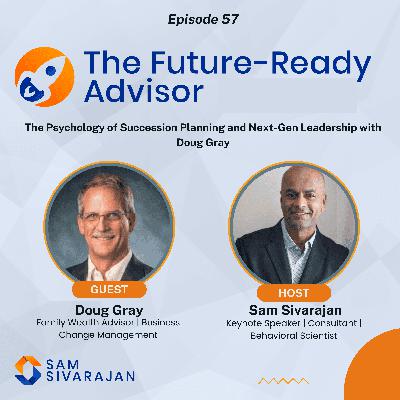
Episode OverviewIn this episode of The Future-Ready Advisor, host Sam Sivarajan sits down with Doug Gray, a business psychologist and executive coach with over 30 years of experience helping leaders navigate complex organizational and family dynamics. Doug is the founder of Action Learning Associates and author of "Objectives Plus Key Results Leadership."They explore the critical intersection of psychology and wealth management, discussing how advisors can better serve multi-generational families through team-based approaches, emotional intelligence, and curiosity-driven engagement. Doug shares his AdFit framework for outcome-based solutions and dispels common myths about generational wealth transfer, offering practical strategies for building the social and emotional capital essential for successful succession planning.Key Quote"Curiosity is the currency of learning. When advisors encourage clients to practice their curiosity, amazing things are going to happen." — Doug GrayKey TakeawaysTeam-based advisory approaches are essential for complex family wealth situations, similar to healthcare teams solving medical problemsThe AdFit framework (Assess, Define, Focus, Interventions, Takeaways) provides structure for outcome-based client engagementsSocial and emotional capital is a bigger driver of succession success than written plans or legal documentationThe "three generations" wealth loss myth is overstated—proactive planning and learning mindsets enable multi-generational successCuriosity and open-ended questioning are powerful tools for engaging next-generation leaders and improving advisor effectivenessSound Bites"Leaders often require guidance from mentors to grow—we all need those sherpas in our professional journeys.""Don't we bring teams of advisors just like we do in healthcare to solve the most complex problems?""Social and emotional capital is a bigger driver of succession success than any written plan.""The three generations myth is not a reality—it's a mythology that we need to move beyond.""When we practice curiosity and we're comfortable with silence, amazing conversations happen."Topics Discussed01:06 — Doug's journey from educator to business psychologist and executive coach07:15 — The AdFit framework for outcome-based client solutions13:27 — Navigating confidentiality and family dynamics in wealth management20:35 — Debunking the "three generations" wealth transfer mythology29:29 — Applying positive psychology principles to financial advisory38:15 — Engaging next-generation leaders through curiosity and mentorship45:46 — Practical tips for advisors: The power of open-ended questionsResources MentionedLearn more about Doug Gray and Action Learning Associates: action-learning.comVIA Character Strengths Assessment: viacharacter.orgStay Connected with The Future-Ready AdvisorSubscribe on your favorite podcast platform to never miss an episodeJoin the conversation on LinkedIn—share your thoughts and connect with other forward-thinking advisors

Episode OverviewIn this episode of The Future-Ready Advisor, host Sam Sivarajan sits down with Ray Adamson, a seasoned coach and FinTech executive, to explore the evolving landscape of advisory practices. They dive into the critical shift from lifestyle practices to structured, scalable businesses and discuss how technology and AI can transform the advisory experience.Ray shares insights on succession planning challenges, the untapped potential of the mass affluent market, and practical strategies for building human-centered practices that leverage technology effectively. Whether you're looking to future-proof your practice or scale your business, this conversation is packed with actionable advice for thriving in a competitive and rapidly changing environment.Key Quote"AI can level the playing field." --- Ray AdamsonKey TakeawaysTechnology enables scalability without sacrificing the human element in advisory relationships.Shifting from lifestyle to structured business is essential for long-term success and succession planning.AI enhances the advisory process but requires careful oversight and human judgment.The mass affluent market presents significant untapped opportunities for growth.Clear personal vision guides better business decisions and strategic direction.Sound Bites"AI can level the playing field.""You can do well by doing good.""The industry has to stay relevant.""Building strong relationships is crucial for success.""Regularly working on the business is as important as working in it."Topics Discussed00:00 -- Introduction to the Future of Advisory Practices02:33 -- Ray Adamson's Career Journey and Insights05:09 -- The Importance of Scalable Processes in Advisory Practices07:51 -- The Role of AI in Financial Advisory10:32 -- Succession Planning in the Advisory IndustryResources MentionedLearn more about Ray Adamson and his work in FinTech and advisory coachingStay Connected with The Future-Ready AdvisorSubscribe on your favorite podcast platform to never miss an episode.Join the conversation on LinkedIn—share your thoughts and connect with other forward-thinking advisors.Explore more insights on Sam's website.
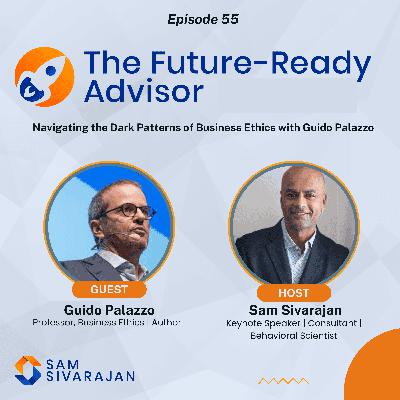
Episode SummaryIn this compelling conversation, Sam Sivarajan sits down with Guido Palazzo, a Professor of Business Ethics, to unpack the complex world of ethical decision-making in organizations. Together, they examine how well-intentioned people can make harmful decisions under pressure, the profound impact of corporate culture on ethical behavior, and why context often matters more than personal values when it comes to moral choices.Professor Palazzo draws on real-world scandals, including the infamous Wells Fargo account fraud case, to illustrate how organizational pressures can create "ethical blindness" that leads good people astray. The discussion emphasizes the critical role leaders play in fostering cultures that not only permit but actively encourage ethical conversations and decision-making processes.Key TakeawaysGood people can make bad decisions under pressure - ethical failures often stem from situational factors rather than character flawsContext trumps personal values in many decision-making scenarios within organizationsCorporate culture significantly influences ethical behavior - the environment shapes choices more than individual moral compassesThe Wells Fargo scandal exemplifies ethical blindness - showing how institutional pressure can normalize harmful behaviorLeaders must normalize discussions about ethics - making moral considerations a regular part of business conversationsThe "fake it till you make it" mentality can lead to fraud - especially problematic in high-pressure startup environmentsEpisode Chapters00:00 Introduction to Ethical Decision-Making03:06 Guido Palazzo's Journey into Ethics05:52 The Dark Pattern: Understanding Ethical Blindness11:41 Context Over Character: The Wells Fargo Scandal32:10 Fake It Till You Make It: The Silicon Valley Spirit35:47 Creating a Bright Pattern: Ethical Decision-Making by Design52:04 Staying Morally Grounded: Do No Harm, Take No ShitMemorable Quotes"The evil is banal.""You have to be the best.""Do no harm, take no shit."Tagsbusiness ethics • ethical decision-making • corporate culture • leadership • moral judgment • ethical blindness • Wells Fargo scandal • financial services • organizational ethics • dark patternsThis episode offers valuable insights for leaders, managers, and anyone interested in understanding how ethical decision-making works in practice within organizational contexts.
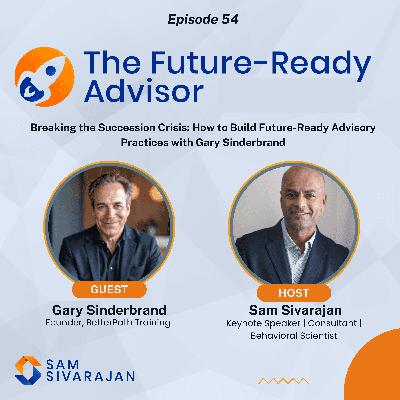
Episode OverviewIn this episode of The Future-Ready Advisor, host Sam Sivarajan sits down with Gary Sinderbrand, a former top-producing advisor turned strategic coach who now helps advisory firms across North America navigate leadership transitions, client continuity, and succession planning challenges.Gary shares his decades of experience on both sides of the advisory business, exploring the looming advisor shortage crisis and what it really takes to build a future-ready practice. From understanding the "motivation gap" among next-generation advisors to redefining client relationships for better outcomes, this conversation is packed with actionable strategies for senior advisors, firms, and emerging talent alike.Whether you're grappling with succession planning, struggling to develop junior advisors, or looking to optimize your practice for long-term success, this episode delivers the insights you need to thrive in an era of increasing complexity.Key Quote"The essence of being a financial advisor is the ability to go create a relationship based on empathy and trust with a perfect stranger in a short period of time. That is a degree you can only get from the school of hard knocks." — Gary SinderbrandKey TakeawaysThe advisor shortage is real and urgent — McKinsey projects a shortfall of up to 100,000 financial advisors by 2034, but many senior advisors remain in denial about succession planning.The "motivation gap" is sabotaging succession — Junior advisors earning high salaries without building their own client relationships lack the resilience and skills needed to take over complex books of business.Client segmentation is critical for growth — Most advisory books follow the same pattern: 40-50 households drive 80% of productivity, while 75% of clients generate only 20% of revenue.Redefining relationships unlocks potential — By transitioning lower-tier clients to junior advisors under a fee-based model, senior advisors can focus on high-value work while developing next-generation talent.Opportunity costs are often invisible — Neglected clients don't just cost time and energy; they actively hurt referral potential and can damage your reputation in the community.Sound Bites"Most of the firms out there have lost focus as to how to really develop that next generation.""You don't know what it's costing you — the opportunity cost of not serving clients properly.""If you don't get it done or figure out a way to get it done, you're not going to be there. The failure rate is 80%.""Question your own conclusions. Even when you're absolutely certain you've got it all laid out, back away and rethink it.""Your job is to absorb the news that's out there, but understand what's not being written as well."Topics Discussed01:34 — Gary's Journey: From Top Producer to Strategic Coach05:29 — The McKinsey Report: Understanding the Advisor Shortage Crisis10:54 — The Motivation Gap: Why Traditional Succession Models Fail15:21 — Client Segmentation: The 80/20 Rule in Advisory Practices22:00 — Redefining Client Relationships for Succession Success27:42 — The Hidden Opportunity Costs of Neglected Client Relationships34:10 — Balancing Rising Client Expectations with Operational Reality38:01 — Building Reciprocal Referral Relationships That Actually Work44:04 — Rapid-Fire Round: Professional Lessons and Practical TipsResources...
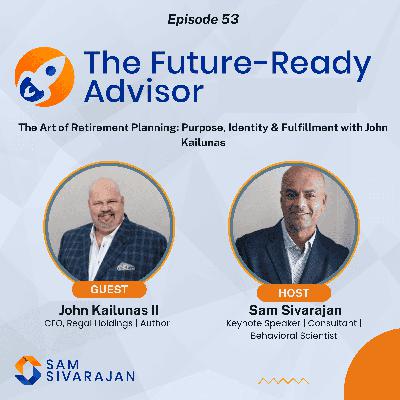
Episode OverviewIn this episode of The Future-Ready Advisor, host Sam Sivarajan sits down with John Kailunas, a wealth advisor, author, and retirement mentor who brings a fresh perspective to one of life's most important transitions. John has spent decades helping clients build, preserve, and transition wealth, but noticed a troubling pattern: clients who had all the financial pieces in place were still floundering in retirement.They discuss the emotional and psychological aspects of retirement planning often overlooked by advisors, the importance of having purpose beyond financial security, and how advisors can evolve their practice to meet clients' deeper needs. John shares powerful client stories and practical insights from his book Mission Retirement, offering a roadmap for creating fulfilling post-career chapters.Key Quote"All money does is give you liberty. The art is how you make people feel and how you leave them." --- John KailunasKey TakeawaysRetirement is a transition, not a finish line - Many people spend decades planning financially but virtually no time planning what they'll actually doPurpose impacts longevity - Clients without clear direction often experience rapid physical and mental deterioration within 2-5 years of retirementThe advisor's role must evolve - Adding the "art" of helping clients visualize their dreams creates unduplicatable value and deeper relationshipsStart small with deliberate actions - Like tiny habits, beginning with one meaningful step can lead to transformative retirement planningInvolve spouses in the conversation - Using structured approaches helps couples align on their retirement vision and prioritiesSound Bites"They had the money, but lacked the mission.""Money gives you liberty.""The art is how you make people feel.""We're wasting a tremendous resource.""Start with something small.""Practice gratitude daily.""Be deliberate with your actions."Topics Discussed01:09 -- The Importance of Purpose in Retirement 05:59 -- Planning for a Fulfilling Retirement10:05 -- The Consequences of Lack of Purpose 16:01 -- The Evolving Role of Financial Advisors 20:26 -- The Importance of Small Steps in Retirement PlanningResources MentionedMission Retirement by John Kailunas and Kevin Burwell - Available on Amazon and KindleCatalyst for Growth coaching and consultingStay Connected with The Future-Ready AdvisorSubscribe on your favorite podcast platform to never miss an episode.Join the conversation on LinkedIn---share your thoughts and connect with other forward-thinking advisors.Explore more insights on Sam's website.
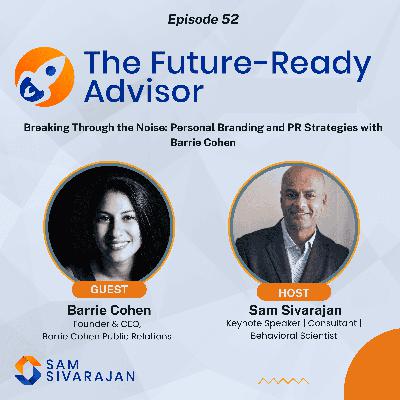
Episode OverviewIn this episode of The Future-Ready Advisor, host Sam Sivarajan sits down with Barrie Cohen, founder of BC Public Relations, to explore how financial advisors can build authentic personal brands and cut through market noise. Barrie shares insights on overcoming common PR misconceptions, the power of storytelling in building trust, and strategies for engaging high-net-worth clients through targeted positioning.They discuss how to navigate compliance requirements while building visibility, why relying solely on referrals can be risky, and the importance of meeting clients where they are in today's digital landscape. Whether you're looking to establish thought leadership or drive new business, this conversation is packed with practical advice for building credibility and standing out in a competitive industry.Key Quote"We all want human connection, right? We're all looking for that. And I think when you work with someone and you feel like they hear you and understand you and you feel seen by them, I think those are the pieces and elements that make you want to hire them." — Barrie CohenKey TakeawaysEveryone has a story worth telling — the biggest misconception is thinking you don't have anything unique to share.Authenticity beats self-promotion — position yourself as a resource and educator rather than focusing on selling.Meet your audience where they are — research what your target clients read, watch, and listen to for maximum impact.Referrals alone aren't sustainable — diversify your business development channels to reach younger, digitally-native clients.PR is a long-term investment — building credibility and visibility takes time but delivers lasting results.Sound Bites"It's not always about you — look at the people you serve to tell your story.""We all want human connection, and that's what builds trust.""PR is not just one thing — find what feels most comfortable to you.""It's an iterative process — adapt your strategy based on what works.""PR is a long-term process that builds credibility over time.""Referrals do dry up — you need multiple sources of business.""Start with baby steps and figure out what works for you."Topics Discussed02:59 — Common Misconceptions in Personal Branding08:57 — The Power of Storytelling15:04 — Adapting PR Strategies for Target Audiences25:15 — Navigating Compliance in Financial Services29:07 — The Risks of Relying Solely on ReferralsResources MentionedLearn more about Barrie Cohen and BC Public RelationsConnect with Barrie on LinkedInStay Connected with The Future-Ready AdvisorSubscribe on your favorite podcast platform to never miss an episode.Join the conversation on LinkedIn — share your thoughts and connect with other forward-thinking advisors.Explore more insights on Sam's website.
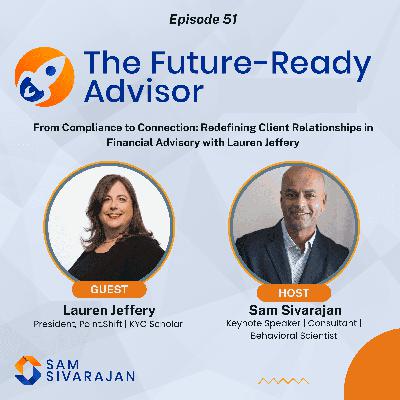
Episode OverviewIn this episode of The Future-Ready Advisor, host Sam Sivarajan sits down with Lauren Jeffery, a registered psychotherapist, certified executor advisor, and doctoral researcher who brings a fascinating perspective to the advisor-client relationship. Lauren's unique journey from compliance trainer in financial services to psychotherapist working with vulnerable populations has given her powerful insights into what truly makes client relationships successful.They explore the biopsychosocial framework for understanding clients, why emotional engagement is essential for building trust, and how advisors can move beyond surface-level conversations to create deeper, more meaningful connections. Lauren shares practical strategies for becoming a better listener, asking the right questions, and creating space for client reflection—all critical skills for the advisor of the future.Key Quote"Be respectfully curious." — Lauren JefferyKey TakeawaysThe biopsychosocial framework helps advisors understand clients as whole people—considering their biology, psychology, and social circumstances together.Therapeutic alliance principles from psychotherapy can dramatically improve advisor-client relationships and outcomes.Emotional engagement is non-negotiable—advisors must be willing to acknowledge and discuss what's really happening in their clients' lives.Silence and follow-up questions are powerful tools that create space for clients to reflect and share deeper insights.Self-awareness is critical—advisors must understand their own biases and social identity to serve clients effectively.Sound Bites"We need to stop for 24 hours and breathe.""Clients come to us looking for help—oftentimes they bring us their peanut butter sandwich problem.""The better the therapeutic alliance, the better the outcomes.""Be respectfully curious—that one small question can shift a whole relationship.""The advisor of 2040 needs to be a therapist."Topics Discussed02:47 — Understanding Biopsychosocial Theory and Its Application to Financial Advisory09:02 — Building Stronger Relationships with Clients Through Emotional Engagement14:49 — The Art of Listening and Asking the Right Questions22:45 — Moving Beyond Surface Issues to Address Deeper Client Needs29:56 — The Critical Importance of Self-Awareness for Financial AdvisorsResources MentionedLauren's KYC Tool: "Where You At" online questionnaire for deeper client understandingCE Webinar: "Bridging the Gap" with Dynamic Mutual Funds on social identity theoryLearn more about Lauren Jeffery: LinkedIn Profile and point-shift.caStay Connected with The Future-Ready AdvisorSubscribe on your favorite podcast platform to never miss an episode.Join the conversation on LinkedIn—share your thoughts and connect with other forward-thinking advisors.Explore more insights on Sam's website.
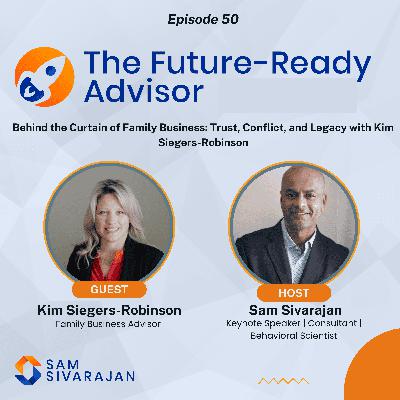
Episode OverviewIn this episode of The Future-Ready Advisor, host Sam Sivarajan sits down with Kim Siegers-Robinson, a family business advisor, to explore the critical yet often overlooked aspects of family business dynamics. Kim shares powerful insights on the importance of communication in succession planning, the emotional challenges families face in wealth transitions, and why addressing the 'soft stuff' is essential for long-term success.They discuss how communication breakdowns account for 60% of family business failures, the delicate balance between fairness and equality in inheritance, and the urgent need for succession conversations. Kim emphasizes the transformative role advisors can play as bridges in facilitating family discussions, fostering trust, and helping families navigate the complex emotional landscape of wealth management and legacy planning.Key Quote"We don't have to be solving the problem—sometimes it's about caring with the human being and being curious with a light touch." --- Kim Siegers-RobinsonKey Takeaways· Communication breakdowns account for 60% of family business failures, making the 'soft stuff' crucial for success.· Succession planning requires a multidisciplinary approach that addresses both technical and emotional aspects of family dynamics.· Fairness vs. equality in inheritance is subjective and deeply emotional, requiring careful navigation and clear communication.· Advisors can act as bridges to facilitate difficult family conversations and build trust between generations.· Family meetings and letters of wishes are powerful tools for preventing conflicts and ensuring clear communication of intentions.Sound Bites· "Succession is multidisciplinary."· "Keeping the peace is just as destructive."· "We assume it's okay, right?"· "It's about maybe caring with the human being."· "You can be curious with a light touch."· "A letter of wishes helps avoid conflict."· "Improved communication fixes most problems."· "Be the bridge; be curious."Topics Discussed· 00:00 -- Navigating Family Business Dynamics· 08:46 -- The Urgency of Succession Conversations· 14:54 -- Addressing Family Conflicts and Legacy Planning· 24:20 -- Navigating Family Dynamics in Wealth Management· 31:02 -- The Importance of Family Meetings· 36:39 -- Transformative Communication in Family BusinessesResources Mentioned· Learn more about Kim Siegers-Robinson and her work in family business advisoryStay Connected with The Future-Ready Advisor· Subscribe on your favorite podcast platform to never miss an episode.· a...
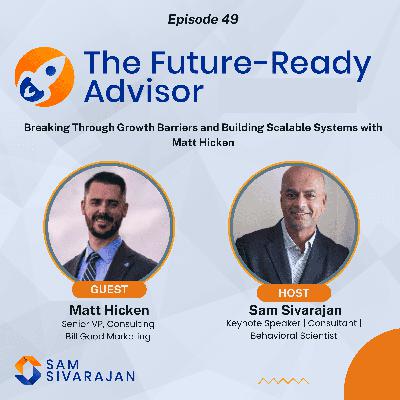
Episode OverviewIn this episode of The Future-Ready Advisor, host Sam Sivarajan sits down with Matt Hicken, Senior Vice President at Bill Good Marketing, for an in-depth conversation about scaling advisory practices and building sustainable growth systems.Matt brings over two decades of experience working with financial advisors across North America, plus nearly 14 years as a licensed advisor where he helped grow one practice from $25 million to over $550 million in AUM. He shares practical insights on breaking through growth plateaus, building referral systems that actually work, and why succession planning should start now—not later.From the psychology of comfort zones to the mechanics of sustainable growth, this conversation is packed with actionable strategies for advisors looking to build scalable, sellable businesses.Key Quote"Stay true to who you are. That's your brand. Stick to it." — Matt HickenKey TakeawaysGrowth requires change — You can't keep doing the same things and expect different resultsReferral systems work when done systematically — Expect 15% of clients to provide referrals annually with proper processesSuccession planning starts now — Begin with the end in mind, regardless of career stageSustainable growth has limits — Most advisor/service teams can handle 30-40 new households per yearDiversify your marketing channels — Don't rely on just one method for lead generationSound Bites"I'm one of those weird kids at 14 who decided I wanted to be a consultant.""The average advisor should be getting at least 15% of their client households to give them at least one referral per year.""Start with the end in mind for succession planning.""This is a business, right? It can't be you if you're going to leave.""Pick one, do it, and then come back and listen again."Topics Discussed01:27 — Matt's Journey from Consultant to Advisor to Coach05:02 — Common Growth Barriers: Change, Team, and Brand Evolution11:48 — Building Systematic Referral Processes That Actually Work20:23 — Shifting from Personality-Driven to Process-Oriented Growth27:19 — Why Succession Planning Should Start Today, Not TomorrowResources MentionedLearn more about Matt Hicken and his work: billgoodmarketing.comStay Connected with The Future-Ready AdvisorSubscribe on your favorite podcast platform to never miss an episode.Join the conversation on LinkedIn—share your thoughts and connect with other forward-thinking advisors.Explore more insights on Sam's website.
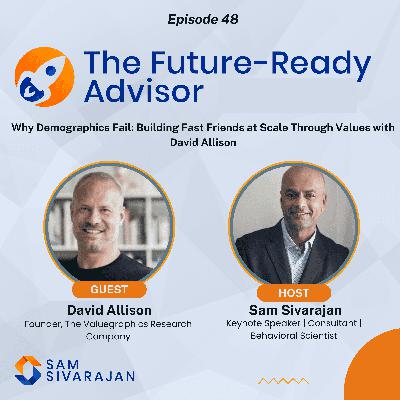
Episode OverviewIn this episode of The Future-Ready Advisor, host Sam Sivarajan sits down with David Allison, founder of Value Graphics Research Company and author of The Death of Demographics. David challenges traditional assumptions about consumer behavior and reveals why demographics are only 10% accurate in predicting client behavior.This conversation explores the shift from demographic analysis to values-driven insights, uncovering how understanding client values can transform advisor-client relationships. David shares groundbreaking research, including his surprising Fox News vs CNN study, and provides practical tools for financial advisors to build deeper trust and create "fast friends at scale" with their clients.Key Quote"Demographics are only 10% accurate. People only do things that align with their values." — David AllisonKey TakeawaysDemographics provide only superficial understanding - they're 10% accurate in predicting behavior and essentially large-scale stereotypingValues are the true drivers of decision-making - there are only 56 core values that influence all human behaviorAsking the right questions reveals true values - avoid asking directly about values; use secondary lines of questioning about daily life and decisionsShared values can bridge political and cultural divides - even opposing groups like Fox News and CNN viewers share core values like familyThe three-legged stool approach works best - combine demographics, psychographics, and value graphics for complete client understandingSound Bites"There's only 56 values that drive every decision people make.""You can't connect if you're always performing based on demographic assumptions.""Don't judge a book by its cover - demographics are incredibly misleading.""Values-driven investing can finally become a reality instead of a wish and a dream.""Human behavior is now measurable and mappable, not just a guess."Topics Discussed01:05 - The Shift from Demographics to Values: David's Origin Story 04:02 - Understanding Human Behavior and Decision Making09:31 - The Value Graphics Database: 56 Core Values Explained 18:03 - The Fox News and CNN Study: Finding Common Ground 25:44 - The Challenge of Identifying True Values Through Secondary Questioning 34:09 - Building Fast Friends at Scale Through Shared Values 40:31 - Integrating Value Graphics with Traditional CRM DataResources MentionedDavid Allison's Book: The Death of DemographicsLearn more about David Allison: LinkedIn ProfileValue Graphics Research: valuegraphics.comSpeaking and Consulting: David Allison, Inc.Stay Connected with The Future-Ready AdvisorSubscribe on your favorite podcast platform to never miss an episode.Join the conversation on LinkedIn - share your thoughts and connect with other forward-thinking advisors.Explore more insights on Sam's website.
🎙️ Episode OverviewIn this second solo episode of The Future-Ready Advisor, host Sam Sivarajan introduces the 3A Framework—a practical model to help financial advisors lead with clarity in a world defined by volatility and change.Sam breaks down how to Assess situations objectively, Act decisively, and Adapt pragmatically. He explores how cognitive biases can distort perception, and why structure and empathy are key to helping clients navigate uncertainty.If you're a financial professional seeking smarter strategies and execution under pressure, this episode delivers concise, actionable tools to turn uncertainty into opportunity.💬 Key Quote"Uncertainty is our new normal." — Sam Sivarajan🔑 Key TakeawaysUncertainty is our new normal and cannot be eliminated.The 3A framework consists of Assess, Act, and Adapt.Cognitive biases can distort our perception of situations.Using structured frameworks can help overcome biases.Strategic empathy is crucial for understanding clients' needs.Decisive action is often more valuable than perfect analysis.🎧 Sound Bites"Assess the situation objectively.""Cognitive biases distort our perception.""Develop strategic empathy with clients.""Act decisively and purposefully.""Change thoughtfully, not constantly."🗂️ Topics Discussed00:00 – Navigating Uncertainty: Introduction to the 3A Framework01:29 – Understanding the Nature of Uncertainty03:47 – The 3A Framework: Assessing the Situation13:08 – Acting Decisively in Uncertain Times21:37 – Adapting Pragmatically to Change29:34 – Implementing the 3A Framework: Practical Steps🌐 Resources MentionedFree Download: The Uncertainty Advantage Guide – https://lp.samsivarajan.com/change-masteryEarly Access: Join the insider list for Sam’s upcoming book Change MasteryMore insights and tools: https://www.samsivarajan.com📲 Stay Connected with The Future-Ready AdvisorSubscribe on your favorite podcast platform so you never miss an episode.Join the conversation on LinkedIn—share your takeaways and connect with other forward-thinking advisors.Visit samsivarajan.com for more insights and free resources.
In this episode of The Future-Ready Advisor, host Sam Sivarajan sits down with behavioral scientist and author Nuala Walsh to explore the unseen forces that lead even smart people to make poor decisions. Together, they break down the common cognitive traps and biases that affect advisors and clients alike.Nuala shares her powerful “decision traps” framework and stresses the importance of reinterpreting—not just hearing—client communication. The conversation challenges advisors to slow down, understand psychological patterns, and approach decision making as a process rather than a performance.Whether you're guiding client portfolios or navigating your own choices, this episode is a must-listen for making smarter, bias-aware decisions.💬 Key Quote"The biggest risk is human decision risk." — Nuala Walsh🔑 Key TakeawaysSuccessful people often make poor decisions due to cognitive biases.Listening is only the first step—advisors must reinterpret what they hear.The “decision traps” framework helps identify recurring pitfalls.Advisors must recognize both their own and clients’ psychological blind spots.Slowing down decision-making improves clarity and confidence.Empowering clients to ask better questions leads to better outcomes.🎧 Sound Bites"You can't trust all you hear.""Listening is only the first stage.""People's decisions really matter.""Not everything you hear is valuable.""Your role is to make sure the valuable is heard.""The biggest risk is human decision risk."🗂️ Topics Discussed01:47 – Why smart people still make bad decisions — and the real risk of bias07:21 – Tuning in vs. tuning out: Hearing the right voices in a noisy world12:12 – The framework of “decision traps” and how they affect financial choices17:54 – Why experts aren’t immune: Ego, identity, and the danger of overconfidence27:12 – Process vs. outcome: Why good results don’t always mean good decisions33:58 – Empowering advisors to slow down, listen better, and ask smarter questions🌐 Resources MentionedWebsite: nualagwalsh.comLinkedIn: Nuala WalshBook: Tune In: How to Make Smarter Decisions in a Noisy World – Buy on Amazon📲 Stay Connected with The Future-Ready AdvisorSubscribe on your favorite podcast platform to never miss an episode.Join the conversation on LinkedIn—share your thoughts and connect with other forward-thinking advisors.Explore more insights at samsivarajan.com
In this episode of The Future-Ready Advisor, host Sam Sivarajan sits down with Ryan Townsley, founder of Town Capital and former senior reactor operator in the nuclear power industry. Ryan shares his remarkable transition into financial advising and how building a niche practice focused on nuclear professionals helped him grow a $110M business.They explore the power of specialization, the importance of relatability in advisor-client relationships, and how consistent educational content can build credibility over time. Ryan’s story offers practical, inspiring lessons for any advisor considering the path of niche-focused growth.Key Quote"You don’t need a massive audience—just the right one. Specialization brings clarity, trust, and efficiency." — Ryan TownsleyKey TakeawaysSpecializing in a niche allows you to deeply understand client needs and build a highly personalized experience.Relatability, especially through shared background or career experience, builds trust faster than generic messaging.Branding isn’t about polish—it’s about consistency, clarity, and value.Educational webinars and content can become evergreen assets that compound over time.Not every client is the right fit—and that’s okay. Fit matters more than reach.Sound Bites"You can’t serve everyone—but you can serve someone really well.""Engineers love detail. So give them charts, graphs, and clarity.""Your niche may be smaller than the market—but bigger than you’ll ever need.""Branding isn’t sales—it’s your reputation on display.""Build trust before the meeting, not during it."Topics Discussed00:00 – Ryan’s journey from nuclear power to financial advising05:36 – Why a generic message failed and the power of niching08:59 – What makes a niche resonate: relatability and specialization17:15 – From niche to network: how the client base naturally expands23:25 – Branding, trust, and using educational content to scale credibility30:29 – Lessons learned: handling rejection and building a niche practice with patienceResources MentionedWebsite: towncapitalllc.comLinkedIn: Ryan TownsleyStay Connected with The Future-Ready AdvisorSubscribe on your favorite podcast platform to never miss an episode.Join the conversation on LinkedIn—share your thoughts and connect with other forward-thinking advisors.Explore more insights on Sam’s website.
🎙️ Episode OverviewIn this first solo episode of The Future-Ready Advisor, host Sam Sivarajan shares a timely and transformative message on how advisors can lead themselves and their clients through volatility, uncertainty, and change.Drawing on decades of leadership in wealth management, behavioral finance, and real-life crisis moments—from the Great Recession to COVID—Sam introduces his powerful CASE Foundation: Control, Align, Span, and Establish. These four principles provide a roadmap to stay grounded and purpose-driven even in the most chaotic markets.Packed with vivid stories (Andy Grove at Intel, Patagonia’s bold pivots, and Whole Foods’ strategic evolution), actionable tools, and behavioral science-backed insights, this episode is a masterclass in how to move from reactive to responsive—and build a resilient, client-centered practice.💬 Key Quote“What your clients need isn't certainty—they need clarity. That’s what builds trust.” — Sam Sivarajan🔑 Key TakeawaysControl what you can. Focus on mindset, communication, and actions—not market noise or Fed decisions.Align your work to what matters. Goals-based planning and client priorities create better outcomes than chasing performance.Span time horizons. Help clients think in terms of now, next, and future to reduce anxiety and make better decisions.Establish the right metrics. Go beyond AUM—measure value, relationships, and purpose to drive lasting success.🎧 Sound Bites"Certainty is a trap. Clarity is a gift.""Stop trying to outguess the market. Start focusing on what you can actually influence.""Alignment isn’t about efficiency—it’s about impact.""When you measure what matters, you transform how you show up."🗂️ Topics Discussed01:47 – Why Uncertainty Feels So Hard—and Why It’s the Defining Challenge of Our Time05:15 – The CASE Foundation: Control, Align, Span, Establish06:00 – Control: The Andy Grove Story and the Power of Strategic Focus11:30 – Align: Client-Centered Planning and Patagonia’s Bold Moves20:00 – Span: Managing Time Horizons Like John Mackey at Whole Foods27:00 – Establish: Creating a Values-Aligned Scorecard That Actually Matters35:00 – Bringing It All Together: Becoming the Future-Ready Advisor🌐 Resources MentionedFree Download: The Uncertainty Advantage Guide – https://lp.samsivarajan.com/change-masteryEarly Access: Join the insider list for Sam’s upcoming book Change Mastery📲 Stay Connected with The Future-Ready AdvisorSubscribe on your favorite podcast platform so you never miss an episode.Join the conversation on LinkedIn and connect with other future-ready professionals.Explore more insights and free resources at samsivarajan.com
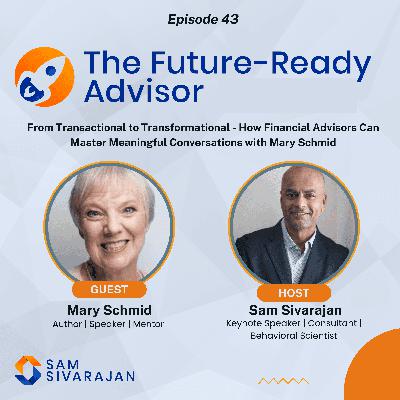
Episode SummaryIn this episode, Sam Sivarajan is joined by Mary Schmid, expert in communication and creator of the Conversational Edge system. Together, they dive into the transformative power of communication in financial advising and explore how financial professionals can foster trust and deepen client relationships through more meaningful, emotionally intelligent conversations.Mary explains the neuroscience behind effective communication and how advisors can transition from surface-level transactions to deeper, transformational engagements. The conversation covers key communication blind spots, the importance of empathy and vulnerability, and how to create a safe space for clients to open up.The episode also touches on the evolving role of technology, how it should enhance—not replace—human connection, and the critical role of emotional intelligence in navigating today’s advisory landscape. In a heartwarming close, Mary shares a profound lesson from a seven-year-old that underscores the idea that there’s often more than one right answer in both life and advising.Key Quote“Good communication doesn’t always build trust—but trust is reinforced or eroded with every conversation.” – Mary SchmidTop 5 Key TakeawaysTransformational conversations build trust—going beyond transactions helps deepen client relationships.Understanding the “invisible conversation” is essential to uncover clients' real concerns, values, and motivations.Empathy, curiosity, and vulnerability are powerful tools for creating safety and connection in client conversations.Effective communication is rooted in neuroscience—how we talk impacts how others feel, think, and respond.Clients value relationships over technical knowledge—what matters most is how you make them feel heard and understood.Sound Bites"Clients don't remember everything you say. They remember how you made them feel.""Being right isn’t the goal—getting it right together is.""Curiosity, empathy, and vulnerability are what make conversations transformative."Episode Chapters01:34 – Mary’s Journey: From Healthcare Executive to Conversation Expert06:36 – The Invisible Conversation: How Neuroscience Shapes Client Trust09:19 – Transactional vs. Transformational: Understanding the 3 Levels of Conversation17:01 – Balancing Immediate Needs with Long-Term Relationships27:47 – Creating Emotional Safety in High-Stakes ConversationsResources Mentioned🔗 Learn more about Mary and her work: maryschmid.com/futureready📚 Book: Make or Break Conversations by Mary SchmidStay Connected with The Future-Ready Advisor📌 Subscribe to the podcast on your favorite platform.💬 Join the conversation on LinkedIn and connect with other future-ready professionals.Explore more insights and free resources at samsivarajan.comKeywordstransformative communication, financial advisors, neuroscience, client relationships, trust, meaningful conversations, behavioral finance, emotional intelligence, conversational edge, client engagement, communication, empathy, financial advice, technology, vulnerability, conversational skills, safety
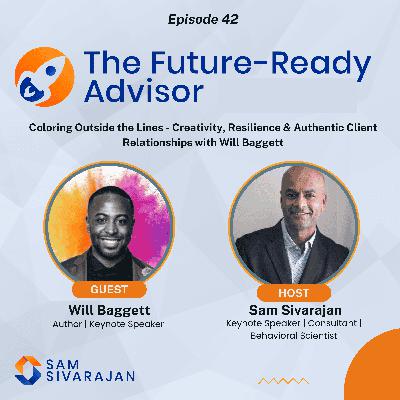
Episode 42: Coloring Outside the Lines - Creativity, Resilience & Authentic Client Relationships with Will BaggettEpisode OverviewIn this episode of The Future-Ready Advisor, host Sam Sivarajan sits down with author and keynote speaker Will Baggett for a powerful conversation on creativity, resilience, and the power of authenticity in client relationships.Will shares how the pandemic changed our perspectives on work and identity, and why personalization and vulnerability are critical to building trust. He discusses how embracing imperfection, listening deeply, and finding common ground with clients can transform the advisor-client relationship.Whether you're navigating change, building a brand, or seeking deeper connection with clients, this episode is packed with real, relatable strategies to help you stand out by simply being yourself.Key Quote"Money only fixes money problems." — Will BaggettKey Takeaways· Creativity fuels personal and professional transformation.· The pandemic reshaped how we view work, success, and connection.· Personalization builds trust and makes advisors more relatable.· Vulnerability isn't a weakness—it's a connection point.· Developing “rejection immunity” can help advisors grow through challenges.· Finding common ground is key to connecting across differences.· Understanding your client’s emotional relationship with money is critical.· Authenticity is a powerful differentiator in a noisy marketplace.· Imperfection creates relatability and human connection.· Listening is a superpower in both life and advising.Sound Bites· "Creativity is one of the most underrated skills in financial advising."· "You can’t connect if you’re always performing."· "· "People don’t remember what you say—they remember how you made them feel."· "Your story is your strength."Topics Discussed01:27 – Will’s Journey: Creativity, Resilience & Coloring Outside the Lines04:46 – Embracing Change in a Post-Pandemic World09:37 – Creativity in Advising & Building Authentic Client Connections15:06 – Imperfection, Vulnerability & Building Trust23:17 – Advisors: Expert vs. Trusted Partner26:23 – Overcoming Imposter Syndrome & Rejection Immunity34:02 – Connecting with Diverse Clients Through Shared Values40:23 – Be the Best Version of Yourself, Not a Copy of Someone Else43:01 – Rapid-Fire Round: Lessons, Tips & Submerged Reflection44:00 – Where to Learn More About WillResources MentionedLearn more about Will Baggett and his work: https://www.willbaggett.comStay Connected with The Future-Ready Advisor· Subscribe on your favorite podcast platform to never miss an episode.·
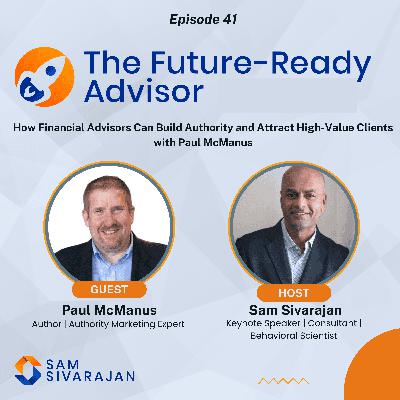
Episode OverviewIn this episode of The Future-Ready Advisor, host Sam Sivarajan sits down with Paul McManus, an expert in authority marketing, to explore how financial advisors can establish trust and attract high-value clients. Paul shares insights on personal branding, the power of authorship, and the importance of defining a niche market.They discuss strategies for standing out in a competitive industry, making content creation manageable, and leveraging reputation to build long-term client relationships. Whether you're a seasoned advisor or just starting, this conversation is packed with actionable advice to elevate your brand and business growth.Key Quote"Authorship is one of the fastest ways to build trust with clients and differentiate yourself in the marketplace." — Paul McManusKey TakeawaysAuthority marketing is a game-changer for financial advisors looking to attract high-value clients.Defining a niche market helps advisors create a stronger, more compelling value proposition.Authorship builds trust quickly, positioning advisors as thought leaders in their field.Personal branding isn’t optional—it's essential for differentiation and long-term success.Content creation should be simple and impactful, not overwhelming.Sound Bites"Authority isn’t given—it’s built through consistent messaging and expertise.""Your book isn’t just a book—it’s your business card, your credibility, and your brand.""The hardest sale is always the first one. After that, trust does the work.""Financial advisors who embrace niche marketing see the biggest growth.""You don’t have to create endless content—just the right content for the right audience."Topics Discussed02:05 – Introduction to Authority Marketing & Paul McManus’ Journey10:10 – Overcoming Misconceptions in Authorship16:50 – Accelerating Trust Through Authorship22:45 – The Role of Reputation in Branding28:30 – Leveraging Personal Branding for Organizational Benefit35:10 – Making Content Creation Manageable41:55 – New Opportunities in Podcasting and MediaResources MentionedLearn more about Paul McManus and his workStay Connected with The Future-Ready AdvisorSubscribe on your favorite podcast platform to never miss an episode.Join the conversation on LinkedIn—share your thoughts and connect with other forward-thinking advisors.Explore more insights on Sam’s website.

Comments

Download from Google Play

Download from App Store
 United States