


 Claim Ownership
The Vernon Richard Show
Subscribed: 6Played: 28
Subscribe
© 2025 Vernon Richards and Richard Bradshaw
Description
Vernon Richards and Richard Bradshaw discuss all things software testing, quality engineering and life in the world of software development. Plus our own personal journeys navigating our careers and lifes.
31 Episodes
Reverse

In this episode of the Vernon and Richard show, the hosts engage in light-hearted banter about football before diving into a deep discussion on QA, QE, and testing. They explore the concept of 'shift left' in software development, comparing its application in agile versus waterfall methodologies. The conversation shifts to the evolving roles of QA and QE in the context of AI's impact on the industry, emphasizing the importance of task analysis and building a quality culture within teams. The episode concludes with reflections on managing expectations in QA roles and the future of jobs in the field.
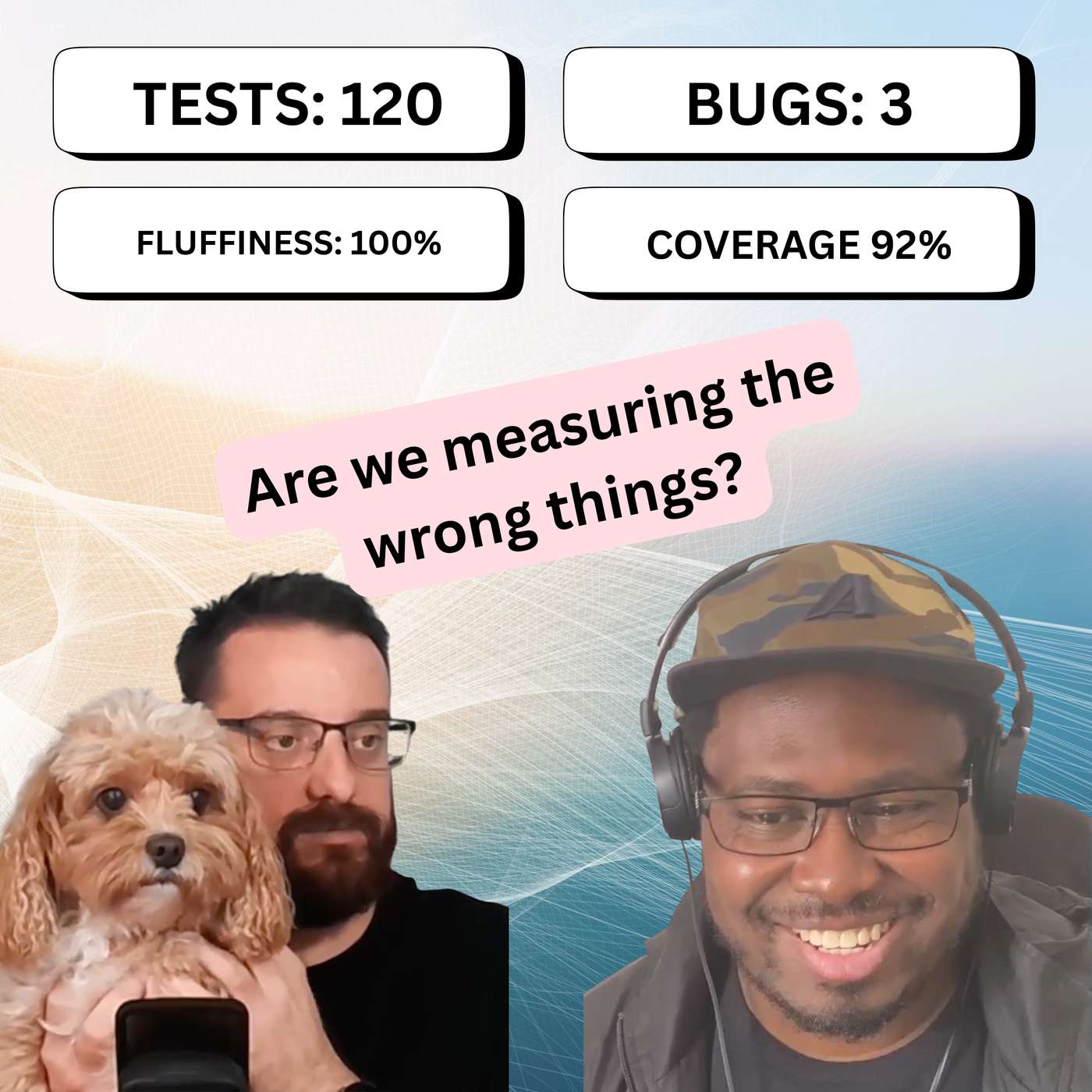
This episode is about the struggle to explain, measure, and name the work testers and quality advocates actually do — especially when traditional labels and metrics fall short.Links to stuff we mentioned during the pod:05:05 - Defect Detection Rate (DDR)The rate at which bugs are detected per test case (automated or manual)No. of defects found by test team / No. of Test Cases executed) *10015:06 - David Evans' LinkedIn24:57 - Janet GregoryJanet's websiteJanet's LinkedIn26:01 - Defect Prevention RatePerplexity search results here28:28 - Jerry WeinbergJerry's Wikipedia page (his books are highly recommended)49:33 - Shift-Left: The concept of moving testing activities earlier in the software development lifecycyle.Some resources explaining the Shift-Left concept (Perplexity link)00:00 - Intro01:11 - Welcome & "woke" testing 😳03:15 - QA, QE, Testing… whatever we call it, how do we measure if we're doing a good job?03:44 - Vernon’s first experience with testing metrics: more = better?05:00 - Defect Detection Rate enters the chat06:41 - Rich reverse engineers quality skills needed in the AI era10:54 - How do we know if we’re doing any of this well?12:40 - Trigger warning: the topic of coverage is incoming 😅16:54 - Bugs in production21:09 - Automation metrics: flakiness, pass rates, and execution time24:29 - Can you measure something that didn’t happen? (Prevention metrics)27:43 - Do DORA metrics actually measure prevention?32:03 - Here comes Jerry!33:50 - The one metric the business cares about...36:23 - QA vs QE: whose “quality” are we "assuring"?39:25 - What's the story behind the numbers?48:29 - Rich brings in Shift Left Testing50:14 - Metrics that reach beyond engineering53:14 - Rich gets a new perspective on QE and the business56:50 - Who does this work? Testers? QEs? Or someone else?
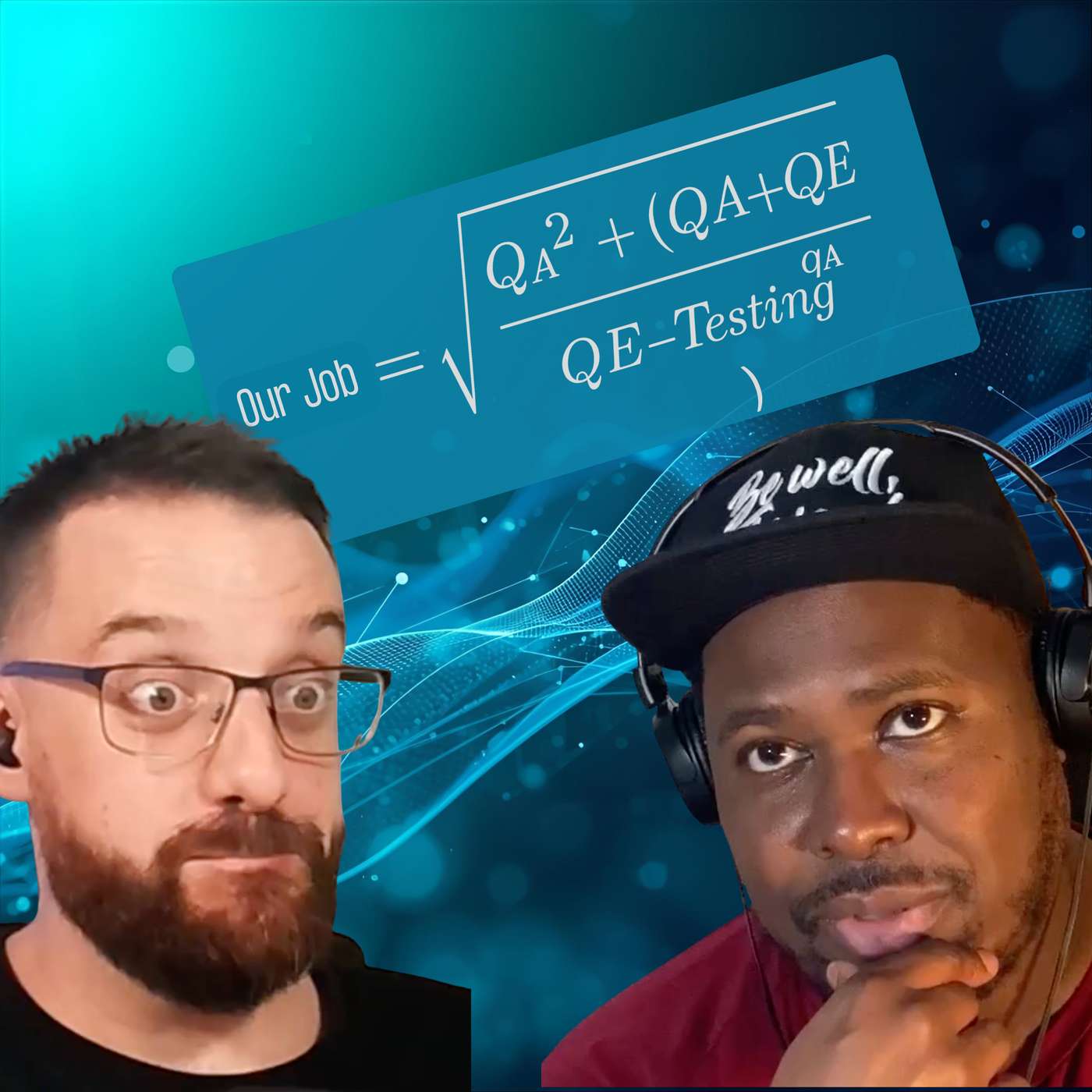
In this episode, Richard and Vernon delve into the complexities of Quality Assurance (QA), Quality Engineering (QE), and testing in software development. They explore the evolution of these concepts, their interrelations, and the importance of metrics in assessing quality. The conversation highlights the need for a holistic approach to quality, emphasizing that both prevention and detection of bugs are essential. The hosts also discuss the challenges of defining these terms and the future of quality in the industry.Links to stuff we mentioned during the pod:08:50 - Dan AshbyWe're referring to Dan's's excellent post called "Continuous Testing" (featuring his famous diagram!)17:13 - Jit GosaiJit's blog Jit's Quality Engineering Newsletter Jit's LinkedIn19:24 - Quality Talks PodcastStu's Quality Talks podcast that he co-hosts with Chris HendersonStu's LinkedInChris's Linkedin19:55 - The Testing Peers podcast22:00 - DORA Metrics: DORA metrics are a set of key performance indicators developed by Google’s DevOps Research and Assessment team to measure the effectiveness of software delivery and DevOps processes, focusing on both throughput and stability26:13 - A link from Episode 10 where Vern discusses Glue Work (be sure to check out the show notes on that episode)Quick overview of DORA metrics34:43 - The Credibility PlaybookA video course by Vernon as he experiments with building digital products.Check it out and let him know what you think of it! 😊46:24 - Ali AbdaalAli's websiteAli's YouTube00:00 - Intro01:36 - Welcome02:40 - Today's topic: What the hell is QA? QE? Testing? And is it all changing?03:00 - Why is this bugging Rich?05:11 - Fruit fly tangent 🍌🍊🍎🪰🐝🦋06:27 - Rich's take on QA, QE, and Testing08:31 - Vern's take on QA, QE, and Testing11:15 - Is shift-left testing the same as QE?13:05 - When the team tests early... is that QE then?!16:18 - What's the big deal if we can’t define QE clearly?19:27 - Why the Efficiency Era makes this even harder22:55 - Trying to draw the Testing, QA, QE, Venn diagram27:24 - Getting the QA, QE, Testing blend just right. What's the right mix?29:52 - The kinds of work we take on as our careers grow34:08 - What Testers get rewarded for45:34 - How Ali Abdaal helped Vern think differently about quality48:18 - Rich talks measurement

In this conversation, Vernon and Richard explore the evolving role of AI in quality engineering and software development. They discuss how AI can enhance quality control processes, the importance of embedding quality early in the development cycle, and the potential challenges and opportunities that arise from integrating AI tools. The conversation also touches on the need for skill development and community engagement in adapting to these changes, as well as the implications for roles within the industry.Description and Thumbnail made with AI to assess the quality, we had to!00:00 - Intro01:02 - Welcome and footy ⚽️02:15 - Today's topic: The impact that AI may or may not have on Quality Engineering03:22 - Rich's wild idea about AI and software quality14:10 - Vern asks a clarifying question22:45 - Communities of excellence… for machines?!24:03 - Vern thinks there's an obvious risk that follows from this idea...31:31 - Rich addresses the risk (Oracles, prompts, and tester superpowers)36:13 – Reflection: the hidden skill AI forces on us41:40 – Shifting in all directions (not just left)43:04 - Feeding your past self into an AI: smart or scary?45:53 – Operation 400 subscribers (and bot listeners)47:13 – Tony Bruce calls us out on sloppy show notes and outroLinks to stuff we mentioned during the pod:04:18 - Shift-Left: The concept of moving testing activities earlier in the software development lifecycyle.Some resources explaining the Shift-Left concept (Perplexity link)25:35 - Rob BowleyRob's LinkedInThe post Vernon referred to......a follow-up post not long after that one too!26:40 - Alan PageAlan and Brent's podcastAlan's LinkedIn34:43 - Saskia CoplansDigital Interruption Saskia's cybersecurity consultancyREXscan Saskia's automated mobile application vulnerability scannerSaskia's LinkedIn (highly recommended follow)41:49 - Paul ColesPaul Coles published 3 of his 4 part series "The Subtle Art of Hearding Cats" over on Dev.To Recommended reading!Paul's LinkedIn43:09 - Maaret PyhäjärviMaaret's websiteMaaret's blogMaaret's LinkedIn
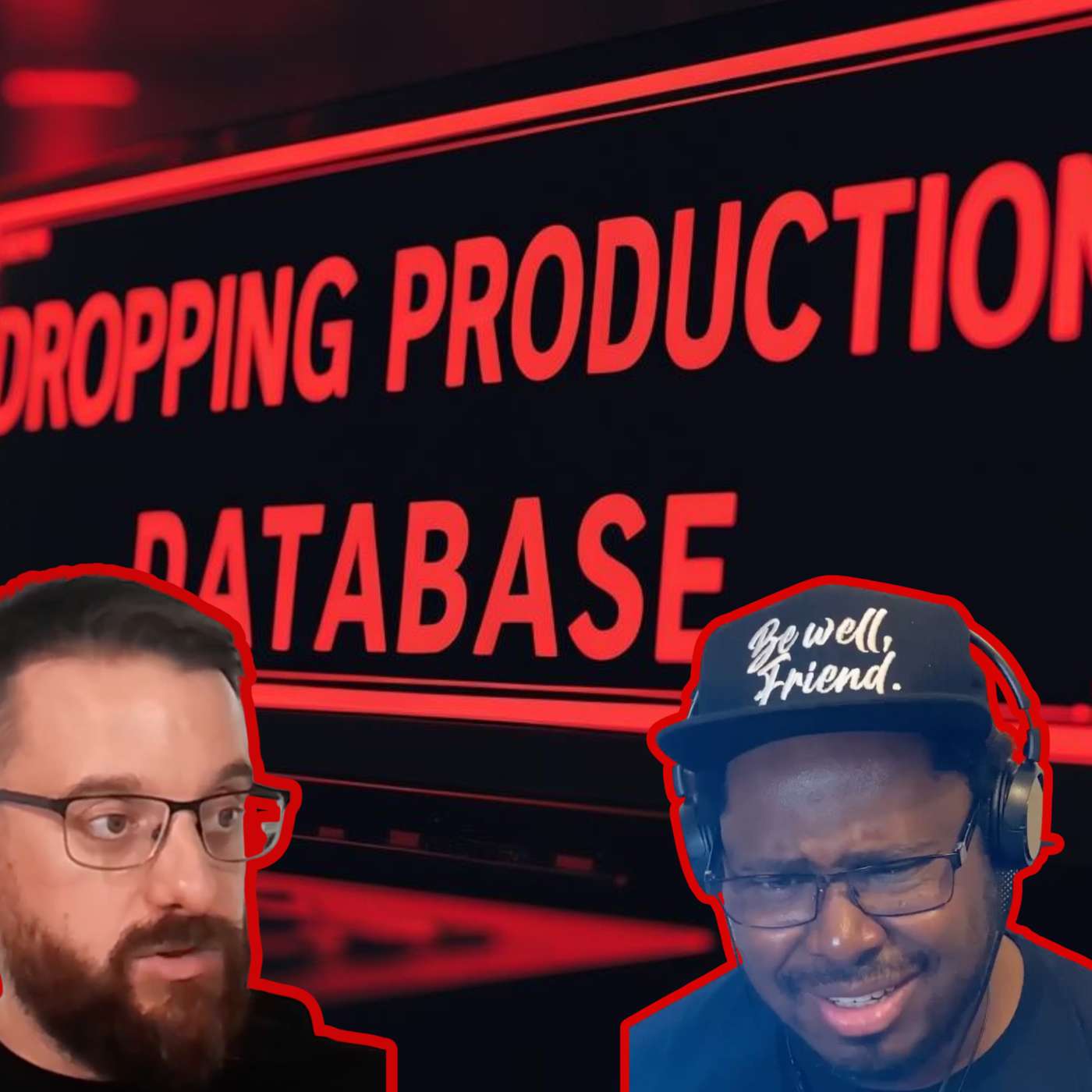
In this episode of the Vernon Richard show, the hosts discuss their experiences with AI tools and agents, focusing on the challenges and lessons learned from using these technologies in coding and software engineering. They explore best practices for utilizing AI effectively, the importance of context in interactions with AI, and the future of AI agents in the workplace. The conversation highlights the balance between leveraging AI for efficiency while maintaining control and understanding of the underlying processes.Links to stuff we mentioned during the pod:09:16 - The LinkedIn post talking about Replit messing with someone's production code 😳And the link to the thread of person who went through itThe tool in question, Replit13:01 - Rich's LinkedIn post with his tips14:21 - GitHub Copilot18:09 - VS Code29:01 - Folks at different ends of the "AI Enthusiasm Spectrum"On the enthusiastic endJason Arbon is on the positive side and is always creating something interesting like...testers.aiOn the unenthusiastic endKeith Klain has created a reading list to help get us up to speed...Keith's reading AI reading listYou can see his full resources list hereMaaike Brinkhof has a bunch of thought-provoking posts on the topic......like this oneand this one34:44 - Want to know what "conflabulation" means? Listen to Martin explain it on the Ghost in th code podcast (that's not a typo!)37:24 - What is Context Engineering? Perplexity has answers!46:38 - The legendary Lt. Geordi La Forge from Star Trek: The Next Generation.51:48 - After recording, the very cool Paul Coles published his article The Subtle Art of Herding Cats: Why AI Agents Ignore Your Rules (Part 1 of 4, explaining the topic of Context Engineering. It’s brilliant!59:04 - The promises of technology over the years...60:50 - The always insightful Meredith Whittaker of Signal fame, where is the president and services on its board of directors, explains the privacy and security concerns with agentic technology.Watch the clip, then go back and watch the whole thing!00:00 - Intro01:17 - Welcome01:30 - TANGENT BEGINS... All kinds of egregious waffling follows. Skip to the actual content at 08:3401:31 - Rich VS Tree Stump01:57 - What on earth did Rich need the pulley for?02:26 - Vern's nerdy confession and pulley confusion02:52 - Does Rich live next door to Tony Stark?!03:22 - What to do when you need a steel RSJ03:35 - We admit defeat. 03:36 - Welcome to Rich's Garden Adventures Podcast!07:25 - What has Vern been up to?08:34 - We attempt to segue into the episode at last!08:35 - TANGENT ENDS...08:51 - Rich’s POC: using agents to help build AI tools09:45 - The Replit disaster: vibe coding meets deleted production data 11:12 - Sociopathic assistants and the case for AI gaslighting 11:55 - Vernon wants his team experimenting with AI tools12:50 - Rich explains the context for his latest AI adventures13:18 - Rich’s bench project and “putting the engineering hat on” 15:22 - Setting up the stack and staying in control 16:53 - A familiar story: things were going fine until they weren’t 17:00 - Ask vs Edit vs Agent mode in Copilot explained 19:06 - The innocent linting error that spiralled out of control 21:16 - Stuck in a loop: “I didn’t know what it was doing, but I let it keep going” 22:11 - The fateful click: “I’m going to reset the DB” 23:10 - The aftermath: no data, no damage… but very nearly 23:33 - Security wake-up call: agents are acting as you 24:39 - You can’t fix what you don’t know it broke 25:52 - Can you interrupt an agent mid-task? 27:14 - When agents get “are you sure?” moments 28:15 - Tea breaks as a dev strategy: outsourcing work to agents 29:24 - Jason Aborn vs Keith & Maaike: where Rich sits on the AI enthusiasm spectrum 30:41 - Tip1. The first of Rich’s 6 agent tips: commit after every interaction32:12 - Why trusting the “keep all” button is risky 34:01 - Writing your own commits vs letting the agent do it 35:26 - When agents lose the plot: reset instead of fixing 36:55 - “You’re insane now, GPT. I’m giving you a break.” 37:54 - Tip 2: Make the task as small as possible 39:59 - The middle ground between 'ask' and full agent delegation 41:12 - Tip 3: Ask the agent to break the task down for you 43:36 - The order matters: why you shouldn’t start with the form UI 44:33 - Vernon compares it to shell command pipelines 45:09 - It can now open browsers and run Playwright tests (!) 46:23 - Star Trek and the rise of the engineer-agent hybrid 47:57 - Tips 4–6: Test often, review the code, use other models 49:39 - Pattern drift and the importance of prompt templates 50:51 - Vernon’s nemesis: m dashes, emojis, and being ignored by GPT 51:48 - Context engineering vs prompt engineering 52:43 - When codebases get too big for agents to cope 53:40 - Why agents sometimes act dumber than your IDE 54:32 - The danger of outsourcing good practices to AI 54:48 - Spoilers: Rich’s upcoming keynote at TestIt 55:01 - Agents don’t ask why — they just keep going 56:42 - Goals vs loops: when failure isn’t part of the plan 58:32 - The question of efficiency: is training agents worth it? 59:47 - Rich’s take: we’ll buy agents like we buy SaaS 61:08...
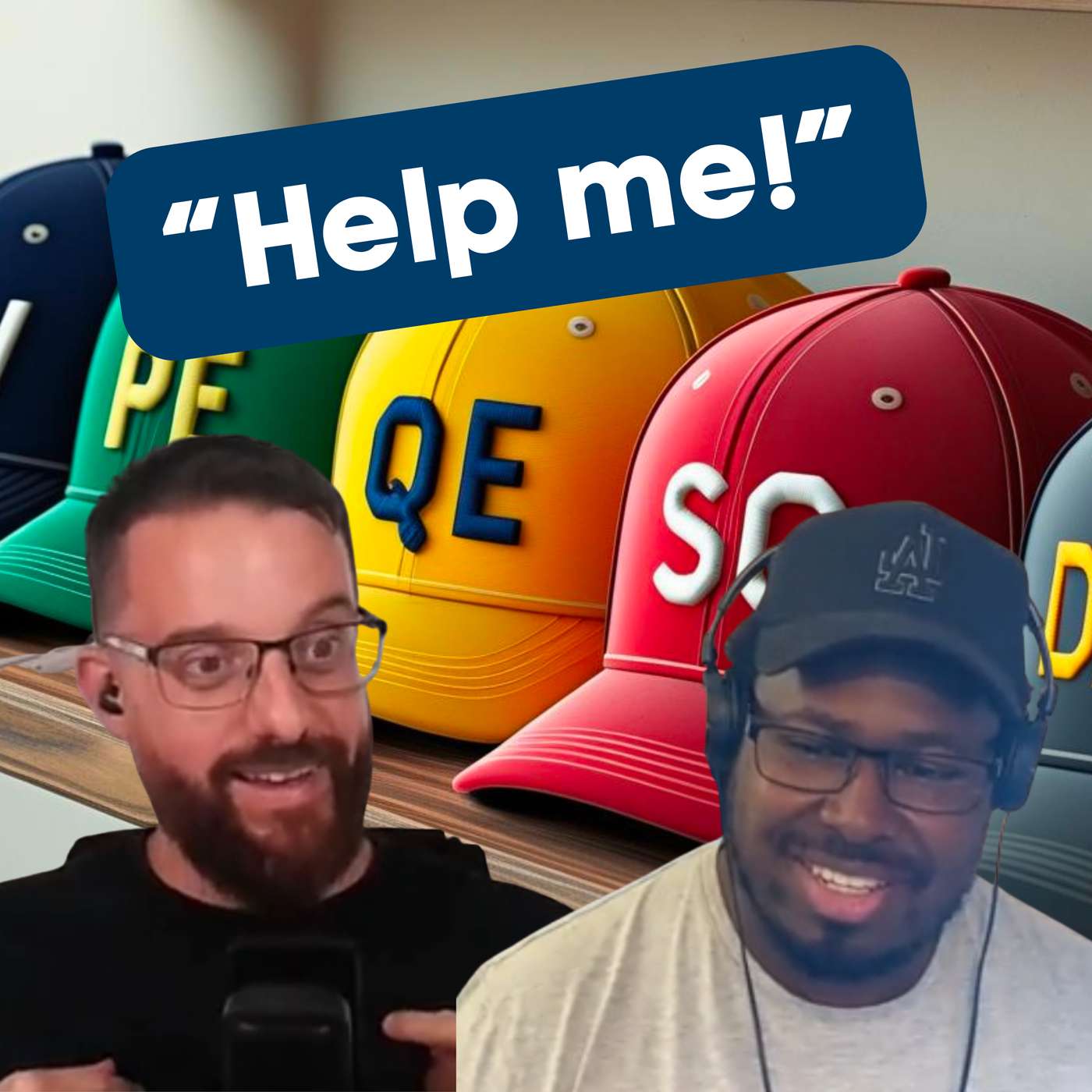
In this episode of the Vernon Richard Show, Richard and Vernon discuss the challenges and opportunities in coaching software engineers on quality engineering. They explore personal updates, family dynamics, and the importance of perspective in quality and risk management. The conversation delves into the significance of code quality, effective communication, and the role of engineers in ensuring quality. They also touch on the need for hands-on learning and practical application in quality engineering training, concluding with a call to action for listeners to share their experiences and insights.Links to stuff we mentioned during the pod:01:16 - Llandegfan Exploratory Workshop in Testing aka LLEWTYou can read about the latest edition from James (I haven’t written anything up yet - VR)19:57 - The “I just want to write code” LinkedIn postFAILURE! I couldn’t find the LinkedIn post I was referring to 😭22:29 - Linda Van De Vooren (massive brain freeze - I couldn't remember Linda's last name properly! Sorry Linda 🤦🏾♂️)25:04 - Cul-de-sacThis is a French term (that means "bottom of the bag") that we use in English to describe a dead-end street, i.e. a street that only has one entry/exit point.We also use it in the context Vernon just did, to indicate a situation where we have no options.31:45 - The Deep Dive tracks at Agile Testing Days look incredible! Get your tickets ASAP folks!They also have an Online Pass available if you're unable to visit Berlin (although if you can, we recommend visiting in person!)34:20 - Rich's Qt testing articlesWhere Does AI Fit in the Future of Software Testing?Applying the SACRED Model to Build Reliable Automated TestsThe Importance of Technical System Knowledge4 Essential Types of Automated API TestingExploring the Different Types of Automated UI TestingThe Manual Testing and Automated Testing Paradox42:11 - PeersCon tickets are available now. If you're in the UK and can easily get to Nottingham, I highly recommend visiting!Don't forget they also need VolunPeers (do you see what they did there?), before and during the event, so check that out too please 🙏🏾43:55 - Heather Reid Heather's blog Heather's LinkedIn46:15 - Liza, the awesome teammate in question46:41 - European Testing Conference led by Maaret PyhäjärviWhile the event has stopped, you can still take a peek at their website00:00 - Intro00:48 - Welcome ramble05:25 - Rich's question: An Engineer colleague wants to be coached on Quality Engineering, what do I do?08:24 - Vern goes into coaching mode (shock!)09:35 - Vern goes into teaching mode (shock!)10:04 - Where could we start?12:25 - Risk enters the chat...14:50 - Quality enters the chat...15:48 - Help them speak up and become a QA (Question Asker)17:30 - Two powerful questions to get them thinking about quality19:15 - The dangers of acting like an order taker...19:57 - ...or are they?21:45 - Uno Reverse! Is it true that all Engineers "love" writing code?23:18 - Order Takers vs Experts24:30 - Another powerful question to ask25:47 - Rich's clarification sparks an idea about hats27:17 - Slalom Sponsorship Appeal27:41 - How do you decide when you have learned enough on a given topic?29:21 - Majors and minors30:55 - Learning modalities31:42 - Learning tools35:00 - A "syllabus" or roadmap starts to emerge36:50 - What can the Engineer do to help the QEs in their life?43:29 - Send us your ideas please45:54 - The 1-to-many approach47:53 - The classic mistake to avoid in this situation49:15 - The relationship between testing and quality52:10 - Vernon's people will contact Slalom's people

In this episode of the Vernon Richard Show, Richard and Vernon discuss the growth plans for testers in test automation, focusing on the importance of coding skills, exploratory testing, and the balance between generalist and specialist roles. They explore the need for measurable targets in personal development plans and the significance of understanding the context of problems in software development. The conversation also touches on the impact of AI on software engineering and the necessity for collaboration between testers and developers.00:00 - Intro01:42 - The Ramble begins07:39 - QUESTION (Thanks Thierry!): "How do you see a growth plan for testers in test automation as a personal development plan?"10:12 - How has Vern helped Testers create an automation development plan?13:14 - What does it mean to go from novice to advanced?15:15 - Rich wants to know what test automation means before answering the question!15:57 - The nuance (and trap!) of the word "tool"17:35 - Rich has come up with a new term for old testing19:21 - What about code? Which languages should you learn?20:34 - Vern's answer to a Redditor asking a similar question23:34 - Don't forget the reason why we're trying to learn all of these tools and languages24:24 - Who makes the "best" "automation" testers?25:45 - What does it look like when an SDET hasn't learned how to identify the right test?26:34 - Ok if that's you and your team, how can you make it work?28:33 - Lord of the Rings testing!29:40 - How does Alan Richardson defeat "Testing Sauron"? (I'll stop the LotR references now I swears it 😇)31:07 - Noah Sussman's excellent early ideas to solve this problem32:42 - Generalist or Specialist, what is the core, foundational knowledge needed to call yourself an engineer?34:18 - ...and what about AI? (only took half an hour!)35:10 - Vern wants to get back to work asap and start creating growth plans... but for who?38:20 - What two things are often missed in growth plans?40:41 - Rich talks about the tangible difference between being a novice and advanced SDET/Automation Specialist/Toolsmith41:39 - The cognitive load of your engineers42:17 - Production code vs Automation code: Which is more important? Rich breaks it down.44:27 - What are we optimising for?47:45 - Do we have to choose between readability and efficiency though?52:52 - Learning through pain54:12 - Rich and Vern wonder what they should do next54:32 - What makes this relevant in today's job market55:22 - One last wild take about software development careers...Links to stuff we mentioned during the pod:03:23 - The Øredev conference in MalmöGet your tickets here!04:13 - The LLEWT peer testing workshopCheck out this summary from last years event by James ThomasRead about the origins of this flavour of workshop06:40 - Cynefin a sense-making framework devised by Dr Dave SnowdenHere's Dr Snowden explaining the frameworkEnabling ConstraintsThe Paradox of Choice (which I didn't know was a book - readingList++)07:39 - Here's the full question from Thierry as he asked it on LinkedIn14:14 - "GUI Automation"A term used to describe tools focused on driving browsers. Some examples of such tools would include Selenium, Cypress, Playwright, and Watir.15:57 - I'll link to Rich's article once it's published 🙂16:04 - Automation in Testing (AiT)Automation in Testing references (via Perplexity)16:18 - Some tools and frameworks Rich mentioned:SeleniumPlaywrightJUnit18:50 - Rich's API Testing article on Qt QA blog19:07 - Rich's article explaining the different kinds of GUI Automation19:21 - What's a scripting language vs an object-oriented language?According to PerplexityKey takeaway: These are not mutually exclusive terms and label to two different aspects of programming languagesScripting: how code is runObject-orietned: how code is organised19:36 - Programming languagesTypeScriptJavaC# (pronounced "See-Sharp")JavaScript19:52 - Mark WinteringhamMark's websiteMark's GenAI bookMark's LinkedIn20:34 - The article called "Career Advice For A 35+ Year Old Manual Tester"26:54 - Erik "I love orange" DavisErik's LinkedIn27:42 - Rich's S.A.C.R.E.D. model29:40 - Alan RichardsonAlan's websiteAlan's Patreon communityAlan's LinkedIn31:02 - Noah SussmanNoah's stupendous blog post "How to teach yourself to be a technical tester: some thoughts."Noah's LinkedInHighly recommend that you watch Noah's talks on anyOfTheThings32:24 - Then the effervescent Michael Larsen actually went through the thing!He documented his journey with it too.
In this episode of the Vernon Richard Show, the hosts discuss the significance of social media and community interaction in the software testing field. They explore how social media has evolved, the importance of content creation, and the balance between personal goals and professional networking. The conversation also touches on their favorite podcasts and books, as well as future directions for their own show.06:10 - Olly FairhallOlly's LinkedInOlly's Bluesky11:27 - Chris ArmstrongChris's blogChris's podcast The Testing Peers (of PeersCon fame!)Chris's YouTubeChris's LinkedIn19:52 - Anne-Marie CharrettAnne-Marie's book (why are you still here? Go and buy it right now!)Anne-Marie's blogAnne-Marie's LinkedIn28:21 - Angie JonesAngie's website (including links to her public GitHub repos, blog, and allTheSocialMedia profiles - I told you she was prolific!)28:33 - GopsTo prove my point, I cannot find this man's LinkedIn profile 🤦🏾♂️😂 (this is a dude who I've known for multiple decades btw!)34:05 - I work at Phrase, I'm having a great time, and we're hiring (and if you see something you like, apply! Just don't forget to tell them Vern sent you! 🙂)34:36 - People who help me think about testing (and life in general)Angie (scroll up for the links!)Ash Coleman Hynie's LinkedIn (don't forget to check out the app she's building over at CountrPT!)Martin Hynie's LinkedIn (check out his new podcast The Ghost In Th Machine explaining AI!)James Thomas's LinkedIn (he also has a wonderful blog)37:35 - Dean MoonDean's websiteDean's LinkedIn37:35 - Jit GosaiJit's blog Jit's Quality Engineering Newsletter Jit's LinkedIn48:47 - Our influencesVernonDiary Of A CEO (DOAC)Modern WisdomOwner NationBig DealSame As Ever by Morgan HouselThings I need to go back and bingeAB Testing podcastQuality Talks podcastTesting Peers podcastRichardEngineering Quality podcastSecrets Of Consulting by Jerry WeinbergExplore It! by Elisabeth HendricksonThinking, Fast and Slow by Daniel KahnemanAgile Testing and More Agile Testing both by Lisa Crispin and Janet Gregory57:03 - Rachel MlotaRachel's YouTubeRachel's LinkedIn00:00 - Intro00:46 - Welcome (Tiredness, Sleeper walls, sweaty chilli, and strongman training)05:59 - QUESTION (Observation? Comment? Ramble? Whatever it is, thanks Olly!): How important is social media and community interaction to testing?06:46 - Vernon's experience of social media over the years08:30 - The impact of the "Influencer" phenomenon on testing09: 59 - The golden age of Testing Twitter10:57 - What LinkedIn can't replace12:10 - The LinkedIn algorithm is weird!13:15 - Algorithm anxiety and the overthinking spiral15:45 - Community: planned vs organic17:24 - Lurkers, reactors, and why it still counts18:04 - To be or not to be... an influencer?20:07 - Rich reflects on the impact of social media on him and testing24:00 - Vern reflects on the impact of social media on him and testing25:35 - The power of sharing with purpose (not just promoting yourself)27:19 - QUESTION (From Olly): There seems to be a push to create content. What do you think about that?30:12 - What is "content" anyway?31:09 - Angie's 1-2-punch for content creation (that we should all copy!)32:39 - Do you know why you're posting in the first place?!33:23 - The impact of talking about testing (it's not just about "likes")37:35 - Rabbiting on about writing40:31 - Talking vs Doing41:12 - Goal confusion & content fatigue44:20 - Now that we mention it, what are OUR goals for content and social media?!48:47 - QUESTION: What podcasts do you listen to, what books do you read, and do any of them influence what you'd like to do with the show?57:20 - Where are we taking the podcast?58:24 - Is Salesforce as dull as Rich thinks?59:35 - Outro

In this episode of the Vernon Richard Show, Vernon and Richard discuss various topics, including personal updates, mental health, the role of gatekeeping in quality assurance, mentoring experiences, and effective onboarding strategies. They emphasise the importance of community support, advocating for mental health awareness, and the nuances of being a gatekeeper in professional settings. The conversation also delves into the dynamics of mentoring, the significance of setting clear goals, and the art of making suggestions in new environments.00:00 - Intro01:06 - Where have we been for a month?06:16 - Men's Mental Health09:46 - The Questions!10:10 - QUESTION: To gate-keep, or not to gate-keep? That is the question from Deb Sherwood22:05 - Olly impersonates Emily22:33 - QUESTION: Mentorship advice27:25 - Coaching vs Mentoring28:10 - Vern's good and bad with experiences mentoring28:57 - What role does accountability play in this?29:38 - Informal mentoring30:48 - Rich shares his experience mentoring a colleague31:46 - Rich's good and bad experiences with mentoring33:44 - Putting 💰 on the line35:45 - Energy Vampires 🧛🏾37:16 - The upside of being a mentor39:17 - QUESTION: Onboarding into a new team or to a new product40:40 - Rich's two-step process when he's in this situation43:50 - Vern's kids teach him a valuable communication technique45:24 - "Asking" & "Suggesting"48:28 - The danger of suggesting things blindly51:15 - Leadership inception54:40 - OutroLinks to stuff we mentioned during the pod:06:16 - Manchester Tech FestivalThe MTF Mixer: Male Mental Health featuringKofi JosephsKofi's website for Why Not IKofi's InstagramKofi's LinkedInJamie Lee DennisJamie's LinkedInJamie's website for Mandem MeetupDmitry LeykoDmitry's LinkedInJames DaviesJames' LinkedIn08:56 - Vern's travelsFrankfurt for German Testing Days with Beren Van DaeleRiskStorming OnlinePrague to meet my Phrase teammatesManchester Tech Festival in... Manchester!Zurich for GreaTest ConferenceLiverpool to celebrate Liverpool FC winning the Premier League!10:10 - Deb SherwoodDeb's LinkedIn15:37 - Jobs To Be Done (JTBD)Courtesy of Perplexity, here are some references you might find useful that explain the JTBD concept25:00 - S.M.A.R.T. goals27:25 - The coaching vs mentoring rabbit hole on earlier episodes29:13 - Ryan CoxRyan's website (if you check him out, tell him Vern sent you!)Ryan's LinkedIn35:45 - The Software Testers Journey book, written by Nicola Lindgren and me40:30 - Automation in Testing references (via Perplexity)41:18 - Resources about the 10 Ps of TestabilityArticle on testability featuring the 10 PsThe book Team Guide to Software Testability by Ash Winter & Rob Meaney
SummaryIn this engaging conversation, Vernon and Richard celebrate Liverpool's recent football victory while seamlessly transitioning into a discussion about automation in testing. They explore the definitions of automation, the importance of having a unified codebase for tests, and the challenges of choosing the right programming language for testing tools. The duo emphasizes the significance of collaboration between developers and testers, the need for regular review of tests, and the impact of context on decision-making in automation. The conversation is filled with insights and practical advice for anyone involved in software testing. In this conversation, Vernon and Richard explore the complexities of development and testing, focusing on the importance of language consistency, the role of developers in testing culture, and the challenges of tool standardization. They discuss the perception of automation skills in the industry, the distinction between coding and technical skills, and the need for context in automation. The conversation also touches on the future of AI in development and the balance between technical skills and automation. Finally, they share upcoming events and opportunities for community engagement.* AI Generated show notes00:00 Football Triumphs and Rivalries01:43 Diving into Automation04:28 Understanding Automation in Testing05:58 Frameworks and Code Repositories08:29 The Role of Developers in Automation11:08 Challenges in Automation Implementation13:11 Best Practices for Test Code Management19:13 Building Communication Between Components21:13 Understanding Context and Testability23:21 The Dilemma of Skipping Tests25:29 The Importance of Test Review and Discipline27:55 Navigating Commercial Pressures in Testing29:32 The Complexity of Automation in Different Languages42:16 The Misconception of Technical Skills in Automation45:45 The Automation Misconception48:44 Technical Skills vs. Coding Skills52:32 Understanding the Role of Automation56:01 The Future of Testing in an AI World59:46 The Value of Critical Thinking in Testing01:03:36 Navigating the Job Market as a Tester01:08:48 Upcoming Events and Community Engagement
In this episode, Richard and Vernon discuss various aspects of job stability in the tech industry post-pandemic, the impact of innovation on job longevity, and the dynamics of accidental management. They explore the changing landscape of tech roles, the importance of ratios between developers and testers in projects, and the evolving nature of go/no-go decisions in software releases. The conversation emphasizes the need for clear metrics and standards to facilitate smoother decision-making processes in tech teams.00:00 - Intro01:07 - Welcome to the Vernon Richard Emily Show01:35 - Our viral moment03:07 - Question: Do you think people are staying in tech jobs longer since the pandemic? The old time in role used to be about 2 years right?17:00 - Income worries and diversification20:20 - Question: I see loads of developers become accidental managers, but i don't think that's as common for testers - what do you think?23:40 - Can Testing specialists become Engineering Managers (and beyond)?26:06 - How does being a Quality Engineer impact your chances?28:25 - Lived experience vs coaching31:08 - We're already doing management and leadership32:19 - What career paths are open to people with a testing background?33:59 - Question: Do you think there is a good target ratio of dev:test professionals in greenfield projects? Brownfield projects etc. If not, what sort of thing do you think that depends on?34:40 - It depends! On the project demands35:20 - It depends! On what kind of people are in the team37:10 - It depends! On testability37:33 - And Rich's answer is...39:19 - Sometimes you can't coach your way out of a situation40:50 - It depends! On what good looks like41:25 - It depends! On where the company is in it's life44:35 - Question: My team release software to customers 1-2 times a week. Who do you think should be in that "go/no go" conversation?46:46 - It depends 🤦🏾♂️48:16 - go/no go meetings in 2002 versus 2025Links to stuff we mentioned during the pod:01:35 - Our most viral video to dateIt's the short Sometimes it's best to quit your job05:02 - Gary Stevenson, economist, trader, authorGary's websiteGary's YouTube "Gary's Economics"Gary's book "The Trading Game"13:02 - Graham FreeburnHappy retirement Graham!17:00 - Here's the phrase Vernon butchered and what he was trying to convey28:41 - The definition of coachingThe International Coaching Federation (ICF) define coaching as: "Partnering with clients in a thought-provoking and creative process that inspires them to maximize their personal and professional potential."Here's Vernon explaining it during a presentation at Agile Testing Days37:10 - Resources about the 10 Ps of TestabilityArticle on testability featuring the 10 PsThe book Team Guide to Software Testability by Ash Winter & Rob Meaney
In this episode of the Vernon Richard Show, Richard and Vernon delve into the intricacies of career journeys in software testing, discussing the significance of job titles, the importance of positioning oneself within a role, and the challenges faced in consulting. They explore how to define one's role and impact, navigate client expectations, and the evolution of job descriptions in the tech industry. The conversation emphasizes the need for continuous learning and adapting to different contexts, ultimately highlighting the importance of effective communication and self-reflection in shaping a successful career.00:00 Introduction to the Podcast and Career Journeys03:49 The Importance of Job Titles10:08 Positioning and Expectations in Roles20:37 Defining Roles and Responsibilities27:47 Evolution of Testing Roles29:09 Navigating Challenges in Testing30:08 The Role of Leadership in Quality Assurance31:09 Understanding Job Expectations in Consulting32:28 The Importance of Experience in Consulting34:38 Context Gathering for Effective Consulting36:33 Identifying Root Causes in Testing Issues37:25 Adapting Responses Based on Context38:51 The Art of Job Crafting41:38 Shifting Perspectives on Best Practices44:16 Balancing Expectations and Reality in Consulting47:17 Recognizing When to Walk Away48:39 The Impact of Context on Job Titles51:48 Reflecting on Skills Beyond Job Titles
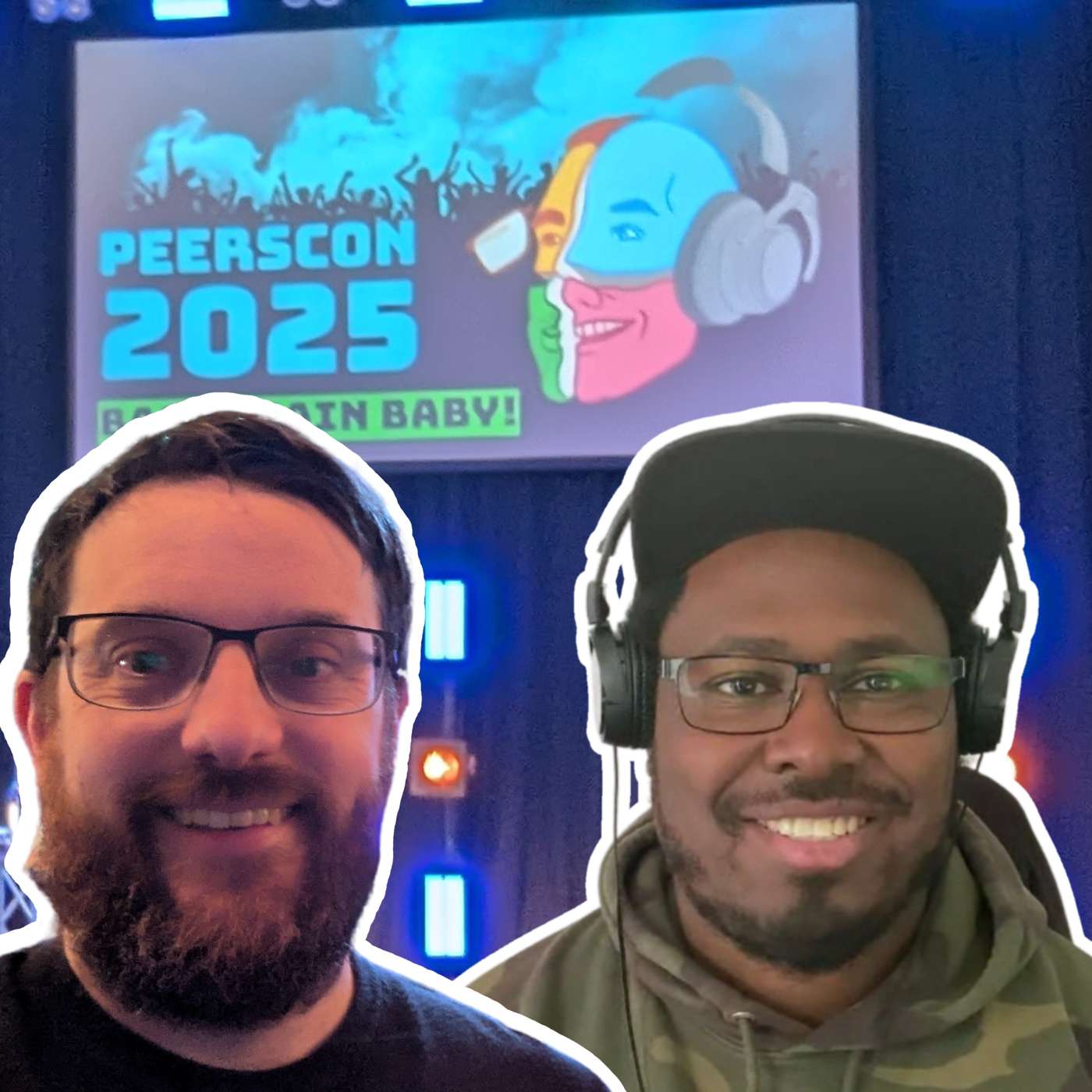
SummaryIn this episode, Vernon and Richard reflect on their experiences at the PeersCon conference, discussing the engaging keynote speakers, insightful workshops, and the overall atmosphere of the event. They share their thoughts on various talks, emphasizing the importance of communication, quality, and personal growth in the software testing industry. The conversation highlights the value of community and collaboration, as well as the significance of learning from both successes and failures in one's career. In this episode, Vernon and Richard reflect on their experiences at PeersCon, discussing memorable moments, workshops attended, and the importance of communication in the testing field. They delve into specific workshops like Pipeline and Risk Storming, and the game 'Defend the Indefensible', which encourages critical thinking and perspective-taking. The conversation also touches on feedback for future events, emphasizing the need for a balance between communication and testing topics, and the importance of recognizing the efforts of event organizers.Chapters00:00 Introduction and Conference Overview03:42 Reflections on PeersCon and Community Engagement06:35 Keynote Highlights and Speaker Insights09:30 Workshops and Learning Experiences12:29 Communication and Quality in Software Development15:27 Personal Growth and Career Development18:22 Closing Thoughts and Future Events25:06 Exploring Engaging Talks at the Conference27:57 Tom's Journey: From Manufacturing to Software Testing29:10 Linda's Comedy of Errors: A Unique Perspective on Automation32:43 The Reality of Coding: Enjoyment vs. Competence39:37 Networking and Unexpected Encounters at the Venue42:57 Workshops: Enhancing Technical Understanding and Communication Skills52:17 The Importance of Communication in IT and Life54:39 Feedback and Constructive Criticism57:36 Balancing Communication and Testing in Conferences01:00:29 Enhancing Event Experience and Sponsor Engagement01:04:34 Acknowledging Organizers and Their Contributions01:08:34 Sustaining Affordability and Accessibility in EventsLinks to come!
In this episode of the Vernon Richard Show, the hosts delve into the nuances of Continuous Delivery and Continuous Deployment, exploring how testing practices evolve in these environments. They discuss the skills required for testers, the importance of risk management, and the cultural shifts necessary for effective quality assurance. The conversation highlights the need for collaboration within teams and the role of testers as facilitators rather than gatekeepers. The episode concludes with reflections on the importance of understanding quality and risk in software development.Links to stuff we mentioned during the pod:01:35 - Quality TalksCheck out their awesome new website02:37 - The Agile Testing Days ConferenceOh! Their Call For Papers is open until the end of March. You should submit!02:42 - Johnny J. JonesJohnny's LinkedIn03:23 - Continuous Delivery & Continuous DeploymentWhat is Continuous Delivery?What is Continuous Deployment?03:31 - Abby BangserAbby's LinkedIn05:24 - Keith KlainKeith's blogKeith's podcastKeith's LinkedIn23:51 - Dan Ashby's famous post called "Continuous Testing" (featuring his famous diagram!)28:45 - James Bach's Test Jumper conceptJames' websiteJames' LinkedIn31:20 - All of these people should probably change their last names to "Bourne"40:18 - James ChristieJames' blogJames' body of work regarding the Post Office Scandal43:37 - Trunk-Based Thierry de PauwThierry's websiteThierry's LinkedIn48:30 - Jerry Weinberg's 2nd Law of Consulting from his book The Secrets of Consulting"No matter how it looks at first, it's always a people problem."Find more of Jerry's quotes on this pageJerry's Wikipedia page (his books are highly recommended)Bonus links to further study on the topic:What's the difference between Continuous Delivery and Continuous Deployment?The book Continuous Delivery, seminal work on the topic by Dave Farley & Jez HumbleSpeaking of Dave Farley...You can visit his website to find links to allTheThingsHere's his excellent YouTube channel Modern Software EngineeringHe's written a second book Modern Software EngineeringSpeaking of Jez Humble...He wrote the excellent book Accelerate with lead author Dr. Nicole Forsgren (<- all of Dr. Nicole's work is recommended reading at this point)And here's his websiteI asked ChatGPT for some resources and it gave me this list (proceed with caution just in case!). 00:00 - Intro01:06 - Merch tangent02:53 - Today's topic:What skills and behaviours does a Tester need, in order to be successful when they work in a CI/CD context?What does testing look like in a team using CI/CD?04:08 - ⚽️ Footy04:40 - Compare and contrast07:00 - What conversation(s) needs to happen before "pressing the button" and who needs to be involved in it?08:25 - Deployed Vs Released13:37 - Monitoring and tooling to enable CI/CD practices17:25 - Where/how do reviews fit into this?20:38 - Back to Shift Left!23:51 - Where does the testing happen?24:36 - The link between chef Gordon Ramsey and software testing25:45 - What are we reeeally talking about here?27:09 - How to reframe things when someone makes the polarising claim "We don't need Testers in CI/CD/DevOps teams"29:35 - Q: So how would I test differently if I were a Tester in a CI/CD team? A: Test like Jason Bourne.32:00 - The value of having a tool belt and using it regularly33:06 - How to catch a unicorn? How to unbundle testing skills35:40 - This all loops back to risks & culture37:03 - Where would it be a bad idea to use Continuous Deployment?40:45 - Q: So how would I test differently if I were a Tester in a CI/CD team? A: Test like a Circus Ringmaster.42:39 - Moar Shift Left: Real Devs build on Main48:48 - Modern Vs Traditional mindsets50:30 - Quality enters the chat...51:00 - The relationship between risk and quality52:47 - Testing Vs Quality Engineering55:50 - ⚽️ Footy

In this episode, Vernon and Richard celebrate their love for the software testing community, discussing the importance of people, tools, teaching, and the thrill of conferences. They reflect on personal growth, the challenges of production issues, and the joy of mentoring others. The conversation emphasizes the connections made within the industry and the shared experiences that enrich their careers.Links to stuff we mentioned during the pod:10:28 - SeleniumThe Selenium websiteThe BiDi spec10:44 - Jason & SimonJason's LinkedInSimon's LinkedIn13:17 - James ThomasHere's an example of what I meanAnd another!Aaaaaand another!27:02 - The PEBCAK error27:28 Conferences27:58 - PeersCon 202528:17 - Agile Testing Days 202528:29 - Let's Test SAPlease DM if you can commit to going and/or know of companies that would be willing to sponsor!BONUS - The legendary Chris Kenst maintains Software Testing Conferences, which has a list of allTheConferences29:33 - Martin HynieMartin's newsletterMartin's LinkedIn00:00 - Intro01:11 - Is it our birthday yet?01:52 - The Forced Socio-Economic Day episode02:20 - What do we love about our careers?03:07 - We love PEOPLE04:39 - Different kids of friendship06:08 - Making a huge impact on people with tiny interactions08:18 - The benefit of being tool aware10:10 - We love TOOLS10:20 - Rich's favourite tool12:03 - Vern's favourite tool15:40 - We love the VARIETY18:21 - We love TEACHING19:58 - What does the balance look like between teaching, mentoring, and coaching in Rich's current role22:33 - We love CHALLENGE23:51 - Systems thinking and understanding how things work27:28 - We love CONFERENCES35:35 - Mutual appreciation ❤️36:28 - The Friendly Tester is Dead. Long Live Richard Bradshaw!
In this conversation, Richard and Vernon delve into the evolving landscape of AI, particularly focusing on the concept of agentic AI. They discuss personal updates, including their health and fitness journeys, before transitioning into a detailed exploration of AI technologies. Richard shares his recent experiences with AI training and projects, emphasizing the differences between traditional generative AI and agentic AI.The discussion highlights the importance of goals, tasks, and tool awareness in AI, drawing parallels to software testing and the dynamics of generalists versus specialists in the tech industry. The conversation concludes with reflections on the implications of these technologies for the future. In this conversation, Vernon and Richard explore the evolving landscape of AI, particularly focusing on agentic AI and its implications for testing and quality assurance.They discuss the importance of defining clear goals and expected outcomes for AI tasks, the need for quality characteristics in AI outputs, and the critical role of human oversight in AI decision-making. The conversation also touches on iterative learning, exploratory testing, and the future of AI in the testing domain, emphasizing the necessity for testers to adapt and enhance their skills in this rapidly changing environment.Links to stuff we mentioned during the pod:02:40 - Ben KellyBen's LinkedInBen's IMDb06:38 - Martin Hynie's video explaining Agentic AIBe sure to check out the resources he shared in the comments too. Goodness gracious 🎯12:19 - CrewAI the tool Rich was experimenting with13:27 - And for funsies we asked ChatGPT the same question17:52 - Jason ArbonJason's websiteJason's LinkedIn23:23 - Persona-based testing24:11 - Context-driven testing01:08:43 - Other folks & materials you can learn fromThe deeplearning.ai websiteTariq KingHere's what Perplexity came up with!His workshop: An Introduction to AI-Driven Test AutomationHis presentation: Integrating GenAI for Testing into the Software LifecycleTariq's LinkedInMelissa EadenMel's newsletterThe issue called is "A Fable about GenAI" is excellentMel's LinkedInMark WinteringhamMark's websiteMark's GenAI bookMark's LinkedInMartin HynieMartin's newsletterThe series "So You Just Got Assigned Your First GenAI Project" is goldenMartin's LinkedInGo to his profile. Find the "Activity" section. Use the "Videos" link/button to filter his posts. Watch the videos. Thank me later.Bill MatthewsBill's LinkedIn00:00 - Intro01:14 - Welcome04:02 - Rich's adventures learning about AI05:24 - Rich goes down the Agentic AI rabbit hole07:00 - GenAI vs Agentic AI12:45 - Understanding Agentic AI vs. Traditional AI13:27 - What's the difference between the term "Agent" and "Agentic"?15:20 - How would Rich describe or categorise a chatbot?16:15 - What makes something agentic then?17:52 - Jason helps Rich understand what to expect from his exploration18:51 - What's the relationship between goals and tasks?20:06 - Rich explains what makes this so interesting for him and got him excited26:12 - Empowering Agents with the Right Tools27:47 - Understanding Tasks vs. Goals28:45 - Breaking Down Tasks for Efficiency29:44 - How much agency do agents have?31:38 - Task Descriptions and Expected Outcomes33:03 - Teams of agents vs teams of people and specialists vs generalists35:48 - How does an agent decide what to do next and how does it know it has completed the task?36:40 - Defining Quality in Agent Outputs38:15 - MOAR testing concepts that have parallels with Rich's exploration40:28 - The consequences of not being accurate enough with your backstory, expected output, tasks, etc43:34 - What happens when agenticai is asked to achieve the same goal without changing anything about the backstory, expected output, tasks, etc?45:40 - Challenges of Iteration and Learning46:47 - What are max iterations and what does that remind Rich of?47:40 - Vern wonders how important semantics is going to be and how Testers can contribute to this work49:42 - Rich riffs on exploratory testing51:02 - Exploratory Testing and Agentic Learning. What does the Tester's story look like in the context of an agentic system from the agent's perspective?54:15 - Exploring Autonomy in AI Systems56:57 - Evaluating AI Outputs and Task Design58:21 - What happens if/when the context is left blank in these agentic systems?01:00:49 - Soooo where do the humans fit in if agentic systems can doAllTheThings?01:02:37 - Wrap up: Take 1 - Designing small targeted tests vs designing small targeted tasks01:04:46 - Wrap up: Take 2 - Agents delegating tasks to other agents. Er... WTF?!01:06:00 - Wrap up: Take 3 - How is Rich feeling about AI & AI tools?01:09:45 - Wrap up: Take 4 - Testers ASSEMBLE! How we're going to contribute in a world of AI
In this episode of the Vernon Richards show, the hosts discuss their goals for the new year, reflecting on the past year and sharing strategies for achieving personal and professional aspirations. They emphasize the importance of journaling, creating structured routines, and building accountability through community support. The conversation also touches on the significance of intentional content consumption and the benefits of sharing progress publicly. Overall, the episode serves as a motivational guide for listeners looking to set and achieve their own goals in 2025.Links to stuff we mentioned during the pod:05:35 - The Yearly Review by Dickie Bush & Nicolas ColeThis is an updated version of the one Vernon discussed in the episode. Win!07:52 - Some helpful journalling prompts from Dickie08:18 - The workshop Vernon mentioned is called The Productivity Spark 2025It was a free to attend online workshop BUT... It looks like the link is down 😞. Vernon suspects the free workshop will be run quarterly, so keep your eyes and ears open for the next one. In the meantime, here are some other helpful resources from Ali.Ali's websiteAli's free stuffAli's bookAli's YouTube channelAli's Productivity course/community09:49 - The CountrPT app by Ash Coleman Hynie12:08 - Ilari Henrik AegerterIlari's LinkedIn17:03 - Elizabeth ZagrobaSign-up for the FroGS peer conference that Elizabeth organises (with help from her pals) because it's awesome!Elizabeth's blogElizabeth's LinkedIn26:00 - Ben KellyBen's LinkedIn28:48 - Toby SinclairToby's websiteToby's LinkedIn34:55 - Daniel PriestlyDaniel's YouTube35:14 - John CutlerJohn's SubstackJohn's LinkedIn36:30 - Martin HynieMartin's LinkedIn36:49 - Melissa EadenMel's SubstackMelissa's LinkedIn41:25 - The DOSE EffectThe bookA conversation on the topic between Ali Abdaal & TJ Power the book's author58:05 - Some references for the internal board of directors and invisible council concept from Perplexity01:00:46 - The System Seeing Challenge by Ruth MalanRuth's websiteThe guide book for A Month of System Seeing00:00 - Intro: New Year, New Goals01:09 - Welcome01:33 - Today's theme: Achieving our goals03:29 - How are we approaching goal setting and achieving goals?05:35 - Vernon describes the Yearly Review process he used07:52 - Journalling as a means to remember what happened throughout the year09:33 - Where else would journalling be useful?11:20 - Rich talks about notebooks and how he uses writing to achieve his goals and remember his wins12:58 - Rich's goals for 202515:30 - Timeblocking FTW!16:39 - Starting small18:23 - Vernon's goals for 202519:26 - Richard's reading goals and his library24:15 - How to stay accountable: Building in public & Accountability buddies31:34 - How to stay accountable: Bullet journal34:21 - Vern shares the concept of "Look at me" vs "Look at this" content39:10 - Rich realises why he hasn't done as much signal boosting as he used to41:25 - How to stay accountable: Managing dopamine44:55 - Managing focus by removing distraction47:49 - Intention and finding a balance between resting vs procrastination and striving vs obsession54:10 - How to stack the odds of success i
00:00 Introduction02:00 Happy to be Employed05:00 Vernon Wrote a Book08:00 Talking at a Developer Conferences16:20 PeersCon20:24 Our Podcast21:50 Agile Testing Days Experience22:20 Our Podcast again28:30 Bluesky32:30 Vernon’s New Newsletter41:00 Generalist Specialist and AI51:00 Discipline and Consistency54:00 Vernon’s Personal Reflection55:40 Richard’s Personal ReflectionLinks to stuff that we mentioned:05:00 - Mark’s and Nicola’s Book - The Software Tester’s Journey05:01 - Nicola Lindgren Bluesky Profile08:00 - Richard’s talk at Oredev08:00 - Øredev conference - https://oredev.org/11:30 - Abby Bangser - Bluesky Profile15:30 - Gitte Klitgaard - Bluesky Profile16:20 - PeersCon - https://testingpeerscon.com/18:24 - Beth Probert - https://www.linkedin.com/in/bethprobert/18:48 - Testing Peers Podcast21:20 - Our Agile Testing Days Podcast episode21:46 - Agile Testing Days conference29:00 - Tobias Geyer Bluesky32:30 - Jit Gosai Bluesky32:30 - JIt Gosai Quality Engineering Newsletter
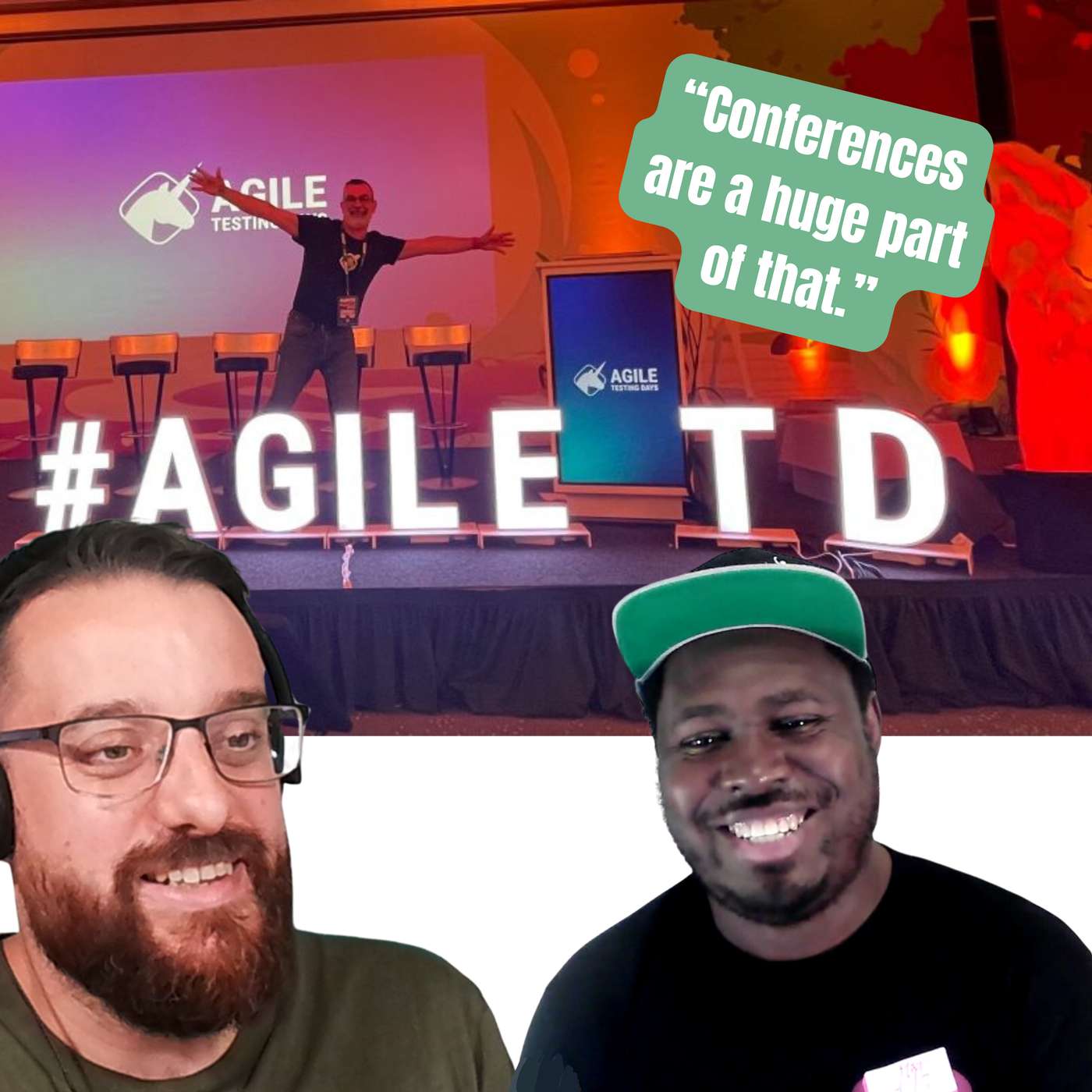
This conversation captures the vibrant atmosphere of Agile Testing Days in Potsdam, highlighting the importance of community, targeted automated testing, and the exploration of tester identity. The hosts discuss their experiences at the conference, including workshops, networking opportunities, and a unique musical performance that showcased the talents of attendees. They delve into the significance of understanding tester identity and the symbols associated with it, emphasizing the need for connection and belonging within the testing community. This conversation at Agile Testing Days explores various themes including the experience of performing in a musical, insights from keynote speakers on technical coaching, the importance of documenting achievements for career advancement, and the evolving identity of professionals in agile environments. The discussion emphasizes the value of networking at conferences and the need for continuous learning and adaptation in one's career. [AI]Links to stuff we mentioned during the pod:01:00 - Agile Testing Days 2024 (ATD)ATD's website02:00 - 🤠 Señor Performo aka Leandro Melendez (who Vernon definitely did NOT call Leonardo 😅😇🤥🥷🐢🤦🏾♂️)Señor Performo's websiteSeñor Performo's English YouTube channel 🇬🇧Señor Performo's Español YouTube channel 🇪🇸Señor Performo's English podcast channel 🇬🇧Señor Performo's Español podcast channel 🇪🇸Señor Performo's bookSeñor Performo's LinkedInSeñor Performo's X03:00 - Richard's tutorial Targeted Automated Tests04:35 - Mark WinteringhamMark's websiteMark's books (probably why he's so slick with words!)10:07 - Lisa Crispin & João ProençaLisa's website and LinkedIn pagesLisa's BlueskyJoão's LinkedIn pageJoão's Bluesky10:17 - José "Pepe" Díaz & Uwe GelfertJosé's websiteJosé's BlueskyJosé's LinkedInUwe's LinkedIn11:25 - Alex(andra) SchladebeckAlex's websiteAlex's LinkedIn13:05 - The castSamuel "Robot Overlord" NitscheLena "Test Management Saviour" Pejgan NyströmRachel "Pitch Perfect" KiblerVeerle "Light Sabre Extraordinaire" VerhagenTamara "Putting the "Rock Star" in Rock Star Developer" JostenCallum "The stage is my happy place" Akehurst-RyanBastian "Best Bad Boss Ever" KnerrTobias "Chill Samuel I've got this" GeyerDid you order a light sabre duel with your musical? You did? Well here you go!19:32 - Leandro's workshop Ramping up modern performance21:53 - Jenna CharltonThe description of Jenna's ATD keynote Testing, Identity, and SymbolsJenna's LinkedInJenna's BlueskyMartin HynieMartin describing the wider impact of his talk, including a link to the talk itselfMartin's LinkedIn22:57 - Ashley HunsbergerAshley's LinkedIn39:05 - Bart KnaackBart's LinkedIn42:21 - Emily BacheThe description of Emily's ATD keynote Technical coaching development teams using the Samman methodEmily's YouTubeThe Samman Society websiteThe Hartman Proficiency Taxonomy by Marian HartmanBloom's taxonomy for cognitive thinkingPaul Holland another ATD contributor of allTheThings and Rubix Cube legendEmily's LinkedIn47:16 - Ash "Data is dope" HynieAsh's LinkedInCountrPT's websiteCountrPT's LinkedInPatrick Prill (who aside from being a generalist, also gives THE BEST hugs around, trust me on this folks!)Rita AvotaBen DowenJoao Proenca01:00 - Intro LIVE from Agile Testing Days!03:00 - Why are we here?10:52 - The importance of networking and conferences12:17 - What kind of event is ATD?13:05 - The ATD Musical (you read that correctly)18:29 - Guest: Señor Performo discussing who he is and performance testing21:53 - Guest: Jenna Charlton explaining the relationship between testing, identity, and symbols36:15 - Guest: Basti aka Bastian "Best Bad Boss Ever" Knerr talking about being part of the musical39:05 - Guest: Baart Knack talking about his escapades at ATD over the years and hi...
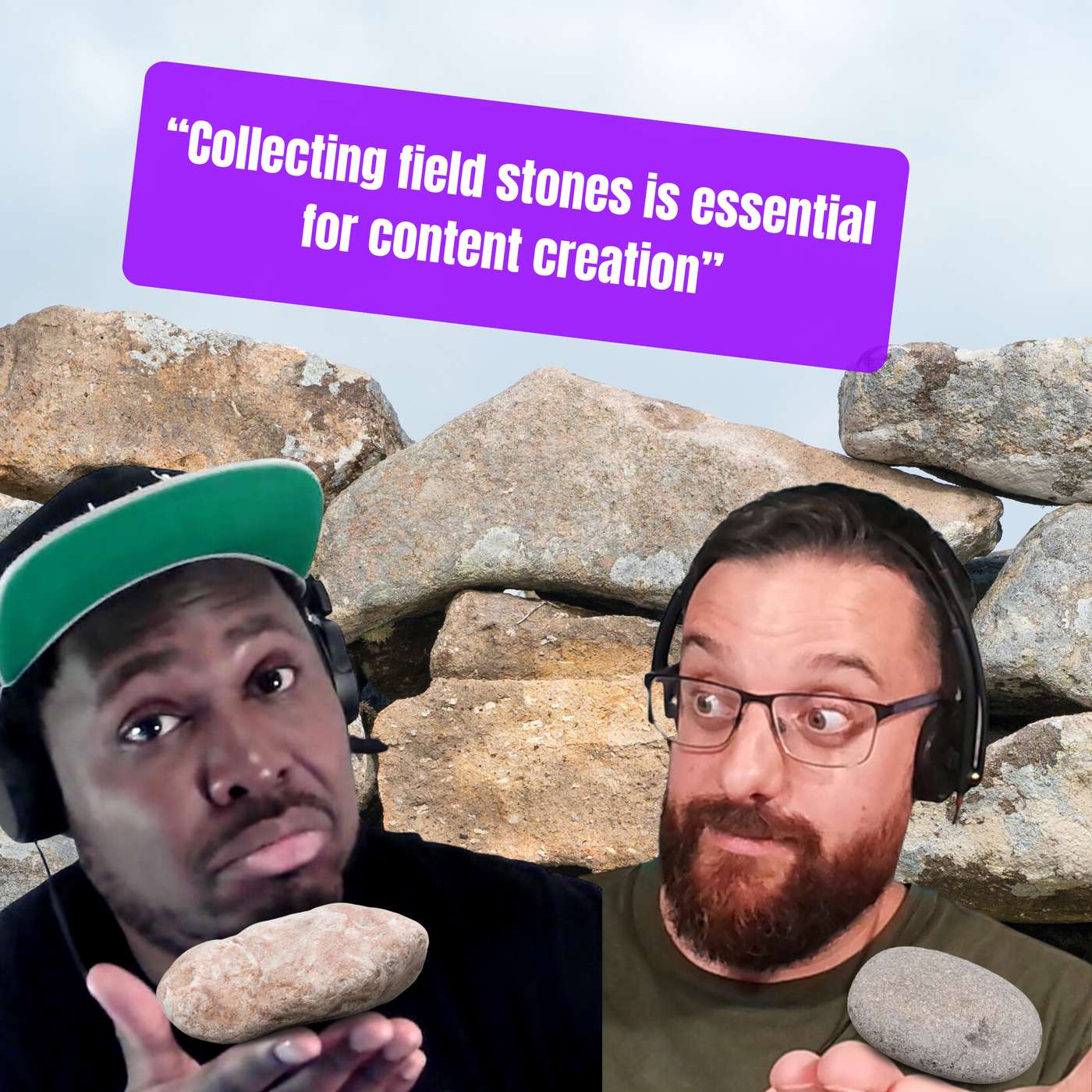
#contentcreation #softwaretesting In this conversation, Richard Bradshaw and Vernon discuss various themes including veganism, personal achievements, the writing process, and the importance of collecting ideas for content creation. They explore the significance of networking within the software testing community and reflect on the dynamics of social media, particularly Twitter and LinkedIn. The conversation also highlights the value of storytelling in professional settings and shares insights from a recent conference experience. In this conversation, Richard Bradshaw shares his experiences from the Husteth Conference, including the challenges and triumphs of being a closing keynote speaker. He discusses the unexpected power cut during his talk, the importance of engaging Q&A sessions, and the value of networking and building connections at conferences. The conversation emphasizes the significance of community, sharing insights, and the overall positive experience of attending events.00:00 Introduction and Veganism Discussion02:58 Celebrating Achievements and Book Launch06:00 Writing Process and Content Creation08:54 Collecting Ideas: The Fieldstone Method11:55 Building in Public and Sharing Experiences15:04 Networking and Community Engagement17:58 Reflections on Social Media Dynamics21:00 The Importance of Collecting Stories23:55 Conference Experience and Innovations26:53 Q&A Dynamics at Events32:25 Reflections on the Husteth Conference34:09 The Power Cut Incident39:43 The Importance of Q&A Sessions45:21 Closing Keynote Experience49:42 Traveling and Networking at Conferences52:22 Conversations and Connections at Events57:11 Final Thoughts and Takeaways

Comments

Download from Google Play

Download from App Store
 United States