


Bad At My Religion
Subscribed: 1Played: 6
Subscribe

© 2024-2025 Bad At My Religion Podcast
Description
In a world full of beautiful spirituality, why do so many people struggle to live their faith -no matter what it is- authentically?
Join host Josh Galt as he interviews religious and philosophical leaders from around the globe to explore the core principles of their beliefs and how individuals can reconnect with their faith in today’s society.
It’s important to note, the B.A.M.R. podcast is NOT an attack on religion—it’s a search for solutions, uncovering practical ways to live a more meaningful, spiritually grounded life.
---
Josh Galt is a former extreme athlete who has traveled to more than 70 countries, seeking to understand the people and belief systems in every region he has visited and lived in.
After being raised by Christian missionaries and having incredibly profound experiences as a child in Africa, Asia, and Eastern Europe along with Native American reservations, he left the faith as an adult and spent decades seeking to understand God in every corner of the planet….and universe!
Join host Josh Galt as he interviews religious and philosophical leaders from around the globe to explore the core principles of their beliefs and how individuals can reconnect with their faith in today’s society.
It’s important to note, the B.A.M.R. podcast is NOT an attack on religion—it’s a search for solutions, uncovering practical ways to live a more meaningful, spiritually grounded life.
---
Josh Galt is a former extreme athlete who has traveled to more than 70 countries, seeking to understand the people and belief systems in every region he has visited and lived in.
After being raised by Christian missionaries and having incredibly profound experiences as a child in Africa, Asia, and Eastern Europe along with Native American reservations, he left the faith as an adult and spent decades seeking to understand God in every corner of the planet….and universe!
18 Episodes
Reverse

Father Augustine Wetta has been a Benedictine monk at Saint Louis Abbey for 30 years. He teaches high school, coaches rugby, turns the Psalms into rap, and wrote Humility Rules, which has sold over 100,000 copies. He met his first monk on a bus in Rome while fending off a pickpocket, and he once told his abbot he was a terrible monk. The abbot agreed.
Josh and Father Augustine talk about going all in on a faith when your vows leave no exit: Saint Benedict's way to end an argument, why love can grow out of commitment, and why you will marry the wrong person. Then they disagree about AI. Josh builds with it every day and sees a crisis of purpose coming fast. Father Augustine uses it to write rap songs, doubts anyone can predict the future, and says no machine can say Mass or become flesh.
They land on the practical: shame, honor and virtue signaling, humility as truthful self-knowledge, why the closer you get to God the smaller you feel, and one thing anyone can try for the next 30 days.
About Father Augustine Wetta: Father Augustine Wetta is a monk of Saint Louis Abbey in Saint Louis, Missouri, where he teaches high school and coaches rugby. He has degrees from Oxford University, Rice University, and Middlebury College. Father Augustine grew up on a tropical island, where he learned to surf and was nearly eaten by a shark.
Father Augustine Wetta: https://www.augustinewetta.comHis psalm raps: https://distrokid.com/hyperfollow/corvuschristi/ran
Chapters
(00:00:00) - Intro(00:01:59) - A Benedictine monk since 1996(00:03:30) - The monk with no pockets(00:05:26) - Stuck in an elevator, and it was perfect(00:07:13) - A family that argued about God(00:08:15) - Why the Benedictines have lasted(00:10:10) - How monks end an argument(00:14:15) - Bad at being a monk(00:15:11) - No exit: vows, marriage and commitment(00:20:47) - You will marry the wrong person(00:23:02) - AI and the Psalms as gangster raps(00:28:30) - A dangerous dance with the beast?(00:30:45) - Why a robot can never say Mass(00:37:36) - Building our own gods(00:38:53) - Ouija boards and demons(00:43:34) - Our times are too certain(00:50:13) - Entertainment vs the sacred(00:56:51) - Cool vs beautiful(00:59:48) - Shame, honor and virtue signaling(01:09:33) - Humility as truthful self-knowledge(01:14:12) - Kill the ego? God doesn't create junk(01:18:16) - The closer to God, the smaller you feel(01:20:13) - Be a good monk today, leave tomorrow(01:23:24) - One practice for 30 days

Michael Hirtzel is a Civil War historian, documentary filmmaker (Calcutta is My Mother), author of The Papa Bull, and a PGA apprentice who teaches golf in Florida. He was raised in the Assemblies of God, moved through the evangelical world, landed in Calvinism, and is now seriously considering becoming Catholic. He and Josh have known each other for years, and this is the conversation they kept having offline.
It starts with a confession: the older Michael gets, the less he expects good things to happen. From there they dig into where the shame in their shared upbringing came from, why Romans 7 has to be read into Romans 8, why churches are afraid to preach grace, and the part nobody warns you about: when grace finally took the guilt away, Michael's drive went with it and he felt dead inside. Josh presses on purpose instead of performance, on who Jesus actually spent his time with, and on why the people most capable of empathy carry shame the heaviest.
The second half is about sacredness: a baptism party with no mention of God, home groups that never talk about Jesus, worship leaders pulling levers, and what draws Michael to a Latin Mass and to prayers written eight hundred years ago. They end on fasting, and a promise to record the next one four days into a fast.
About Michael Hirtzel: Michael holds his Masters in History with a focus on the Civil War and still teaches periodically as a professor of History. He also directed and produced the acclaimed documentary Calcutta is My Mother and wrote the self-help book The Papa Bull. Golf has also been a lifelong passion for Michael and he is a PGA Apprentice. He currently works as the Director of Instruction at GOLFTEC in Carrollwood, FL.
Chapters
(00:00:00) - Intro(00:00:33) - The older I get, the less I expect good things(00:03:46) - Dopamine, distraction and fake community(00:06:31) - So what is the meaning?(00:09:18) - Where the shame comes from: Calvinism and Arminianism(00:11:43) - The Assemblies of God's fundamental truths(00:13:21) - Romans 7 into Romans 8(00:18:25) - Shame is used to control(00:22:07) - If God is omnipresent, nothing can separate us(00:23:11) - Universalism, the elect and predestination(00:26:53) - Reading the gospel through grace, and feeling dead(00:33:47) - Purpose instead of performance(00:37:57) - Who did Jesus hang out with?(00:41:21) - Is personality really who we are?(00:42:45) - Why shame hits the empathetic hardest(00:47:15) - I believe; help my unbelief(00:49:19) - Where does the separation come from?(00:53:14) - A baptism party with no mention of God(00:55:47) - Religion woven into culture(00:58:08) - Home groups: shooting the breeze or real fellowship(01:04:42) - Why Michael is drawn to Catholicism(01:08:37) - The Litany of Humility, prayers across centuries(01:12:56) - Sola scriptura and communing with the saints(01:19:56) - The danger of going through the motions(01:20:48) - Worship leaders and emotional manipulation(01:25:27) - Set and setting: sacredness in plant medicine and mass(01:29:50) - Why I dread going to church(01:33:46) - Lent, Hallow and fasting(01:38:03) - A fasting episode, and closing

Arpan Patel is a software engineer turned Vedantic seeker. He spent fifteen years in the United States, moved back to India, and now writes on the Upanishads and the Vijnana Bhairava Tantra. He grew up Hindu, kept asking questions nobody around him wanted to answer, and landed somewhere most people don't expect a Hindu to land: the scriptures never define God, there is nothing after this life, and that is exactly why spirituality matters.Josh comes at it from the other side. Raised fundamentalist Christian, he believes a divine intelligence sits in every atom and that death is a transition, not an ending. Over two recording sessions they press on each other's frameworks: whether religion should evolve, why ritual without meaning is worthless, why the Buddha gave two opposite answers to "does God exist?", whether our natural state is joy or sadness, and what the point of being spiritual is if this life is all there is.They end up closer than either expected. Arpan calls it nothingness, Josh calls it God, and both agree the work is the same: go inward, be honest about what you find, and do the thing you love while you are here. Arpan's one practice for the next 30 days: every night, go to bed assuming you will not wake up tomorrow.About Arpan Patel: Software engineer by profession, gardener by passion, and philosopher at heart. A sincere seeker exploring spirituality and philosophy, committed to uncovering the deeper truths behind misconceptions within Hinduism and other religious beliefs.YouTube: Arpan Patel - Upanishad Journey: https://www.youtube.com/@ArpanPatel-UpanishadJourneyChapters:0:00 Intro0:38 From software engineer to Vedantic seeker3:04 Raised Hindu in India, questioning in the US6:35 Religion as a stepping stone to spirituality11:20 Should religion evolve?13:52 The trad trend and ritual without meaning20:10 Why we avoid looking inward23:42 Religion and spirituality have nothing to do with each other25:10 No definition of God in the Hindu scriptures31:15 If God appeared tomorrow, what would change?32:21 Why the Buddha gave two opposite answers36:42 Death, cremation and whether anything continues38:12 Purpose or pure coincidence?44:49 Thousands of gods, each one a symbol48:37 Consciousness, the Big Bang and the limits of knowing53:33 Is our natural state joy or sadness?53:53 Part two: why our default state is sadness58:26 Do monks and sadhus have it right?1:00:10 Putting spirituality first in a material world1:07:05 If this life is all there is, why be spiritual?1:29:19 Nothingness, the soul and reincarnation1:37:01 Do trees have a spirit?1:39:39 I call it nothingness, you call it God1:44:42 No afterlife as the strongest motivator1:50:02 The purest definition of spirituality1:55:09 One practice for the next 30 days1:57:59 Individualism, family and crabs in a bucket2:07:35 What to read, and closing thoughts
Chapters
(00:00:00) - Intro(00:00:38) - From software engineer to Vedantic seeker(00:03:04) - Raised Hindu in India, questioning in the US(00:06:35) - Religion as a stepping stone to spirituality(00:11:20) - Should religion evolve?(00:13:52) - The trad trend and ritual without meaning(00:20:10) - Why we avoid looking inward(00:23:42) - Religion and spirituality have nothing to do with each other(00:25:10) - No definition of God in the Hindu scriptures(00:31:15) - If God appeared tomorrow, what would change?(00:32:21) - Why the Buddha gave two opposite answers(00:36:42) - Death, cremation and whether anything continues(00:38:12) - Purpose or pure coincidence?(00:44:49) - Thousands of gods, each one a symbol(00:48:37) - Consciousness, the Big Bang and the limits of knowing(00:53:33) - Is our natural state joy or sadness?(00:53:53) - Part two: why our default state is sadness(00:58:26) - Do monks and sadhus have it right?(01:00:10) - Putting spirituality first in a material world(01:07:05) - If this life is all there is, why be spiritual?(01:29:19) - Nothingness, the soul and reincarnation(01:37:01) - Do trees have a spirit?(01:39:39) - I call it nothingness, you call it God(01:44:42) - No afterlife as the strongest motivator(01:50:02) - The purest definition of spirituality(01:55:09) - One practice for the next 30 days(01:57:59) - Individualism, family and crabs in a bucket(02:07:35) - What to read, and closing thoughts

A noble death is ACCESS to life
That’s the real reason why suicide backfires
Humans are on a spiritual loosh farm, a prison planet being milked for negative energies
The only way out is to re-connect with the Divine directly and transcend the constraints of this realm
That’s why Jesus was able to perform miracles and speak so simply and clearly a child could understand it - he understood the way to the source is within
For whatever reason each of us is here -those of us who are genuinely souled, not NPC’s- there is free will only to an extent
The journey is set and determined by fate and/or our willingness to endure pain in order to grow spiritually
We have to be wiped of conscious understanding or the journey and the work wouldn’t be real - after all why would you ever be afraid if you know the dog is on a chain and can only bark, but never reach you?
The funny thing to me is that Christians will accept the story of Job, God making a bet with the Devil in narcissistic arrogance and destroying many lives just to make a point about his worshippers…
But those same people will be vehemently angry and scoff at the idea of a spiritual loosh farm where demonic entities are allowed to feed on our fear, and it is up to us individually to transcend and “win” the game by denying them those lower frequency emotions
The despondency, the grief and shame and fear and anger that are present in suicide loses the game to the dark spiritual machine.
Maybe that means you have to play again, maybe that means your soul becomes one of them, there are many theories - I have zero interest in finding out because my desire is to learn grow and evolve toward Truth and enlightenment
If the story is already written then my only role is to learn MY lessons in order to develop
and eventually I’ll be granted the open doorway to LIFE
which is accessed through the transition that is death
Only a soul at peace passes through that gateway unscathed
Which means my soul earthly aim must be targeting peace, and joy, and love
Whether as a monk or as a political pundit, as a rich man or as a garbageman,
the end game is identical
EARN LIFE
Which means live in such a way that material bodily death will reward your spirit’s integrity for the higher purpose
By allowing you to reconnect with source,
Life itself
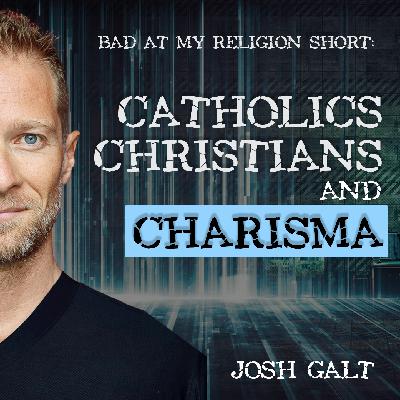
When it's a charismatic variation of the religious framework, if you close your eyes it's nearly impossible to tell if you are in a pentecostal Christian gathering or a charismatic Catholic one...
Yet both sides would be staunchly against the 5% differences in their house of worship decor and the theology.
Is that truly of "God", is one side really right and the other really wrong?
Or is the truth found merely within, through one's own direct connection with the Divine?

Comments

Download from Google Play

Download from App Store
 United States