


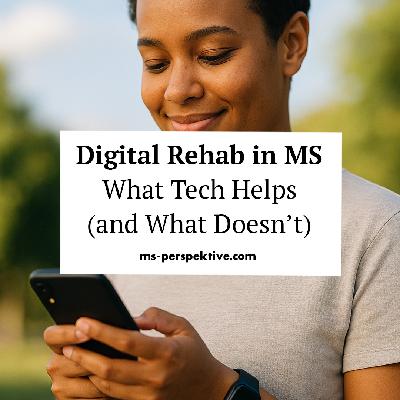
#142: Digital rehab in MS – what new technology can (and can't) do for you. An ECTRIMS 2025 Special
Description
- Maybe you already use your phone, a wearable, or one of the many MS-related apps to track your symptoms or support your daily routines. But when it comes to rehabilitation, the real question is: which digital tools actually help — and which ones are just noise?
In this ECTRIMS session, researchers from around the world explored how technology can enhance rehabilitation for people with MS. Their message was clear: digital tools can open new doors, but only when they are designed well, grounded in science, and truly support your everyday life.
You can read through the complete article here: https://ms-perspektive.de/EN/142-digital-rehab
In this episode, you'll hear about:
1. Alon Kalron – Israel
How digital technologies—from smartphones to sensor-based rehab tools—can extend what your rehab team can see and support between appointments.
2. Andrea Tacchino – Italy
Why digital outcome measurements matter, how sensors can capture real-life changes, and what it takes to turn raw data into meaningful digital biomarkers.
3. Gabriele Perachiotti – Italy
How high-intensity, task-oriented circuit training can improve balance, fatigue, and quality of life—even in people with severe mobility limitations—and how a simple home-based telerehab setup helps maintain progress.
4. Andrea Baroni – Italy
How machine-learning models can predict rehab outcomes and why your starting functional level is the strongest predictor of future improvement.
5. Diogo Haddad Santos – Brazil
Why "strange" visual symptoms in MS often reflect real, measurable eye-movement changes—and how portable eye-tracking may become a new digital biomarker.
6. Katrin Parmar – Switzerland
Which balance tests reflect high-tech lab measurements, and why static and dynamic balance need to be tested separately.
Topics we explore:
-
The promise and limits of MS apps & wearable sensors
-
Digital biomarkers for gait, balance, fatigue, and vision
-
Task-oriented training and telerehabilitation
-
Predicting rehab outcomes using machine learning
-
Eye-tracking and the hidden world of visual symptoms
-
Static vs. dynamic balance: why both matter
-
How to decide which digital tools are worth your time
What you'll take away:
-
Not every digital tool is useful — evidence and usability matter.
-
Sensors can capture changes that clinic visits miss.
-
Even with higher disability, meaningful rehab gains are possible.
-
Your starting function strongly shapes your rehab journey.
-
Subjective symptoms (like visual strain) deserve objective investigation.
-
The future of MS rehab is a blend of clinic + lab + digital.
---
See you soon and try to make the best out of your life,
Nele
For more information and positive thoughts, subscribe to my newsletter for free.
Click here for an overview of all podcast episodes published so far.













 United States
