


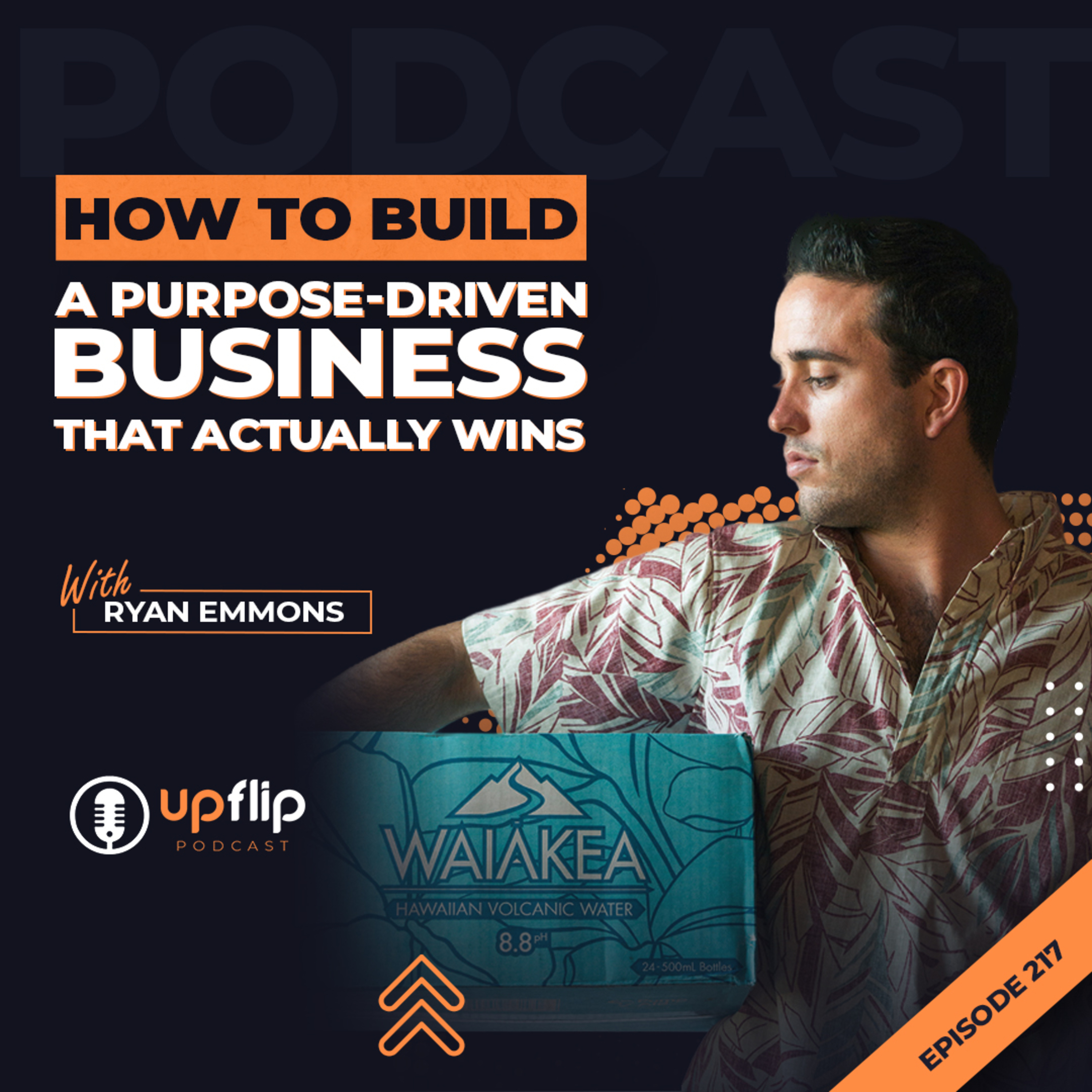
217. How To Build a Purpose Driven Business That Actually Wins
Description
Ryan Emmons entered one of the most competitive and criticized industries on the planet—bottled water—with little more than a U-Haul and a vision. Going up against billion-dollar giants like Fiji and Smartwater, Ryan didn't just build another beverage brand; he built a mission. By betting everything on a "triple bottom line" philosophy—People, Planet, Profit—he proved that a purpose-driven company could disrupt a saturated market and command consumer loyalty in a way the big corporations couldn't.
In this interview, Ryan Emmons sits down with Ryan Atkinson to reveal how he scaled Waiakea from a local hustle into one of the fastest-growing premium water brands in the world. You’ll learn his scrappy "consignment" strategy for getting onto shelves without paying massive slotting fees, how to turn environmental sustainability into an economic advantage that lowers overhead, and why he believes naivety is an entrepreneur’s greatest asset.
Whether you are launching a CPG product or trying to differentiate your service in a crowded industry, this episode offers a masterclass in resilience and branding. Ryan breaks down exactly how to build a business that stands for something, keeps employees loyal, and generates massive growth without sacrificing your values. Tune in to discover why playing the long game is the ultimate competitive advantage
Takeaways:
- Build your business on a "triple bottom line" philosophy—People, Planet, Profit—from day one, as it is nearly impossible to authentically integrate deep purpose into a company's DNA after investors are involved.
- Leverage a purpose-driven mission to increase employee retention, as high-performing talent is more likely to stay and work harder when they can see the tangible impact of the company's social initiatives.
- Prove your product's sales velocity by starting with "mom and pop" shops on a consignment model before attempting to pitch major distributors or large retail chains.
- Avoid direct competition with billion-dollar CPG conglomerates by targeting specific retailers where you can secure equal shelf space without paying exorbitant slotting fees.
- Embrace manual self-distribution in the early stages—even if it requires renting U-Hauls and working overnight shifts—to maintain control over logistics and keep overhead low.
- Reframe environmental initiatives as efficiency strategies rather than just expenses, as reducing material usage, water waste, and energy often leads to significant margin gains.
- Justify a slight price premium by positioning your product as an "affordable luxury" that allows consumers to support a cause they believe in without breaking the bank.
- Protect your company's mission during scaling by legally incorporating as a Public Benefit Corporation (PBC), which enshrines your social and environmental standards into the corporate bylaws.
- Use your lack of industry experience as a strategic asset, as naivety allows you to be fearless and attempt innovations that industry veterans might deem impossible.
- Focus on resilience and building a legacy business you want to lead for decades, rather than chasing a quick "exit" or overnight success in the volatile CPG market.
Tags: Product Development, Retail Goods, Bottled Water, Business Scaling, Startup, Business Growth
Resources:
Grow your business today: https://links.upflip.com/the-business-startup-and-growth-blueprint-podcast
Connect with Ryan: https://www.linkedin.com/in/ryan-emmons-8709871b








 United States
