


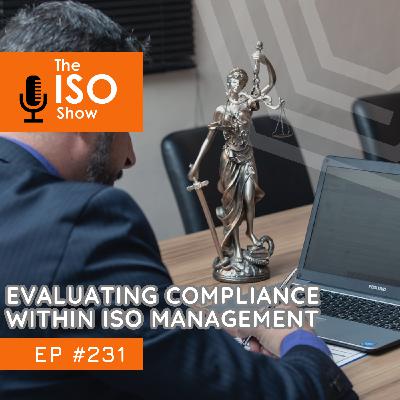
#231 Evaluating Compliance within ISO Management
Description
When stating ISO Management System 'compliance', that in reality means the conformance to ISO Standard requirements, compliance in ISO terminology actually refers to compliance with legal and other statutory regulations.
It may sound like semantics, but the difference is distinct for a reason, as you don't get a 'non-compliance' for not meeting requirements, rather you get a 'non-conformity'. When it comes to compliance with the law as required by ISO Standards, you need more than a Legal Register to prove compliance.
In this episode, Ian Battersby dives into what is meant by compliance in ISO, how this relates to legal and statutory requirements, and how businesses can effectively evaluate compliance.
You'll learn
· What is the difference between 'Compliance' and 'Conformity'?
· What are the different types of compliance requirements?
· How do Acts and Regulations work in tandem?
· Who enforces legal compliance requirements?
· Where do these requirements sit in ISO Standards?
· How do you prove compliance within ISO management?
· How do you evaluate effective compliance?
Resources
In this episode, we talk about:
[00:30 ] Upcoming webinar: If you'd like to learn more about the benefits of integrated management systems, feel free to register for our upcoming webinar here.
[01:30 ] Episode Summary – Ian Battersby discusses the topic of compliance within ISO Standards, and how you can effectively evaluate it within your Management System.
[02:30 ] What is the difference between 'Compliance' and 'Conformity'? It's a common misconception that you 'comply' with an ISO Standard, when in reality, you conform to an ISO Standard, hence why you can receive a 'non-conformity' in audits and not 'noncompliance'.
When we talk about compliance within ISO Management, this refers to compliance with the law, regulations and other statutory requirements, as this is a requirement within all ISO Standards.
[03:50 ] What are the different types of compliance requirements? There are many different types of law, Ian focuses on what is known as statute law legislation, as this is distinct from common law, case law and constitutional conventions.
Statute law legislation is clearly written and can be cited in something like a Legal Register, or Register of Compliance Obligations. There are different types of legislation that you'll need to document, including:
Primary Legislation: These are put in place by acts of UK Parliament and may have involvement from devolved administrations as well. Statutory compliance refers to compliance



















 United States
