


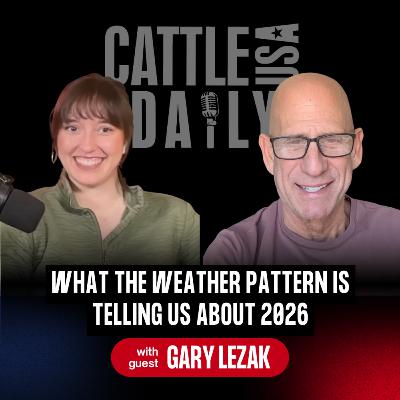
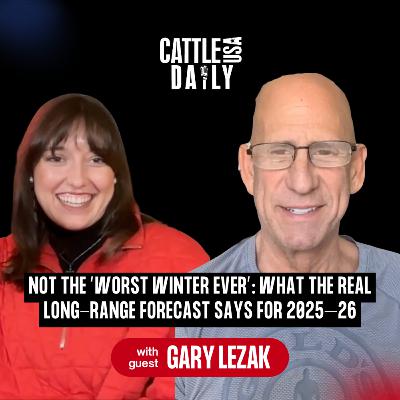
235: What the Weather Pattern Is Telling Us About 2026 with Gary Lezak
Description
Meteorologist Gary Lezak kicks off the new year by breaking down what the long-range weather pattern is already revealing about 2026. After chasing a major West Coast storm to Lake Tahoe, Gary explains why this year’s unusually long weather cycle matters, how anchor ridges and troughs are shaping snowfall, drought risk, and storm tracks, and what producers should be watching as we head toward spring and summer. The conversation covers California flooding, Rocky Mountain snow struggles, Plains moisture concerns, a possible major heat wave later this year, and a clear, plain-English refresher on how the LRC works and why it continues to outperform traditional forecasts.
Links
Weather 20/20 Dashboard Discount - https://www.weather2020.com/partner/cattle-usa
Substack - https://weather2020.substack.com/
The Global Predictor App - https://www.weather2020.com/global-predictor-mobile-app
Youtube -https://www.youtube.com/@Weather2020
Follow Gary on X - https://x.com/glezak
CattleUSA Insurance - https://info.cattleusainsurance.com/l/1102253/2025-06-04/288f5m
CattleUSA Website - https://www.cattleusa.com/
Facebook - https://www.facebook.com/cattleusamedia
Instagram - https://www.instagram.com/cattleusa.media/
Subscribe to our newsletter - https://www.cattleusadrive.com/
CattleUSA Media - https://www.cattleusamedia.com/
Lauren’s Instagram - https://www.instagram.com/_laurenmoylan/
Lauren’s Youtube - https://www.youtube.com/@Showboatmediaco
The Next Generation Podcast Website - https://www.thenextgenag.com/
Takeaways
• This year’s weather pattern is cycling much slower than last year, with a roughly 70–76 day cycle instead of a 40-day cycle.
• A major West Coast storm that hit California was predicted months in advance using the LRC and returned almost exactly on schedule.
• Anchor ridges near Colorado are suppressing snowfall in the Rockies, while anchor troughs are hammering the Northeast with repeated storms.
• California is likely to see additional strong storm systems over the next several weeks, with more flooding and heavy mountain snow possible.
• The Plains and Corn Belt face growing uncertainty around spring moisture and drought risk as storms weaken moving east.
• A significant heat wave signal is emerging for late July into early August, which could have major implications for crops, pasture, and livestock stress.
• Weather leading up to mid-May will be critical in determining how damaging that potential summer heat becomes.
• Snow squalls are short-lived but dangerous winter weather events that can create near-blizzard conditions in minutes.
• The LRC is built on repeating seasonal patterns, anchor ridges and troughs, and consistent cycling that lasts until the next fall reset.
• Understanding long-range weather risk early allows producers to plan ahead instead of reacting when problems hit.
Chapters
00:00 New Year, Lake Tahoe, and Chasing a Predicted Storm
02:01 Why This Year’s Weather Cycle Is Much Longer Than Last Year
04:12 Drought Concerns for the Plains and Corn Belt
06:43 California Storm Systems and Why They’re Intensifying
08:42 Ice Storm and Plains Winter Risk
10:26 Snow Squalls Explained and Why They’re Dangerous
11:21 What the LRC Is and How It Works
13:30 How the Pattern Predicts Heat, Floods, and Drought
14:52 The Three Most Impactful Weather Events of the Year
16:08 Preparing for 2026 Weather Risks
weather forecast, long-range weather, LRC weather pattern, drought outlook, heat wave risk, California storms, Plains weather, Midwest weather, snow squall, climate risk agriculture, farm weather planning, ranch weather risk, Weather 2020, Gary Lezak, anchor ridge, anchor trough, extreme weather planning, seasonal weather cycles
















 United States
