


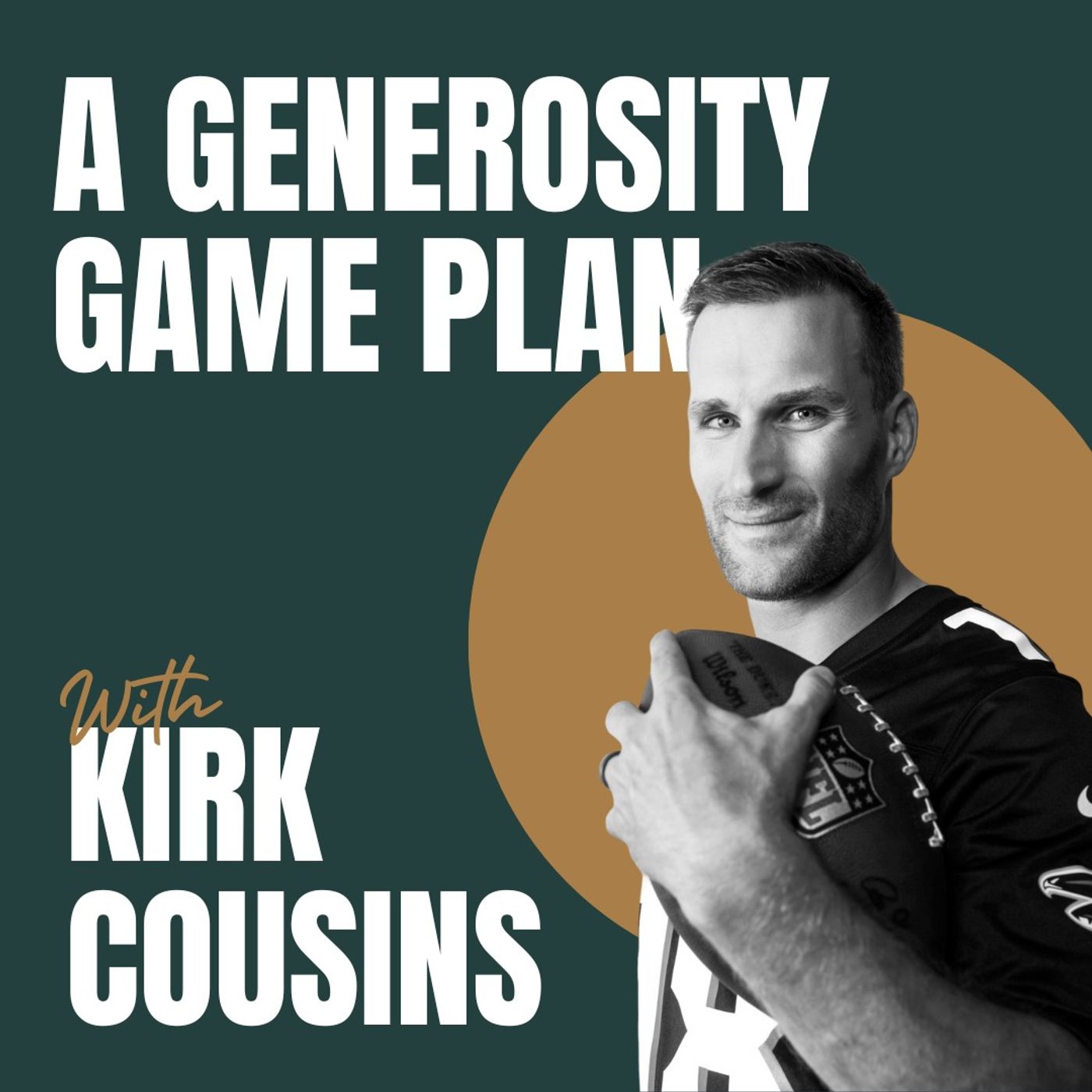
A Generosity Game Plan with Kirk Cousins
Description
Missionary martyr Jim Elliot famously wrote, “He is no fool who gives what he cannot keep to gain what he cannot lose.” Those words capture a vision of life that values eternal reward over temporary success—and they’re being lived out today in an unexpected place: the NFL.
When many people think of professional athletes, generosity may not be the first word that comes to mind. But Kirk Cousins, a 4-time Pro Bowl quarterback, is quietly challenging that assumption. For Cousins, faith isn’t a compartment—it’s the lens through which he approaches football, finances, family, and the future.
A Faith Shaped at Home
Kirk often points back to his upbringing as a pastor’s kid. His parents modeled two complementary virtues: careful stewardship and open-handed generosity. Budgets mattered. Overspending was avoided. But when it came to helping others, generosity was practiced freely.
That example left a lasting impression. As Kirk puts it, generosity was caught, not just taught. Watching his parents hold money loosely prepared him for a future where financial decisions would come with far greater stakes—and far greater temptation.
When Kirk entered the NFL, the learning curve was steep. His first signing bonus—a six-figure check—was unlike anything he had ever seen. Unsure how to handle it, he called his dad for advice, only to discover they were navigating unfamiliar territory together.
That moment marked the beginning of a stewardship journey that continues today. From the start, Kirk committed to simple but demanding principles: give first, save wisely, and live within bounds. Practicing those habits early helped anchor him when income grew and public pressure mounted.
The Tension of a Finite Career
Unlike many professions, professional athletics comes with a built-in expiration date. That reality creates a unique tension: the need to save aggressively while still giving generously. For Kirk, that tension has become an invitation to trust God more deeply.
Giving can feel risky when a career is visibly diminishing. Yet Kirk sees those moments as opportunities to shift the pressure off himself and back onto God—to believe that obedience and generosity create space for God to provide and direct what comes next.
From Rules to Relationship
One of Kirk’s most compelling insights is the distinction between religious box-checking and genuine discipleship. It’s possible, he admits, to treat giving like a checklist—do the minimum, meet the requirement, move on. But that’s not the abundant life Jesus describes.
Instead, Kirk points to Jesus’ parable of the hidden treasure. When the treasure is truly seen as valuable, surrender becomes logical, even joyful. Financial decisions don’t lead the heart; the heart leads the finances. When Christ is the treasure, generosity follows naturally.
Scripture doesn’t give a universal percentage or spending rule for believers. That absence is intentional—it drives us to prayer and discernment. Kirk and his wife, Julie, continue to wrestle with what “enough” looks like for their family, recognizing that the answer requires humility, wisdom, and the Holy Spirit's leading.
Money, Kirk says, is a tool—a test, a testimony, and a means to an end. Growth without purpose risks becoming a search for control rather than an instrument for Kingdom impact. The question isn’t just how much is being accumulated, but why.
Unity in Generosity
One of the most formative pieces of advice Kirk received early in his career was simple: always give in unity with your wife. That principle has shaped every major giving decision he and Julie make.
Disagreement isn’t ignored—it’s prayed through. Spousal unity, Kirk believes, is often a channel through which God provides clarity and protection. Generosity practiced together strengthens both stewardship and marriage.
As they consider estate planning and their children’s future, Kirk and Julie intentionally prioritize wisdom over wealth. Their hope is not simply to pass down assets, but to raise children who can steward them faithfully.
Their long-term vision includes generous support for their foundation and Kingdom causes, with no desire for wealth to linger aimlessly beyond its intended purpose. In Kirk’s words, the goal is impact—not permanence.
One place especially close to Kirk’s heart is Christian education. His experience attending a Christian high school profoundly shaped his faith, and he’s passionate about ensuring future generations have access to a similar formative environment. Supporting schools, teachers, and students has become a meaningful outlet for his generosity.
A Different Definition of Success
Kirk Cousins’ story reminds us that success isn’t measured by contracts, trophies, or net worth—but by faithfulness. In a world that applauds accumulation, his life points to something better: surrender, trust, and joyful generosity rooted in Christ.
As Ron Blue often says, the question isn’t how much we can keep, but how much is enough—and what God would have us do with the rest.
On Today’s Program, Rob Answers Listener Questions:
- I recently sold my business, and after paying off debts and taxes, I expect to have approximately $2–$2.5 million. It’s a bit overwhelming, but I feel incredibly blessed and grateful. I have a few questions: How should I invest this money safely, given that I’m pretty risk-averse? How much cash should I keep on hand? And I also have a question about tithing.
Resources Mentioned:
- Faithful Steward: FaithFi’s Quarterly Magazine (Become a FaithFi Partner)
- Kirk Cousins
- Julie & Kirk Cousins Foundation
- Wisdom Over Wealth: 12 Lessons from Ecclesiastes on Money
- Look At The Sparrows: A 21-Day Devotional on Financial Fear and Anxiety
- Rich Toward God: A Study on the Parable of the Rich Fool
- Find a Certified Kingdom Advisor (CKA)
- FaithFi App
Remember, you can call in to ask your questions every workday at (800) 525-7000. Faith & Finance is also available on Moody Radio Network and American Family Radio. You can also visit FaithFi.com to connect with our online community and partner with us as we help more people live as faithful stewards of God’s resources.
Hosted by Simplecast, an AdsWizz company. See pcm.adswizz.com for information about our collection and use of personal data for advertising.


















 United States
