


Absolute Moral Principles
Description
 Absolute Moral Principles Episode 37
What are the absolute moral principles that Christians especially Catholics must believe? In this episode, Father David explains the five clearly without any doubt or confusion. While some want to push falsehoods, there is a big difference in what we must believe.
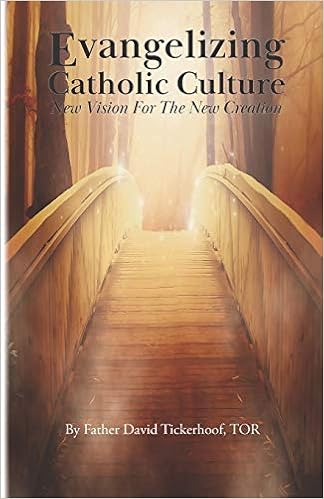
This inspiring book by Father David Tickerhoof, Third Order Regular (TOR), on the role of Merciful Penitents in the Renewal and Reform of the Church
Father David’s book is available! “Evangelizing Catholic Culture,” get your copy today.
Since Biden has been elected the Christians, especially Catholics may be confused. It has been no secret that his administration leaders would be chosen to reflect President Biden, who is a Catholic, socially progressive philosophies and attitudes towards moral behavior in American life. This matter is important for Catholic Christians because he has not always supported authentic Catholic moral teaching, especially in the recent past. For example, his clear and public endorsement of Planned Parenthood in the recent election campaign.
Therefore, at this time in our society, it may be helpful to examine what really is the moral teaching of the Catholic Church in relationship to certain non-negotiable absolute moral principles that pertain to the sacredness of human life. For the sake of our reflection and discussion, we can identify five non-negotiable absolute moral principles from the Catholic point of view. They are as follows: abortion, euthanasia or physician-assisted suicide, embryonic stem cell research, human cloning, and homosexual marriage. Always and everywhere the belief and practice of any one of the five is objectively a serious grave moral evil.
Over the last one hundred and fifty years in Christian churches in American society, there has been a history of gradual moral comprise, especially in the moral practices of infanticide (abortion), contraception, and homosexual marriage. Little by little each of these moral issues were gradually allowed. As society became more secular humanistic, it evolved into a total acceptance of these moral issues as completely allowed in modern civilization which has come of age. For example, one of President Biden’s appointments to a cabinet post is an individual who publicly identifies himself as a partner in a homosexual marriage, whose husband supports his appointment.
In the second part of this Podcast, we will look briefly at the above five non-negotiable moral issues to present the Catholic Church’s teaching about these challenging principles. To begin with, we will not be considering moral culpability or specific judgment on any individual. We will simply restate what the Catholic Church holds about these moral issues. Abortion is a grave moral evil contrary to the natural law. The inalienable right to life of every innocent human individual from the moment of conception to natural death is held by the Church and has not changed. Any state approving abortion is denying the equality of every human individual. Just recently the law in the United States is permitting abortion clear up to full term. This is one of our Nations greatest evils, if not the greatest. Abortion is the practice of child sacrifice! The next absolute moral evil is Euthanasia, which consists in putting an end to the lives of handicapped, elderly, the sick, or dying persons. It is a grave moral evil. The present form of Euthanasia which is practiced in the United States at the present time is physician-assisted suicide. Some of the States laws in this regard are weak, and thus in some places, it is being practiced at the present time. Denying the truth that it is God who remains the sovereign Master of all life.
We will treat Embryonic stem cell research together with Cloning human beings because they are related by the fact that they are both a part of the stem cell development process. The Catholic Church supports ethically acceptable and responsible stem cell research. What the Church opposes is deliberately destroying innocent human life at any stage for research or any other purpose. It opposes embryonic stem cell research. Stem cells are cells that develop very early in the human embryo after fertilization. The Church opposes any research that exploits or destroys the human embryo. It opposes destroying some human lives now, on the pretext that this may possibly help or save other lives in the future. In the case of embryonic stem cell research, it is impossible to remain true to moral principles and at the same time destroy potential human life in the process. To obtain embryonic stem cells, the early embryo is destroyed. This means destroying a potential human life.
In cloning human beings, to achieve the necessary stem cells the embryo has to be destroyed. The Church’s document on Christian views of cloning, entitled Declaration on the Production, the Scientific, and the Therapeutic Use of Human Embryonic Stem Cells; all three approaches of proposed solutions are morally unacceptable.
The Church teaches that from the moment of conception begins the development of a human being; therefore, the embryo cannot be considered just another clump of cells. As an individual, it has a right to its own life. And any negative action no matter for what purpose is a moral violation of an individual’s right to life. Any intentional damage to the embryo is a grave immoral action. No end believed to be good can justify an intervention to the embryo that destroys its life. A good end does not make right an action which itself is wrong. A human being is to be respected and treasured as a person from the moment of conception to the finality of natural death.
In the issue of human cloning: it is morally erroneous and unacceptable for anyone to engage in this process for the creation of human beings. It is morally unacceptable to develop a cloned embryo and then destroy it in order to produce a new cell structure moving towards the development of a human being. Because this process violates the sacredness and dignity of a God-willed and man-made human being. It consists of grave moral evil. In conclusion, it is not hard to see the serious gravity of the ethical problem posed by embryonic development and the attempts to clone other human beings. Where this has been attempted in the animal world serious and devastating problems have arisen. Some of the animals have developed major disproportions of structure, size, and organs. This process has made some extremely susceptible to viral depletions and vulnerable diseases.
The last topic for consideration is a huge hot button issue in our contemporary society, namely “Same-Sex Marriage”. First, may we say that the Church has a deep commitment to human dignity and the equality of all human persons. Why then is Same-sex Marriage disallowed in Catholic teaching? In Gaudium et Spes, the Council maintains that childless marriages are still truly marriages. The United States Catholic Bishops reflecting on this teaching state that the rightness of male-female marriage is demonstrated in the possibility of reproduction, maintain that there are also “personal and spiritual dimensions” revealed by that espousal union that are equally essential. There are deeply personal, social, and affective aspects of masculinity and femininity that are seen in males and females. Each person is complete in himself or herself, yet there is a complimentary and the communion of persons that is essential for marriage. This genuine complementary is impossible for same-sex couples.
The Catholic Church teaches that same-sex (gay and lesbian) marriages are not possible. Even though the Supreme Court ruled that same-sex ‘marriage’ is legal. The Catholic Church does not accept this court ruling. The reason why is that the Church believes and accepts that Marriage is, was, and always will be the union of one man and one woman, in a permanent, faithful, and fruitful union. God is the author of marriage, not man and not society or the government. Marriage is a sign of a covenant between God and his people, between Christ and His Bride, the Church. Men and women complement one another, emotionally and anatomically. Adoption and artificial insemination, in vitro fertilization, or surrogate parenthood, are not viable means to render a relationship capable of married fecundity and espousal communion.
Homosexual unions contradict nature. They imitate but do not complement and that is key. The Church holds that same-sex inclination is objectively disordered. (the Catechism of the Catholic Church #2358). There may be no culpability if there is no activit


 United States
