


Allocating Scarce Resources with Dr. Jennifer Bell
Description
sqs-block-image-figure
intrinsic
">

</figure>
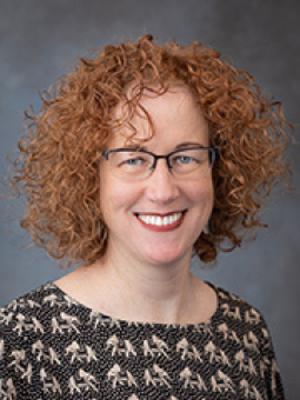
In this episode we discuss another success story with Dr. Jennifer Bell who helped her medical center think about how to ration scarce CAR-T Cell cancer treatments.
Transcript
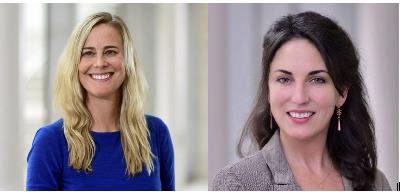
Welcome to this episode of Bioethics for the People, the most popular bioethics podcast on the planet according to Grandma Nancy.I'm joined by my Co host Doctor Devin Stahl, who dutifully completes the same 5 New York Times puzzles every single day.
And I'm joined by my Co host Doctor Tyler Gibb, who if he weren't here right now, would probably be golfing.All right, Tyler, so we have another success story to share today from a fellow Canadian.Yes, I love Canadians, of all the nationalities, they're my favorite.
Have you ever, I don't think you even talked about this in the podcast we did about you, Tyler, is that you're Canadian?Well, kind of Canadian.I was born there.I can have dual citizenship if I ever fill out the paperwork.Oh, you've never filled out the paperwork?No, it's like $125.00 fee and I've never never actually filled it out, but.
That says something about your like extreme optimism about our political situation that you've never like in the back of your mind, Go said maybe Canada might not be such a bad choice for me.Yeah, maybe this year will be the difference maker though.We'll see.OK, so we've got a Canadian with us.
Well, I'm actually dual citizen.Yes, dual citizens are the best.I grew up in Georgia and now I live in Toronto, so.All right, so we've got Jennifer Bell with us, who's a senior bioethicist up north of the border, and we'll let her introduce herself.
Yeah, well, I I already told you more about me than I think I tell the average person.So I am.I won't start from birth.I'm currently a senior bioethicist in Toronto, ON and Director of Bioethics Research.I'm at the University Health Network and I'm affiliated with the University of Toronto.
Very cool.So, Jen, what does your day-to-day look like?Well, I mean, actually it's changed a little bit because I just was awarded a fellowship actually in AI and compassionate healthcare, but previous to that, which I just started a couple of weeks ago.So I've been seconded to that and it's a research fellowship, but, but prior to that my, my day was very clinically oriented.
I mean, I provide clinical, organizational research and policy and education ethics across our organization.I primarily support Princess Margaret, which is our cancer hospital.But organizationally, I do a lot of work for the entire organization as it goes.
So, you know, day-to-day it's, I mean, as those of you who work in healthcare settings and our ethicists there and you're sort of beholden to what kinds of consults and questions come up and you can never really anticipate what those might be.So that's sort of exciting, but also a bit daunting because you know, you're called on to be sort of have knowledge about all these various areas.
But it's sort of a generalist in a sense, at this hospital at least, because I, again, serve a larger population than just the cancer system.So it could look very different depending on the day.But generally, I will be responding to a clinical consult, a bedside consult.
Maybe there's a policy coming through that needs an ethics perspective.Right now, we're in the midst of creating sort of AI protocols and procedures.And so there's a lot of opportunity there for ethics input on that.So, I mean, it really varies, yeah.And I know that Tyler has experience with this too, but I've been part of hospital systems that get like 1 consult a year, and then I've been part of ones that get more like 1 consult a day.
My guess is you're getting even more than that.So what is your typical load like?How often are you being called to consult?Yeah.Well, I should preface this.I'm not a sole bioethicist working in this network.Actually one of five others.So there's six of us.We're not all full time.
So me in particular, I have 3 days that I devote to practicing ethics in the healthcare in our, in our healthcare network, but I'm also paid to do research.I have a nice dual role, which is it's hard to come by, at least in Canada.
I don't know how frequent you have these opportunities in the States, but so my day, my week is actually split into normally it's changed a bit now because I've started this fellowship, but before this it was three days clinical organizational research ethics practice and then two days I had devoted to actually conducting research and bioethics.
I would say that's incredibly unusual.That is a lot of time for research.That is really cool.Yeah, yeah.And it's not grant funded either.So it's it is a permanent sort of part time research position, a full position in its entirety, but the research side is actually well as guaranteed as you can be.
That's cool.One of the topics that we're covering on this kind of series group of episodes is success stories.What we want to do is highlight some of the good work that clinical ethicists are doing.Number one, because they, I think clinical ethics and being an employed clinical ethicist is a fairly unusual type of position.
Most people don't know that this position exists, but it's easy to envision, you know, the worst case scenario or really terrible cases where an ethicist is useful.But sometimes those get sad and those get heavy.Those talking about those cases all the time.
So we wanted to talk about success stories.And so you have a success story that you are going to share with us.Yeah, Yeah, I do.And thanks.And it just, it just dawned on me that I didn't actually answer Devin's question about how many consoles we get.I I was leading into it and then and then digressed.
But as a snapshot, because we have, you know, almost 6 at the system varying kind of responsibilities to ethics within our service, we have around 350 consults a year.I don't know how to make sense of that necessarily.I mean, that's one of the questions of our, of our profession, of our discipline is how do you benchmark this?
But but yeah, we are a busy service, a very busy service.And actually the success story stems from an organizational ethics consults.So actually most of my work has tended to be at the Cancer Center and it's tended to be organizational in nature.
I think that might be because I'm there three days out of five and I'm just not, I'm not as present on, on the units walking around or participating in rounds as much as maybe I would be if I were there five days.I mean, I think that might be some reason.
But I have also just had a lot of uptake in terms of organizational ethics issues and leadership has brought me on to some of these issues and it's just kind of propelled from there.So the success story that I wanted to share with you all is an organizational, I'd say organizational ethics success story in the sense of success of being involved as an emphasis being included embedded I think in the process and the questions.
It was an important and still is actually an important issue that we're working through at the Cancer Center that, but that's the setup.It might be helpful to some of our listeners who might not be as familiar with the work of clinical ethicists to just describe briefly the difference between sort of a clinical ethics consult and an organizational consult.
I generally understand those as a clinical would more come from a physician or someone on the healthcare team, maybe even a patient, other family members saying like what's happening here doesn't seem quite right or there's an ethical dilemma I'm seeing at bedside versus an organizational question might be more like the process itself that we have some sort of policy that we have doesn't seem to be working for us.
So we need a higher level console that says we need to think about how our systems are running.Is that how you make that distinction?Yeah.I think that's a really, that's a really helpful distinction.I would have made something similar, but maybe not as eloquent.
Yeah, clinical ethics is more about direct patient care.We got consulted by all those parties that you just mentioned.Many









 United States
