



Building the Map After You’ve Started Running
Description
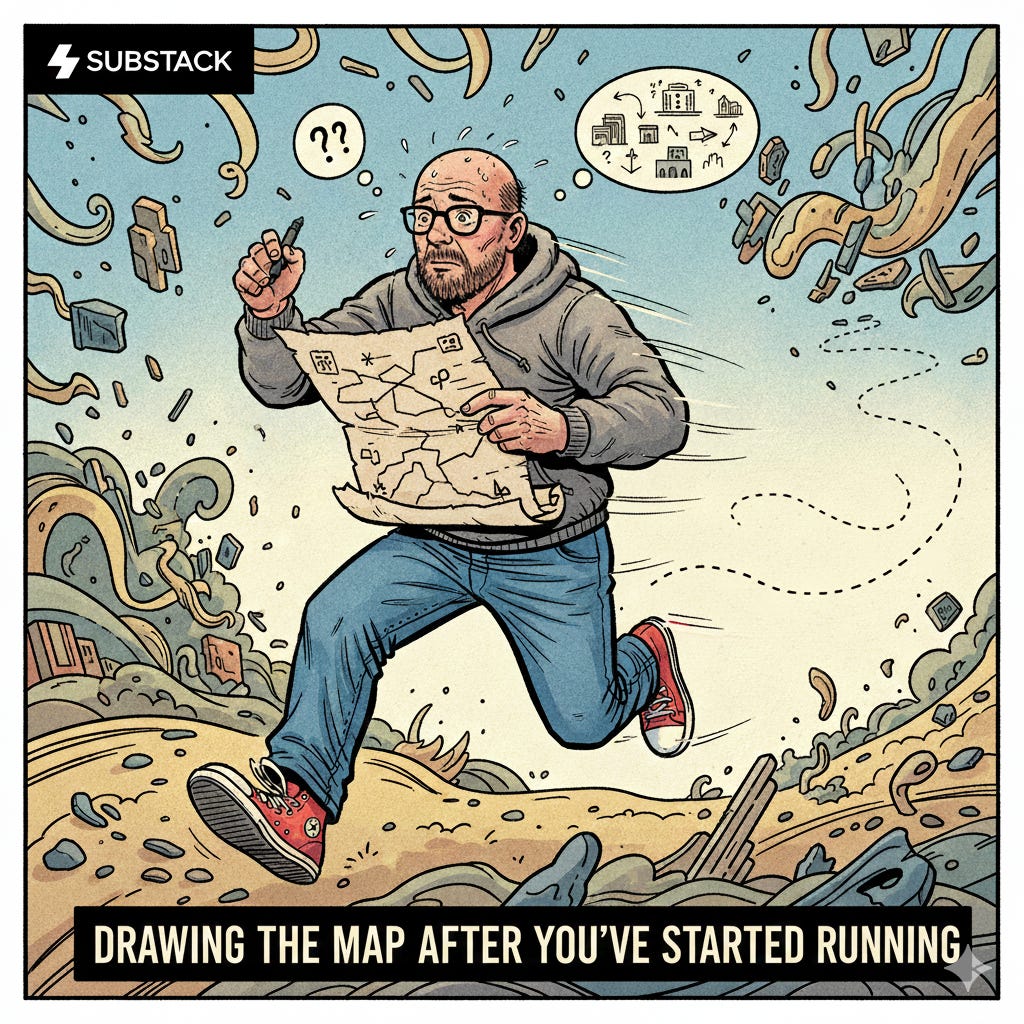
Sometimes you get an idea and just start running with it. The framework makes sense, the direction feels right, so you commit before you’ve actually mapped out all the details. Which is fine. Momentum matters. But at some point you probably need to stop and draw the actual map.
I posted the framework for this series without including the specifics: which cocktails, which months, and why they’re sequenced that way. That’s the kind of detail that’s useful when you’re asking people to follow along for a year. So here’s the calendar through August.
One thing to clarify upfront: just because I’m developing the cocktail in a given month doesn’t mean the article drops then. Testing takes time, iteration requires multiple rounds, and I write things up when I write things up. We could easily see the next article in December even though I’m actively working on November’s cocktail right now. I’m not running a tight editorial calendar here.
November–December: Closing Out the Year
November is the Turkey Smash. It’s Thanksgiving in a glass, which is why it’s timed for November. Cranberry bourbon cocktail I’m actively testing. Initial version was too sweet, so I’m working through rye variations to see if the spice character can balance the cranberry without adding more citrus.
December closes out the year with Boozy Butterbeer. Look, Harry Potter is a Christmas movie, and we had the actual thing at Universal. Damn was it sweet. Sweets go with Christmas pretty well, but I’m trying to find a way to make it less diabeetus. This one introduces aged rum (Don Q Gran Reserva) and butter-washing technique, which is elaborate but the seasonal timing works.
January–March: Winter Foundation
January starts simple. Black Russian. Vodka and coffee liqueur, straightforward build. Good contrast after December’s production complexity.
February shifts to Vieux Carré. Rye whiskey and cognac split base, which means learning brandy alongside the Manhattan-adjacent structure. It’s also a bit of an homage to Mardi Gras, which feels appropriate for February.
March is Irish Whiskey Sour, hitting St. Patrick’s Day while working through the fundamental sour template.
April–August: Spring Into Summer
April opens gin territory, which has been completely absent so far. I haven’t locked the specific cocktail yet, but it needs to address that gap while fitting the transitional weather.
May brings the Cranberry Paloma. Tequila, cranberry, grapefruit. Originally planned for earlier but spacing it out makes more sense than back-to-back cranberry content.
June is Hemingway Daiquiri. White rum, grapefruit, maraschino liqueur. Classic technique, different rum profile from December’s aged expression.
July is Blackberry Bramble. Our blackberries in the backyard should be ripening by then, which makes this the practical choice. Also gives a second gin cocktail to round out that spirit education.
August wraps the calendar with Paper Plane. Equal parts bourbon, Aperol, Amaro Nonino, lemon. First real amaro exploration.
What This Actually Does
The structure avoids clustering similar spirits or flavors back-to-back while building systematic knowledge across categories. Heavy bourbon/whiskey representation in the early months reflects what’s already on the bar cart. Not a strategic decision, just reality. But the back half deliberately expands into gin, rum variations, and tequila. Seasonal appropriateness drives most of the selection, but there’s also practical timing like waiting for the backyard blackberries or hitting holiday windows when they make sense.
Testing approach stays consistent: baseline recipe, systematic iteration on single variables, documentation of what doesn’t work and why. Some of these will shift during development. April’s gin cocktail isn’t finalized, June could move if testing reveals something needs more work. The calendar provides structure without forcing adherence when reality suggests a better direction. If November’s cranberry testing takes longer than expected or reveals something worth pursuing, that informs adjustments rather than sticking to a predetermined plan because I wrote it down.
Now we have the map. We’ll see how well it survives contact with actual testing.




 United States
