


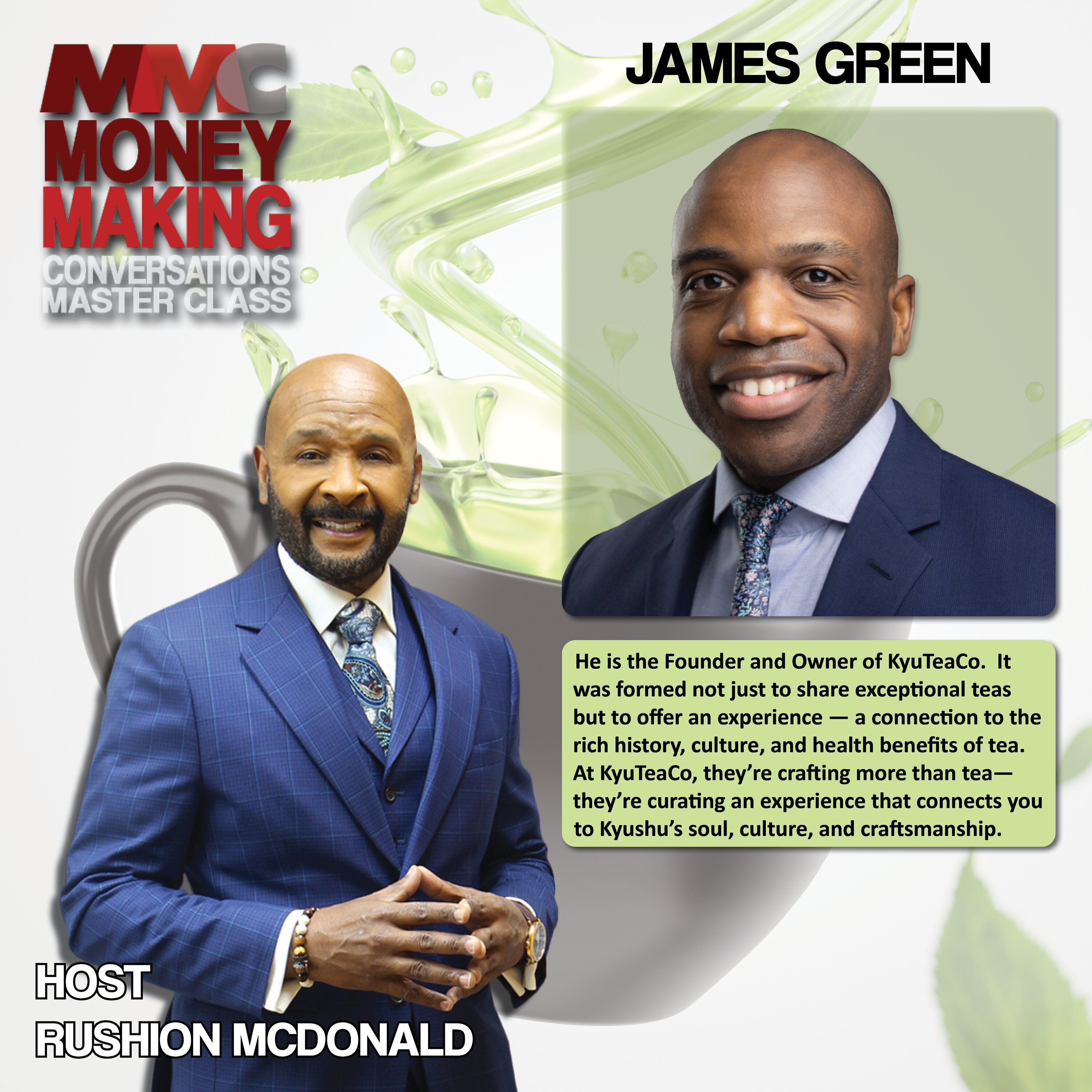
Changing Stereotypes: African American man partners with eight small, organic tea-growing families in Kyushu, Japan.
Description
Two-time Emmy and Three-time NAACP Image Award-winning, television Executive Producer Rushion McDonald interviewed James Green.
Purpose of the Interview
The interview aimed to showcase James Green’s entrepreneurial journey as the founder of KyuTeaCo (Kyushu Tea Company), a premium tea brand focused on curating authentic Japanese tea experiences. It highlighted his unique position as an African-American entrepreneur bridging cultures, his passion for tea, and his mission to educate consumers about tea’s health benefits and heritage.
Key Takeaways
-
Background & Inspiration
- James Green grew up in Atlanta, studied international business and Japanese, and lived in Japan for five years.
- His passion for tea began during a high school exchange program in Fukuoka, Japan, and deepened through cultural immersion.
-
Business Model
- KyuTeaCo partners with eight small, organic tea-growing families in Kyushu, Japan.
- Direct-to-consumer and B2B approach: e-commerce platform launching soon, plus partnerships with cafes.
- Simplified supply chain: Farmers → Kuti Co → Customer (eliminates middlemen, ensures fair pay for farmers).
-
Mission & Differentiation
- Focus on storytelling and cultural connection, not just selling tea.
- Educates consumers on tea’s health benefits (e.g., reducing hypertension and diabetes risks).
- Premium curated experience vs. mass-market tea brands.
-
Challenges & Lessons
- Kickstarter campaign failed due to lack of collaborators and marketing reach.
- Learned importance of storytelling and emotional connection for crowdfunding success.
-
Social Impact
- “11% for Good” Program: 11% of every sale goes to sustainability efforts for Japanese tea farming.
- Name significance: “11” in Japanese sounds like “ii,” meaning “good.”
-
Future Plans
- Launching e-commerce in January.
- Exploring subscription models and virtual tea tastings.
- Goal: Build a brand that consumers care about through cultural education and premium experiences.
Notable Quotes
-
On launching a business:
“I’m learning now more than anything, just launch it. Just go. You’ll build it brick by brick, day by day.” -
On cultural connection:
“We’re not just selling tea; we’re telling the stories of Kyushu and these families. It’s about legacy and sustainability.” -
On social impact:
“Every bag of tea someone buys, 11% goes toward rehabilitating the Japanese tea industry. We’re investing in their futures.” -
On entrepreneurship:
“Anybody can sell a product. What we’re doing is creating an experience and educating people about the culture behind it.”
#SHMS #STRAW #BEST
Steve Harvey Morning Show Online: http://www.steveharveyfm.com/
See omnystudio.com/listener for privacy information.





 United States
