


Ep 62 - Chlöe Swarbrick - Co-Leader New Zealand Aotearoa Green Party
Description
The Sunday Long Read and Listen
I had the very enjoyable experience of interviewing Chlöe Swarbrick last Thursday. I’d never met or spoken with Chlöe before and I was taken by how the MP for Central Auckland and Co-Leader of the Greens, has carefully thought through in detail big issues such as What is the role of government in the economy? and How can we pay for better housing, healthcare, education and all the other things people in our society need ?
Authenticity comes from knowing who you are and what you believe. Authenticity comes from walking the talk.And authenticity, born of social conscience, is as freshing as it is inspiring.
So, if you are in need of a little hope for the future,you might like to find 25 minutes today to listen to the very authentic Chlöe Swarbrick.
Or, you may prefer to read the transcription.
Please share and restack posts you find useful. Thank you
This interview has been made free to listen to thanks to the generosity of my paid subscribers who support my independent public journalism.
For $10 a month including GST ( less than a cup of coffee a week) you can not only gain full access to all my paywalled fourth estate articles and podcasts, but get to comment in a chatroom full of thoughtful Kiwis who care about our country and where it is going.
I post something everyday and all subscriptions go to meet production costs .
TRANSCRIPTION
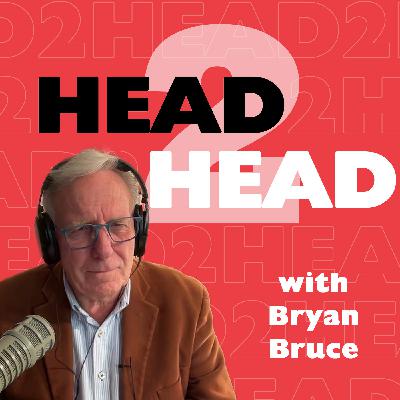
Hello, I'm Bryan Bruce and welcome to Head to Head
My guest today is the co-leader of the Green Party and MP for Auckland Central, Chloe Swalbrick.
Kia ora, Chloe.
Chlöe :Kia ora, thank you for having me.
Bryan :You've been an MP for nine years now, is it? Since 2017?
Chlöe : Nearly nine years.
Bryan: A lot of people will know your name, but not much about your background.Just fill me in a little bit about where you grew up, how you got interested in politics.
Chlöe : Yeah, how long have we got? (laughs)
So I grew up all over kind of central, south central Taumaki Makaurau, Auckland. So me and my little sister were trying to count up the number of rental properties that we lived in the other day, but couldn't, a few dozen. But long story short, you know,
I spent a lot of time with my dad and in those conversations, what some would call arguments as I was growing up. I learned a lot about how you can flesh out your worldview by trying your best to understand other people and their perspectives. As my old man used to always say, different people see different things differently.
I later went to uni, did one of my undergrad degrees in philosophy and realized my old man was not Socrates, did not come up with the idea of subjectivity. ( laughs)
But, you know, in doing so, I guess that's part of the intellectual framework or ideological framework that I approach things with, where I'm just, obviously very clear about where my views and values have landed, but I'm fundamentally interested in understanding other people's points of view, because otherwise you can't move forward.
So yeah, I then went on to study my law degree. While I was at university, I spent about four and a half years at 95 BFM, number one alternative radio station in Auckland, where I thought that I might actually eventually become a journalist because I was really interested in, again, trying to understand the shape of the world, the motivations of different players and that. And I was consistently interviewing these community leaders and researchers and people who had dedicated their lives to solving and understanding these problems…and then the politicians!!
And I did not understand that the massive gap between the reality of what people were saying on the ground and then what the politicians were coming to the table with, let alone the gap between what politicians said and what they did. So all of that was bubbling away in the background as I also got involved in running a few different small businesses with my former partner- Alex.
We were involved in producing menswear clothing for a little while, we ran a bunch of events,particularly in arts and culture and nightlife across Tamaki Makaurau,particularly in the central city.
And up until the point that I was elected, I was running a little art gallery, coffee and donut shop on Mount Eden Road next to the Crystal Palace.
So that's, I guess, a bit of a grab bag of all the things that I'd been doing,
How I got involved in politics is I was interviewing the kind of top four candidates as prescribed by the mainstream media for the Auckland Mayoralty in 2016, and I was just really frustrated by the fact that I didn't feel as though they were addressing issues that mattered to me or to my community or to my friends.
At the same time, we were sitting in the context of the brain drain, you know, with the former national government, and I was watching a bunch of my mates who are incredibly talented all go offshore for a lower cost of living and a higher quality of life, and I just kind of had to go and say, stay and fight, you cowards. You know, I love this city and I love this country and nothing changes if nothing changes!
So, yeah, I was complaining about this to my producer at the time and she said,just shut up while we go and do something about it.
So I Googled how to become the mayor of Auckland. And it turns out there's three barriers.
You need $200 for administrative fees.
You need two people to nominate you, which I'm not sure if you're familiar with local government elections -t here's some interesting characters, but those two nominators are probably the sanity bar.
And you had to be over the age of 18.
And I was 22 at the time, which became kind of my defining feature.But I just, was really conscious of how I wanted to try and model the kind of politics that I felt was missing.
So I never pretended to have all of the answers. Obviously, I was 22 years old. But also I think any politician who stands in front of people and says that they know everything is either lying to people or completely lacking self-awareness, and I'm not sure which is worse.
Which brings me back to the point that I was making earlier about the approach that I take to trying to solve problems, which is understanding how we got here and how everybody thinks about the issue.
Bryan : Let's get on to politics and economics.
I mean, I grew up in what I call the We Society. I was a poor kid. I got a free education right up to and including university and I'm able to talk to you today because, you know, I got the break.
And then in 1984, I think about 10 years before you were even born, we switched to what I call the Me society with neoliberalism - the idea that government ought not to be involved in the marketplace.
Whereas in the society I grew up in, we understood that the The State meant all of us and that the government really ought to be involved in the marketplace.
What do you think is the role that government should play in the marketplace.
Chlöe: I think that if we take a step back and ask ourselves what the government is and what parliament is and what it's supposed to be, then we actually get a far better insight.
So I think part of the problem is that right now we tend to conceptualise of government as a sector, like business or like civil society, as opposed to what I believe it's supposed to be as far as the democratic ideal goes, which is simply the manifestation of the will of the people, of all of us.
And if we take that really pure version of democracy about how we allocate our resources,
which, again, is actually a point that I often kind of try and unpack for people because there's a tendency to present politics as though it's really complicated but, you know, sure,it's imbued in jargon and all of this other gatekeeping terminology, but at the end of the day,all politics really is, it's about power, it's about resources, and it's about who gets to make decisions that saturate and shape our daily lives.
So when we understand that context, to your question of what the role is that the government or the state should play in the economy per se, well,I'd say that it should ensure that everybody has their basic needs met so that they are able to participate in this thing that we call democracy.
Otherwise, we experience the decline of said democracy like we are at the moment.And to give some colour to that statement, you know, we've experienced not just,you know, obviously the last 40 years or the last four decades of kind of trickle-down economics, and I think very much Margaret Thatcher encapsulated it best in terms of that project when she said that there is no such thing as society, there is nearly individual men and women. by which I think she lifted the lid on the fact that the neoliberal economic project, which individuated people and forced them into competition for basic needs and basic survival, was very much not only an economic project, but one that had substantive cultural ramifications.
So, you know, this is where when we think about how at hyperspeed over the last 18 months as this government has been demonstrating what cronyism looks like in practice,setting up not only a two-track economy where they preach growth, growth, growth, but that growth seems to only be in the form of profits for the supermarket banking and electricity sector while regular people are suffering because that profit is the cost of living for regular people.
We're now also seeing that manifest in a two-track democracy because those who canafford it get special



 United States
