


Ep. 4: Rufus and Demalda Newsome and Newsome Community Farms, Greenville, MS
Description
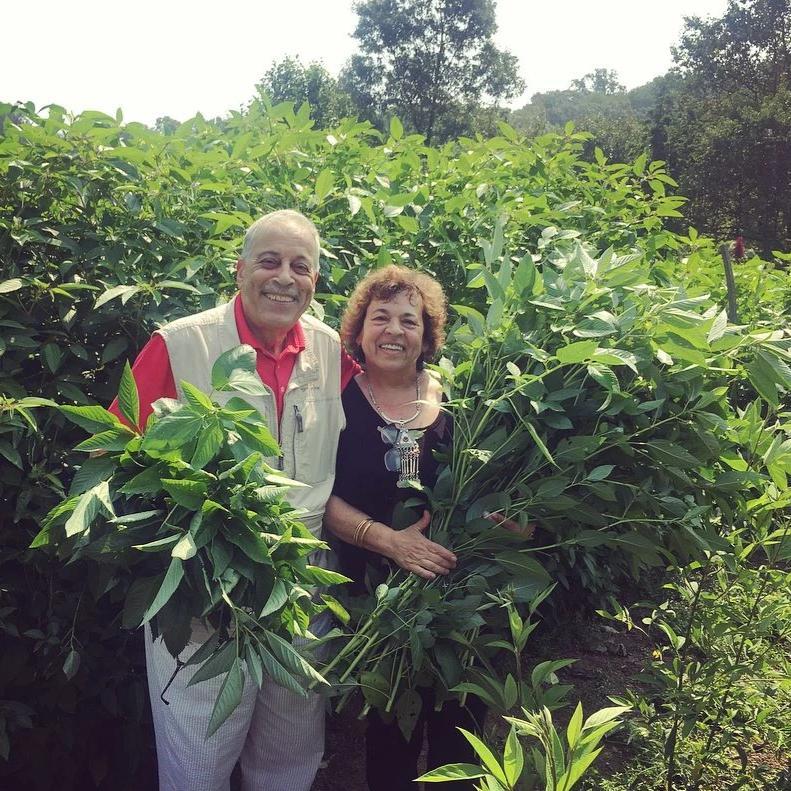
In this fourth episode, we talk with Chris’s parents Rufus and Demalda Newsome of Newsome Community Farms in Greenville, Mississippi at Christmas. While Rufus pulls seeds from cotton he talks about growing up at ten years old working in the cotton fields as a weed chopper, a hoe filer, and a water boy. While Demalda chops vegetables for the Christmas meal, she describes growing up harvesting fruits from neighborhood trees and beans from an overturned bean truck, and getting watermelons from the watermelon man. While she and Chris make tamales, we talk about how they’d always eat them with hot donuts in the Delta at Christmas, which brings us to talking about segregation and desegregation. She describes her advocacy and food sovereignty work with Newsome Community Farms, Community Food Security Coalition, and Food First. There’s a hidden track at the very end where Rufus opens his very first moringa pods (see the videos here) and the grandkids get to taste the seeds and the way they transform water, and we discuss seed maturity and storage, and the importance of eating good bacteria.
SEED AND FOOD STORIES TOLD IN THIS EPISODE:
- Cotton
- Mustard and Turnip Greens
- Tamales
- Moringa
MORE INFO FROM THIS EPISODE:
- Newsome Community Farms, by WhyHunger
- Demalda Newsome, Food First
- Food First
- An Introduction: Hot Tamales and the Mississippi Delta, Southern Foodways Alliance.
- The brutal murder of Emmett Till in Money, Mississippi, by the History Channel.
- Fannie Lou Hamer founds the Freedom Farm Cooperative in the Mississippi Delta, by SNCC.
ABOUT:
Seeds And Their People is a radio show where we feature seed stories told by the people who truly love them. Hosted by Owen Taylor of Truelove Seeds and Chris Bolden-Newsome of Sankofa Community Farm at Bartram’s Garden.
trueloveseeds.com/blogs/satpradio
FIND OWEN HERE:
FIND CHRIS HERE:
Sankofa Community Farm at Bartram’s Garden
THANKS TO:
- Rufus Newsome and Demalda Bolden Newsome
- Aunt Veronica
- Jala, Jacob, Amareion
- Sara Taylor
PARTIAL TRANSCRIPT:
Rufus Newsome
Rufus Newsome:
Years ago as a boy. Um, the field wasn't very far away from where we live. We lived in Mississippi, Greenville Mississippi. We lived on white people's land. They were called the Dominic's. They were pretty decent folks also. But we went to other people fields to pick and chop cotton. I can remember as a small child smelling that fresh cotton smell and I crave the smell now. But this cotton doesn't smell the same way it did 50 years ago. It's different. Doesn't have a smell at all. But, progress goes on.
Owen Taylor:
Do you remember the first times you smelled cotton and what was that like and where were you? What were you doing?
Rufus Newsome:
I was in the fields when I was about 10 years old. At that time I was chopping because I think people had stopped picking cotton. That was combines picking cotton then, but we still needed to chop the weeds between the rows and there weren't a lot of herbicides used on that time. So we had to chop the weeds and I can remember seeing maybe 60 or 70 people chopping cotton. It seemed like those rows were a hundred feet long, hot. And so we're chopping and the aroma of the cotton, the smell just rises from the cotton and the smell is all around. Every so often you stop and pull some cotton and just sniff it up your nostrils and then you'd go back to work.
Owen Taylor:
What does it smell like? Can you describe it to someone who's never smelled it before?
Rufus Newsome:
It was fresh smell. I mean it was fresh. Uh, it smell like fresh air. Beside that, I can't describe it though. It's just really fresh. Like after a new rain when the sun comes out and clears up, everything smells so fresh. Remind me of the wash. My mom used to wash outside and hang the clothes up on the line and once the sheets, the white sheets dried that aroma and it would just, I mean it would just suffocate you.
Owen Taylor:
So what are you doing right now?
Rufus Newsome:
Right now I'm removing the seeds from, uh, some cotton that I picked from a field about two weeks ago on my way home from work. Uh, this is left over cotton in the field. So I went out and picked some, I'm sure the owner doesn't mind. And so what I'm doing now, I'm removing the seeds from the cotton itself. This is what our ancestors did. Everything was done by hand. They removed the seeds from the cotton. It was done by hand. And this is what I'm doing and I'm reminiscing of my ancestors, my great, great grandparents. As they sat there on the plantation, probably after noon, they've done all that picking. Now it's time to remove the seeds and so they're sitting there removing the seeds, talking and having a good time. It was very important that they remove the seeds because of course you know those seeds were planted the next year.
Owen Taylor:
Have you ever grown cotton at your house?
Rufus Newsome:
Oh yes we have. We, we grew cotton in Oklahoma. It was so beautiful. People would stop by older people, and say, you know what? That reminds me when I was a boy, when I used to pick cotton, I hadn't seen cotton in 50 years. And so we had planted a couple rows out in front of the house on the main street there, one of the main streets there in Tulsa, Oklahoma. It was, it was a beautiful sight to see. That was about four feet tall. This is white and beautiful. That's why so many people stopped - they had never seen cotton up close before, just on television.
Rufus Newsome:
Well, you know, cotton been around for thousands of years. They Egyptians grew cotton and cotton is what kept the South alive. Major crop. Major crop cotton.
Owen Taylor:
Do you have a question? If so, get close to the mic?
Jala Newsome:
Did you ever have a brother or sister that died during slavery?
Rufus Newsome:
Well Jala, you know, I wasn't in slavery, but I'm sure we had relatives that died in slavery that we, we've never met.
Owen Taylor:
How old were you when you worked in the, in the fields chopping cotton?
Rufus Newsome:
I started in the field when I was about 10 years old. I started, uh, I think first I did do a little picking and then as I said, the combine, it was already developed, but I guess he was a poor farmer. He hadn't had it yet, but he got it later. And so we just basically chopped. I started off as a chopper chopping grass between the rows and then I was promoted to the water boy. That was a great promotion. All you did would carry water back and forth, uh, to, uh, the workers. And I did that so well I was promoted to a hoe filer. I filed hoes. Kept the hoes sharp and all. That's what we cut the weeds with. And I did that all the way up to high school. I earned most of all the money during the summer, uh, by working in the field cause Mama was working a job, she wasn't making that much. But I, I worked the field all summer and I made $13 a day for almost a month and a half. Imagine how much that was. So that helped bought my clothes along, my sisters and my brothers and food for the house also, I never regretted working so hard and rushing home and I couldn't wait to get home and get my money to my mother. You were paid in cash of course? Actually we made $15 an hour, but the driver took three.
Demalda Newsome:
$15 a day.
Rufus Newsome:
$15 a day. I'm sorry. Actually, we made $15 a day and the driver took three of it I guess for transportation and all. And I recall Mama, I would get up early in the morning about two, three o'clock because the truck left about five and mom would fix me my breakfast and fix me lunch also. She would make me baloney sandwiches and um, I think even she would put some, uh, teacakes in the bag/container. Teacakes were like homemade cookies and all. I mean they were just wonderful. They were like just a flat cookie, just delicious. We call th




 United States
