


How to be a good man
Description

Bob Jensen
From social media influencers to academic theorists, preachers and politicians, everyone weighs in on the question of what makes a good man, especially what young men need to do embrace their masculinity.
Here’s a simple, sensible answer: If you want to be a good man, do your best to be a good person.
If your goal is to model a “positive masculinity,” work to develop qualities that everyone—men and women—should strive for. Strength along with vulnerability, honesty and empathy, a clear head and an open heart—all are markers of a good person, male or female. Both men and women should protect the vulnerable, provide for their families, and contribute to their communities in whatever ways they can.
The specific choices a person makes about how to live those values—whether a man or a woman—will depend on one’s talents and temperaments, which vary in many ways. There are patterns to the way men and women behave, depending on the society in which they are socialized, but no individual can be contained solely within those patterns. Locking people into rigid ways of being men or being women limits everyone and undermines the health of communities.
But that answer apparently is unsatisfactory to many. The fretting over what it takes to be a good man continues, which leads me to another observation: If you are holding onto the notion that being a good man has to be distinctive from being a good woman—that there are positive traits distinctive to men—you probably are not searching for a positive masculinity but trying to put a positive spin on male dominance.
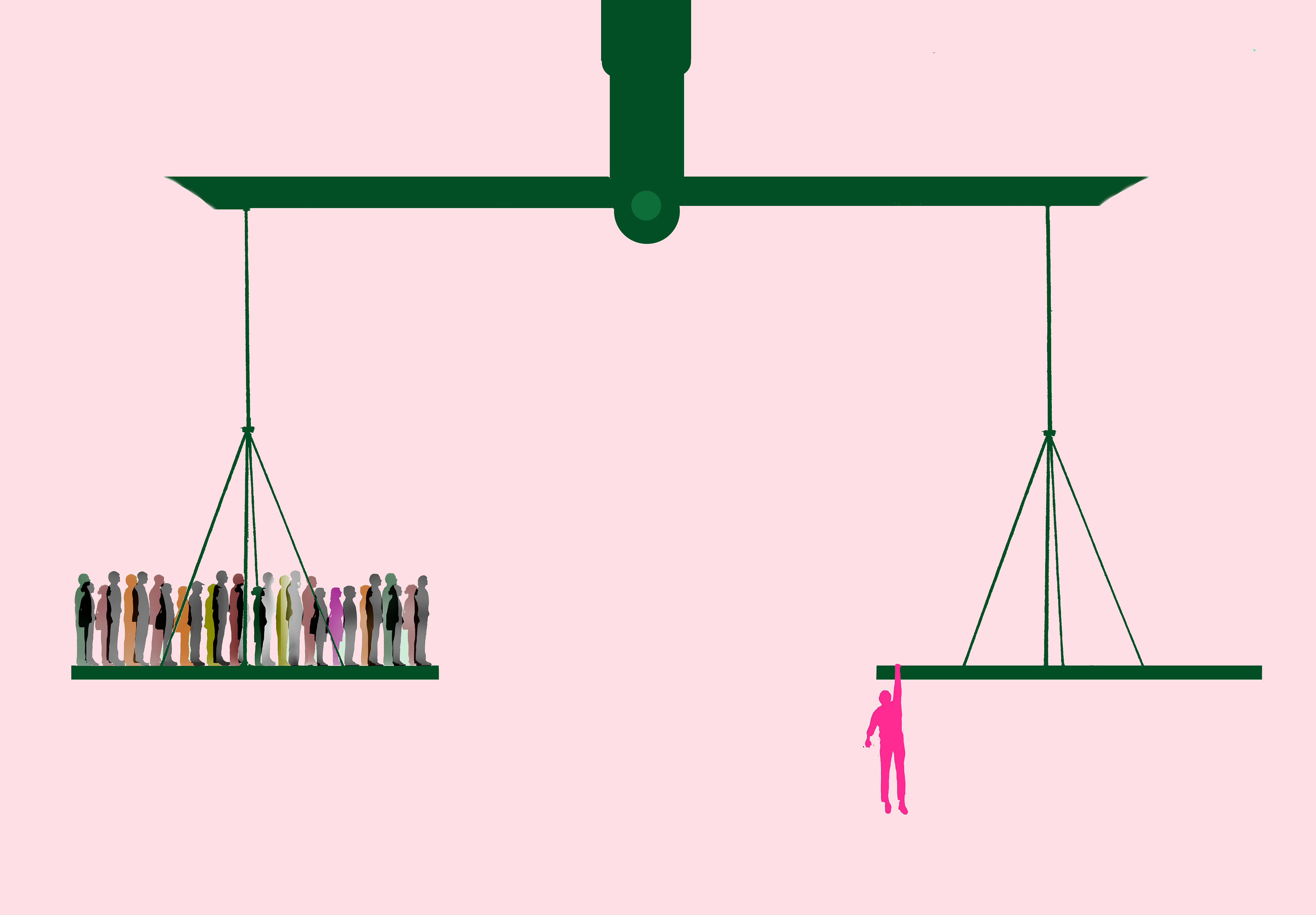
I understand the practical reasons that some feminists have for redefining masculinity, for asking men to transcend the norms of what is often called “toxic masculinity” (valorizing aggression and violence; encouraging emotional repression and extreme self-reliance; seeking control and dominance). We live in a culture obsessed with holding onto masculinity and femininity, and if we want to change attitudes and behaviors, we have to meet people where they are. But that strategy can obscure the root problem of patriarchy, institutionalized male dominance. Whatever tactics we use to challenge male dominance—especially in organizing to end men’s violence against women, which is so common that it can be invisible to many men—we should not reinforce patriarchal assumptions.
Two reasonable objections can be raised to my argument.
First, aren’t men and women different? Yes, of course. I’m a man, a male human. I can never carry a fetus or breastfeed a child. Not all women, female humans, have babies, but only female humans can. Males produce small gametes (sperm) and females produce large games (eggs). That’s a big difference between the sexes. There also are differences in hormone levels, average size and muscle mass, and body shape and fat, along with differences in male and female cardiovascular, respiratory, and immune systems.
But the thorny question is, do those physiological differences produce significant differences in intellect, emotions, and moral reasoning? That is, are men and women significantly different—not just because of cultural training but because of biology—in the way we think, feel, and make decisions? It’s certainly plausible that the physiological differences give rise to those other kinds of differences. But we lack the research methods to answer the question with precision. There’s no way to know, no matter how much we may want to know. We don’t have to pretend there are no differences between men and women—after all, if the two sexes were exactly the same, why would patriarchy have ever developed? But we should avoid making grand claims about intellectual, emotional, and moral differences that go beyond our ability to know.
Second, haven’t societies always created gender roles and imposed gender norms? Yes, of course. Given the fundamental differences in male and female roles in reproduction, it’s not surprising that human communities—from small-scale gathering-and-hunting bands to large-scale empires with cities—tell some kind of story about what those sex differences mean. In other words, the reality of biological differences gives rise to cultural gender stories. But there is no single way those cultural roles and norms take shape; across time and place, the stories vary.
Patriarchy tells the story that men and women are different in such profound ways that male dominance is natural, inevitable, and necessary for human thriving. That’s a story that only started emerging several thousand years ago, as hierarchical systems came to dominate human societies. It’s not the only story we can tell.


 United States
