


In the News... top diabetes stories and headlines happening now!
Description
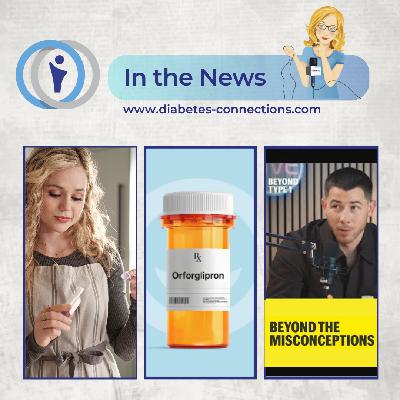
It's In the News.. a look at the top headlines and stories in the diabetes community. This week's top stories: kids' A1C and tech access correlation, first generic GLP-1 for weight loss approved, Metformin cuts long covid risk, Tandem Diabetes & Eversense updates, and more!
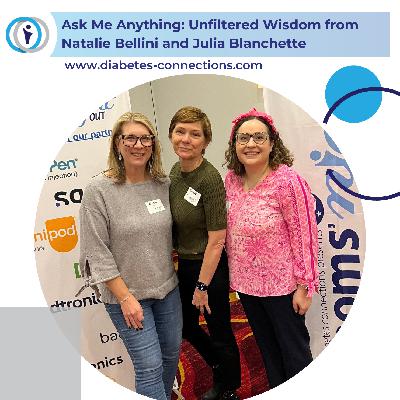
Find out more about Moms' Night Out
Please visit our Sponsors & Partners - they help make the show possible!
Learn more about Gvoke Glucagon Gvoke HypoPen® (glucagon injection): Glucagon Injection For Very Low Blood Sugar (gvokeglucagon.com)
Check out VIVI Cap to protect your insulin from extreme temperatures
The best way to keep up with Stacey and the show is by signing up for our weekly newsletter:
Sign up for our newsletter here
Here's where to find us:
Learn more about everything at our home page www.diabetes-connections.com
Reach out with questions or comments: info@diabetes-connections.com
Episode transcription with links:
Hello and welcome to Diabetes Connections In the News! I'm Stacey Simms and every other Friday I bring you a short episode with the top diabetes stories and headlines happening now.
XX
Accessibility to modern diabetes technology directly correlates with A1c among children with type 1 diabetes globally. Big, cross-sectional study, conducted in 81 pediatric diabetes centers in 56 countries, found that a greater extent of reimbursement for continuous glucose monitoring (CGM), insulin pumps, glucose meters, and insulin was associated with lower A1c levels.
Partha S. Kar, MD, Type 1 Diabetes & Technology lead of the National Health Service England, told Medscape Medical News, "As is now being shown in countries such as UK with widespread uptake of technology, there is now population-wide shift in A1c not seen before."
He added, "If policymakers are serious about bringing A1c at a population level to sub-7.5% - 8% levels, then without technology it would be incredibly difficult to achieve, in my experience and opinion. Leaving the median A1c of a population at above 7.5%-8% goes with complications so that's a decision regarding investment many will have to make in the near future."
In an accompanying editorial, Elizabeth R. Seaquist, MD, professor of diabetes, endocrinology, and metabolism and co-director of the Institute for Diabetes, Obesity, and Metabolism at the University of Minnesota, Minneapolis, called it "striking" that access to technology in and of itself was associated with improved glycemic control, given that multidisciplinary team care is also needed to provide education and behavioral or psychological support.
https://www.medscape.com/viewarticle/diabetes-tech-access-linked-a1c-kids-t1d-globally-2025a1000nn6
XX
A man with type 1 in Illinois has received the first FDA-approved islet-cell replacement treatment, Lantidra, and he is now producing his own insulin.
The treatment works by restoring the body's beta cells, potentially eliminating the need for insulin injections.
The FDA approved Lantidra (donislecel) in 2023. Lantidra uses donor cells and requires lifelong immunosuppressive drugs.
Lantidra is only available at University of Illinois Chicago Health. Other universities, such as the University of Pennsylvania, continue to do islet cell transplants as part of clinical trials.
Early data has shown that a majority of participants in the Lantidra clinical study were able to achieve some level of insulin independence, but it's unclear whether the benefits of donislecel outweigh the treatment's safety risks. Nearly 87 percent of participants reported infection-related adverse events, and post-operation complications included liver lacerations, bruising of the liver (hepatic hematoma), and anemia. One patient died of multi-organ failure from sepsis, which Lantidra maker CellTrans stated was "probably related" to the use of either immunosuppression or study drugs.
In addition, some industry leaders have raised the question of whether it's ethical to commercialize the use of deceased donor islet cells.
https://diatribe.org/diabetes-research/first-fda-approved-islet-cell-transplant-performed?utm_campaign=feed&utm_medium=social&utm_source=later
XX
Patients in the U.S. now have access to the first generic GLP-1 treatment approved for weight loss as Teva has launched its copycat of Novo Nordisk's injected Saxenda (liraglutide).
The compound, which is a GLP-1 forerunner of Novo's semaglutide products Ozempic and Wegovy, has been approved by the FDA to treat adults with obesity and those who are overweight and have weight-related medical problems.
Saxenda also is endorsed for pediatric patients ages 12 through 17 who are obese and weigh at least 60 kg (132 pounds). The treatment is for both triggering and maintaining weight loss.
Saxenda is not the first GLP-1 drug that is available as a generic. In June of last year, Teva also was the first company to launch a knockoff version of Novo's Victoza, which is the same compound as Saxenda but has been approved only for patients with Type 2 diabetes.
Sales of the branded versions of both Victoza and Saxenda have declined significantly in recent years as demand for Novo's semaglutide and Eli Lilly's tirzepatide products have skyrocketed. In addition, marketers of compounded products have been aggressively competing for market share in the GLP-1 space.
https://www.fiercepharma.com/pharma/saxenda-knockoff-teva-launches-first-generic-glp-1-obesity
<p class="M






 United States
