


Interview With J. Christian Wichard, Deputy Director General at the German Federal Ministry of Justice and Consumer Protection in Germany – History of the Unified Patent Court (UPC) – Important Changes in IP Law in Europe – the EU IP Reform Package – Copyright and AI – Remuneration of Creators in the Platform Economy – IP Fridays Podcast – Episode 165
Description
 </figure>
I am Rolf Claessen and my co-host Ken Suzan and I are welcoming you to episode 165 of our IP Fridays podcast!
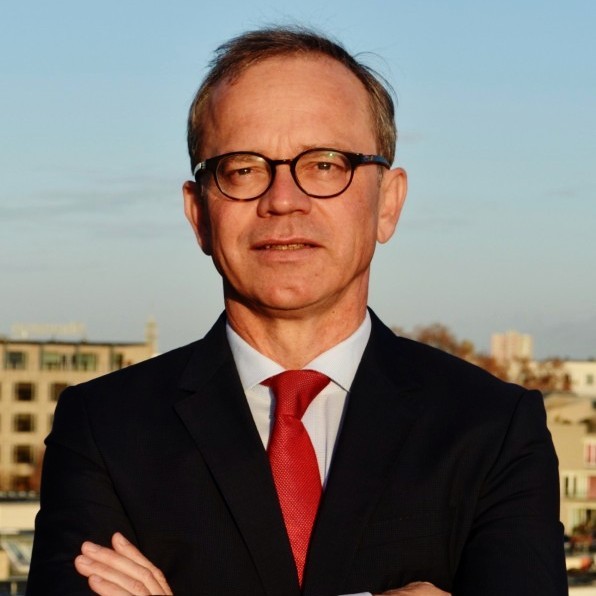
Today’s interview guest is Christian Wichard, who is the Deputy Director General of at the Federal Ministry of Justice and Consumer Protection and he has been doing that for about 14 years, with a short brek from 2009 to 2014, where he as Deputy Director General at the WIPO. He is overseeing all legislative efforts of the German government related to intellectual property and we talk about many interesting topics. He had large contributions to the becoming of the Unified Patent Court, we talk about the role of AI in IP, about new reforms in the IP world. Stay tuned for this interesting interview!
Before we jump into this interview, I have news for you:
The USPTO has launched DesignVision, the first AI-powered image search tool available to design patent examiners through the Patents End-to-End (PE2E) system. This tool uses artificial intelligence to support prior art searches in design patent examination and is part of the agency’s broader efforts to modernize workflows and reduce pendency.
In Europe, the EPO’s Enlarged Board of Appeal issued a much-anticipated decision in G 1/23 on July 2. The Board clarified that a product already on the market before the filing date of a European patent application cannot be excluded from the state of the art under Article 54(2) EPC merely because its internal structure or composition could not be analysed or reproduced. Furthermore, any technical information about that product that was publicly available before the filing date forms part of the state of the art—regardless of whether the product itself could be reverse-engineered.
Just weeks earlier, on June 18, the same Board issued another important decision in G 1/24, ruling that claims must always be interpreted in the context of the description and drawings—not only when ambiguities arise. This decision aligns EPO practice more closely with that of the Unified Patent Court and is a major step toward harmonization.
Speaking of the UPC, its case management system (CMS) transitioned to a new platform between July 3 and July 8. During the switchover, certain functionalities—like opt-out requests and representative registrations—were temporarily limited. Since July 8, all filing capabilities have resumed, supported by updated FAQs and training materials.
Finally, the EUIPO has expanded its mediation service to cover all inter partes proceedings in the areas of trademarks and designs. As of June 2, 2025, parties in opposition or invalidity proceedings can now opt into mediation free of charge, fully online, and on a voluntary basis.
Now let’s jump into the interview:
In this episode of IP Fridays, Rolf Claessen speaks with J. Christian Wichard, Deputy Director General at the German Federal Ministry of Justice and Consumer Protection. Wichard has been one of the most influential figures in shaping intellectual property law and policy in Germany and Europe over the past two decades.
He reflects on the most significant developments in European IP law during this time. First and foremost is the creation of the Unitary Patent and the Unified Patent Court (UPC), which he describes as a historic milestone for patent protection and enforcement across Europe. He explains why this new system makes litigation more accessible, enhances legal certainty, and strengthens Europe’s competitiveness.
The second major development he highlights is the EU Directive on Copyright in the Digital Single Market, particularly the implementation of Article 17 concerning the liability of content-sharing platforms. He outlines the challenges of balancing copyright protection with fundamental rights and explains how Germany approached the directive’s implementation.
Third, Wichard discusses the Second Patent Modernization Act in Germany, which addressed some of the systemic effects of bifurcation in patent litigation. He explains how the reform introduced measures to better synchronize infringement and invalidity proceedings, and how it introduced a safety valve allowing courts to deny injunctions in exceptional cases.
In a detailed discussion about the UPC, Wichard shares his personal involvement in both the early conceptual phase and the more recent ratification process. He explains why it took so long to bring the UPC into force and how political, legal, and procedural hurdles—especially in Germany—had to be overcome. He also outlines the core advantages of the UPC: its broad territorial scope, procedural efficiency, cost-effectiveness, and the expertise of its judges. According to Wichard, the UPC is well positioned to become one of the leading patent litigation venues worldwide.
The conversation then turns to the current EU IP reform package. Wichard explains the status of various legislative dossiers, including the proposal for compulsory licensing in crisis situations, the introduction of unitary supplementary protection certificates (SPCs), and the regulation of standard-essential patents (SEPs). He offers insights into the controversial withdrawal of the SEP proposal and the diverging views among member states.
Another focal point of the interview is the intersection of copyright and artificial intelligence. Wichard discusses whether copyrighted works can be used to train AI systems, whether AI-generated content can be protected under copyright law, and what challenges generative AI poses for the remuneration of human creators. He emphasizes the need for legal clarity, transparency, and a fair remuneration system in the age of AI.
Finally, Wichard talks about a new official expert opinion on remuneration in the platform economy and for private copying in Germany. Although the report had not yet been published at the time of the interview, he reveals that its main conclusion is that the current system does not require fundamental reform, but that improvements in transparency and efficiency are necessary. The report is expected to be published shortly and may already be available when this episode airs.
This is a rare opportunity to hear from someone who has been deeply involved in drafting and negotiating major pieces of IP legislation at the national and European levels. Whether you are a practitioner, policymaker, or simply interested in the future of IP in Europe, this episode offers valuable insights into where we stand and where we are heading.
If you don’t know Christian Wichard, he is the Deputy Director General at the Federal Ministry of Justice and Consumer Protection of the German government, and I’m very happy that you are taking your time to be on IP Fridays.
J. Christian Wichard: Thank you for having me. Thanks.
Rolf Claessen: Thank you very much for being here. Just to clarify, and that’s important: everything that you mention here in this interview is your personal opinion and you don’t speak for the government of Germany. That is clear. And you have been Deputy Director General at the Federal Ministry of Justice and Consumer Protection for over 10 years now and you are in charge of everything related to intellectual property in the government of Germany and so that’s very interesting for our listeners of IP Fridays, of course.
What have been the top three things you remember from this whole time that in your personal opinion have the biggest impact in the intellectual property world?
J. Christian Wichard: First let me start with a small clarification. I’ve been Deputy Director General in charge of IP matters twice: first between 2006 and 2010. Then I moved to WIPO as DDG, came back in 2015 to the ministry, and back again in 2019.
And yes, I mean there are a number of IP issues that have been around during the last 10 years. And I think by far number one is the creation of the unitary patent and the Unified Patent Court. I think in my view this is almost a once-in-a-lifetime event, at least in the area of intellectual property. You have a patent that is valid currently in 18 countries and possibly in the future in the whole European Union.
You have a specialized patent jurisdiction with judgments that are enforceable in all 18 participating countries. I think that in itself is already a huge achievement that makes patent litigation much easier in Europe. It lowers the threshold for SMEs to enter the patent system. It also contributes to Europe’s competitiveness and I think it’s also a unifying force beyond the patent family. So it’s the first civil or private law European litigation system we have.
Number two was already a bit more difficult. So here I’m hesitating a little, but probably it’s the EU directive on copyright and related rights in the digital single market that was passed in 2019 and our implementation in Germany. In translation, that would mean the law on the responsibility of service providers under copyright for the sharing of content. Already the directive was hotly disputed and heavily criticized, but in the end I think it did its job. It aims at extending copyright and related rights into the digital environment, including all limitations and exceptions, and this is a very complex process.
And hotly debated in particular was Article 17 of the directive, which clarifies the responsibilities of content-sharing platforms. And here just to explain a little: these platforms make a business out of making content available online, but tradition


 United States
