


Iranian Missile Attacks on Israel & Escalating Regional Conflict . What next?
Description
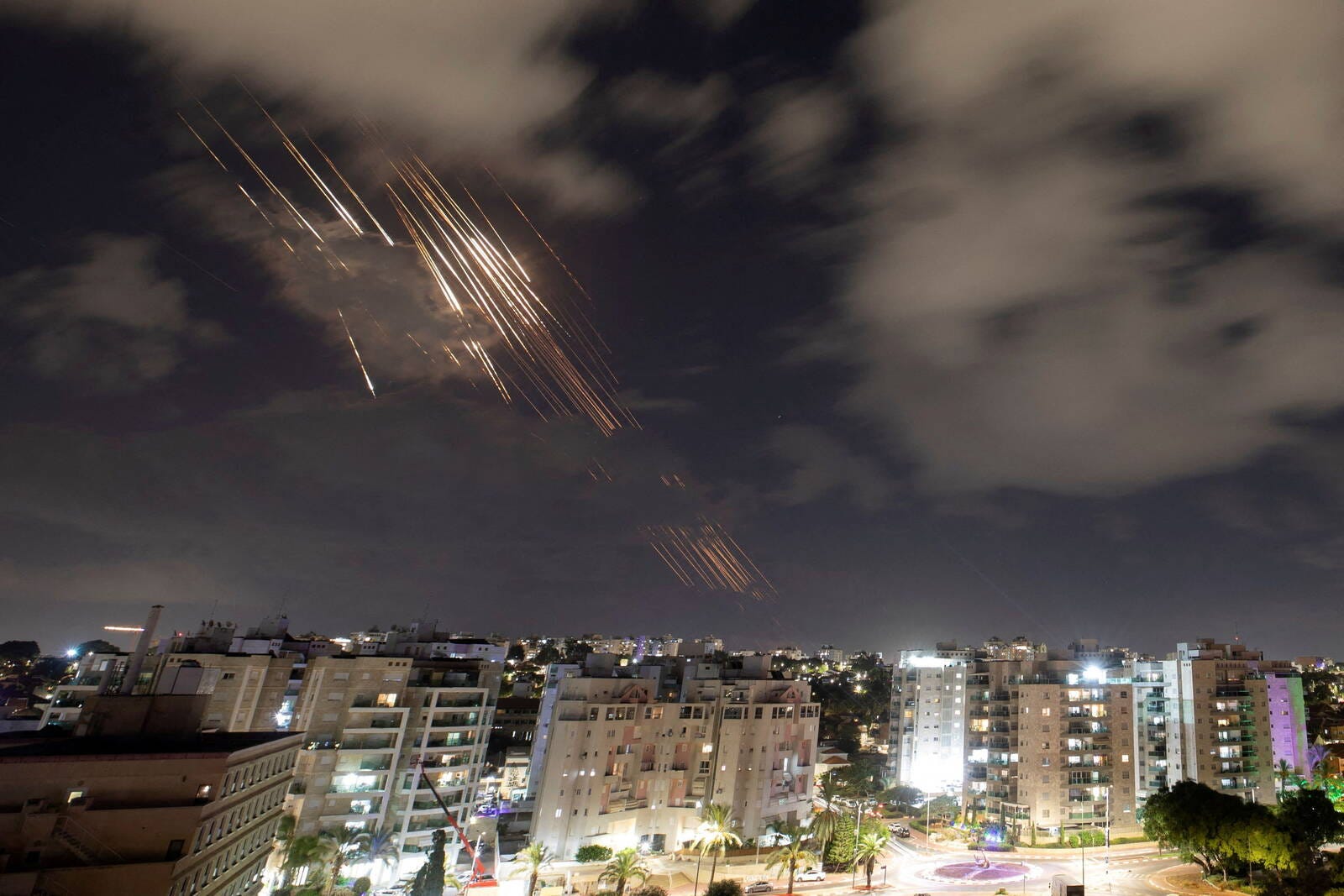 </figure>
<figure class="wp-block-audio"></figure>
On October 1, 2024, Iran launched approximately 200 missiles at Israel, marking a significant escalation in the ongoing conflict. This attack acknowledged as retaliation for the recent assassination of Hezbollah leader Hassan Nasrallah and the ongoing Israeli offensive in Lebanon, represents the second direct Iranian assault on Israel this year. While Israeli air defense systems largely intercepted the missiles, the attack signifies a dangerous turning point in the region.
<figure class="wp-block-embed is-type-rich is-provider-pocket-casts wp-block-embed-pocket-casts">
<iframe title="Baklava & géopolitique, le podcast de Thinkestân | RoohCast" src="https://pca.st/embed/lytmhxph" style="border: 0; border-radius: 8px; width: 100%; max-width: 1102px; height: 450px;" allowfullscreen="true" frameborder="0"></iframe>
The attack took place in response to Israeli strikes against Hezbollah in Lebanon, an ally of Iran. Sirens sounded throughout Israel, alerting the population to the imminence of an attack. Explosions were then heard in Tel Aviv and Jerusalem, and the airspace over Israel was closed. The Israeli army promised to respond rapidly to the attack.
The provided sources report on a significant escalation in the conflict between Israel and Iran. Iran launched a missile attack on Israel, targeting multiple locations, in retaliation for Israel’s military operations in Lebanon and the deaths of Hezbollah and Hamas leaders. This attack followed a series of Israeli strikes against Iran-backed groups, including Hezbollah, in Lebanon. The United States has condemned the attack and has committed to assisting Israel in defending itself. The situation is highly volatile, and tensions are rising in the region.
Key Developments:
- Iranian Missile Barrage: Iran launched nearly 200 missiles at Israel, targeting major cities like Tel Aviv and Jerusalem. The Islamic Revolutionary Guards Corps (IRGC) claimed responsibility, stating the attack was a direct order from Supreme Leader Ayatollah Ali Khamenei.
- Israeli Ground Incursion: Israel launched a ground incursion into southern Lebanon, targeting Hezbollah “attack infrastructure.” This marks the first sustained Israeli military operation in Lebanon since the 2006 war.
- International Response: Global powers expressed deep concern and called for de-escalation. The US, while reaffirming its support for Israel’s right to defend itself, stressed the need for a ceasefire.
- Civilian Impact: While Israel reported minimal casualties due to successful interceptions, the psychological impact on the population is undeniable. In Lebanon, the situation is dire, with over a million people displaced by the conflict.
Analysis:
- Retaliation and Escalation: Iran’s missile attack is a calculated response to the perceived humiliation of not reacting to Nasrallah’s assassination. This tit-for-tat cycle of violence could easily spiral into a broader regional conflict.
- Iranian Resolve: Iran’s willingness to strike Israel directly, despite the risk of retaliation against its nuclear facilities, demonstrates a new level of resolve. As stated by Iranian President Masoud Pezeshkian, “Let Netanyahu know that Iran is not a belligerent, but it stands firmly against any threat.”
- US Role: The US faces pressure to restrain Israel and prevent a wider war. However, the effectiveness of US diplomacy is questionable, given its already strained relationship with Israel and the waning influence of the lame-duck Biden administration.
- Uncertainty and Fear: The situation remains highly volatile. With both sides digging in and exchanging threats, the potential for miscalculation and further escalation is high. As aptly summarized, “The sight of missiles descending on Tel Aviv on Tuesday night was the clearest sign imaginable that the regional conflict so widely feared over the past year may finally have ignited.”
Quotes of Note:
- “This attack will have consequences. We have plans, and we will operate at the place and time we decide.” – IDF spokesperson, Daniel Hagari
- “The enemy is in a state of desperation and is trying to prove himself successful with psychological operations… but there is no such success for him.” – Ali Akbar Ahmadian, Iranian SNSC chair
- “None of us want to see a regional war. The price would be huge for the Middle East and it would have a significant effect on the global economy.” – David Lammy, UK Foreign Secretary
Next Steps:
- Monitor the situation closely: Track military developments, statements from key actors, and international reactions.
- Assess potential scenarios: Analyze the likelihood of de-escalation, a protracted conflict, or a wider regional war.
- Develop contingency plans: Prepare for various scenarios, including the potential humanitarian consequences of a protracted conflict.
Baklava & Geopolitics is a reader-supported publication. To receive new posts and support my work, consider becoming a free or paid subscriber.
Timeline of Events
Prior to October 1, 2024:
- Undisclosed Date (Months Prior): Israeli special forces begin conducting covert raids in southern Lebanon, targeting Hezbollah infrastructure and uncovering tunnels and weapons caches.
- July 2024: Hamas political leader, Ismail Haniyeh, is killed in an Israeli airstrike. Iran does not immediately retaliate, a decision that sparks debate and criticism within the Iranian government.
- September 27, 2024: Hezbollah leader, Hassan Nasrallah, is killed in an Israeli airstrike in Beirut.
- Following Week (September 27 – October 1): Israel launches a series of airstrikes against targets in Lebanon, resulting in hundreds of casualties, including many civilians.
October 1, 2024:
- Early Morning:Israeli forces launch a ground incursion into southern Lebanon, targeting Hezbollah positions in villages near the border. Israel insists it is a limited and targeted operation, not a full-scale invasion.
- Hezbollah denies a ground incursion is underway and claims no direct clashes with Israeli troops have occurred.
- The UN peacekeeping force in Lebanon (UNIFIL) states they have not observed any Israeli ground incursion into Lebanon.
- Israel orders residents of around 30 villages in southern Lebanon to evacuate to areas north of the Awali River.
- Lebanese officials report 95 people were killed in Israeli airstrikes across Lebanon on September 30th.
- The US announces it will deploy “a few thousand” additional troops to the Middle East to bolster security for the roughly 40,000 already in the region.
- Lufthansa and Swiss airlines extend suspensions of flights to Beirut and Tel Aviv.
- The UK government announces it has chartered a commercial flight for British nationals wishing to leave Lebanon.
- A French amphibious assault ship departs for the eastern Mediterranean to be in position for a possible evacuation of French nationals from Lebanon.
- Late Morning – Early Afternoon:Hezbollah claims responsibility for firing a rocket toward Tel Aviv, stating it targeted an Israeli military intelligence base. They dedicate the attack to the memory of Hassan Nasrallah.
- Air sirens sound in Tel Aviv and other areas of central Israel after projectiles are fired from Lebanon. The Israeli military says some projectiles were intercepted, while others landed in open areas. One man is lightly injured by shrapnel.
- Russia calls on Israel to immediately cease hostilities, withdraw its troops from Lebanon, and engage in a genuine search for peaceful means to resolve the conflict.
- Turkey condemns Israel’s ground incursion into Lebanon as an “illegal invasion attempt” and urges Israel to withdraw its soldiers “as soon as possible.”
- The UN calls for an immediate ceasefire and warns against a “full-scale ground invasion” of Lebanon by Israel.
- China expresses “grave concern” about the escalating situation between Israel and Lebanon, opposing any violation of Lebanon’s sovereignty and any actions exacerbating conflicts in the region.
- The Israeli military reinforces security restrictions inside the country, limiting gatherings and urging peop




 United States
