


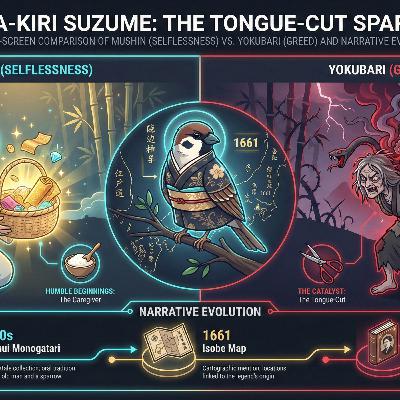
Japanese Folklore. The Tongue-Cut Sparrow: The spiritual symbolism of the Shita-kiri Suzume folktale.
Description
The discovery that this "fairy tale" was treated as a legal reality in 1661, appearing on a government land dispute map in Gunma Prefecture, which suggests the story served as a codified warning about interacting with Marebito—visiting deities disguised as animals to test the human soul.
In this episode, we explore Shita-kiri Suzume (The Tongue-Cut Sparrow), one of Japan's most enduring morality tales. We move beyond the sanitized children's version to uncover a narrative deeply rooted in Edo-period sociology and Buddhist ethics. We discuss the story's surprising connection to a specific location in Isobe Onsen, validated by a 17th-century shogunate map, and analyze the sparrow not just as a bird, but as a Marebito—a visiting spirit that judges human households. We also examine the brutal original endings involving the "Mean Old Woman" and the symbolic significance of the wicker baskets.



















 United States
