


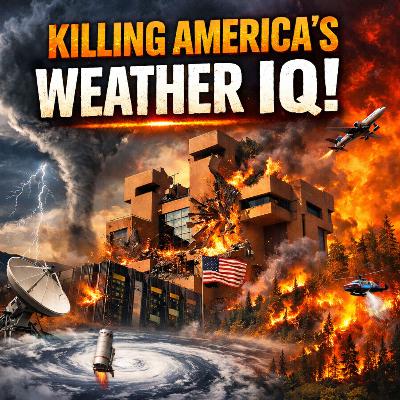
Killing America’s Weather IQ!
Description
In December 2025, the Trump administration announced plans to dismantle the National Center for Atmospheric Research (NCAR), one of the world’s most critical institutions for weather, climate, and atmospheric science. The decision, revealed publicly without warning to NCAR leadership, was justified by the White House as an effort to eliminate what it called “climate alarmism.” But scientists, lawmakers, and observers across the political spectrum argue the move is far less about science—and far more about politics.
NCAR, founded in 1960 and funded by the National Science Foundation, serves as the backbone of U.S. atmospheric research. It operates elite supercomputers, develops the world’s most widely used weather and climate models, pioneered lifesaving aviation wind-shear detection, revolutionized hurricane forecasting with GPS dropsondes, and provides real-time forecasting support for wildfire response and national defense. Thousands of researchers, universities, private companies, and federal agencies rely on its centralized resources—capabilities no single institution could replicate.
The administration’s announcement immediately sparked alarm. Scientists warn that dismantling NCAR would set U.S. weather and climate research back by decades, degrading forecast accuracy for hurricanes, floods, tornadoes, wildfires, and extreme cold—at a time when climate-driven extremes are intensifying. Aviation safety systems, wildfire prediction tools, military forecasting operations, and global research collaborations would all be weakened. Economically, the loss would ripple through Colorado and beyond, damaging industries like insurance, aviation, and energy that depend on reliable forecasts.
Beyond the official rhetoric, many believe the move is politically retaliatory. The decision came amid a highly publicized feud between President Trump and Colorado Governor Jared Polis over the imprisonment of former county election official Tina Peters. It also coincided with the cancellation of over $100 million in federal grants to Colorado. Colorado’s congressional delegation has openly called the NCAR action dangerous and punitive, framing it as an attempt to punish the state rather than reform science.
The NCAR announcement fits into a broader pattern of actions undermining U.S. science: deep funding cuts to federal research agencies, mass departures of government scientists, removal of scientific data from public websites, and increasing pressure on universities to shift away from climate research. Graduate programs are shrinking, long-term projects are failing, and scientists describe a shift from advancing discovery to simply trying to preserve what still exists.
The response has been swift and fierce. Hundreds protested in Boulder, joined by elected officials and researchers, emphasizing the irony that the announcement came during an extreme wind event when NCAR’s models were actively protecting lives. Colorado lawmakers are pursuing legislative and legal avenues to block the dismantling, while the scientific community has spoken with near-universal condemnation—warning that losing NCAR doesn’t just hurt science, it endangers public safety and national security.
At its core, this is more than a budget fight or a political feud. It’s a reckoning over whether evidence-based science remains a pillar of American decision-making—or whether one of the nation’s most vital scientific institutions can be dismantled at the stroke of a political pen.

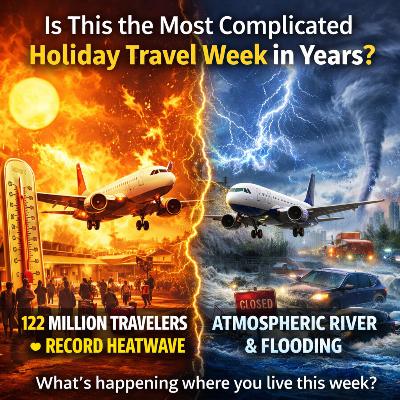
![[ES] Tu Pronóstico de Fin de Año: Qué Significa el Clima Para Tus Viajes Esta Semana Festiva](https://s3.castbox.fm/95/85/ee/b7685dc1518fff08b8022eb9a89ec533b1_scaled_v1_400.jpg "[ES] Tu Pronóstico de Fin de Año: Qué Significa el Clima Para Tus Viajes Esta Semana Festiva")
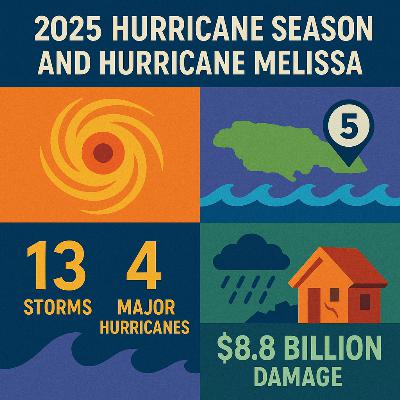
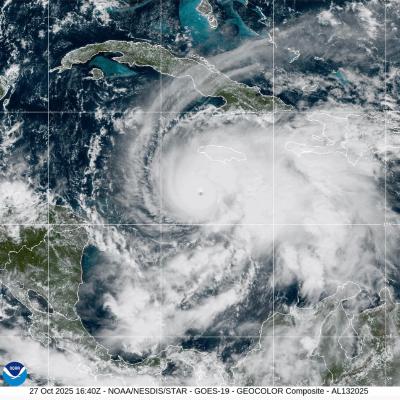
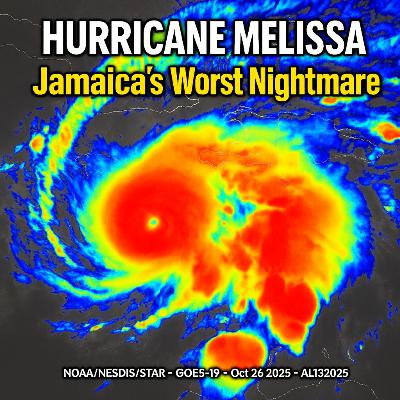
![[ES] Huracán Melissa: última oportunidad para prepararse](https://s3.castbox.fm/5d/51/89/b59c2f2d953e83f0ff78551b8fd10a5dfd_scaled_v1_400.jpg "[ES] Huracán Melissa: última oportunidad para prepararse")





 United States
