


Lapita pottery: A 3000-year tale of movement, memory and preservation
Description
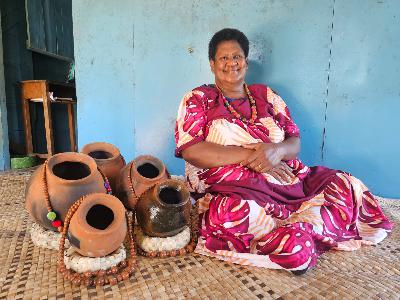
"This is what I'm known for. It's my identity"
In the Fijian village of Nayawa, Akesa Vaka Kunabuli is keeping the ancient art of Lapita pottery making alive. It's one of the only remaining places continuing this particular technique.
It's a style that once travelled across the Pacific, carried by the Lapita people who migrated from modern-day Taiwan over 3,000 years ago. But the story doesn't end there.
Each shard found maps a chapter in one of the most complex human migrations in history. Recently, pottery shards have been uncovered in unexpected places like Papua New Guinea and northern Queensland. It's challenging what we thought we knew, and suggesting the Lapita journey stretched even further than imagined.
Fijian archaeologist Dr Tarisi Vunidilo puts it simply: "The more Lapita sites we find, the more information we keep adding to our collective history." With new technology and a growing movement to preserve this art, we're not just expanding our understanding, we're safeguarding its future.
Yet climate change is starting to affect how potters like Akesa source clay and dry their pieces. So what happens when the environment that sustains this ancient practice begins to shift? What will become of the craft, and the identity it carries?
Culture Compass was produced by Deadset Studios for ABC Radio Australia.










 United States
