


Life in the Fast Lane With Robinhood Markets
Description
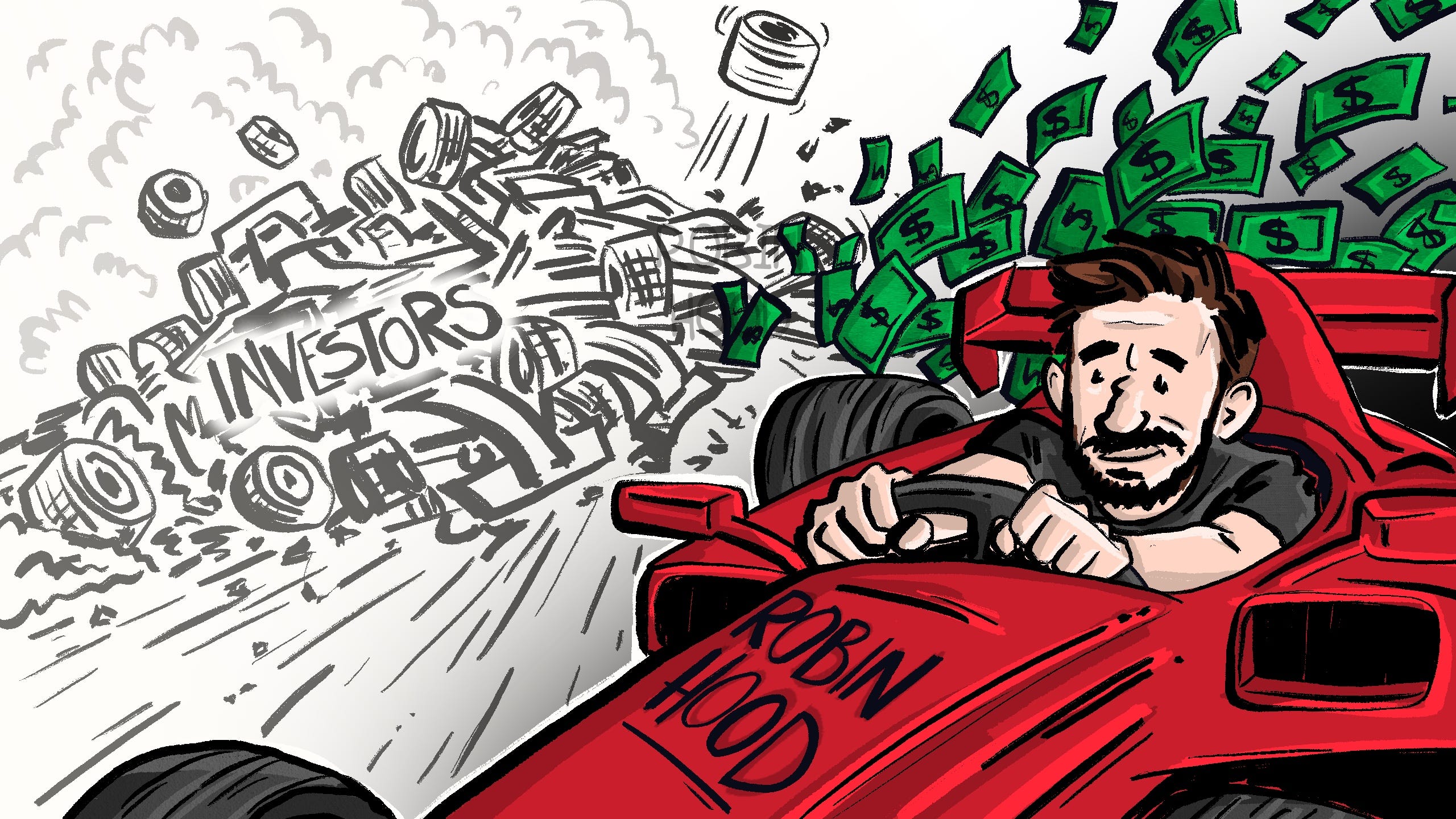
By just about any metric it has been a blowout year for the retail brokerage company Robinhood Markets. The company’s stock (HOOD) price is up about 220% in 2025, revenues and account growth have shot higher, and founder Vlad Tenev has become a multi-billionaire.
Robinhood was founded in 2013 but really burst onto the scene in 2020, changing the face of the retail brokerage industry. After a near-death experience in 2021 with the infamous GameStop episode, the company has become a phoenix, rising from the ashes, turning itself into a casino that can fit in a young man’s pocket. On the Robinhood app you can buy and sell stocks, options, crypto and bet on Monday Night Football all at the same time!
Robinhood is a pusher in plain sight and dopamine is the drug it peddles. It rounds up retail, non-professional traders and matches them up with the best and fastest traders in the world and gets paid handsomely to do it. Tenev continually claims he’s democratizing investing, but his customers are, in effect, profitable lab rats. Their order flow is sold to professional trading firms and studied. They’re more like marks than investors.
The Wall Street Journal recently reported:
The chief executive of Robinhood took the stage at the online brokerage’s annual summit in Las Vegas this fall decked out in a race-car driver’s jumpsuit and customized Nikes.
Vlad Tenev told the hundreds of cheering traders in the audience that they had chosen “one of the most intense lifestyles out there.” He compared trading to driving a race car. “A finely tuned machine can make all the difference,” he said, “and that’s the role we feel Robinhood plays for our active investors.”
Vlad is right about one thing: trading for a living is definitely intense. I’ve done it professionally until I realized I really wasn’t good at it (most people aren’t) and went back to sales and strategy! A veteran trader, who was actually very good at it, said to me once, “If it were easy, Girl Scouts would be doing it.”
As far as Vlad taking the stage in race-car driver get-up and talking about a finely tuned machine making the difference, the analogy only works if the driver knows how to handle the damn car. If you put 99.99% of us into a Formula One car, we’re going to run that thing into the first wall we see. Maybe the odds are a little better trading stocks, or options on stocks and the host of other high-octane wagers that Robinhood promotes and offers, but over the long term, not much better.
The Journal’s story includes that of a 35-year-old man who says he gets up at 6:30 a.m. every day to start trading zero-day options.
It’s a hobby he said he never would have picked up if not for how easy it is on Robinhood. “The thrill gets me going. If $500 can get me $50,000 or $60,000, let me just try.”
Good Lord.
I have to admit that I’ve looked at the meteoric growth of Robinhood with fascination and a sick sense of admiration for what Vlad Tenev and Baiju Bhatt built. I felt the same way when I watched “Narcos Mexico” and saw how Felix Gallardo built the first Mexican marijuana and cocaine cartel.
My admiration comes from the rather brilliantly evil way Tenev and Bhatt took their early experiences with high frequency trading (HFT), identified a new brokerage profit model that could offer a no-fee brokerage combined with a video game-like interface to serve up dopamine hits to a whole new generation of investors that the traditional brokerage houses either overlooked or didn’t know how to reach effectively.
A Ticket to Billions: Payment for Order Flow
Fee-less trading was Robinhood’s main draw when it started in 2013. You might ask yourself how Robinhood could have made money without the traditional fees a retail broker would charge per trade. To this day, most users of Robinhood don’t know the answer to this question.
From their experience with high frequency trading, the Robinhood boys learned that they didn’t have to send your order to the publicly visible New York Stock Exchange, but could sell customer orders to buy and sell stocks and options to the big and secretive HFT market makers, like Citadel, Dash, Wolverine, Susquahanna, Jane Street and Morgan Stanley, who will happily take the other side of your trade and quietly pay Robinhood for the privilege. This is called Payment for Order Flow (PFOF). You may have read or heard about this from Michael Lewis’ book, “Flashboys.” Before all the super geniuses of the planet went into Artificial Intelligence, they went to Wall Street or Chicago to build these super-fast trading algorithms that can transact in about 100 milliseconds, or faster than you can blink your eyes.
Without getting too into the weeds, when a Robinhood customer places an order to buy a stock, Robinhood can go to say, the New York Stock Exchange to fill the customer’s order or can route the order to one of the HFT market makers as long as it’s making the best effort to get the best execution (essentially, price) for the customer. The HFT market makers post where they will buy or sell a particular stock or option. The market maker profits from the difference.
Profit isn’t guaranteed but market makers typically make a penny or two per share on stock trades — and they are potentially making tens of millions of pennies per day. For options, the HFTs can make a much larger spread, anywhere from 10 cents to a few dollars. This is why HFT market makers like options! HFT market makers pay retail brokerages like Robinhood and Charles Schwab a certain amount per share of their retail orders to direct the orders to them, and as long as the retail customer is getting the National Best Bid and Offer (NBBO) at the moment of trade, all good, right? Maybe.
The SEC found that from 2015 to 2018, Robinhood was not disclosing to its retail clients how the company was making money off orders by selling their order flow. from the 2020 SEC press release.
“…Robinhood made misleading statements and omissions in customer communications, including in FAQ pages on its website, about its largest revenue source when describing how it made money – namely, payments from trading firms in exchange for Robinhood sending its customer orders to those firms for execution, also known as “payment for order flow.” As the SEC’s order finds, one of Robinhood’s selling points to customers was that trading was “commission free,” but due in large part to its unusually high payment for order flow rates, Robinhood customers’ orders were executed at prices that were inferior to other brokers’ prices. Despite this, according to the SEC’s order, Robinhood falsely claimed in a website FAQ between October 2018 and June 2019 that its execution quality matched or beat that of its competitors. The order finds that Robinhood provided inferior trade prices that in aggregate deprived customers of $34.1 million even after taking into account the savings from not paying a commission.
After that ethical speed bump, Robinhood really got down to business. The demographic Robinhood was going for suddenly had lots of time on its hands when Covid hit.


 United States
