


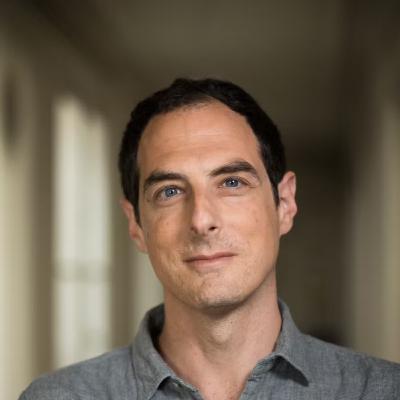
Mathematics, Intuition, and Curiosity – David Bessis
Description
David Bessis is a mathematician and the author of Mathematica: A Secret World of Intuition and Curiosity.
In this conversation, we explore David's provocative claim that mathematical ability is not genetically determined — and what that means for how we teach, learn, and think about intelligence itself.
David explains why math books aren't meant to be read, why conference talks often aren't meant to be understood, and how fear is the number one inhibitor of mathematical progress at every level — from primary school to research departments. He introduces the concept of "secret math": the oral tradition of metacognitive tricks and intuitions passed between mathematicians but rarely written down or taught explicitly.
We discuss Bill Thurston's extraordinary visualization abilities (developed through childhood exercises to compensate for a vision impairment), Terence Tao's superhuman mathematical speed, and David's own trajectory — from failing his first PhD to experiencing weeks of what he calls "hyperlucidity," where decades of mathematical progress compressed into days.
David shares practical insights on how he's teaching his own children, what schools get wrong about math education, and the three specific changes he'd make to how mathematics is taught. Throughout, he challenges the assumption that extreme talent gaps must have genetic explanations, arguing instead that idiosyncratic cognitive development and self-reinforcing feedback loops create the massive inequalities we observe.
Outline
00:00 Introduction
01:32 Why Math Books Are Not Meant to Be Read
05:10 The Secret Math That's Never Written Down
11:31 The Metacognitive Skill of Asking Stupid Questions
17:57 Fear is the Number One Inhibitor of Mathematics
25:44 How Idiosyncratic Development Shapes Math Talent
39:06 Why Terry Tao Can't Be Explained by Genetics
54:43 Raising Children to Be 1000x Better at Math
1:04:08 Hyperlucidity: How I Proved a 30-Year-Old Conjecture
1:18:18 Three Small Changes That Could Transform Math Education
1:24:39 Advice for Aspiring Math Students





 United States
