


Michael Green: Trump and the Pendulum of U.S. Foreign Policy
Description
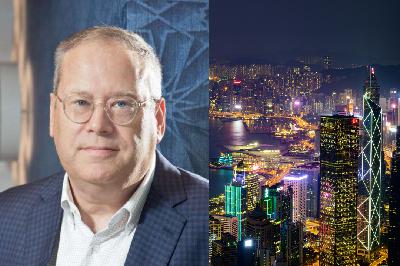
For this episode, we spoke with Professor Michael Green, who is CEO of the United States Studies Center at the University of Sydney, and served in the U.S. National Security Council during the George W. Bush administration. Dr. Green advocates for America’s allies to remain committed to the alliance, but notes the many counterproductive moves by the Trump administration that, while mostly reversible, are damaging America’s global strategy at a privotal moment in the competition with China.
Richard Gray
Welcome to Pacific Polarity. Today, we're speaking with Dr. Michael Green, who is CEO of the United States Studies Center at the University of Sydney and Senior Advisor and Henry Kissinger Chair at the Center for Strategic and International Studies. Dr. Green served as Senior Vice President for Asia at CSIS, and is on leave from Georgetown's Walsh School of Foreign Service. Previously, he taught at Johns Hopkins SAIS and served in the U.S. National Security Council during the George W. Bush administration. Dr. Green received his PhD from SAIS and is the author of numerous books, including most recently, Line of Advantage, Japan's Grand Strategy in the Era of Shinzo Abe. Dr. Green, pleasure to be speaking with you.
Michael Green
Thank you, guys. Glad to join you.
Richard Gray
As a starting point, throughout your career working on U.S. policy in Asia, what have the historic strengths been for U.S. as a strategic ally and partner? Why have countries decided to collaborate with the United States out of choice, not necessarily out of the lack of options?
Michael Green
When the U.S. sent its first diplomatic mission to China in 1784 on board the sycophantically named Empress of China, which sailed out of New York Harbor with ginseng from Pennsylvania and other goods to trade, they sent a diplomat, major Shaw, who'd been in the Continental Army. And his instructions from Washington were, be very nice, say that the U.S. doesn't interfere in other countries' internal affairs, that we're interested in commerce, that we're not imperialists like the British.
For a lot of our history, really, into the early 20th century, the U.S. approach to the world was just be nice to everybody, and focus on commerce. The rest of the world figured, that is not exactly a consistent pattern, if you were in Latin America in the 1840s or the early 1900s, you didn't feel that way about the U.S.; big power rivals like Japan in the early 20th century—you know, Japanese people liked the U.S. actually, but they realized that the US, in fact, was not this Jeffersonian “peace and friendship with all”, but had hard power interests. And that's probably good because we do, the US does.
My book argued that the US will compete, it had competed starting in 1783 and 84, and it will compete now to prevent China from having hegemonic control of Asia. That's built into the DNA. The American colonists were fighting tooth and nail for their independence, they'd turn to the French, the Spanish, whoever would help them.
So that's one thing that allies get today, because the Japanese, the Indians and Australians, any ally worries about abandonment: will the US really be there? The consistency of American competition and not letting another hegemon take over, that frankly provides a really important base for an alliance. It's not just that we're nice. It's that actually, we don't like getting pushed around. And that is somewhat reassuring.
The other thing that has really built American credibility as an ally is the economic power of the United States. After World War II, 50% of global GDP was American because most of the world was blown up or not yet developed. By the 1970s, the U.S. had about 25% of global economic output.
In the post-Cold War years in the 90s, when the Soviet Union collapsed and everyone talked about American unipolarity, we had about 25%. You know what it is today? About 25%. So there's a consistent critical mass of American economic power that also makes it really important if you want to develop your country, have access to technology.
And then the third thing is, while American engagement in the world is based on realpolitik and hard power and preventing rival hegemons from dominating Asia or Europe or the Western Hemisphere, it's also built around the idealism and rule of law that the founders of the country built into the Constitution and the Declaration of Independence. There's a theory that Charlie Kupchan at Georgetown and others have advanced, John Ikenberry at Princeton, that American hegemony is very different from ancient Rome or Nazi Germany, because it's based on the rule of law. So the UN, the World Trade Organization, the Bretton Woods system, all these things allow countries like Japan, Germany, former rivals to get rich because the Americans allow people who participate as partners and allies to get a say and to have constraint over American choices in the UN or the World Trade Organization.
I'm sure we'll ask about the Trump administration, but what worries a lot of people is that last part, keeping people on your side because you play by the rules is now really being questioned. And then the other two parts, American economic power, American hard power count, but the secret sauce has always been this willingness of Gulliver to let the Lilliputians tie him down. And Trump isn't going for that. And so we'll see what happens.
Richard Gray
You did predict the follow up, which is the question of looking at the status quo situation of U.S. strategic positioning. More narrowly on this question, you talked about a lot of things, which is consistency of commitment, economic power and commitment to some level of international rule setting. Specifically on the commitment side of things, how has that changed? And how do you think other countries are reacting to a perception, perhaps, that American commitment is less stable and predictable as maybe it had been five or 10 years ago?
Michael Green
Henry Kissinger was asked, when Trump was elected in 2016, to explain Donald Trump in the context of world history, very Kissinger kind of question. And Kissinger said, sometimes the international system changes and you don't realize it has changed until some figure comes along to remind you that it's broken. And he said that was Donald Trump.
And then the interviewer asked him, so what is Trump's vision for the new world order and Kissinger hesitated and said, I don't think he has one. He was an accident. So my view is that Donald Trump is the most disruptive American president in history. And that is obviously nerve wracking for allies and confusing for adversaries.
But he's not speaking for the American people. And frankly, I don't think he's speaking for American interests as the Congress defines them, which is to say he got elected mainly because of… there's new polling out that is much more reliable than the exit polls on the day of the election, and it pretty much shows he got elected because of inflation and the economy, and because people thought Biden was old and Kamala Harris wasn't elected in an open way, she was anointed, plus immigration and culture stuff, the woke DEI agenda, which was probably fourth on the list; that's why he was elected.
He was not elected to break American alliances, tariff everyone, because consistently in polls, the U.S. Studies Center polls we do, CSIS, Chicago Council, you name it, Pew, Gallup, consistently the American people really like having allies and think they're really important. And by the way, polls also show that two-thirds of Americans think tariffs are not good because they raise prices.
So Trump is disruptive. His leadership style is built around being unpredictable and threatening. And that's not how you run an alliance. But it's not a mandate that he has from the American people or the Congress. So my view is the disruption could get deeper, but it's not a new world order and it's not a new American strategy. It's a period of great disruption. And the question is, what comes next? Allies like Australia or Japan will have some say in that, because we need allies.
And it's interesting, even in the tariff wars, which are pretty harsh with Japan right now, the U.S. trade representative, the lead negotiator, has said, we are not going to bring defense into this. We're not going to talk about defense spending. So there is a recognition, even in the most protectionist parts of the Trump administration, that we really need allies because of China.
So as the French saying goes, plus ça change, plus c'est la même chose, the more it changes, the more it looks the same. There's huge disruption and change, but it's also revealing, I think, the depth of support for alliances in the major institutions of American power, the Congress, the public, think tanks, universities.
There is really no constituency in the U.S. that is against alliances right now, which for the first time ever, by the way, because in the 80s, when we had trade friction with Japan, a lot of trade unions were critical of the alliance. That's not the case now. So anyway, it's small comfort. Doesn't mean this won't be hard.
Richard Gray
As a point on the unions, I think the Nippon Steel situation points slightly in the other direction, but I take your point.
Michael Green
Let me say something about Nippon Steel, which was a supremely stupid decision by both Biden and Trump to not approve the purchase by Nippon Steel of a U.S. steel company that would have increased U.S. competitiveness in steel, saved jobs, and lowered prices for manufacturers. But in the context of the 2024 presidential election, swing state votes in Pennsylv



 United States
