


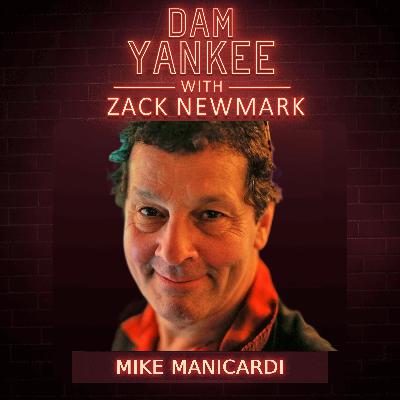
Mike Manicardi
Description
Ask long-time Amsterdam resident Mike Manicardi whether he is an actor, director, community leader, or entrepreneur, and he'll give you a complex answer making it clear why he worked 80 hours per week for most of his career. The founder of the Badhuistheater in the capital's Oost district, Manicardi says it is his family's survivor mentality and his refusal to quit that allowed him to defy the odds and grow the theater over 40 years into a vital cultural hub for Amsterdam's Dutch and international community. Manicardi told the Dam Yankee podcast it was never easy turning the venue into one of the city's most diverse small theaters, noting that the building's assignment by City Hall to international audiences prompted violence from extreme nationalists and youth gangs in the then working-class neighborhood.
The early years of the Badhuistheater were marked by open hostility and literal threats to its existence. Compounding the danger was the immense physical labor required just to open the doors each night. Manicardi recalled transforming the derelict structure: "We had to rebuild it... we had to pull half of the building apart and create a kind of circus tent of beams to create the amphitheater that you have now." In that part of Amsterdam-Oost, which he described as an "impoverished ghetto," he faced "a kind of a criminality" and "fascist parties" who "tried to burn us out. But it didn't matter. It didn't work." Manicardi's tenacity in the face of firebombs and gang crime cemented the theater’s foundation on a principle of absolute refusal to fail.
Manicardi credits his English, Irish, and Italian heritage for his immense fortitude, tracing his "survivor mentality" through his parents’ dramatic experiences. His mother was quite literally born in a forest in Myanmar, when it was still known as Burma, a "complete miracle that they all didn't die of disease." Meanwhile, his Italian father was rounded up as a teen during World War II and held in an internment camp on the Isle of Man. Manicardi speculated his father carried the shame of that experience "all his life," noting that in the camp "they didn't mind if a couple of them died because then there was less people to feed." This intergenerational history instilled in Mike the unwavering resolve needed to save his theater.
After over five decades in theater, Manicardi, now in his 70s, admits that the fight for survival never went away; it just changed. The early physical threats have been replaced by the persistent, draining struggle against slim finances and institutional neglect. "In my 70s, I’m still working 60 hours a week," he noted, explaining that he must constantly be two people: the artistic director and the entrepreneur who keeps the lights on. The battle has intensified with politicians who "sometimes disregard the need for culture," leading Manicardi to work constantly to protect the diverse, vital role the Badhuistheater plays in the community.
Despite the battles, Manicardi remains intensely optimistic about the future of his city and his country. He expressed hope for the political landscape: "I'm very positive. Amsterdam is going to be the wonderful magic city which it still is," adding, "I'm a complete fan. And I think, 'Thank God, we live in the Netherlands.' I'm very proud to live in the Netherlands." Today, the Badhuistheater stands as a unique monument to independence and resilience, hosting live theater, improv comedy, and productions from Dutch, English, Czech, French, Italian and Polish companies—a testament to one man’s decades-long commitment to culture.
Listen to this entire episode of Dam Yankee on all major podcast platforms, or watch the full videos on YouTube. For more information and tickets, visit the Badhuistheater website and their Instagram pages.
Amsterdam, Mike Manicardi, Amsterdam-Oost, Badhuistheater, theater, nationalism, political violence, extreme right, international theater, live theater, comedy, improv comedy, United Kingdom, podcast, Dam Yankee, immigration, Podcast Interview, entertainment, Noord-Holland, gang violence, organized crime, finance, arts and culture






 United States
