


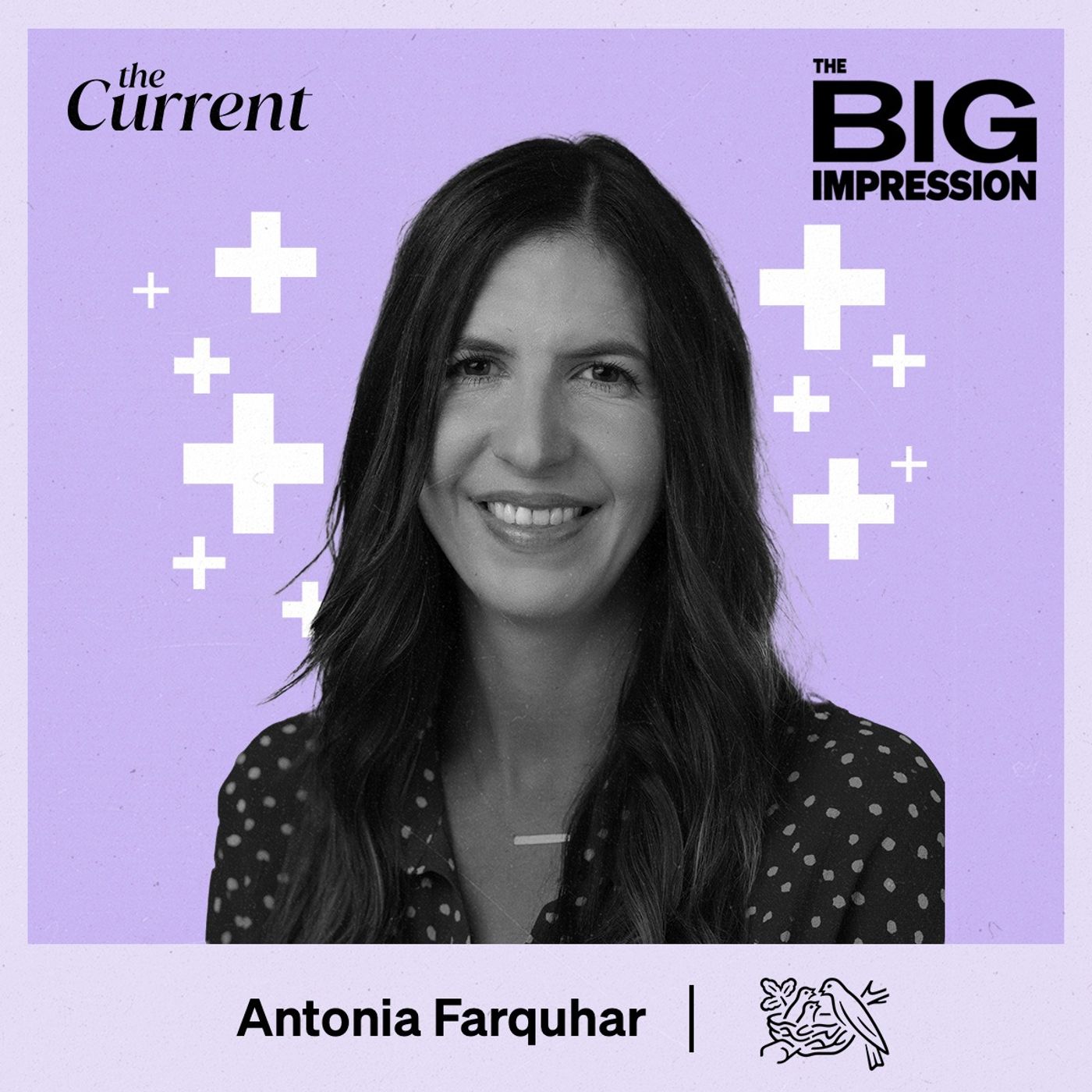
Nestlé’s Antonia Farquhar on why KitKat and F1 joined forces
Description
On the latest episode of The Big Impression, Nestlé’s Antonia Farquhar talks about striking unexpected partnerships, like KitKat with Formula One, to keep the 90-year-old chocolate brand fresh. It’s part of a larger strategy to connect with new audiences through live cultural moments.
Episode Transcript
Please note, this transcript may contain minor inconsistencies compared to the episode audio.
Damian Fowler (00:00 ):
I'm Damian Fowler.
Ilyse Liffreing (00:01 ):
And I'm Ilyse Liffreing.
Damian Fowler (00:02 ):
And welcome to this edition of The Big Impression.
Ilyse Liffreing (00:09 ):
Today we're spotlighting one of the most ambitious shifts happening in brand marketing, Nestle's global push to redefine performance in a world where reach, relevance and streaming. Now go hand in hand.
Damian Fowler (00:21 ):
Our guest is Antonia Farquhar, global head of Media and partnerships at Nestle. Antonia has been at the forefront of Nestle's pivot towards connected TV and long-term brand building across categories, continents, and campaigns.
Ilyse Liffreing (00:35 ):
From Formula One to Gen Z coffee drinkers, she's helping Nestle rethink what media performance really means in a CTV first world and how brands can use new tools and data to close the loop between awareness and action.
Damian Fowler (00:50 ):
Let's get into it.
Ilyse Liffreing (00:52 ):
Antonia. So I understand that you guys are sponsoring Kit Kat's Formula One. I'm very curious to learn more about that.
Antonia Farquhar (01:03 ):
Yeah, one of the reasons that the Kit Kat team put that sponsorship together was to really, they've got an existing brand strategy, have a break, have a Kit Kat, right?
Damian Fowler (01:14 ):
Everybody loves that.
Antonia Farquhar (01:14 ):
Which is decades and decades old. I think it's way over 75 years old, that consistency of brand message is there and it's really part of the foundations of that brand. But the break is more important than ever in a busy world that we all live in today. And so it was really putting the brand at the heart of also everybody needs a break. How can we capitalize on that? And F1 has gone from being very much, I think known as a petrol head sports, to really bringing in different audiences, so younger, more diverse across the genders and it's global and Kit Kat is a major global brand of ours. So it was an excellent opportunity to really bring together the brand and I guess wouldn't have been an expected place. And then to capitalize on that, on giving people a better break as well.
Ilyse Liffreing (02:08 ):
Can you give me a little bit of background about why sports and why Formula One?
Antonia Farquhar (02:15 ):
I think for me, sports is one of the last truly appointment of view. Live viewing. You do not want to miss the race. You do not want to miss the final, you do not. There's so many of those moments now where it is also, people are talking about it, who won, how's the lineup, where is it? Et cetera. So it's part of cultural conversations and really the opportunity for our brands is to connect into what's happening, making sure we are injecting our brands with freshness and bringing in that new conversations. And I think sponsorship like the F1, and we also did Coffee Mate and the Super Bowl early this year, again, to really capitalize on where's the real excitement happening and how do we inject our brands in a distinct way. Obviously being true to their brand codes to new and different audiences,
Damian Fowler (03:13 ):
A thought a 30,000 foot view, you look across the landscaping like, well, these are the moments where we need to show up
Antonia Farquhar (03:20 ):
For sure. I mean, one of the role within the team is to really inspire and provoke and drive that distinctiveness for our brands. We are privileged to have a lot of huge global brands, but we're also over 150 years old as a company. So it's how do you inject that freshness? How do you stand out in a increasingly fragmented media landscape? So I think this is where we want brands to really lean in and as I said, it is holding on what is your brand territory? Where is that strategic foundations that hold true and need to be consistent, but how do you punch and become a little bit more maybe unexpected? Unexpected places is clearly one of the themes that I'm seeing in the industry lately that it drives that attention.
Damian Fowler (04:20 ):
When you talk about unexpected places. Could you say a bit more about that?
Antonia Farquhar (04:26 ):
I mean, we all know we are living in a very attention. Yeah, the second you wake up the phones, the amount of apps on your phones, it's increasingly hard and I think it'll continue to get harder to really drive connectivity to brands with people. And so I think doing something a little bit different and perhaps wouldn't, it's not predictable for that brand to be in that particular place or speaking in a different environment. I think that's an opportunity going forward. And I think when you look at a lot of the award-winning work globally this year, that's one theme that I really see coming through and I kind of love it. It's bringing a bit of fresh, it's bringing an edge, and I think it's pushing people and brand experiences to a different level to where they were before. So
Ilyse Liffreing (05:18 ):
Yeah,
Antonia Farquhar (05:19 ):
I'm enjoying
Ilyse Liffreing (05:19 ):
It and it's fun.
Antonia Farquhar (05:20 ):
Exactly. It's fun. And I feel like it's almost, there's different areas where different brands have different tone of voice, and so it's working out really what is that? And then perhaps tapping into a community really engaged in a particular community and how can you link your brand and derive some insights from that behavior to speak in that way.
Ilyse Liffreing (05:45 ):
Certainly. Now, I know you were talking about using sports to tap into that audience around appointment tv. Are there other channels that you guys are particularly leaned into at this time? Are there ones that you're experimenting with? How is that going?
Antonia Farquhar (06:03 ):
Yeah, so I think the more you know about marketing science, and I'm quite a nerd when it comes to marketing science, but the more channels you are in, the higher your effectiveness of course. So again, it's about how do we do fewer, bigger, better campaigns.
(06:21 ):
And media activations to really get that consistent cut through. But in terms of channels, when you look at where the growth is at the moment, retail, digital media is growing at an increasingly fast rate year on year. But connected TV is another one that I am really excited to discover the f



 United States
