


OEG Voices 074: Tony Bates and A Personal History of Open Education
Description
Join us for a wide ranging conversation with Tony Bates covering his long and on ongoing span of being active in open and distance education. We start from his being part of the very first days of the Open University through his years based in Canada but working globally being integral to the development of online learning through the web. He has long been publishing open textbooks and sharing his perspectives on his own website. We go right up to present day where Tony is active in exploring the role of artificial intelligence.
We were inspired to have these conversation having seen where Tony has been publishing on his blog his “personal history” now up to it’s 26th installment:
I am writing an autobiography, mainly for my family, but it does cover some key moments in the development of open and online learning. I thought I would share these as there seems to be a growing interest in the history of educational technology.
Note that these posts are NOT meant to be deeply researched historical accounts, but how I saw and encountered developments in my personal life.
Tony Bates blog
<figure class="wp-block-image size-large">
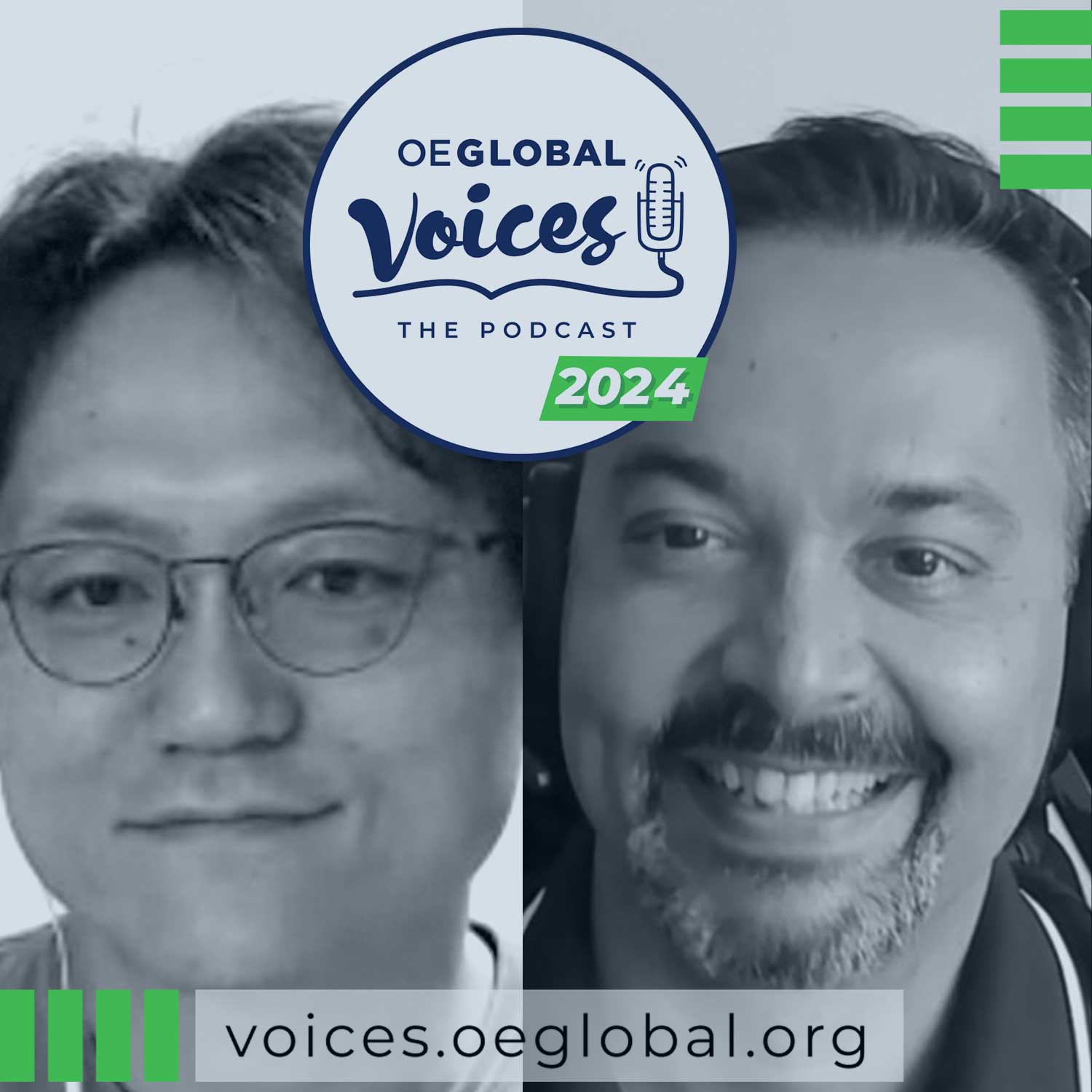
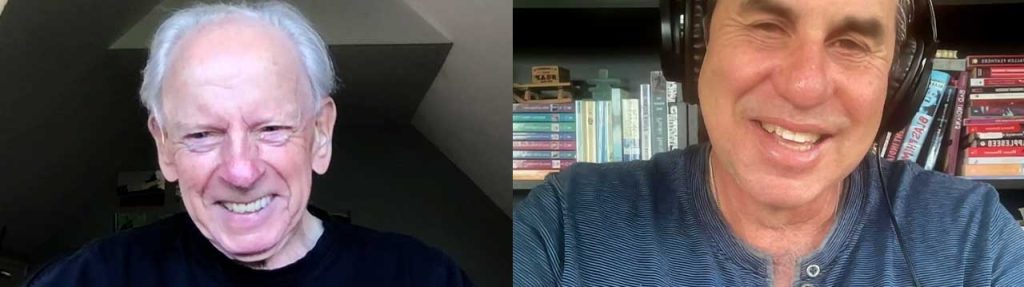 <figcaption class="wp-element-caption">In the OEGlobal Voices studio with Tony Bates (left) and Alan Levine (right)</figcaption></figure>
Listen in for Tony’s insightful energy, critical perspective, and humor as well as his lived stories of experience through a long era of online and open education. Plus, you will find a surprising bit of extra history on how he might have influenced some other students he knew in primary school who went on to be famous.
In This Episode
FYI: For the sake of experimentation and the spirit of transparency, this set of show notes alone was generated by AI Actions in the Descript editor we use to produce OEGlobal Voices.
Podcast Show Notes: OE Global Voices Episode 74: Tony Bates
In this enlightening episode of OE Global Voices, host Alan Levine is joined by the remarkable Dr. Tony Bates, an influential figure in the realm of open education.
Episode Highlights:
- Introduction to Tony Bates: Discover the journey of a legend in open education, from his beginnings in England to key contributions at the Open University and beyond.
- Open Education Insight: Tony discusses the limitations and potential of open education resources today, sharing insights rooted in his extensive experience.
- Founding of the Open University: Gain behind-the-scenes knowledge of how the Open University was envisioned and established, expanding access to higher education with innovative methods such as integrating print, radio, and TV.
- Role in Online Learning: Learn about Tony’s pioneering role in developing online learning approaches and his transition from traditional educational systems to digital landscapes.
- Publishing and Open Resources: Tony candidly shares why he embraced open publishing, emphasizing accessibility and the benefits of keeping educational resources current.
- Reflections on Artificial Intelligence: Tony offers a balanced view of AI’s potential and risks, particularly concerning big tech companies’ influence.
About Tony Bates:
Tony Bates has been a transformative presence in education, contributing through teaching, leadership, research, and writing. He’s known for his candid take on the state of education, often sharing personal anecdotes from his storied career.
Get Engaged:
Listen as Tony Bates reflects on a career filled with innovation, humor, and lasting impact. Follow up on our discussions about educational technology and AI.
This episode is accompanied by the musical track “Distance” by Anitek, fittingly chosen to reflect the expansive themes of Tony’s work. Visit OEGlobal Voices for more episodes and join our community discussions at OEG Connect.
Don’t miss this journey through impactful education landscapes with Tony Bates. Subscribe and engage with us for future insights and conversations.
(end of AI generated show notes)
Additional Links and Quotes for Episode 74
What happened was that I actually saw the internet for the first time in Vancouver when I was visiting a friend. I thought this is the best way to use computers in education, not this, programmed learning stuff, which I didn’t really like because it wasn’t in my view, achieving the higher level cognitive skills that you’d want from university students. It’s all about memorization and so on.
So I thought, yes, we can use computers for communication between students and between students and instructors, that’s great. And a colleague, Tony Kay and I we tried this out on a social science second level course called DT 200.
Tony Bates on early vision for online education
- Online Learning and Distance Education Resources (Tony Bates blog)
- A personal history of open learning and educational technology: 1. The start of the UK Open University
- A personal history: 2. Researching the BBC/Open University broadcasts
- Lord Crowther’s Inaugural Address, launch of the Open University (Open University Digital Archive)
- Geoffery Crowther (Open University Digital Archive)
- Walter Perry (Open University Digital Archive)
- DT200 Introduction to information technology: Social & Technological issues (Open University Digital Archive)
- CoSy System (Wikipedia)
From very interesting things like audio, we found that generally, you know, this is a generalization, doesn’t apply to everybody. But most people that we researched found audio more personal, that they felt they got closer to the lecturer through listening to an audio, a radio broadcaster or an audio cassette. The other thing was that we found that cassettes, actually changed the design principles because students could stop and start. You could build that into the design of a cassette. And then the learning effectiveness went right up.
We had a perfect laboratory situation where we had exactly the same program in audio and radio and exactly the same as a recording. Then we could look at what students learn as a result. We could then change the design of the cassettes and see what happened then and look at the results. Because we had such large numbers of students, we got very statistically significant results.
Tony Bates on early research on use of audio for learning
- A personal history: 7. Distance education in Canada in 1982 (Tony Bates blog)






 United States
