



Podcast Episode 108 - Fueling the Future: Nourishing Teen Athletes
Description
We have another episode for you where I’m joined by Anna Mackay, an original co-host of the podcast with Anna Lutz and me. Anna lives on the other side of the world these days, but she and I were able to catch up and record a few episodes this summer while she was visiting the US. I’m sure you’ll enjoy this episode as much as I enjoyed talking with Anna Mackay!
Podcast Episode 108: Nourishing Teen Athletes with Anna Mackay
In this conversation, Elizabeth and Anna Mackay discuss the unique nutritional needs of teen athletes, emphasizing the importance of fueling for growth and performance. They explore tips for building healthy relationships with food, the role of parents in supporting their teens, and practical strategies for fueling teen athletes in a number of different scenarios. The discussion also highlights the signs of under-fueling and provides resources for parents and teens to navigate nutrition effectively.
Key takeaways
* The unique nutritional needs of teen athletes.
* The importance of food for growth and performance.
* The roles parents play in fueling their teen athlete.
* The importance of meal planning and preparation.
* Suggestions for navigating teen athletes who don’t want to eat breakfast and those who are picky eaters.
Links to resources
* Podcast Ep. 69: Getting Diet Culture Out of Sports Culture with Rachel Manor
* Podcast Ep. 25: Sports Nutrition for Kids and Teens with Leslie Schilling
* Leslie Schilling’s Dietitian Development Hub
* Podcast Ep. 28: Nourishing a Dancers Mind & Body with Monika Saigal
* Podcast Ep. 59: Eating Disorders and Athletes with Shane Jeffery
* Hydration Essentials: All Fluids Fit
* Pinney Davenport Nutrition, PLLC
* Lutz, Alexander & Associates Nutrition Therapy
Did you miss my previous conversation with Anna Mackay?
We chatted about meal planning for college and boarding students.
* Episode 104: MealPlanning for College Students
Transcript
I am so excited to say to our listeners that I am here with Anna Mackay, who, as those of you who've been with us for a long time know, Anna is really the impetus for starting the podcast during COVID. So Anna, I'm so excited you're here. Welcome, welcome.
Anna Mackay (00:20 )
I am equally excited to be here and in the same time zone.
Elizabeth (00:26 )
Yes, yeah.
That's why we haven't been recording with Anna, because Anna's been in a very different time zone and busy ⁓ becoming a registered dietitian, which she is now officially a registered dietitian. yes, yay. And Anna is also a certified personal trainer. And so we thought she would be a great person to chat with.
Elizabeth (00:51 )
Fueling teen athletes. So we'll jump in and let's just talk for a minute to let our listeners know kind of what you would say are the nutritional, you know, what makes the nutritional needs of teens, ⁓ teen athletes rather unique.
Anna Mackay (01:06 )
Thanks.
So I really like this question because I don't think it's something we think about. You sort of just, think often it's approached as like a one size fits all. But the main reason that teen nutritional needs are unique is because teens are still growing and developing, right? Their bones, muscles, their brains, their hormones are still maturing. And then you add training into the mix.
And it doesn't matter what type of training, we could be talking about football, dancing, gymnastics, any type of training that is physically taxing to the body. And their nutritional needs are going to go way up. Food isn't just fuel for sport either. It's the raw material needed for building a strong, healthy body for life. And so that is what I think makes the nutritional needs for teens specifically unique.
I'll also add that where adult athletes would be primarily focused on performance maintenance, teens are still in a phase of physical development and need food to support both their growth and performance. So they are going to need more energy in the form of calories, more protein, potentially more fluids, and more micronutrients like calcium and iron, for example, because of that growth and training.
Elizabeth (02:31 )
So they have to pay, they and their parents really have to pay closer attention to their needs without creating an issue, right? Without it becoming a struggle. Well, so how can parents support teen athletes in building flexible, trusting relationships with food and really support them in.
Also, this is really more than one question, support them in meeting their needs.
Anna Mackay (02:59 )
So to answer, think the building of flexible and trusting relationship with food first. I would be interested actually Elizabeth in hearing what you think about this. For me, the first thing that comes to mind is never ever ever tying food to appearance.
And for teen athletes, this is going to be very particularly important for the athletes who are in your very, what I would call body conscious sports, gymnastics, swimming, diving, also the sports where they are still, I think, at the elite level, weights are still being taken, wrestling and rowing, it is still happening. Maybe forgetting a sport where that happens, maybe boxing.
Because as soon as a kid starts tying their food to how they look, it's impossible to have a flexible relationship with food because they're going to always have that little voice in their head saying, are you sure you want to eat that? It'll make them second guess their intuition. And so instead we can focus on how food helps them to perform by saying things like, this is going to help you recover faster, or this will give you more energy at practice.
Keep conversations about weight or size out of it. And I'll just add to that, that it's really important for parents to also model this - modeling body respect yourself.
Elizabeth (04:21 )
Yes, that's a huge one. I'm sitting here nodding and our listeners can't see me nodding. But yes, that's such a valuable point. Even if parents aren't saying anything, just watching, just the teens seeing how the parents are eating and seeing their relationship with food and physical activity. And the earlier that starts, the more solid a foundation the teens will have.
Anna Mackay (04:45 )
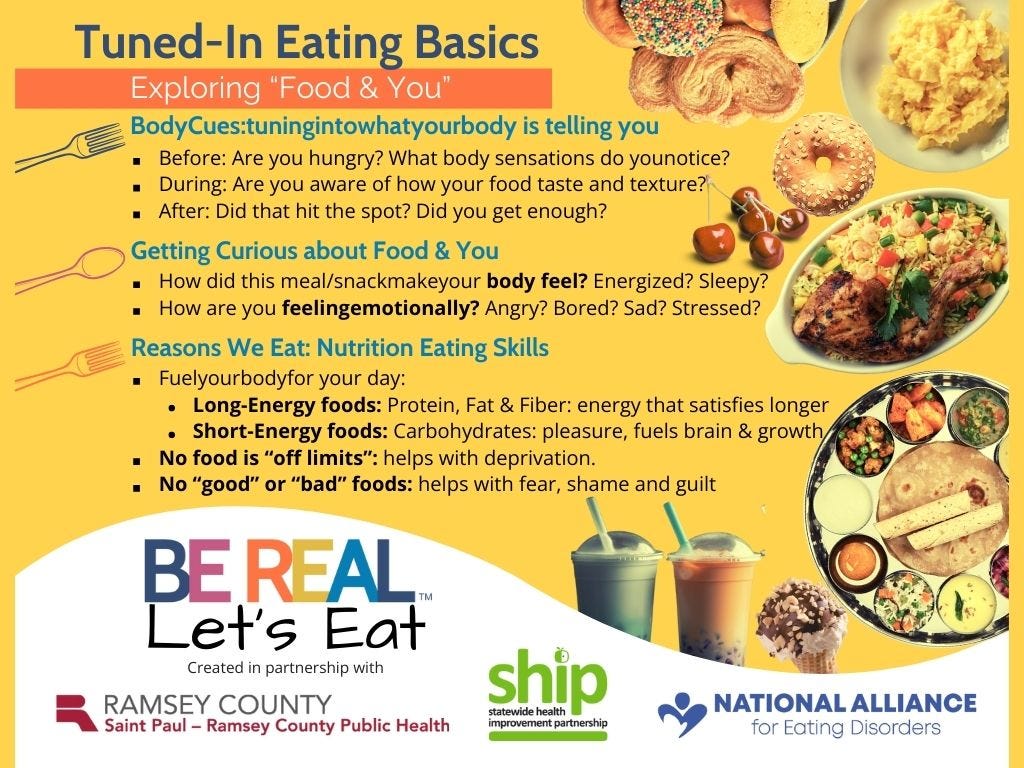
Yeah, and one more thing I would add to that is we really, really need to get away from this idea that carbs are bad - absolutely essential. They are an essential component of good nutrition, both generally for every day for all of us, but particularly for athletic performance.
Elizabeth (04:53 )
I'm so Yea
Anna Mackay (05:07 )
You know, and I live on the other side of the world now, and I hear this all the time, and I'm sure in the States this is still a big thing where everyone's kind of... carbs are bad, reduce your carbs and protein’s king. We need both. We do. So, and you know, this belief that sort of looking a certain way is a part of athletic success is also incredibly harmful. I think the bottom line is that under fueling hurts performance, it slows recovery and it increases the risk of injury and burnout. And carbs are a really important part of that fueling.
Elizabeth (05:39 )
Do you want to talk kind of high level on why carbs are so important?
Anna Mackay (05:44 )
Well, it might be over-complicating things to go into the sort of biochemistry of it, but I think we can explain that, or it might be helpful to explain that carbs, when we ingest them, are converted into glucose. And glucose is how our bodies get energy. It is our brain's preferred source of energy. It is also your muscles' preferred source of energy. So that's where all your energy comes from. And the protein is the building block that helps provide the muscles with it's muscle building block, I think. Is that how you would explain it?
Elizabeth (06:19 )
Yeah, 100%, 100%. And I think one thing that just popped into my mind when you were talking about this is, you know, parents are, you know, even if parents are modeling at home and really have laid a foundation for a positive relationship with food, it can still be so difficult because the parents are up against, and the teens, and the coaches are up against all the messaging that's out there in the media. And so that adds another layer to really making sure that teen athletes are fueled adequ



















 United States
