


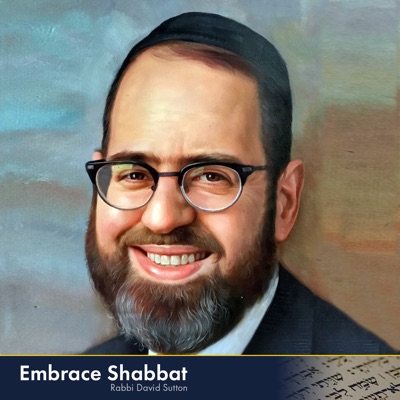
Rosh Hashana on Shabbat
Update: 2023-09-15
Description
Welcome to Embrace Shabbat. This week’s initiative is to strengthen our commitment to Hilchot Shabbat. The Mishnah teaches that when Rosh Hashanah falls on Shabbat, we do not blow the Shofar. The Gemara provides an explanation for this surprising law: because few are skilled in blowing the shofar, the Rabbis instituted this halacha to avoid one carrying their shofar to an expert to learn how to blow it properly. Despite the fact that this is a highly uncommon scenario, the Shofar is not blown. This seems incredibly strange, especially considering the fact that the Shofar is the most important and powerful tool that we use to usher in a good year for the entire Jewish people. To answer this question, we must first establish some background: The Gemara in Masechet Rosh Hashanah asks why the shofar is blown while the congregation is sitting and again while they are standing. It answers: כדי לערבב השטן , in order to confuse the Satan. Rashi explains that the Satan is confused by חיבוב מצוה , the endearment of the mitzvah. When the Satan sees the Jewish people blowing twice in order to satisfy the many opinions regarding shofar blowing, he becomes confused and his accusations are interrupted. Rav Matisyahu Solomon extends this concept of חיבוב מצוה to applying to all mitzvot throughout the year. When a person is painstakingly attentive to the details of the mitzvah, always taking care to complete the mitzvah in the best possible manner, that is חיבוב מצוה . In his Sefer Torah Lishmah (chapter 139), the Ben Ish Chai relates the following story: In Baghdad, it was difficult to procure a kosher lulav and etrog, and often there would be a singular set for the entire community to share. Throughout the holiday, people would push and shove through all hours of the day for a chance to fulfil the mitzvah of shaking the lulav and etrog. Once, someone came up with the idea of implementing a staggered schedule of times for people in the community to receive a turn with the kosher set, thus eliminating the pushing and shoving that would ensue. However, the Ben Ish Chai immediately rejected the idea. He said that the chaos is precisely what demonstrates the community’s חיבוב מצוה , endearment to the mitzvah; the noise of their tumult is what provides protection for them. With this background, Rav Aharon Kotler draws a connection to explain the reason for not blowing the shofar on Shabbat. Just as there is חיבוב מצוה on a positive command, there is also חיבוב מצוה on a negative command. In the case of blowing the Shofar on Shabbat, the mitzvah of Shabbat is so dear, that a person does not want to take any chances of violating a Halacha, and therefore refrains from blowing Shofar. That חיבוב מצוה of Shabbat has the power to confuse the Satan, who becomes shocked into silence by the Jewish people’s commitment and love for the mitzvah. The start of the new year is an opportune time for a person to demonstrate their חיבוב מצוה for Shabbat by committing to learning Hilchot Shabbat. In a regular year, a person can take a kabbalah upon themselves during the sounding of the shofar . This year commit to learning Hilchot Shabbat as one of your new year resolutions, whether by purchasing a new sefer, preparing a thought to share at the table, or any other undertaking related to Hilchot Shabbat. What a wonderful way to start the new year and secure a powerful defense attorney for Rosh Hashana. Have a Shabbat Shalom and a Shana Tova. May the merit of Shabbat protect us all. כי אשמרה ,שבת א-ל ישמרני If I guard Shabbat, G-d will protect me.

Comments

In Channel

Download from Google Play

Download from App Store
 United States
00:00
00:00
1.0x

