



Survey: Principals say they need better-trained teachers and more resources to address student misbehavior
Description
By Rachel M. Perera, Melissa Kay Diliberti
Teachers and principals have long struggled to find effective ways to address and reduce student misbehavior—a challenge that has become more acute since the onset of the COVID-19 pandemic. Schools across the country are reporting increased levels of misbehavior, including fights and more serious acts of violence. Educators largely attribute these increases in misbehavior to the negative effects the pandemic had on students’ learning, socioemotional development, and mental health.
We know that student misbehavior can have negative consequences for student learning, school climate, and teachers’ well-being. Thus, in the context of continued pandemic recovery efforts, figuring out how to reduce and prevent student misbehavior is imperative.
In this post, we highlight two things principals say their schools need to reduce student misbehavior: better teacher preparation and more resources. We present data from three nationally representative sources as evidence. Specifically, we leverage data from a November 2021 survey conducted via the RAND Corporation’s American School Leader Panel (ASLP); surveys conducted in May and November 2022 via the National Center for Education Statistics’ (NCES) School Pulse Panel (SPP); and NCES’ biennial School Survey on Crime and Safety (SSOCS). Taken together, these data represent the perspectives of thousands of principals across the United States. Here’s what we found.
Only one third of principals believe their teachers have been adequately trained to deal with student misbehavior and discipline
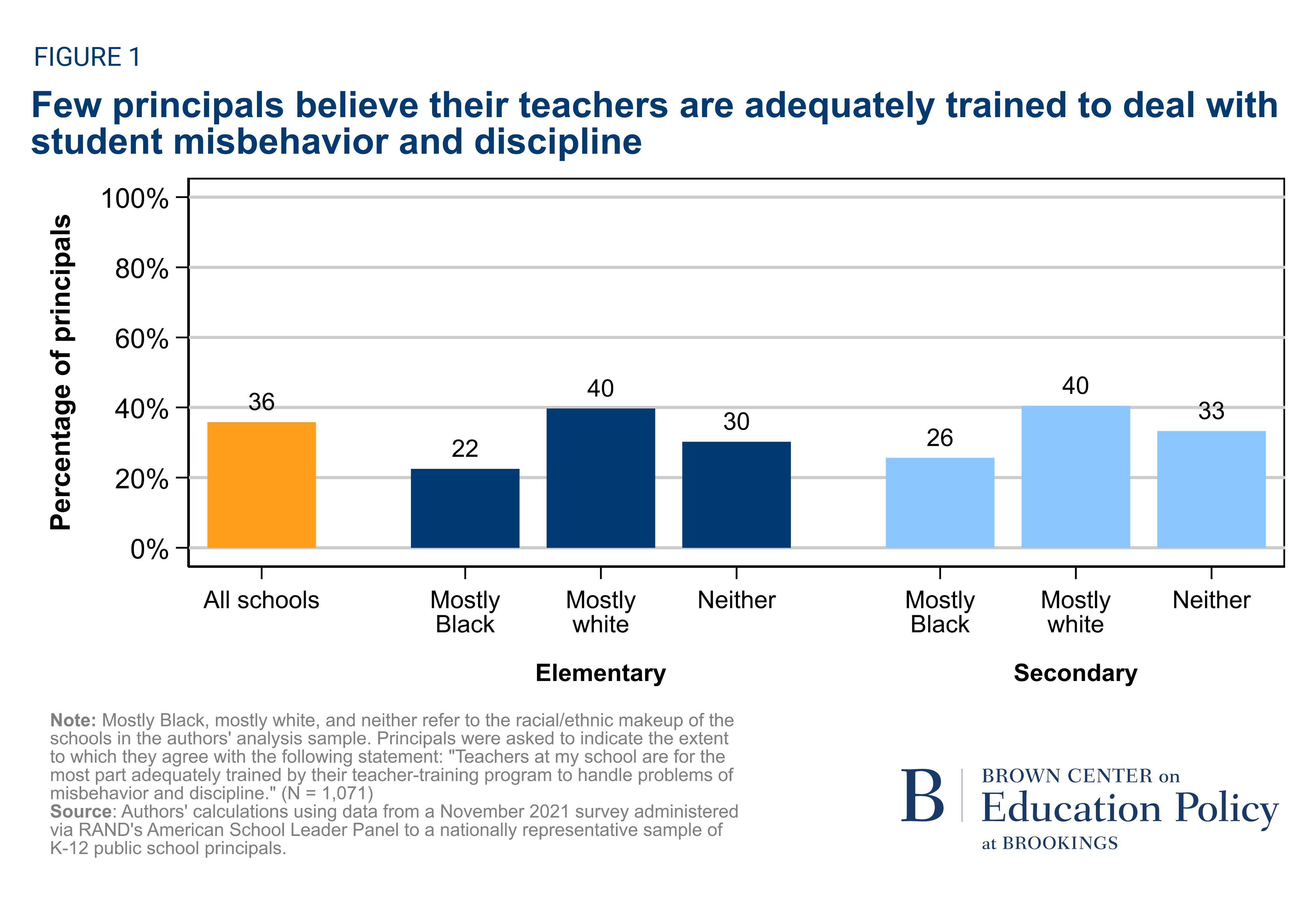
In November 2021, only 36% of principals believed the teachers at their school were adequately trained by their teacher preparation programs to handle misbehavior and discipline (Figure 1). Principals’ perceptions of adequate teacher training varied by their school context. Principals in schools serving mostly Black students were less likely than their counterparts in mostly white schools to feel that their teachers received adequate training to deal with student misbehavior, particularly at the elementary level.
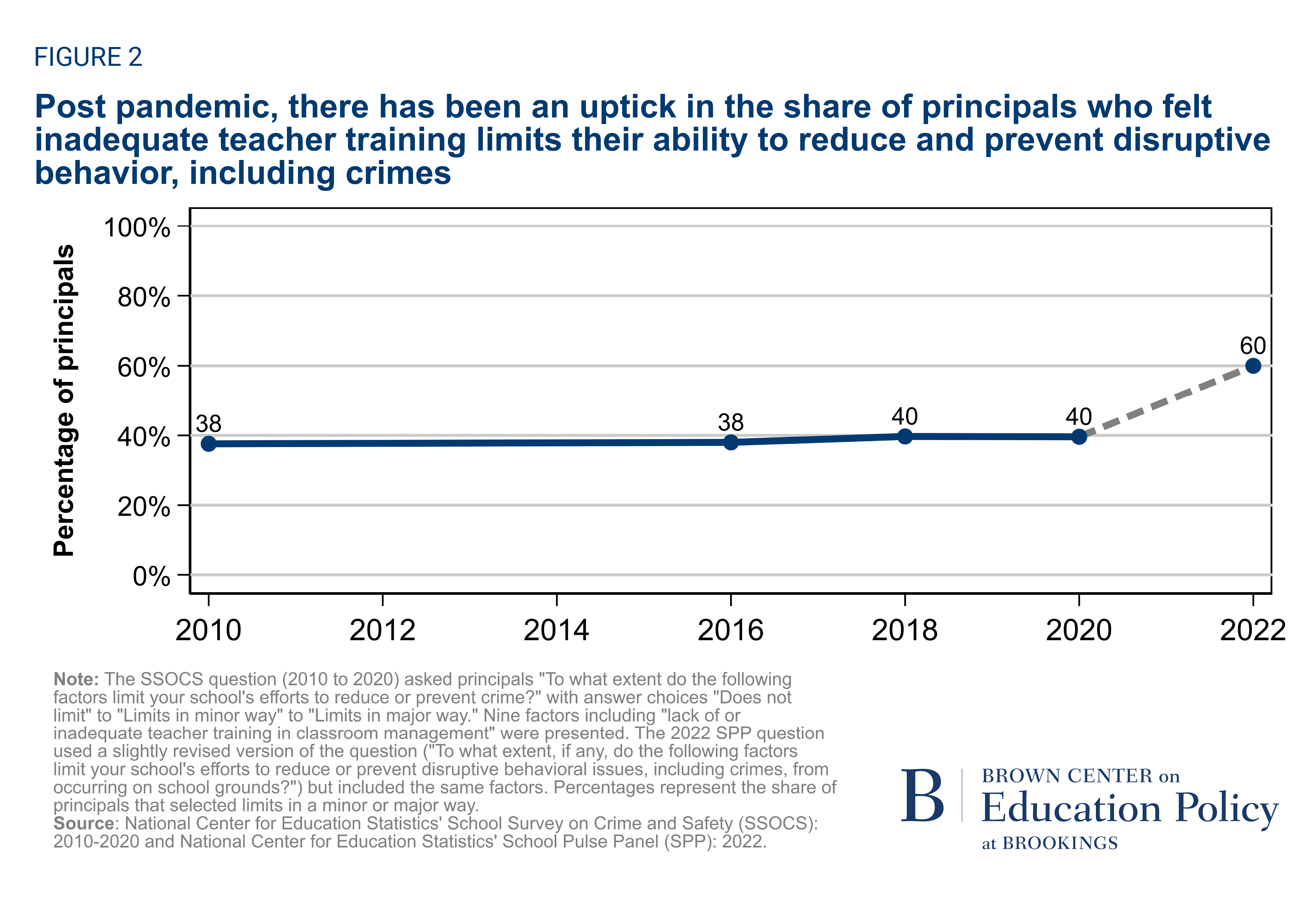
Federal data tell a similar story. In November 2022, three in five principals said inadequate teacher training in classroom management limits, in major or minor ways, efforts to reduce or prevent disruptive behavioral issues (Figure 2). This is a notable uptick from pre-pandemic surveys in which only two in five principals identified inadequate teacher training as a limiting factor. While some of this increase may be related to a broadening of the survey question wording, it also likely reflects principals’ overwhelming perception that the pandemic negatively impacted student behavior and that teachers may be ill-prepared to help students catch up both academically, and socially and emotionally.[1]
Importantly, large shares of teachers also agree that teacher training programs need to better prepare teachers to effectively manage student behavior. Roughly two thirds (68%) of teachers in a March 2022 nationally representative survey said their preparation programs should have spent more time on how to manage student behavior. Notably, more time on managing student behavior was teachers’ top recommendation for their training program. More teachers identified learning how to manage student behavior as a deficiency in their preparation program than all other activities asked on the survey, including things like learning how to engage students, culturally responsive pedagogy, and discussion of controversial issues.
Beyond better teacher training, a majority of principals say they need additional resources to reduce student misbehaviors—and they have been saying so for at least the last decade
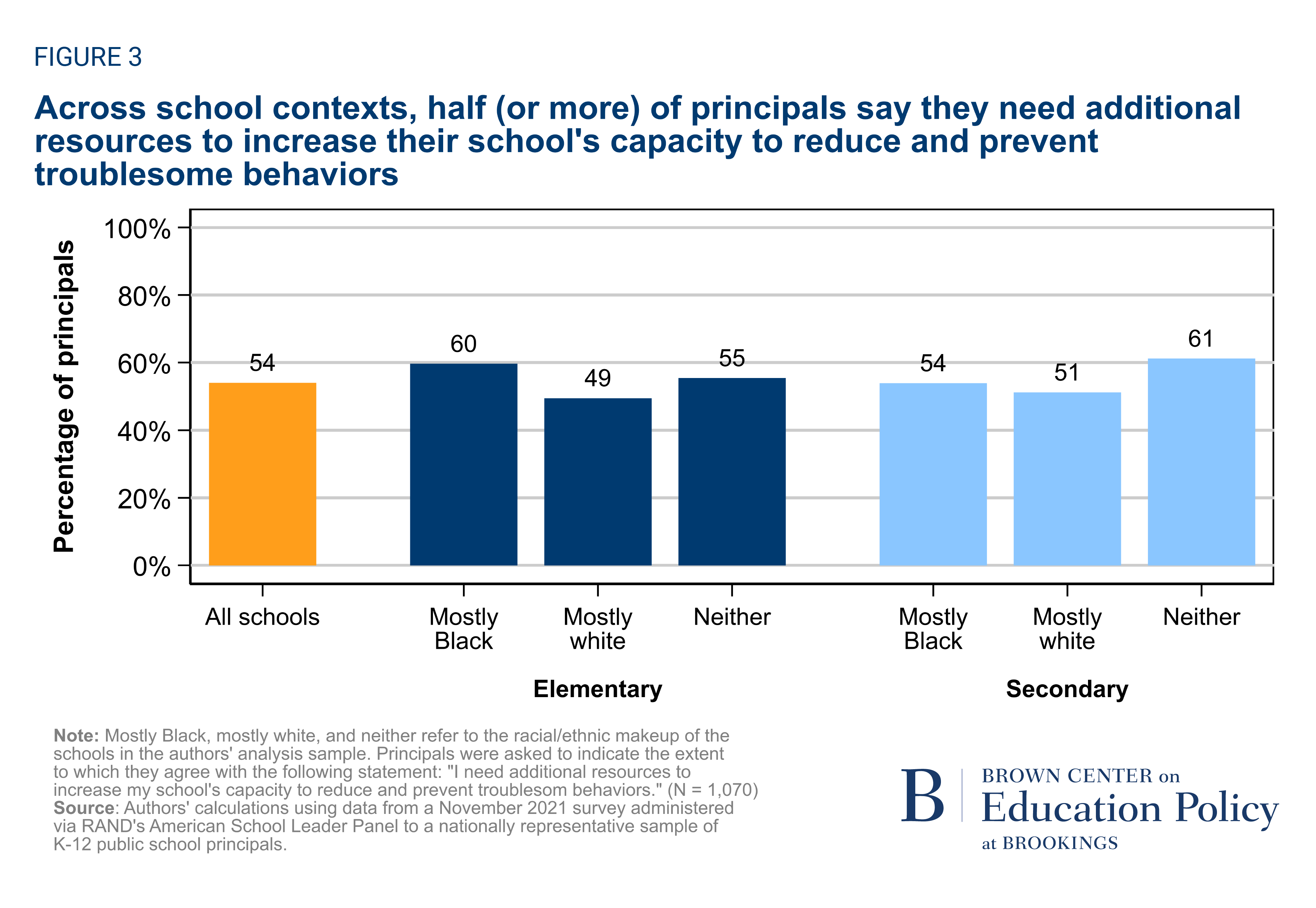
As of November 2021, over half of U.S. public school principals (54%) agreed or strongly agreed their schools need additional resources to increase their capacity to reduce student misbehavior (Figure 3). Principals of elementary schools serving mostly Black students were especially likely to indicate a need for additional resources to prevent or reduce misbehavior; although we emphasize that across school contexts, roughly half (or more) of principals indicated they needed more resources to address troublesome behaviors.
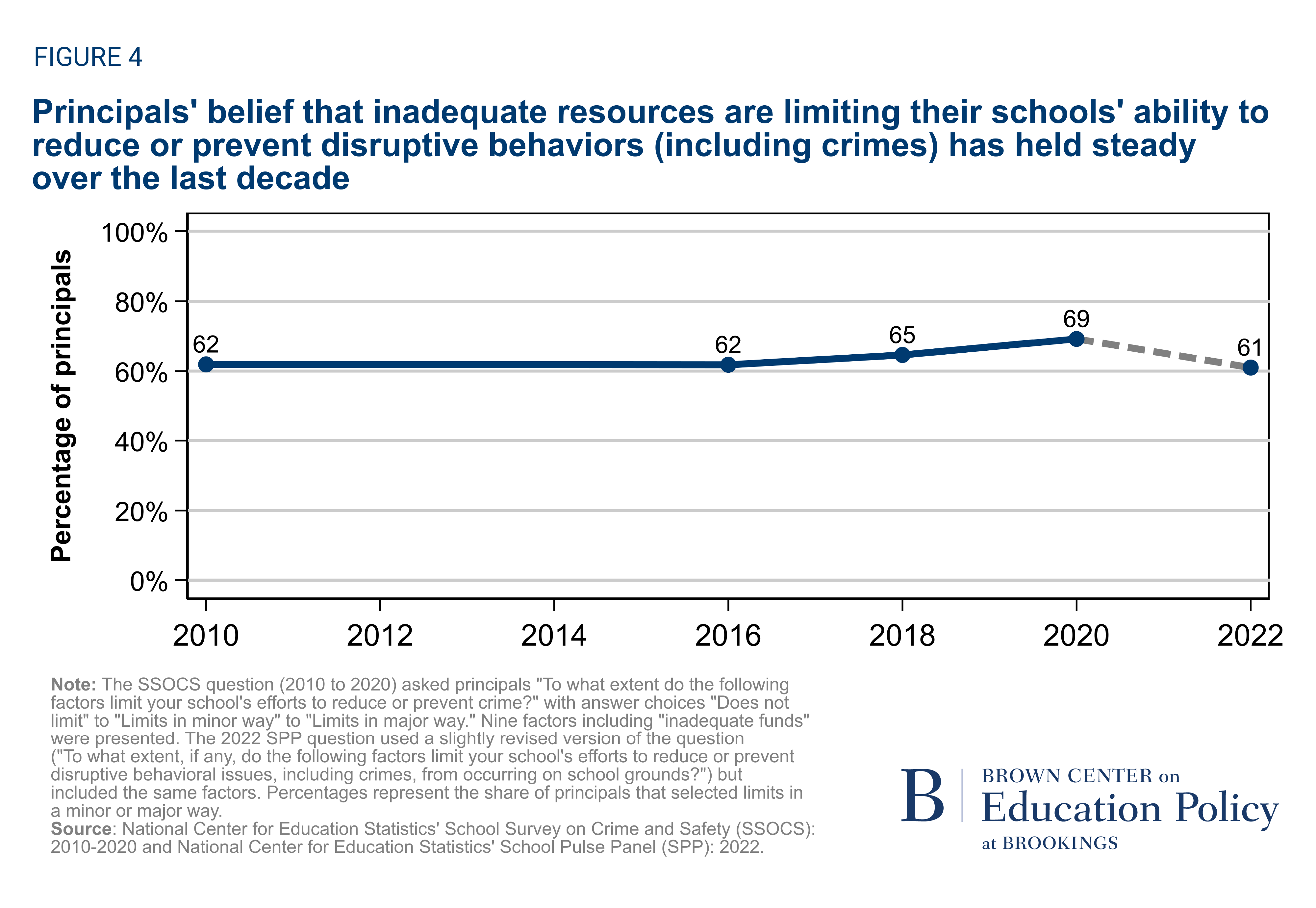
Federal data confirm that principals’ belief that more resources are needed to address troublesome student behaviors isn’t new. For at least the last decade, nearly two thirds of principals have said that inadequate resources are a minor or major factor limiting their schools’ ability to reduce or prevent crime and other disruptive behaviors (Figure 4). In fact, principals consistently ranked inadequate funding as the biggest barrier they face, behind only lack of alternative placements for disruptive students.
A natural next question is: what would principals purchase with additional funding? Federal data suggest that principals have several programs, trainings, and staff in mind. When asked in May 2022 what their schools need to better support student behavior and socioemotional development, principals indicated need for support for student and/or staff mental health (79%), training on supporting students’ socioemotional development (70%), hiring of more teachers and/or other staff (60%), and training on classroom management strategies (51%). All told, these results suggest educators need a more comprehensive approach—including more effective trainings, more staff, and more mental health supports—to adequately support their students.
In summary, educators need more support to reduce student misbehavior
Data from multiple nationally representative surveys suggest schools do not have the training or funds they need to effectively reduce and prevent student misbehavior.
Principals have been telling us for at least the last decade that they need more resources to remedy student misbehavior. In the short-term, federal pandemic recovery funds may help schools fill in some gaps. Analyses of districts’ spending plans suggest many are investing in staffing (including hiring more psychologists and counselors), socioemotional learning curriculums and trainings, and other behavioral and mental health s


 United States
