


TBM 392: When (And How) Tools Matter
Description
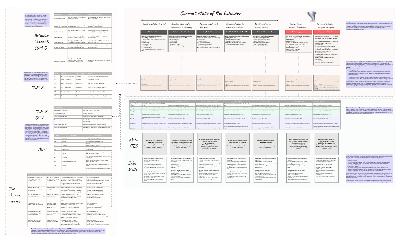
A video post!The Miro board used in the video can be accessed here:
https://miro.com/app/board/uXjVJi6NCs8=/?share_link_id=616280785572
(PS: Miro, I’d love another sweatshirt!)
This framework explains why tools help in some situations and fail in others by grounding everything in the current state of a behavior. Every important behavior in an organization sits somewhere on a spectrum: it might be purely aspirational, weakly practiced, inconsistent, friction-heavy, fully stable, actively suppressed, or not even clearly defined. Each of these states is held back by different blockers—lack of clarity, lack of skills, lack of time, workflow friction, political risk, or social norms—and each requires a different kind of support.
Using a behavior-design lens like COM-B, the idea becomes simple: tools only work when they address the real blocker. Sometimes their job is to scaffold early steps and turn aspiration into practice. Sometimes it is to remove operational drag from a behavior that already exists. Sometimes it is to create shared visibility and reduce political friction. Tools matter, but how they matter depends entirely on the behavioral context they are dropped into.
Show Notes (AI Generated)
The Core Question
When do tools matter, and how do they matter?Answer: It depends entirely on the current state of the behavior you want to see.
The Seven Behavior States
A. Normal States
* Aspirational / Not RealizedOnly talked about. No real practice.
* Weakly RealizedPeople agree it matters and occasionally try it, but it gets displaced by urgency and habit.
* Partially Realized / InconsistentHappens in pockets. Conflicting interpretations. Local successes that have not scaled.
* Mostly Realized but Friction-FilledBehavior is accepted and happening, but it is painful due to workflow friction, manual effort, tool constraints, or time pressure.
* Fully Realized / StableConsistent, predictable, routinized. Embedded norms. Change feels risky.
Special States
* Actively SuppressedCounter-behaviors, incentives, or power dynamics prevent the behavior.
* Contested / UndefinedNo shared understanding of what the behavior even is or how it should show up.
COM-B Essentials
A behavior emerges when people have:
* Capability
* Psychological: knowledge, mental models, clarity
* Physical: skills, practice
* Opportunity
* Physical: time, tools, workflow space
* Social: norms, permission, cues, legitimacy
* Motivation
* Reflective: beliefs, intentions, identity, political risk
* Automatic: habits, impulses, shortcuts
Tools can influence any of these.
How Tools Help Depends on the Behavior State
If the behavior is…
Aspirational / Not Realized
Primary tool role:Turn aspiration into a repeatable practice.
Strategies:
* Provide structure and scaffolding
* Make early steps easy
* Visualize desired state
* Reinforce identity and intent
Weakly Realized
Primary tool role:Lower activation energy and make it harder to forget or skip.
Blockers:
* Not enough time
* Habit competition
* Too many steps
* Short-term urgency wins over long-term value
Strategies:
* Reduce steps
* Support self-regulation
* Nudge and cue the behavior
* Make it easy to start
Partially Realized / Inconsistent
Primary tool role:Create a shared frame without forcing uniformity.
Strategies:
* Clarify purpose
* Help reconcile or visualize different interpretations
* Provide minimally viable standardization
Mostly Realized but Friction-Filled
Primary tool role:Remove operational drag.
Blockers:
* Workflow friction
* Manual coordination
* Confusing handoffs
* Tool gaps
Strategies:
* Standardize routines
* Streamline workflows
* Make bottlenecks visible
* Automate repetitive work
Fully Realized / Stable
Primary tool role:Preserve what works while reducing risk and effort.
Blockers:
* Risk aversion
* Fear of destabilizing the ritual
* Manual grind that no one wants to mess with
Strategies:
* Automate low-value steps
* De-risk changes
* Protect institutional knowledge
Contested / Undefined
Primary tool role:Clarify, name, and frame the behavior.
Strategies:
* Make interpretations explicit
* Help teams converge on a definition
* Reveal misalignment
Actively Suppressed
Primary tool role:Shift legitimacy, visibility, and power dynamics.
Strategies:
* Provide shared visibility
* Depoliticize the behavior
* Reinforce norms or incentives
* Create social proof
Tool Change Vectors (How Tools Influence Behavior)
Tools can work through different mechanisms depending on the blocker:
Influencing Capability
* Clarification
* Instruction
* Cognitive offloading
* Guided workflows
* Checklists
Influencing Opportunity
* Automation
* Better workflows
* Reducing steps
* Making time and space
Influencing Motivation
* Social proof
* Legitimacy
* Identity cues
* Reduced political risk
* Reinforcement
What This Means for AI
AI’s role will differ depending on the behavior state:
* In aspirational states: scaffold early steps, provide examples, generate clarity.
* In friction-filled states: remove manual overhead, automate stitching, reduce coordination cost.
* In stable states: protect quality, ensure consistency, prevent regressions.
* In contested states: help surface meaning, definitions, and distinctions.
AI is another lever in the COM-B system — not magic, but highly state-dependent.
The Core Insight
Tools always matter, but they matter in different ways depending on:
* Which behavior you’re trying to support
* Where that behavior currently sits on the realization spectrum
* What is actually blocking it (Capability, Opportunity, Motivation)
Getting this right means choosing the right intervention instead of assuming tools “fix” or “don’t fix” things.
Get full access to The Beautiful Mess at cutlefish.substack.com/subscribe




 United States
