


The Problem with Plastic
Description
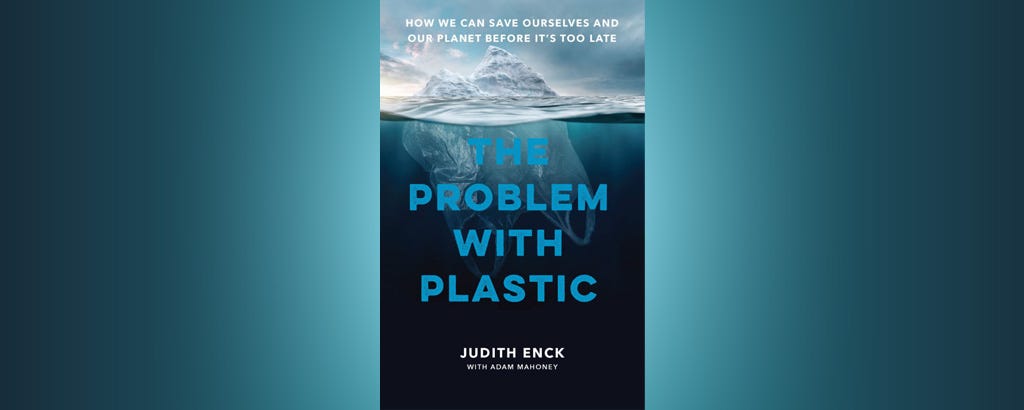
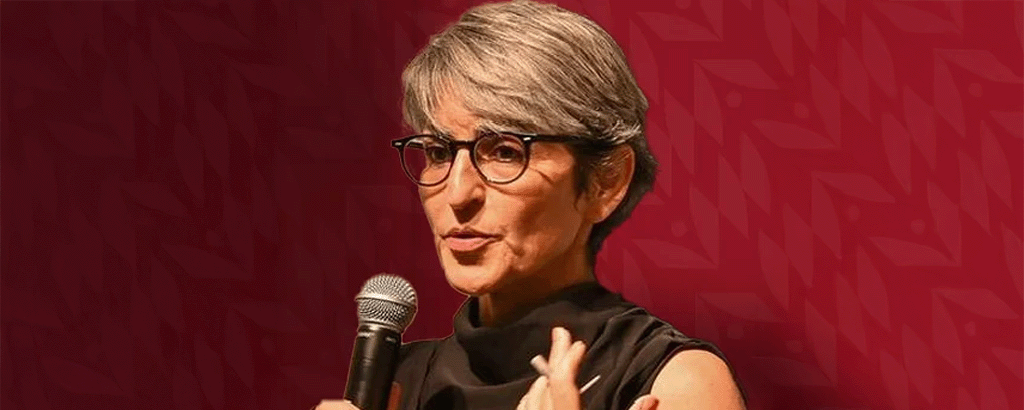
Ralph welcomes Judith Enck (founder and president of Beyond Plastics, whose goal is to eliminate plastic pollution everywhere) to discuss her new book “The Problem with Plastic: How We Can Save Ourselves and Our Planet Before It’s Too Late.” Then, Ralph reflects on the 60th anniversary of “Unsafe at Any Speed.”
Judith Enck is the founder and president of Beyond Plastics, whose goal is to eliminate plastic pollution everywhere. In 2009, she was appointed by President Obama to serve as regional administrator at the U.S. Environmental Protection Agency and served as deputy secretary for the environment in the New York Governor’s Office. She is currently a professor at Bennington College, where she teaches classes on plastic pollution. She is co-author (with Adam Mahoney) of The Problem with Plastic: How We Can Save Ourselves and Our Planet Before It’s Too Late.
I support recycling…But the sad reality is that plastic recycling has been an abysmal failure. Always has, always will be…You cannot really accomplish high levels of recycling with plastics because you would literally have to do hundreds, if not thousands of different sorting. The people who know this the most are the plastic manufacturers. Yet they have spent hundreds of millions of dollars confusing and deceiving the public into thinking: “Don’t worry about all your plastic, just toss it in your recycling bin,” knowing that most plastic never gets recycled.
Judith Enck
A lot of people feel overwhelmed and that it’s hopeless and what can one person do? And that fails to acknowledge that the reason we’re not making more progress on climate change is because of the political power of fossil fuel companies. On the plastics issue, we’re taking on fossil fuel, chemical, and consumer brand companies and plastics companies. So it’s a lot. It’s amazing we get anything done. But people around the country are coming together and they’re getting victories.
Judith Enck
I do think if you start paying attention to plastic in your own life, you see that there are alternatives. And then you climb the civic ladder. So you try to reduce plastic in your own home. Then you look at your kid’s school. Then you look at your faith community. Then before you know it, you’re at your city council asking what can the city do to reduce plastics. You’re going to get a couple victories there. And then you find the statewide environmental groups that are working on this. This is for the long haul.
Judith Enck
The important thing about [Unsafe at Any Speed] now is: sure, it saved millions of lives and the laws are still on the books, and even Donald Trump can’t tear seatbelts and airbags out of our cars. But if we tried to do this again today, it wouldn’t happen. And that’s because the concentration of corporate power over Congress and the media is so much more intense now. And it’s also because the decline of civic institutions and democratic institutions has been very pronounced over the last few decades. And that is sobering us up.
Ralph Nader
News 12/5/25
1. Our top stories this week are on Venezuela. First, the BBCis out with a report on the American military build-up around the Latin American nation, which includes “air and naval forces…a nuclear-powered submarine and spy planes...a range of aircraft carriers, guided-missile destroyers, and amphibious assault ships capable of landing thousands of troops.” So far, the Trump administration has sent mixed messages on whether they plan to launch a full-scale invasion of the Bolivarian Republic, but Venezuelan President Nicolás Maduro shows no signs of stepping down without a fight, having declared a “massive mobilisation” of 200,000 military personnel throughout the country. Most ominously, on November 29th, President Trump declared Venezuela’s sovereign airspace closed, per the Wall Street Journal.
2. However, American bellicosity towards Venezuela is unpopular at home. A CBS poll found that only 30% of Americans would favor the U.S. taking military action in Venezuela, compared to a whopping 70% opposed. Another question in this same poll found that only 13% of Americans consider Venezuela a “major threat” with 48% considering the country a “minor threat” and 39% report they don’t think Venezuela is a threat at all. Unfortunately, the lack of popular support for war is unlikely to constrain the Trump administration much, but it is a notable difference from the lead-up to the Iraq War, when 70% of Americans favored an invasion. The American people want peace, even if the government does not.
3. Another key detail from the CBS poll is that “Three in four Americans…say Trump would need congressional approvalbefore taking military action in Venezuela, including just over half of Republicans.” In light of this fact, it is significant that a bipartisan group in Congress is pushing a War Powers resolution to “block strikes on Venezuela,” per the Intercept. This new push in the House is sponsored by stalwart progressive Congressman Jim McGovern and co-sponsored by dissident Republican Thomas Massie along with other progressives like Reps. Ro Khanna, Lloyd Doggett, and Joaquin Castro, among others. As the Intercept piece notes, this resolution must be acted on in the House within 15 days, but by then the administration may have already acted, pre-empting the resolution. A similar resolution has also been introduced in the Senate, primarily backed by Senators Tim Kaine and Rand Paul, with backing from other Senate Democrats, per the Hill.
4. Of course, American aggression towards Venezuela is reverberating out into the international community in myriad ways. Generally speaking, while United Nations officials decry the actions, America’s European allies have kept quiet – with many speculating that these countries would prefer Maduro’s ouster in order to get ready access to Venezuelan oil and decrease their dependence on Russia. China however, has issued a stiff condemnation of American actions. The Iranian Students News Agencyquotes Chinese Foreign Ministry Spokesperson Lin Jian’s statement at a Beijing press conference, which where in he stated, “China opposes any action that violates the purposes and principles of the UN Charter or infringes upon the sovereignty and security of other countries…[and] opposes foreign forces interfering in Venezuela’s internal affairs under any pretext.” He added, “We urge all parties to keep the Latin American and Caribbean region a peaceful zone and not allow the situation to escalate further.” However, beyond these condemnations, it remains unclear what, if anything, China will do to check American aggression.
5. Despite all of this however, House Democratic leadership is typically feckless. In a corollary to the increasing likelihood of strikes against Venezuela directly, Secretary of Defense Pete Hegseth has stepped up the campaign of striking boats off the country’s coast. Recently, the Washington Post revealed that after a strike in September which left survivors clinging to life, Hegseth ordered a second strike, directing Admiral Frank Bradley to “kill everybody.” This revelation led to calls for House Democrats to pursue impeachment against Hegseth on charges that he violated the laws of war. However, Axiosreports House Minority Leader Hakeem Jeffries will not pursue a Hegseth impeachment. While true that such a push would likely be DOA, it sends a dark signal that the administration can do something like this and face virtually zero official condemnation.
6. Nevertheless, Republicans have taken such unpopular actions that it seems Democrats will retake the House, perhaps by a wide margin, in the 2026 midterms – or perhaps before. So far, 31 House Republicans have announced they will not seek re-election, with some retiring and others running for other offices. Still others however are signaling that they will resign their offices before the midterms, shaving the slim House GOP majority ever slimmer. Representative Marjorie Taylor Greene has announced she will retire in January 2026. Now, Congresswoman Nancy Mace is reportedly considering resigning early as well, though she has denied such rumors, per KOMO News. Either way, Democrats should be taking this moment to prepare an agenda for if and when they retake control of the chamber.
7. Turning to consumer protection news, Jalopnik reports Senate Republicans are seeking to rollback decades of automobile safety regulations. In a recent hearing held by the Committee on Commerce, Science and Transportation ostensibly to put the CEOs of the Big Three American car manufacturers, as well as Tesla, on the record as to why cars have become so expensive, Republicans on the committee used the opportunity to blame safety regulations. Jalopnik notes that Republican Senators specifically targeted “automated emergency braking, the requirements for which will not come into effect until 2029 and have no bearing on current car prices…[and] back-seat alarms to remind you if you’ve left a child or pet back there. According to Kids and Car Safety, since 1990 at least 1,165 children have sweltered to death in hot cars, and another 7,500 survived with varying degrees of injury.” The cost of these sensors will amount to about $50 per vehicle. In short, while there are many reasons cars have become considerably more expensive in recent years – including everything from tariffs to data centers buying up all electronic parts – blami













 United States
