


Tyler Cowen on Bach, Beethoven, John, and Paul
Description
I’ve listened to Tyler Cowen talk for hundreds of hours about economics, music, history, art, travel, and regional cuisine, so meeting him on Zoom felt a little like stepping through The Purple Rose of Cairo. My composure mostly held, and it was a pleasure to trade favorite recordings, speculate on Bach’s motivations, and wrestle with uneasy feelings while enjoying recordings from wartime Germany. Full transcript follows.
Artists discussed:
Leo Kottke
The Beatles
John Eliot Gardiner
Philippe Herreweghe
Otto Klemperer
Martha Argerich
Karl Richter
Sviatoslav Richter
Glenn Gould
Alisa Weilerstein
Pablo Casals
Peter Schreier
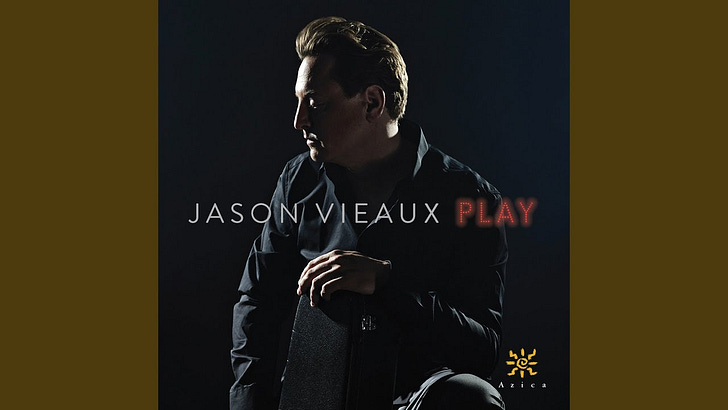
Jason Vieaux
Eduardo Fernandez
Mogens Wöldike
Hans-Christoph Rademann
Carlos Klieber
Keith Jarrett
Benjamin Alard
Angela Hewitt
Samuel Feinberg
Pierre Hantai
Berlioz
Artur Rubenstein
Andres Segovia
Julian Bream
Wilhelm Furtwangler
Fabio Biondi
Frank Peter Zimmerman
Nathan Milstein
David Robinson
Pierre Boulez
Masaaki Suzuki
Wilhelm Backhaus
Leonard Bernstein
Msistislav Rostropovich
Yo-Yo Ma
Jean-Guihen Queyras
Janos Starker
Heinrich Schiff
Kim Kashkashian
Edgar Meyer
Sergei Rachmaninoff
Yuja Wang
Transcript:
Evan Goldfine: Welcome to episode three of the podcast of A Year of Bach. My name's Evan Goldfine and today I'm delighted to be talking to Tyler Cowen. Tyler's one of our foremost public intellectuals. He's an economist at Virginia's George Mason University and one of the original internet bloggers whose work continues into its third decade at Marginal Revolution.
I think about money a lot, and Tyler has reshaped my thinking about economics, especially around how economic growth leads to human flourishing, the importance of incentives and how every economic decision has trade-offs. Tyler and I share a deep love of Bach and the Beatles, and we're both products of Bergen County, New Jersey, so maybe there was something in the water there.
Tyler, welcome.
Tyler Cowen: Happy to be here. Thank you, Evan.
Evan Goldfine: Your earliest exposure to the music was seeing a Bach performance on public television. Could you talk about that?
Tyler Cowen: Well, it wasn't exactly a performance, but I was watching William F. Buckley's Firing Line and uh, on public tv, and they play [00:01:00 ] the parts of the Brandenburg Concerto number two as the show starts.
And it just so happened that we had at home, I think three classical records. And Brandenburg number two was one of the three. So I had it on the record and then I heard it on Buckley and it's like, oh, I know what this is. And so it was one of the two or three first classical pieces that I knew. Maybe the first one, and I liked it.
Right. That's important.
Evan Goldfine: And how did you start digging more?
Tyler Cowen: Uh, it took a little bit longer. So we had a copy of Rimsky Korsakov Scheherazade. And Tchaikovsky, the Pathetique sixth Symphony. But I was so into classic rock, and that was such an incredible time to have that interest. It wasn't until I was 18 or so that I started really becoming interested in classical music.
I moved down to be an undergraduate at George Mason, so I started going to the Kennedy Center, and my first love really was Beethoven. I just kept on going to hear all the Beethoven and all the Brahms I could, [00:02:00 ]
Evan Goldfine: but somehow it flipped over to Bach.
Tyler Cowen: Well, I don't know. I don't know if I would say it flipped.
May, maybe they're on a par. Sure. Uh, Bach, A true love for Bach was two or three years later, but I would say until I was 40, I definitely was more interested in Beethoven than Bach. Right now. It would arguably be the opposite.
Evan Goldfine: I'd say the same. Uh, although I probably got the Bach bug a little bit earlier, just by playing classical guitar.
Some of those Bach pieces are the cornerstones of that repertoire, and I think especially
Tyler Cowen: I did that too. I played the prelude, uh, the transcribed cello, sonatas, some, you know, parts of the violin, sonatas and partitas, uh, different short bits from Cantatas for guitar. It works pretty well, doesn't it?
Evan Goldfine: It works great, and Beethoven does not, so no,
Tyler Cowen: nothing, none of it.
Evan Goldfine: So there's a. There's a pleasure in being able to get deeper and deeper into it. And I've found, as I've gotten older and listening to these things, you know, of course the Breamadth in which I listened to it last year, but [00:03:00 ] also going deeper and deeper into it, I find it's, uh, sort of an infinite Well,
Tyler Cowen: that's right.
Oh, another early exposure I had around the time of Buckley. I had a Leo Kottke album called Mudlark. And he was mostly, you could say, a folk guitarist, and he did Bouree on that album for guitar. And I just thought, well, I wanna play this. And in, you know, in due time I did. It's not that hard to play that piece at all.
Evan Goldfine: Correct. And I love Leo Kottke. I've seen him many times in concert in
Tyler Cowen: Same here.
Evan Goldfine: And, um, what a, what an incredible American, uh, weirdo character, but also he performed the, uh, Jesu Joy of Man's desiring on the Six and 12 string guitar album.
Tyler Cowen: That's right. Yeah.
Evan Goldfine: Which is just a beautiful, beautiful arrangement for steel string, not usually done on the steel string guitar.
And I recommend everyone take a listen to that.
Tyler Cowen: It's better than most classical guitarists, how he has some sort of feel for Bach, even though it would not count as traditional in any way.
Evan Goldfine: Yeah, he, uh, Bach can translate into folk music, uh, if, if it's in the right hands. [00:04:00 ] You've called Bach the greatest achiever of all time.
How did he do it?
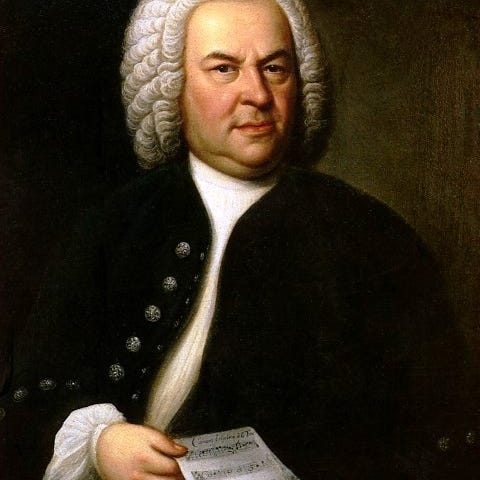
Tyler Cowen: We don't know. So there's plenty of records about Johann Sebastian Bach. But what he really was like to me is quite a cipher. And I've read the major books on him by Gardiner, Wolff. Others, uh, you can read about the records, different places he worked, tax records. But at the end of the day, he's the least easily graspable major composer.
I feel Beethoven in Mozart. If I met them, they wouldn't fundamentally surprise me. Oh, you're Beethoven, you know, Bach. I don't know. It's, uh, that's part of the mystery and challenge, isn't it?
Evan Goldfine: It's maddening. And, and also I, I've been left flat by a lot of the biographies also. I just find, I don't, I'm not getting enough out of them to,
Tyler Cowen: they're well done,
Evan Goldfine: especially for.
Tyler Cowen: Yeah, I'm not blaming the authors. They just have nothing to work with and he's so consistent. You don't learn much about the variation. You [00:05:00 ] said this yourself in your 37 propositions about Bach over time and styles. He's. More or less always the same. And that too makes it harder.
Evan Goldfine: Yes, there's the
Tyler Cowen: opposite of the Beatles, right?
Evan Goldfine: The opposite of the Beatles. But you know, I'd say that there is an extra little bit of depth, I think that Bach gets to towards the end of his life. I'm thinking of the Art of Fugue in particular, but you know, I'd say this, his output from his teenage years up until that point, it just remarkably consistent and uh, you know, it doesn't really feel like very much of an early and late style as compared to others.
Tyler Cowen: I agree with your general point, but sometimes I wonder if Art of the Fugue and Musical Offering are his greatest depth.
Evan Goldfine: Hmm.
Tyler Cowen: I'm not convinced that's true. So something like the first partita are parts of Well-Tempered, clavier, uh, they sound less complex, but in a way they're more compelling and the fact that there are so few good recordings of Art of the Fugue or Musical Offering, [00:06:00 ] it could just mean they're so deep.
No human can do them. Uh, but maybe in a sense they're too far out there and in that regard, less deep. I think about this pretty often.
Evan Goldfine: I don't listen to them as much as the other pieces that you mentioned.
Tyler Cowen: Exactly. Or even
the brandenburgs, maybe those are his deepest works and his most accessible works.
Evan Goldfine: He was a tune,
he was a tunesmith as well. And he gets short of, he gets short shrift for his melodic mastery because the harmony and the, and the counterpoint are so intricate.
Tyler Cowen: What's also interesting to me, I mean B minor mass, which of course, you know, it might be considered by many his greatest work, but just how much he threw it together.
It's a bit like a Paul McCartney song like Uncle Albert, Admiral Halsey, where there are all these pieces and somehow it works. And you just wonder like what re



 United States
