



Understanding Rheumatoid Arthritis
Description
This article is a collaboration with Immunology Explained, an initiative by the American Association of Immunologists to connect you to the science that protects your health.
I (Leigh) have had a front row seat to the challenges of rheumatoid arthritis (RA) for the past ~20 years. I’ve watched both my mom and my aunt develop and manage this disease. I’ve watched them navigate the maze of diagnostic tests, decipher confusing lab results, cycle through multiple treatments to find what actually works, and then- perhaps the hardest part- advocate for themselves with insurance companies to get those (often very expensive) therapies covered.
Because of that history, I know RA may one day be part of my own story too. I’ve already had blood tests for RA-associated markers (so far, so good!), but I stay vigilant. Any joint issue I have gets checked out, and every clinician I see knows my family history. I’m a big believer in the power of awareness and early screening to make all the difference in long-term health and quality of life.
This might sound bleak and depressing, but there’s also good news. The RA landscape today looks very different from when my mom and aunt were first diagnosed. And working as a scientist in drug development, I’ve had a front-row seat to these changes. Diagnostics are more specific, treatment options are broader and more personalized, and there’s an exciting pipeline of new therapies on the way. That progress gives me, and a lot of other families, real hope: RA might impact quality of life, but it doesn’t have to derail it.
Even today, I can see my mom enjoying her retirement, gardening and playing with her grandchildren, thanks to the development of drugs like Enbrel (etanercept) and Rinvoq (upadacitinib), and the added utility of corticosteroids (prednisone). Full disclosure: I don’t work in pharma, and neither my mom nor I receive any financial compensation for mentioning these drugs. I’m just grateful that her flares are under control and that she can enjoy playing with my kids!
What is Rheumatoid Arthritis?
Rheumatoid arthritis is a chronic autoimmune disease that affects millions of people worldwide—about 208 out of 100,000 people. In this condition, the immune system makes a serious mistake: it attacks the joint lining (synovium), leading to inflammation, pain, and progressive joint damage. It primarily affects joints in the hands, wrists, and feet, but it doesn’t always stop there. It can also involve the eyes, lungs, heart, skin, and blood vessels.
The word ‘arthritis’ literally means inflammation of a joint, but it’s not just one disease. It’s an umbrella term for many different conditions that can look very different from each other. You might have heard of osteoarthritis (OA). That’s the “wear and tear” arthritis that comes from years of use. It occurs when cartilage gradually wears down over time and is not considered an autoimmune disease. RA, on the other hand, is driven by immune system dysfunction and inflammation that actively damages the synovium. Because of this fundamental difference, RA may begin earlier in life, progress differently, and require specialized treatments that target the immune system itself.
What makes RA particularly tricky? Symptoms can look like other conditions and vary widely from person to person, making it challenging to understand and sometimes difficult to diagnose.
Let’s take a closer look at what may play a role in RA development, common signs and symptoms, and how it can be treated.
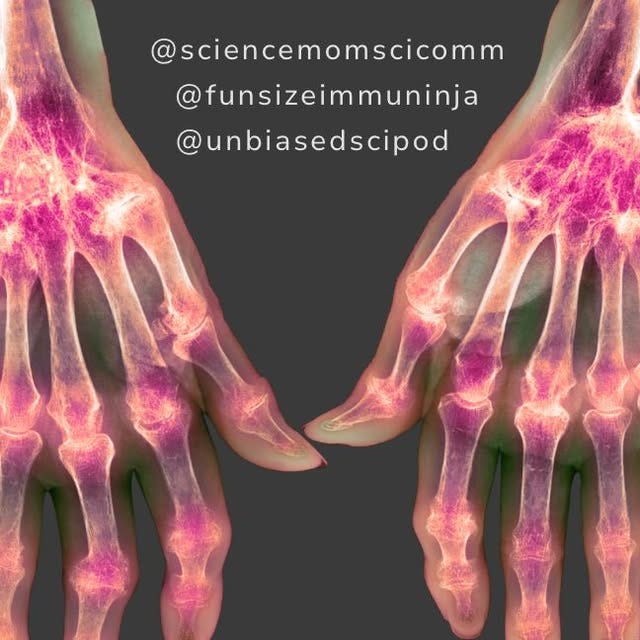
When the immune system mistakenly identifies joints as intruders
Imagine your immune system as a security guard. In rheumatoid arthritis, this guard starts seeing your own joints as threats—attacking them with the same force it would use against actual invaders. But what flips that switch from protector to attacker?
The answer, frustratingly, is: it’s complicated. Like many autoimmune conditions, RA is a complex disease driven by multiple factors. The exact cause is unknown, but several specific factors can create the perfect storm for its development. These include genetic susceptibility, environmental influences, hormonal factors, and immune dysregulation. Together, these elements contribute to the loss of immune tolerance and the chronic inflammation that characterizes the disease:
Genetics: A family history of RA increases risk, which is why I keep such close tabs on my own joint health. Variants of genes involved in immune regulation are strongly associated with RA, but genetics alone does not cause the disease. One example is HLA-DRB1, which encodes a protein that presents peptide antigens to T cells (essentially showing the immune system what to target). Having certain variants of this gene is associated with an increased risk of RA. You can think of it as having a genetic “vulnerability”- the door is there, but something still needs to open it.
Environmental Factors: Certain exposures can trigger disease in genetically predisposed people, including:
Cigarette smoking
Air pollution
Occupational dust (like silica)
Hormonal influences: As with several autoimmune conditions, RA is 2-4 times more common in women than in men (my mom and her sister both have it but their brother does not). Peak onset tends to occur during times of hormonal flux, such as the postpartum period and perimenopause. This isn’t a coincidence; hormones play a significant role in immune regulation.
Health influences: Poor dental health and the persistent presence of certain microorganisms, such as Porphyromonas gingivalis (a bacterium associated with gum disease), may be associated with the development of RA.
What RA looks and feels like
RA is particularly sneaky because the underlying immunological changes that cause it can begin years before the disease becomes symptomatic. The immune system may be quietly turning against the joints long before a person feels anything wrong.
When symptoms finally appear, they can develop gradually and become progressively worse. The disease can also ebb and flow with cycles of flares (periods of intense symptoms) and remission (when symptoms subside).
One key distinguishing feature of RA is that the symptoms often affect the same joints on both sides of the body (like both wrists or both knees). This symmetry helps to distinguish it from osteoarthritis, which often affects only one side.
RA symptoms develop most frequently between the ages of 30 and 60.
Pain, swelling, and stiffness in more than one joint (typically hands, wrists, or feet)
Stiffness that is worse in the morning and lasts more than 30-60 minutes
Warmth or tenderness in the joints
Fatigue
Weakness
Because RA is systemic and affects the entire body, other manifestations may occur:
Eye inflammation (dry eyes, scleritis) and dry mouth
Lung inflammation or scarring (up to 80% of people have lung involvement)
Skin nodules or rashes
Anemia
Increased cardiovascular risk, such as atherosclerosis, heart attack, stroke, and pericarditis
Loss of bone density from chronic inflammation
Symptoms vary widely from person to person, depending on the stage of the disease and other health conditions. No two RA stories look exactly the same.
Piecing together a diagnosis
There is no single blood test that says “yes, you definitely have RA.” Instead, diagnosing RA typically involves a combination of clinical evaluation, laboratory testing, and imaging studies. It’s like putting together a puzzle where each piece adds clarity.
The diagnosis is often made or confirmed by a rheumatologist after a patient is referred by their primary care physician or another clinician who suspects RA. Since RA is systemic and can affect multiple organ systems, a person with RA can end up working with a whole team:
Rheumatologists, who specialize in the diagnosis and care of autoimmune and connective tissue diseases
Dermatologists, for skin manifestations like rashes and lesions
Hematologists, to address blood-related complications
Cardiologists


 United States
