


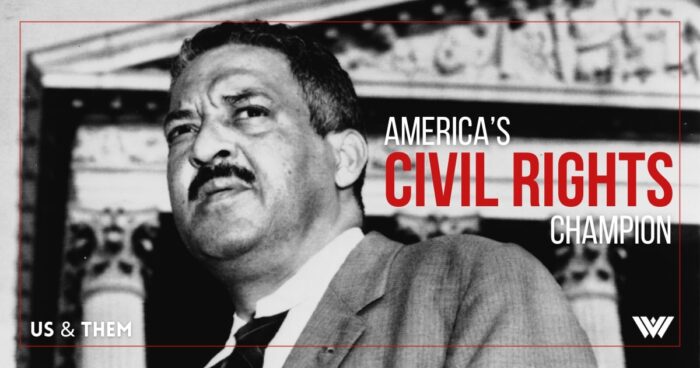
Us & Them: America’s Civil Rights Champion
Description
Many people know Thurgood Marshall as the first African American U.S. Supreme Court justice, however, first he had a long and distinguished career with the American Civil Liberties Union and the NAACP Legal Defense Fund.
On this episode of Us & Them, Trey Kay hosts a community conversation highlighting Thurgood Marshall’s legacy and sharing excerpts from a new Maryland Public Television documentary “Becoming Thurgood: America’s Social Architect.”
Marshall was the lead attorney for the plaintiffs in the 1954 Brown vs. Board of Education case which declared racial segregation in public schools unconstitutional. His work used the law as a tool for social change while dismantling institutional racism and inspiring social reforms.
This episode of Us & Them is presented with support from Maryland Public Television, the Greater Kanawha Valley Foundation and the CRC Foundation.
Subscribe to Us & Them on Apple Podcasts, NPR One, RadioPublic, Spotify, Stitcher or wherever you get your podcasts.
<figure class="wp-block-image size-full">
 <figcaption class="wp-element-caption">Courtesy Maryland Public Television</figcaption></figure>
West Virginia Public Broadcasting recently hosted a community conversation highlighting a new documentary “Becoming Thurgood: America’s Social Architect” on the life and legacy of Thurgood Marshall, produced by Maryland Public Television (MPT). The film, directed by Alexis Aggrey, examines Marshall’s journey from Baltimore to the U.S. Supreme Court, tracing his legal strategy, moral vision, and enduring impact on American constitutional law and civil rights. The documentary is airing on PBS member stations across the country.
<figure class="wp-block-image size-large">
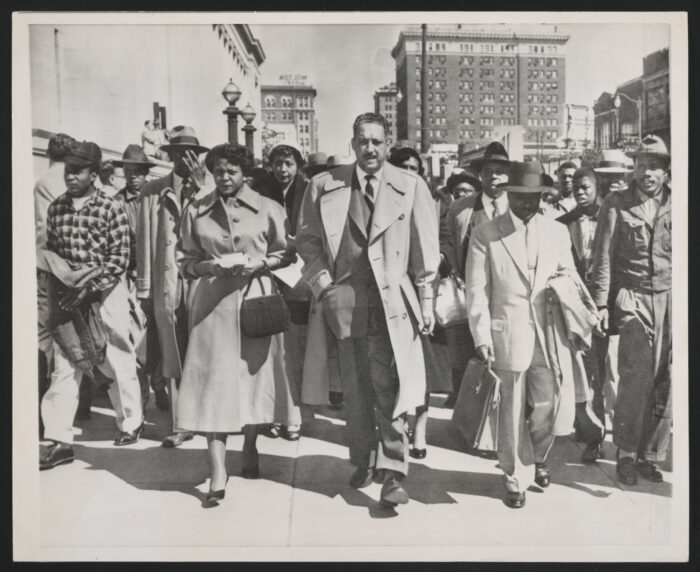 <figcaption class="wp-element-caption">Thurgood Marshall walks near federal court during proceedings tied to the University of Alabama desegregation case involving Autherine Lucy in February 1956. The legal battle marked a pivotal moment in the fight to dismantle segregation in higher education.
 Photo courtesy of the New York World-Telegram & Sun Collection, Library of Congress</figcaption></figure>
<figure class="wp-block-image size-large">
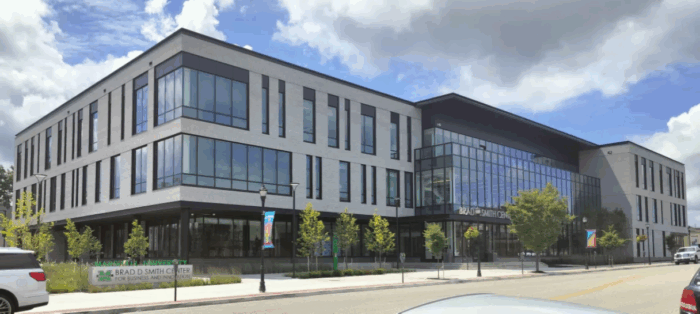 <figcaption class="wp-element-caption">West Virginia Public Broadcasting hosted a community screening and discussion of "Becoming Thurgood" on Nov. 18, 2025, at the Brad D. Smith Center for Business and Innovation at Marshall University in Huntington, West Virginia.
 Photo courtesy of Marshall University</figcaption></figure>
Learn more about the Brad D. Smith Center for Business and Innovation.
Learn more about Marshall University.
<figure class="wp-block-image size-large">
 <figcaption class="wp-element-caption">Members of a three-person panel prepare for a community discussion as attendees gather in the Encova Auditorium at Marshall University’s Brad D. Smith Center for Business and Innovation in Huntington, West Virginia, ahead of a screening of "Becoming Thurgood."
 Photo Credit: Julie Blackwood</figcaption></figure>
<figure class="wp-block-image size-large">
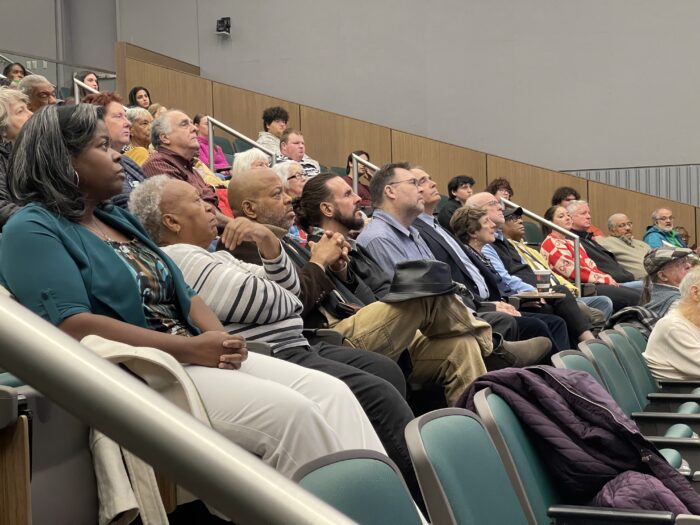 <figcaption class="wp-element-caption">Audience members gather at Marshall University to watch selections from the Maryland Public Television documentary "Becoming Thurgood."
 Photo Credit: Julie Blackwood</figcaption></figure>
<figure class="wp-block-image size-large">
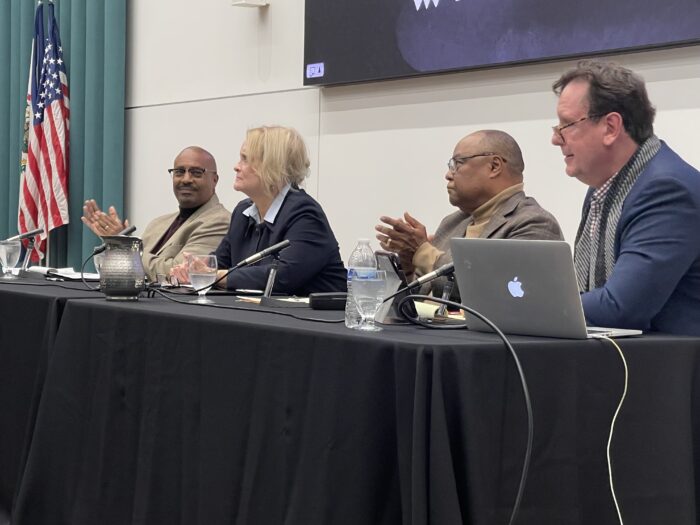 <figcaption class="wp-element-caption">Panelists for the evening’s discussion about the legacy of Thurgood Marshall include (left to right) Clinton Arnold of West Virginia State University, Patricia Proctor, J.D., of Marshall University, and Cicero Fain of Marshall University. The conversation was moderated by Us & Them host Trey Kay.
 Photo Credit: Julie Blackwood</figcaption></figure>
<figure class="wp-block-image size-large">
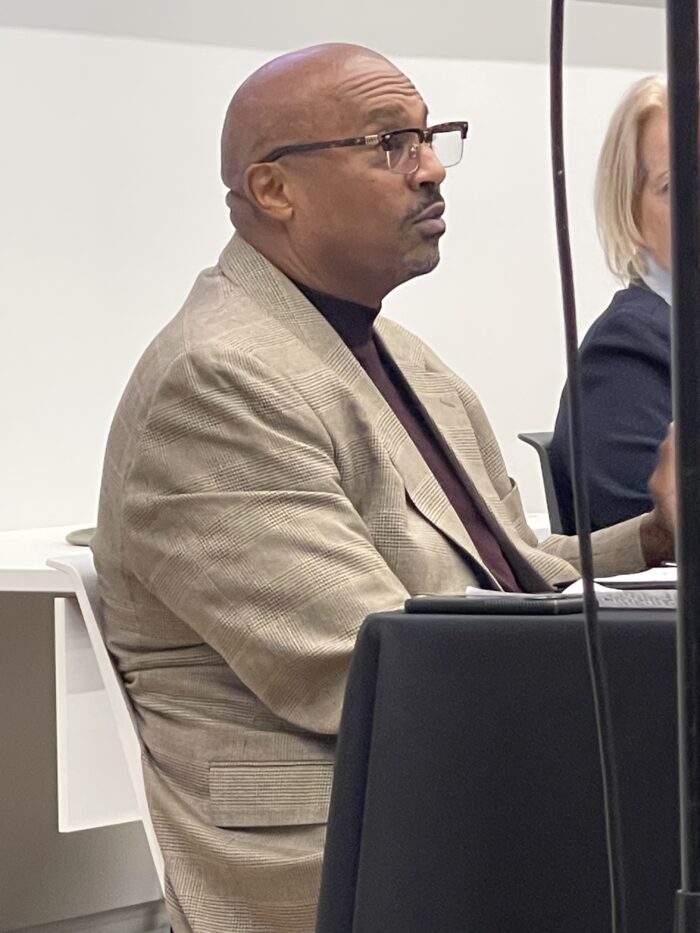 <figcaption class="wp-element-caption">Clinton Arnold, a professor at West Virginia State University, is the CEO of the Kanawha Institute for Social Research & Action, a nonprofit focused on workforce development, reentry support and strengthening families. Prior to holding these positions, Arnold spent 25 years with Verizon Communications Inc.
 Photo Credit: Julie Blackwood</figcaption></figure>
“If you go back to my humble beginnings in Dayton, Ohio, where I grew up, my sister and I integrated the Catholic schools in Dayton in 1972, which was after the brutal civil rights activities of the ’50s and ’60s.
I can’t tell you how many names I was called those early years until we got through the first few years. My parents said, ‘We’re not leaving.’ That wouldn’t have happened if it weren’t for some of the victories we’re talking about with Thurgood Marshall. That prepared me to go on to high school … and then on to the University of Kentucky.
If it weren’t for some of these laws and the fights done back in the ’40s, ’50s, ’60s and ’70s, I may not have had the opportunity to compete, and that’s what propelled me into my corporate career.
Once you were able to prove yourself, there’s still a fight. There’s still a fight to keep proving yourself over and over again. That’s part of his legacy … the persistence, the strategy, the tactics, the support, because nobody does anything on their own.
I don’t care how many people say, ‘I did it all by myself.’ Nobody does anything by themselves.”
— Clinton Arnold, professor at West Virginia State University (one of West Virginia’s two HBCUs). Arnold is also CEO of KISRA — the Kanawha Institute for Social Research & Action — a nonprofit focused on workforce development, reentry support and strengthening families.
Learn more about Clinton Arnold.
<figure class="wp-block-image size-large">
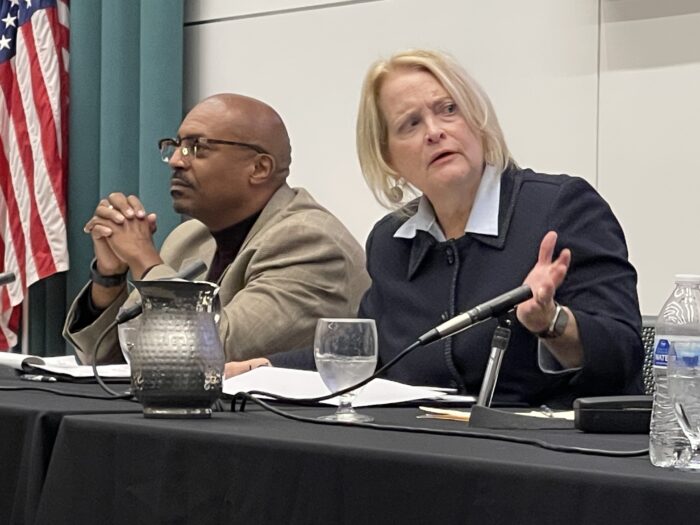 <figcaption class="wp-element-caption">Patricia Proctor, J.D.















 United States
