


Virginia Likes Kale Now
Description
You’re listening to Burnt Toast!
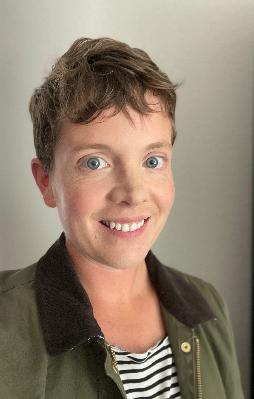
I’m Virginia Sole-Smith, and today my guest is Amy Palanjian.
Amy is my work wife and best friend of over 20 years. She’s also the creator of Yummy Toddler Food and author of the nationally bestselling cookbook Dinnertime SOS: 100 Sanity-Saving Meals Parents and Kids of All Ages Will Actually Want to Eat.
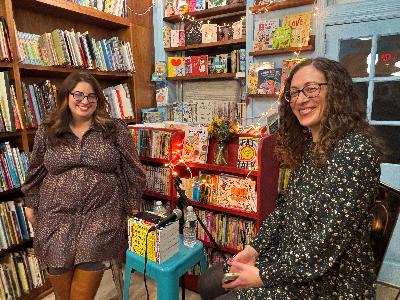
Amy joined me last month at Split Rock Books to celebrate the launch of FAT TALK in paperback. They also host the Burnt Toast Bookshop for us, and are forever the place to get my books signed and personalized however you like!
So we talked about the book, of course, but we also got into how family dinners have changed for us post-divorce, why cooking with kids is terrible, and then Amy outed my (not so) secret love of protein powder. 😂
(Bear with some imperfect audio, since we weren’t recording with our usual set-up — but Tommy worked his magic as usual so it’s still highly listen-to-able!)
If you find today’s episode valuable, a paid subscription is the best way to support this work!
Guest interviews are always free on Burnt Toast, but paid subscriptions enable us to pay guests for their time, labor and expertise. (This is extremely rare in the world of podcasting, but key to centering marginalized voices!)
The Burnt Toast Podcast is produced and hosted by Virginia Sole-Smith (follow me on Instagram) and Corinne Fay, who runs @SellTradePlus, and Big Undies.
The Burnt Toast logo is by Deanna Lowe.
Our theme music is by Farideh.
Tommy Harron is our audio engineer.
Thanks for listening and for supporting anti-diet, body liberation journalism!
Episode 183 Transcript
Amy
Okay, so we are here to celebrate your paperback release, and we had a burning question from the front row. Can you tell us if and how this book is different than the hardcover?
Virginia
Yes! Okay, so I don’t know how familiar folks are with publishing, but a lot of hardcovers don’t ever get a paperback. It’s just the way the industry is working these days, fewer and fewer books make it to paperback. So it was very exciting to make it to paperback! And part of how you make it to paperback is you and your editor brainstorm all the ways you can make the paperback really good so they’ll want to print it.
Most of the book is the same, but there is a foreword written by Kate Manne who is an amazing fat activist and feminist philosophy professor at Cornell. She’s the author of the incredible book, Unshrinking. She wrote a beautiful foreword. And then there’s an afterword by me where I talk about what it was like to launch this book at the height of Ozempic Mania, and how that played a role in the conversations around the book, how it led so many men on the Internet to have feelings about me.
Amy
I was going to ask if you can talk a little bit more about how the world feels different or how your maybe your intended audience feels a little bit different from when you first released the book to now? If it does.
Virginia
Obviously there’s the huge conversation happening now around the semaglutide drugs and this idea that now weight loss is within all of our reach. Now, I think what we’re seeing increasingly from the data is that it doesn’t put weight loss within everyone’s reach. There’s also a very valid conversation to be had about whether we need weight loss to be within everyone’s reach. Everyone is allowed to make their own choices for their bodies. But what would it actually do for the world if we could make everyone thin?
Audience Member
That’s funny. Sorry, that’s ridiculous.
Virginia
Yes! So in short, it’s ridiculous. But I think what it does mean is that the conversation around weight loss is louder in a lot of ways. I mean, in some ways, I think traditional diet conversation it is less because that’s not what people are doing now to lose weight. But the fact that anytime, as a person in a larger body, I go to the doctor, this is likely to come up. You’re just navigating it in a whole other way now. And what the Ozempic conversation has really done is given anti-fatness and diet culture this “well, why not?” sort of answer. Like, “Well, we’ve got this now, so why wouldn’t you?”
And again, this is not to demonize anyone’s personal choices! We’re all allowed to do what we want with our bodies. But there are lots of us that feel like that shouldn’t be the only answer, or shouldn’t be where the conversation stops and starts.
What I’m also noticing is that we have a lot of people who are like, “Well, I am doing this because my doctor said it was important for my health. Can I still be for fat liberation? Can I still be against diet culture?” And the answer is absolutely yes. So I think we need to create space for the fact that people are going to make their own choices for their bodies, because that’s core to body autonomy and body liberation. But we can also still name anti-fatness and calling it out and trying to dismantle it. So it’s more nuanced now. Because we have to hold those two things together.
Amy
So, say you go to the doctor because your knee hurts and the subject of weight loss comes up, or weight loss drugs come up. What are some questions that you might ask for more context?
Virginia
Well, I think the first question that’s always useful to ask is: How would you treat this condition for a thin person? Because someone in a thin body that shows up with knee pain is not prescribed weight loss. We know for any health condition, there are multiple ways of going about it because weight loss isn’t the answer for everybody. So asking them to think about, “what would you do for a thin person? Can we start with that for me?” is a useful starting point.
Then I think having a direct conversation is important. And this is scary and vulnerable and really hard to do. But most of us who are fat, we’ve done weight loss. That’s not something we have no experience with. So saying, like, “I’ve done this, it hasn’t worked for me. This is what happens when I’m dieting.” This is the toll it takes on my mental health and my emotional health. This is why it’s not realistic for my lifestyle, because of my job schedule or my parenting schedule. And helping the doctor understand that while yes, that might solve a problem that they’re trying to solve for you, the ripple effect of that “solution” in your life also matters.
So does that actually solve your problem, or does that give you many other problems? That’s going to be a different answer for everybody. But that’s the nuance that I want doctors to have. It’s not that I never want doctors to talk about weight, it’s that I want them to be understanding that the conversation doesn’t start and end with weight loss, and that you’re allowed to be a person with a whole context to your life.
Amy
Okay, so, speaking of versions of your book, I have a 12 year old who was obsessed with your hardcover book, and she has heard that you are noodling around the idea of a YA version. She has volunteered herself to be as helpful as possible, and would really like to know if this is happening.
Virginia
Okay, we are in early conversations—this is early, early, early!—to do a middle grade version of the book. I would be delighted to have your 12-year-old write it! She and I need to talk. We’re figuring out what of the book needs to go into a middle grade version.
One interesting thing that came up, actually, in a conversation with the editors was they are concerned—and the same thing happened with the hard cover. With the hard cover, people said, “Should we call it FAT TALK? Because maybe that means only parents of fat kids will buy the book!” Like, as if parents of thin kids never think about fatness or have no relationship to this concept. And I was like, no, I don’t think that will be the case. And it wasn’t.
But with FAT TALK for kids, they’re saying, is this a title that makes sense to put on a middle grade book? Will only fat kids read it? Will that create stigma? Like, what do we do about that?
So thi



![[PREVIEW] The Year in Butters: 2025](https://s3.castbox.fm/97/0e/ee/44e1a0b26f934e73cb55f46ed899d75a91_scaled_v1_400.jpg "[PREVIEW] The Year in Butters: 2025")
![[PREVIEW] Hot People Problems](https://s3.castbox.fm/10/0c/c3/2c4186bb3ffaa958c5a4ee4d3888ceb6df_scaled_v1_400.jpg "[PREVIEW] Hot People Problems")
![[PREVIEW] Are Standing Pants Different from Sitting Pants?](https://s3.castbox.fm/be/2c/0c/f737b964d5f27610acbbd373a16c29a78e_scaled_v1_400.jpg "[PREVIEW] Are Standing Pants Different from Sitting Pants?")
![[PREVIEW] How Much Did You Pay Your Pumpkin Stylist?](https://s3.castbox.fm/fe/3d/c0/dd8784a5450c5e085b6336501f2ac0f261_scaled_v1_400.jpg "[PREVIEW] How Much Did You Pay Your Pumpkin Stylist?")

![[PREVIEW] Can A Body Acceptance Advocate Work for Weight Watchers?](https://s3.castbox.fm/ce/6e/f2/62fdccc162b0b6bc777b5875f2c6d64cfa_scaled_v1_400.jpg "[PREVIEW] Can A Body Acceptance Advocate Work for Weight Watchers?")
![[PREVIEW] Not Trying to Be Hot 25-Year-Olds](https://s3.castbox.fm/1c/8e/70/adb41c046a3fe07dc045af139e24fdcf89_scaled_v1_400.jpg "[PREVIEW] Not Trying to Be Hot 25-Year-Olds")
![[PREVIEW] Is Back To School A Diet?](https://s3.castbox.fm/29/4e/50/fbf3f4de138a90fdd48db11f2d64935074_scaled_v1_400.jpg "[PREVIEW] Is Back To School A Diet?")

![[PREVIEW] The Mel Robbins Cult of High Fives](https://c10.patreonusercontent.com/4/patreon-media/p/post/140044903/63d8db77f7bf4ae6adc056b196ba3c37/eyJkIjo3MiwiaCI6MzAwMCwic3RyaXBfYWxwaGEiOjEsInciOjMwMDAsIndlYnAiOjB9/1.jpg?token-hash=_lgawLhrnuO4p0kAmMk8Wmg8kk1uHDzmHglZCAmOM1I%3D "[PREVIEW] The Mel Robbins Cult of High Fives")
![[PREVIEW] When Parenting Influencers Slide to the Right](https://s3.castbox.fm/1a/37/0c/e4a5f3b307c64e00ce970d9cb6eb9d171d_scaled_v1_400.jpg "[PREVIEW] When Parenting Influencers Slide to the Right")


 United States
